How to Recognize and Tame Your Cognitive Distortions
Learn to identify and overcome cognitive distortions affecting your mental health and wellbeing.
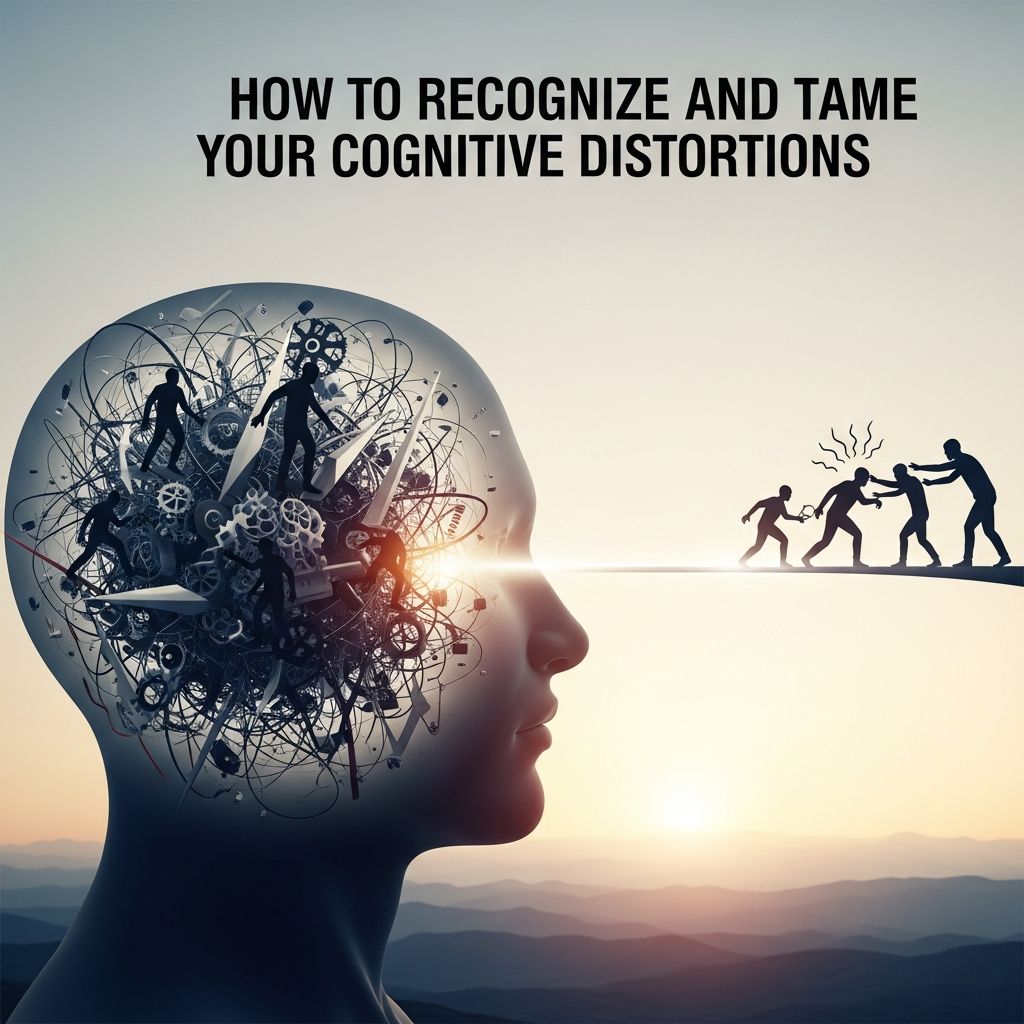
Understanding Cognitive Distortions: What They Are and Why They Matter
Cognitive distortions are biased thoughts that create negative patterns in the way a person thinks, often serving as symptoms of depression and anxiety. These are errors in both cognitive processing and content that result in maladaptive or unhelpful interpretations of incoming stimuli. In the 1960s and 1970s, pioneering psychologist Aaron Beck and colleagues conducted groundbreaking research that led to the creation of cognitive behavioral therapy (CBT) and identified at least 12 distinct types of cognitive distortions. Understanding these thought patterns is essential because they can significantly impact your mental health, relationships, and overall quality of life.
Research demonstrates that cognitive distortions are more prevalent among individuals experiencing depression, anxiety, and other mental health challenges. These distorted thinking patterns often reinforce negative views of yourself, your experiences, and your world. When repeated frequently enough, these thoughts can become part of a consistent pattern or evolve into strongly held beliefs that shape how you interpret reality.
The Science Behind Cognitive Distortions
Researchers theorize that times of high stress, such as traumatic life events or challenges during childhood, can activate cognitive distortion. This activation may occur as a survival and evolutionary adaptation to streamline the thinking process during difficult times. However, this protective mechanism can continue into later life and affect events that are not necessarily negative, causing the person to view those neutral events negatively.
Understanding the structure of cognitive distortions helps a person better identify them in their thought patterns. Scientists believe that cognitive distortions are sometimes but not always the result of stress, negative life events, or gradual smaller events, such as negative expressions from parents or caregivers, that continue to trigger this way of thinking later in life.
Common Types of Cognitive Distortions
Recognizing the specific types of cognitive distortions you experience is the first step toward addressing them. Here are some of the most prevalent forms:
Mental Filtering (Selective Abstraction)
Mental filtering is a thought pattern that lingers and focuses on negative events or thoughts, even in the face of contradictory information. In this distortion, you may filter out the positive aspects of a situation and focus exclusively on the negatives, like a sieve that only catches the bad stuff. This distortion often leads to a distorted view of reality, reinforcing negative thoughts and feelings from everything from work to relationships. For example, if you receive nine compliments and one criticism, you fixate only on that single negative comment.
Jumping to Conclusions
With this cognitive distortion, you may make negative predictions, often expecting the worst possible outcome, also known as catastrophic thinking. You might also assume you know what others think or feel without evidence—a cognitive distortion called mind-reading. This pattern leads people to assume that other people have negative thoughts about them, even though they may not.
Catastrophizing
Catastrophizing is a type of cognitive distortion in which you automatically assume the worst possible outcome in a given situation. For example, if you have a headache, you might catastrophize by immediately thinking it’s something serious. People with this cognitive distortion tend to jump to extreme conclusions about their own performance and about events around them, viewing situations as more black or white than they really are.
Related Stories



Emotional Reasoning
A person with emotional reasoning will allow their emotions to dictate what they believe as truth, without paying attention to the facts in front of them. This means treating feelings as facts—if you feel anxious about a situation, you assume something bad will happen, regardless of actual evidence.
Perfectionism and All-or-Nothing Thinking
A person with this cognitive distortion might believe that if they don’t do something perfectly then they have done it badly and there is no point in doing it at all. This person may view themselves as being a failure if they don’t perform well on an exam, for example. There’s no middle ground—everything is either perfect or worthless.
The Impact of Cognitive Distortions on Mental Health
The consequences of unchecked cognitive distortions can be severe. These distorted thinking patterns can increase an individual’s negative emotions and reinforce mental illness. Extreme forms of distortions can lead to distorted views of yourself and others, making situations feel worse and making you feel incapable of dealing with future events. This creates a cycle where individuals feel bad and continue to struggle with anxiety, negative thoughts, and unhelpful behaviors.
Research has found that cognitive distortions are uniquely associated with suicide attempt status, with individuals who recently attempted suicide more likely than psychiatric controls to experience cognitive distortions, even when controlling for depression and hopelessness. This underscores the serious mental health implications of persistent cognitive distortion patterns.
Recognizing Your Cognitive Distortions
The first step in addressing cognitive distortions is becoming aware of them. To recognize your cognitive distortions, start by paying attention to your thoughts throughout the day. Notice when you’re thinking in absolutes or making predictions without evidence. Keep a thought journal to track recurring negative thought patterns. Ask yourself whether your thoughts are based on facts or interpretations. Consider whether you’re focusing only on the negative aspects of a situation while ignoring positives.
Pay attention to your emotional responses to events. If you feel disproportionately upset, this may signal that a cognitive distortion is at play. Examine your self-talk and the language you use when describing situations. Words like “always,” “never,” “worst,” or “catastrophe” often indicate distorted thinking.
Strategies for Taming Cognitive Distortions
To treat and manage cognitive distortions, a person has to learn to restructure their thought patterns and responses to stimuli. While this is difficult, with commitment, it is possible to change cognitive distortions. Here are effective strategies:
Cognitive Restructuring
Cognitive restructuring is a process by which you can identify, challenge, and alter cognitive distortions and negative thought patterns. By examining your thoughts more objectively, you may react more appropriately to situations and mitigate the impact of cognitive distortions on your lives. This process involves several steps: first, identify the distorted thought; second, examine the evidence for and against it; third, develop a more balanced, realistic thought; and finally, practice replacing the distorted thought with the healthier alternative.
Challenge Your Predictions
When you find yourself making negative predictions, pause and consider whether they’re based on actual evidence. A healthy response to fortune-telling cognitive distortions would be to recognize that the future is uncertain, and that your predictions are often based on incomplete or biased information. Instead of predicting the future in a negative way, try to focus on the things that you can control, such as preparing adequately and doing your best.
Practice Balanced Thinking
When you notice yourself engaging in all-or-nothing thinking, deliberately look for middle ground. Ask yourself: “Is there a gray area here? Can something be partially successful even if it’s not perfect?” Recognize that mistakes and setbacks are normal parts of life, not catastrophic failures.
Evidence-Based Evaluation
For emotional reasoning distortions, deliberately separate your feelings from facts. When you feel strongly about something, ask: “What evidence supports this belief? What evidence contradicts it? What would I tell a friend in this situation?” This helps you see situations more objectively.
Cognitive Behavioral Therapy: A Professional Approach
CBT is a type of talk therapy that works to highlight the inaccuracy of cognitive distortions for the situations in which they occur and how they affect mood and behavior. CBT is an effective way to restructure thought patterns, and a specialist psychotherapist will guide you through your thought patterns and highlight the inaccuracy of cognitive distortions in your repeated thoughts.
CBT typically employs various techniques to help individuals recognize and counter cognitive distortions. A licensed therapist can help you see patterns in your thinking that you might not notice on your own, facilitating the cognitive restructuring process. This professional guidance is particularly valuable if your cognitive distortions are severe or deeply entrenched.
Building Resilience Against Distorted Thinking
Beyond addressing current distortions, you can build resilience to prevent them from taking hold in the future. Maintain a regular mindfulness practice to observe your thoughts without judgment. Keep a gratitude journal to intentionally counteract negative mental filtering. Develop a support network of people who can provide perspective when you’re caught in distorted thinking. Practice self-compassion rather than self-criticism. Engage in activities that boost your mood and sense of accomplishment.
When to Seek Professional Help
While self-help strategies are valuable, certain situations warrant professional intervention. Seek professional help if cognitive distortions are significantly interfering with your daily functioning, causing persistent depression or anxiety, contributing to relationship problems, or leading to harmful behaviors. If you have a history of mental health conditions or if self-directed efforts haven’t improved your thinking patterns after several weeks, consulting with a mental health professional is advisable.
Frequently Asked Questions
Q: How long does it take to overcome cognitive distortions?
A: The timeline varies depending on how entrenched the patterns are and your commitment to change. Some people notice improvement within weeks, while deeper patterns may take months of consistent practice. Working with a therapist can accelerate progress.
Q: Can cognitive distortions return after I’ve addressed them?
A: Yes, especially during times of stress. However, once you’ve learned to recognize and challenge them, you develop skills to address them more quickly. Ongoing mindfulness and self-awareness help prevent them from becoming entrenched again.
Q: Are cognitive distortions a sign of mental illness?
A: Cognitive distortions can occur in anyone and are not inherently a sign of mental illness. However, when they’re frequent and persistent, they may contribute to conditions like depression and anxiety. Everyone engages in negative thinking from time to time.
Q: Can I address cognitive distortions without therapy?
A: Many people successfully manage cognitive distortions through self-directed strategies like journaling, cognitive restructuring, and mindfulness. However, therapy can be more effective for severe patterns and provides personalized guidance.
Q: What’s the difference between normal negative thinking and cognitive distortions?
A: Normal negative thinking occurs occasionally in response to actual negative events. Cognitive distortions are persistent, irrational patterns that occur even without evidence and significantly impact mood and behavior.
Conclusion: Taking Control of Your Thoughts
Cognitive distortions are common thinking patterns that can significantly impact your mental health and wellbeing. By understanding what they are, recognizing when you’re engaging in them, and implementing strategies to challenge and change them, you can regain control over your thoughts and improve your overall quality of life. Whether through self-directed efforts or professional help, addressing these distortions is a worthwhile investment in your mental health. Remember that recognizing the cause and challenging these distortions can be a big help in breaking negative cycles and more helpful in having balanced thinking.
References
- Cognitive Distortions and Suicide Attempts — National Center for Biotechnology Information (NCBI), National Institutes of Health (NIH). 2014. https://pmc.ncbi.nlm.nih.gov/articles/PMC4185206/
- Cognitive Distortions: What They Are, Types, and How to Manage — Medical News Today. 2024. https://www.medicalnewstoday.com/articles/cognitive-distortions
- Understanding & Countering Cognitive Distortions For Your Mental Health — BetterHelp. 2024. https://www.betterhelp.com/advice/therapy/understanding-and-countering-cognitive-distortions-in-cbt/
- Cognitive Distortions in Medicine – Part 2 — Physicians Anonymous. 2024. https://physiciansanonymous.org/overcome-cognitive-distortions-medicine/
- Cognitive Distortions: Put an End to Negative Thinking — HelpGuide. 2024. https://www.helpguide.org/mental-health/anxiety/cognitive-distortions-put-an-end-to-distorted-thinking
Similar Articles








Read full bio of Sneha Tete