Recurrent Fissuring of Posterior Fourchette
Understanding the causes, symptoms, diagnosis, and effective treatments for recurrent posterior fourchette fissuring in women.
The
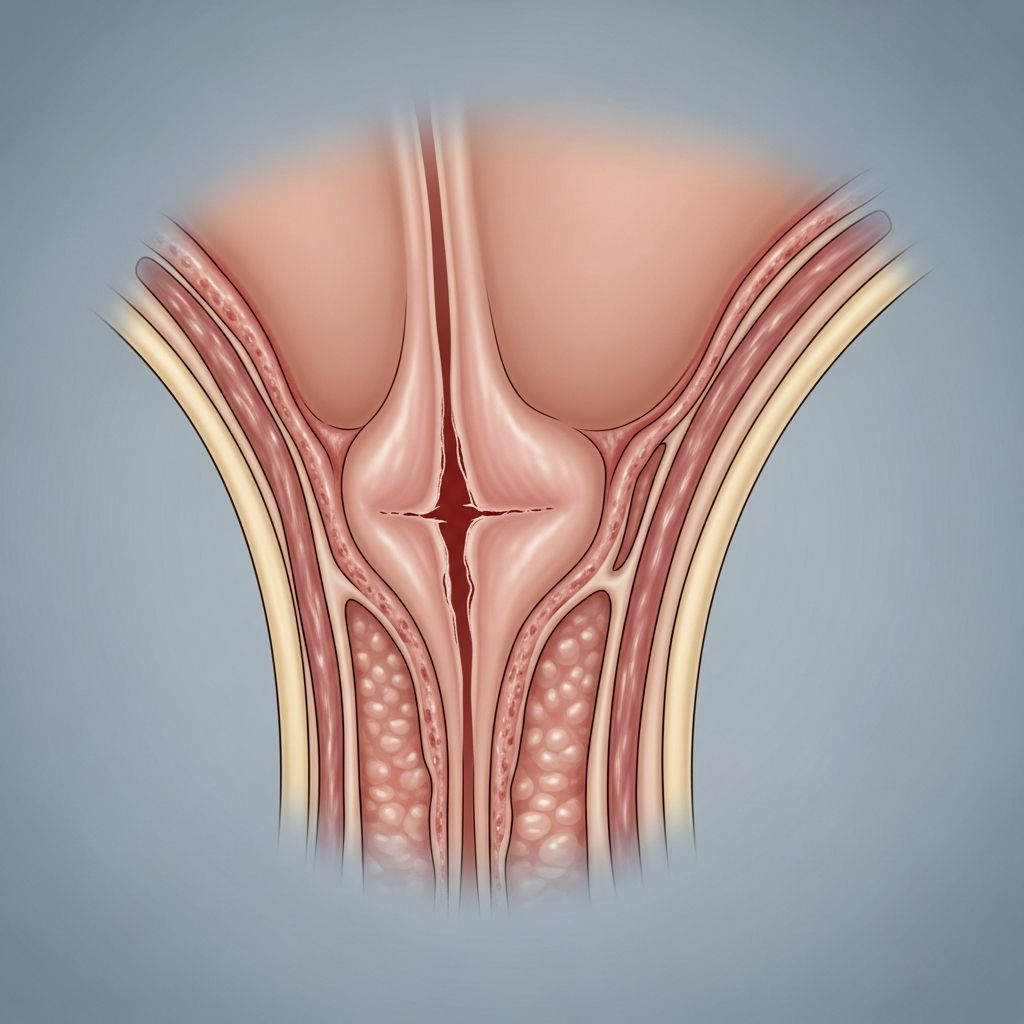
posterior fourchette
is a thin, fork-shaped fold of skin at the base of the vaginal entrance, designed to stretch during activities like sexual intercourse. When it fails to stretch adequately, it can split, leading to recurrent vulval pain often described as ‘like a paper-cut’ or ‘knife-like’. This condition, previously termed vulval or vulvar granuloma fissuratum, primarily affects sexually active women and can significantly impact quality of life.What is the Posterior Fourchette?
The posterior fourchette forms the lower junction of the labia minora and perineal skin. It is a delicate mucosal area that must accommodate stretching during penetration. In recurrent fissuring, this tissue repeatedly tears due to inadequate elasticity, stiffness, inflammation, or fragility. Unlike lacerations from trauma like straddle injuries or childbirth episiotomies, recurrent fissures occur spontaneously with normal stretching, often without visible bruising.
Who Gets Recurrent Fissuring of Posterior Fourchette and Why?
Affected women span premenopausal and postmenopausal ages, including those with or without children. Symptoms may debut at first intercourse or years later. Primary fissuring has no underlying skin disease, while secondary cases stem from infections or dermatoses. Common causes include:
- Vulvovaginitis from Candida albicans (thrush)
- Bacterial vaginosis
- Genital herpes
- Vaginal atrophy (common postmenopause)
- Contact dermatitis from allergens or irritants
- Lichen sclerosus or lichen simplex chronicus
- Seborrhoeic or atopic dermatitis
- Aphthous ulceration
- Collagen disorders like Ehlers-Danlos syndrome
- Pelvic floor dysfunction causing vaginismus
Histamine intolerance or repeated trauma from intercourse exacerbates fragility. Poorly healed episiotomies or perineal tears from delivery also contribute.
Clinical Features
Symptoms follow intercourse or tampon insertion, resolving in days but recurring. Severity varies from mild to debilitating, including:
- Sharp, stabbing pain
- Burning or stinging, worsened by urine, semen, or water
- Tenderness and inflammation
- Bleeding or spotting
- Itching
- Swelling or lumps
- Dyspareunia (painful sex)
- Dysuria (painful urination)
Additional fissures may appear in vulval folds. Examination reveals a midline linear erosion or split at the fourchette base; colposcopy aids visualization. The area may show:
- Tight band or membranous hypertrophy (‘tenting’)
- Scar tissue
- Ulceration in severe cases
Gentle stretching often provokes a new fissure. Normal appearance post-healing is common.
Diagnosis
Diagnosis relies on history and exam; tests confirm underlying issues. Swabs detect infections like Candida, BV, STIs, or herpes. Biopsy reveals nonspecific submucosal chronic inflammation, hyperkeratosis, or parakeratosis in primary cases—no true granuloma. Scar or fibrosis distinguishes from controls. Rule out vestibulodynia (pain without fissures).
| Diagnostic Feature | Description | Source |
|---|---|---|
| Clinical Exam | Midline fissure, hypertrophy | |
| Swabs/Cultures | Infections (Candida, BV, herpes) | |
| Biopsy | Chronic inflammation, no granuloma | |
| Colposcopy | Enhances fissure visibility |
Treatment
Treat underlying causes first: antifungals for Candida, antibiotics for BV, antivirals for herpes. For primary fissuring:
- Emollients: Soothing barrier creams (e.g., sorbolene, aqueous cream).
- Topical steroids: Mild (hydrocortisone 1%) daily for 2 weeks, then alternate days; potent (betamethasone 0.05%) for resistant cases under supervision.
- Analgesics: Paracetamol or ibuprofen for pain.
- Sexual abstinence: 4–6 weeks to allow healing.
- Lubricants: Water-based during resumption.
Related Stories



If unresponsive, options include:
- Surgical correction: Fissurectomy (excision of scarred fourchette) with or without Z-plasty. Heals in 2 weeks; low recurrence.
- Laser ablation: CO2 laser vaporizes tissue.
- Dilators: For vaginismus; start small, 20 min twice daily.
- Pelvic floor therapy: Relaxes tension.
Postmenopausal atrophy responds to topical estrogen.
What is the Outcome for Recurrent Fissuring of Posterior Fourchette?
Most heal with conservative care; surgery yields excellent results with minimal scarring. Recurrence drops post-correction. Untreated cases risk scarring, worsening dyspareunia.
Prevention
- Use lubricants generously.
- Avoid irritants (harsh soaps, pads).
- Treat infections promptly.
- Practice positions reducing fourchette strain.
- Moisturize daily with emollients.
- Manage menopause with estrogen if needed.
Frequently Asked Questions (FAQs)
Q: Is recurrent posterior fourchette fissuring the same as vulvodynia?
A: No, vulvodynia involves pain without visible fissures; fissuring shows splits on exam.
Q: Can fissures heal on their own?
A: Yes, often within days, but recurrence is common without treatment.
Q: Is surgery always needed?
A: No, most respond to topicals and abstinence; surgery for refractory cases.
Q: Does childbirth cause this?
A: It can via poor episiotomy healing, but occurs without childbirth too.
Q: How to prevent fissures during sex?
A: Use ample lubrication, foreplay, and gentle positions.
Q: What if biopsy is normal?
A: Primary fissuring shows nonspecific inflammation; proceed with conservative therapy.
This comprehensive guide synthesizes clinical insights for women experiencing vulval fissuring. Consult a dermatologist or gynecologist for personalized care.
References
- Recurrent fissuring of posterior fourchette — DermNet NZ (Dr Amanda Oakley). 2011 (reviewed post-2020). https://dermnetnz.org/topics/recurrent-fissuring-of-posterior-fourchette
- Histopathology of recurrent mechanical fissure of the posterior fourchette — Kennedy CM et al., Journal of Lower Genital Tract Disease (PMC). 2008-10-23. https://pmc.ncbi.nlm.nih.gov/articles/PMC2678940/
- What are fissures of the posterior fourchette and how can you treat them? — VuVa Tech (clinical summary). Accessed 2023. https://www.vuvatech.com/blogs/care/what-are-fissures-of-the-posterior-fourchette-and-how-can-you-treat-them
- Vulvar Granuloma Fissuratum (recurrent tearing of the vulva) — National Vulvodynia Association. Recent update. https://vulvodynia.com/conditions/vulvar-granuloma-fisuratum-recurrent-tearing-of-the-vulva
- Chronic sexual pain: a layered guide to evaluation — Coady D, Contemporary OB/GYN. Recent. https://www.contemporaryobgyn.net/view/chronic-sexual-pain-layered-guide-evaluation
Similar Articles








Read full bio of medha deb