Red Blood Cells: Function, Role & Importance
Understanding how red blood cells deliver oxygen and maintain your body's energy.
Understanding Red Blood Cells: The Oxygen Carriers of Your Body
Red blood cells, scientifically known as erythrocytes, are among the most vital components of your circulatory system. These microscopic cells play a crucial role in maintaining your health by transporting oxygen from your lungs to tissues throughout your body and removing carbon dioxide waste. Without properly functioning red blood cells, your body cannot generate the energy needed to sustain life. Understanding their functions, structure, and importance can help you appreciate the remarkable biological processes happening within your body every moment.
The Primary Function of Red Blood Cells
The main function of red blood cells is to transport oxygen from your lungs to every tissue and organ in your body. When you breathe in, oxygen enters your lungs and attaches to hemoglobin, an iron-rich protein found within red blood cells. This oxygen-rich blood then circulates through your arteries, delivering life-sustaining oxygen to cells throughout your body. Your cells use this oxygen to produce energy through cellular respiration, a process essential for all biological functions.
Beyond oxygen delivery, red blood cells perform an equally important function: they remove carbon dioxide, a waste product generated by your cells during energy production. Red blood cells pick up this carbon dioxide from your tissues and transport it back to your lungs, where you exhale it with each breath. This continuous cycle of oxygen delivery and carbon dioxide removal is fundamental to your survival.
The Role of Hemoglobin
Hemoglobin is the protein that gives red blood cells their characteristic bright red color and enables their vital oxygen-carrying function. This iron-rich protein is composed of a string of amino acids and contains an iron atom that binds to oxygen molecules. When hemoglobin binds to oxygen, it becomes oxyhemoglobin, giving arterial blood its bright red appearance. When hemoglobin releases oxygen to tissues, it appears darker red, which is why venous blood appears darker than arterial blood.
The structure of hemoglobin is specifically designed for efficient oxygen transport. Each hemoglobin molecule can carry up to four oxygen molecules simultaneously, making red blood cells extremely efficient oxygen delivery vehicles. The iron content in hemoglobin is why iron is such an essential nutrient for maintaining healthy red blood cell function.
Physical Structure and Characteristics
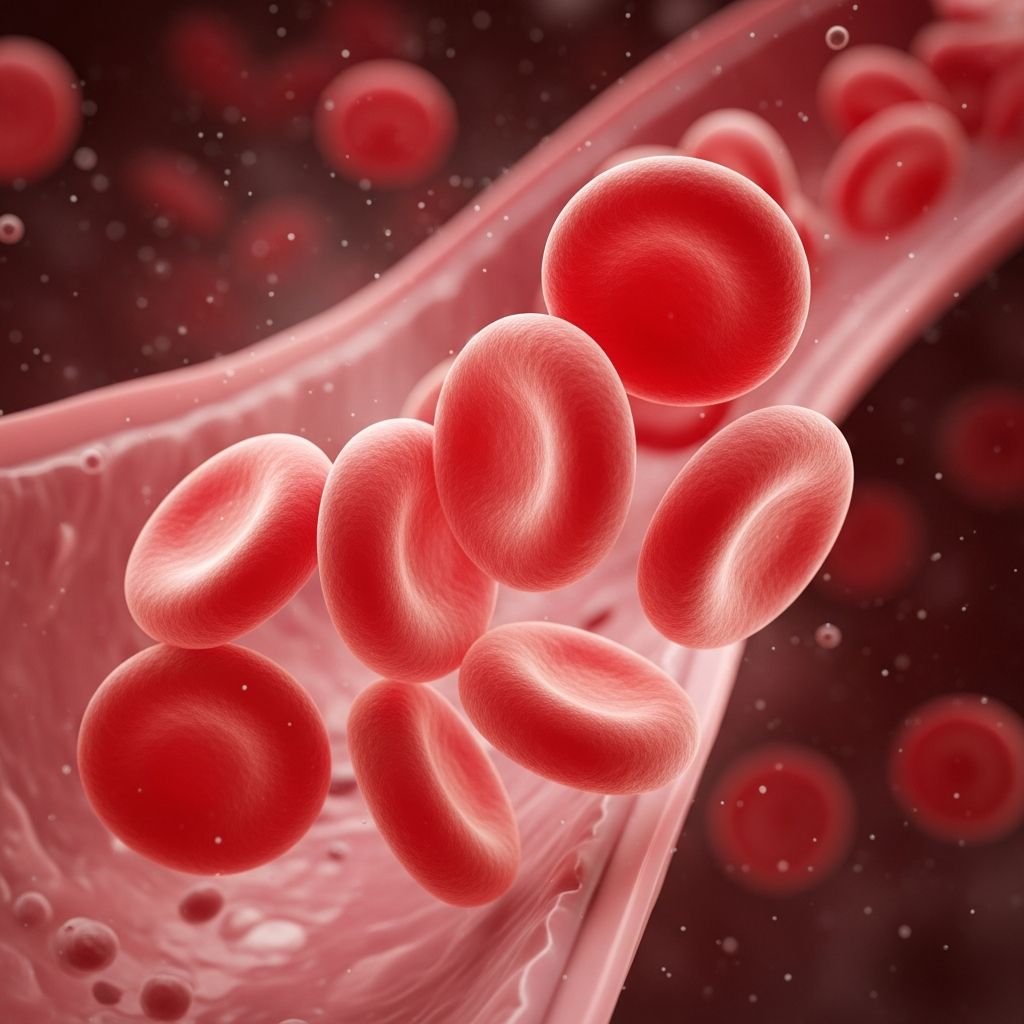
Red blood cells possess a unique physical structure that enables them to perform their functions effectively. Unlike many other cells in your body, red blood cells are biconcave discs—shaped like a flat disk or doughnut with an indentation in the center, though they are not hollow. This distinctive shape provides several advantages for their oxygen-carrying function and movement through your bloodstream.
A significant structural feature of red blood cells is their lack of a nucleus, the membrane-bound organelle that contains genetic material in most other cells. This absence of a nucleus provides red blood cells with more space to contain hemoglobin and allows them to change shape more easily as they navigate through narrow blood vessels and capillaries. Red blood cells are incredibly microscopic, measuring only about 6 to 8 micrometers in diameter, yet they accomplish enormous physiological tasks throughout your body.
Red Blood Cell Production: Erythropoiesis
Red blood cells are produced through a process called erythropoiesis in your bone marrow, the spongy tissue found inside your large bones. Bone marrow is the primary site where nearly all blood cells are manufactured, including red blood cells, white blood cells, and platelets. The production process begins with hematopoietic stem cells (HSCs), which are the foundation for all blood cell types.
Related Stories



The journey from stem cell to mature red blood cell involves several developmental stages. An HSC first develops into a common myeloid progenitor (CMP) cell, which can eventually become a red blood cell, platelet, or certain types of white blood cells. If destined to become a red blood cell, a CMP develops into a megakaryocyte-erythroid progenitor cell (MEP), putting it on the path to becoming a functional red blood cell. Throughout these stages, the cell undergoes significant changes, gradually accumulating hemoglobin and losing its nucleus.
The complete maturation process takes approximately seven days from initial development to full functionality. Once red blood cells are fully mature, they are released into your bloodstream where they can begin their oxygen transport work. Your body produces billions of new red blood cells daily to maintain healthy levels and replace those that have aged beyond their functional lifespan.
Red Blood Cell Lifespan and Replacement
Red blood cells have a relatively long lifespan compared to many other cells in your body, surviving approximately 120 days in circulation. During this time, they continuously circulate through your bloodstream, delivering oxygen and removing carbon dioxide. After about 120 days, red blood cells become less efficient and are removed from circulation, primarily by your spleen and liver.
Your body loses approximately 1% of its red blood cells each day, which means you lose roughly one million red blood cells every second. Fortunately, your bone marrow continuously replaces these lost cells through ongoing erythropoiesis. This continuous cycle of production and replacement means your entire population of red blood cells is completely renewed approximately every four months, ensuring you always have fresh, healthy cells to transport oxygen.
Regulation of Red Blood Cell Production
Your body carefully regulates red blood cell production to ensure you have the optimal number—not too few or too many. This regulation is primarily controlled by oxygen levels in your tissues and a hormone called erythropoietin (EPO), which is produced by your kidneys. When your tissues experience low oxygen levels (hypoxia), your kidneys detect this condition and secrete more EPO. This hormone signals your bone marrow to increase red blood cell production, ensuring adequate oxygen delivery to all tissues.
Your kidneys constantly secrete low levels of EPO even under normal conditions to maintain baseline red blood cell production. When conditions improve and oxygen levels normalize, EPO production decreases, slowing red blood cell production accordingly. This elegant feedback system ensures your body maintains the precise number of red blood cells needed for optimal health without requiring conscious effort on your part.
Red Blood Cell Counts and What They Mean
A complete blood count (CBC) test is used to measure the number of red blood cells in your blood, providing important information about your health status. A medical professional takes a blood sample and analyzes it in a laboratory to count the red blood cells present. The results are reported as the number of red blood cells per microliter of blood.
Normal red blood cell counts vary slightly based on individual factors, and your healthcare provider can explain what the specific ranges mean for your health. Generally, normal RBC counts are:
– For adult men: 4.7 to 6.1 million cells per microliter of blood- For adult women: 4.2 to 5.4 million cells per microliter of blood
If your count falls outside these ranges, it indicates either too few red blood cells (low count) or too many red blood cells (high count). A low red blood cell count may indicate anemia, a condition in which your body cannot produce enough healthy red blood cells to carry adequate oxygen. A high red blood cell count, called erythrocytosis, may result from various conditions including lung disease, heart disease, or bone marrow disorders.
Conditions Affecting Red Blood Cell Counts
Several medical conditions can affect your red blood cell production and function, resulting in abnormal counts. Understanding these conditions can help you recognize when medical attention might be necessary.
Low Red Blood Cell Count Causes:
– Anemia from various causes- Leukemia and other blood cancers- Malnutrition affecting vitamin and mineral intake- Multiple myeloma- Kidney failure- Blood loss from injury or other problems- Alcohol use disorder- Pregnancy
High Red Blood Cell Count Causes:
– Polycythemia vera- Chronic lung disease- Heart disease- Living at high altitudes- Smoking- Certain medications
Related Blood Tests for Comprehensive Assessment
When your healthcare provider measures your red blood cell count, they often order additional tests to provide a more complete picture of your blood health and overall wellness. These complementary tests include:
– Reticulocyte count: Measures the number of immature (developing) red blood cells in your blood, helping determine if your bone marrow is producing adequate quantities- Iron tests: Measure iron levels, which are essential for red blood cell production and hemoglobin formation- Vitamin B tests: Assess levels of B vitamins, particularly B12 and folate, which are crucial for red blood cell production and overall health- Hemoglobin test: Measures the amount of hemoglobin in your blood, indicating your blood’s oxygen-carrying capacity
Maintaining Healthy Red Blood Cells
Your lifestyle choices significantly impact your red blood cell health and function. To keep your red blood cells healthy and functioning optimally, consider these evidence-based recommendations:
Nutritional Strategies: Eat a nutritious diet rich in vitamins and minerals essential for red blood cell production. Include iron-rich foods such as lean meats, beans, and leafy greens. Consume foods high in vitamin B12, folate, and vitamin C, which support red blood cell formation and hemoglobin synthesis.
Avoid Harmful Habits: Smoking reduces your blood’s oxygen-carrying capacity and damages red blood cells. Avoiding tobacco smoke protects your red blood cells from oxidative stress and premature aging. Limiting alcohol consumption prevents malnutrition and bone marrow damage that can impair red blood cell production.
Maintain Physical Activity: Regular exercise improves circulation and stimulates your body to maintain optimal red blood cell production. Physical activity enhances oxygen utilization and supports cardiovascular health.
Manage Chronic Conditions: If you have conditions like kidney disease, heart disease, or diabetes that affect red blood cell production, work with your healthcare provider to manage them effectively.
The Continuous Journey of Red Blood Cells
Red blood cells embark on a remarkable continuous journey throughout your body, completing circuits through your circulatory system hundreds of thousands of times during their 120-day lifespan. These cells pass through your heart approximately 170,000 times, traveling through arteries, capillaries, and veins in an intricate network spanning approximately 60,000 miles if laid end to end. Despite their microscopic size, red blood cells accomplish the monumental task of keeping every tissue in your body oxygenated and functioning.
Frequently Asked Questions
Q: How many red blood cells does your body produce daily?
A: Your body produces billions of new red blood cells daily to replace those that have aged and been removed from circulation. Since you lose approximately 1% of your red blood cells each day, your bone marrow works continuously to maintain adequate levels.
Q: Can you live without red blood cells?
A: No, red blood cells are essential for survival. Without them, your tissues cannot receive oxygen, and your cells cannot produce the energy needed for any biological functions. This is why conditions like severe anemia require immediate medical treatment.
Q: Why do red blood cells not have a nucleus?
A: The absence of a nucleus in red blood cells provides more space for hemoglobin storage and allows these cells to change shape more easily as they navigate through narrow blood vessels and capillaries, making them more efficient at their oxygen-transport function.
Q: What should a normal hemoglobin level be?
A: Normal hemoglobin levels vary by age and sex, but generally range from 13.5 to 17.5 grams per deciliter for adult men and 12.0 to 15.5 grams per deciliter for adult women. Your healthcare provider can explain what your specific results mean.
Q: How do I know if I have a red blood cell disorder?
A: A complete blood count (CBC) test can reveal if your red blood cell count is abnormal. Symptoms of red blood cell disorders may include fatigue, weakness, shortness of breath, and dizziness. If you experience these symptoms, consult your healthcare provider.
References
- Red Blood Cells: Function, Role & Importance — Cleveland Clinic. https://my.clevelandclinic.org/health/body/21691-function-of-red-blood-cells
- Red Blood Cell (RBC) Count: MedlinePlus Medical Test — National Library of Medicine. https://medlineplus.gov/lab-tests/red-blood-cell-rbc-count/
- Erythropoiesis: What It Is & Process Stages — Cleveland Clinic. https://my.clevelandclinic.org/health/articles/24407-erythropoiesis
- Blood: What It Is & Function — Cleveland Clinic. https://my.clevelandclinic.org/health/body/24836-blood
- How Your Circulatory System Works — Cleveland Clinic. https://my.clevelandclinic.org/health/body/circulatory-and-cardiovascular-system
- Hemoglobin Test: What It Is, Procedure & Results — Cleveland Clinic. https://my.clevelandclinic.org/health/diagnostics/17790-hemoglobin-test
- Anemia: Symptoms, Causes & Treatment — Cleveland Clinic. https://my.clevelandclinic.org/health/diseases/3929-anemia
Similar Articles








Read full bio of medha deb