Red Ear Syndrome: Expert Guide To Causes, Symptoms & Treatment
Unraveling the mystery of red ear syndrome: paroxysmal redness, burning pain, triggers, causes, and management strategies.
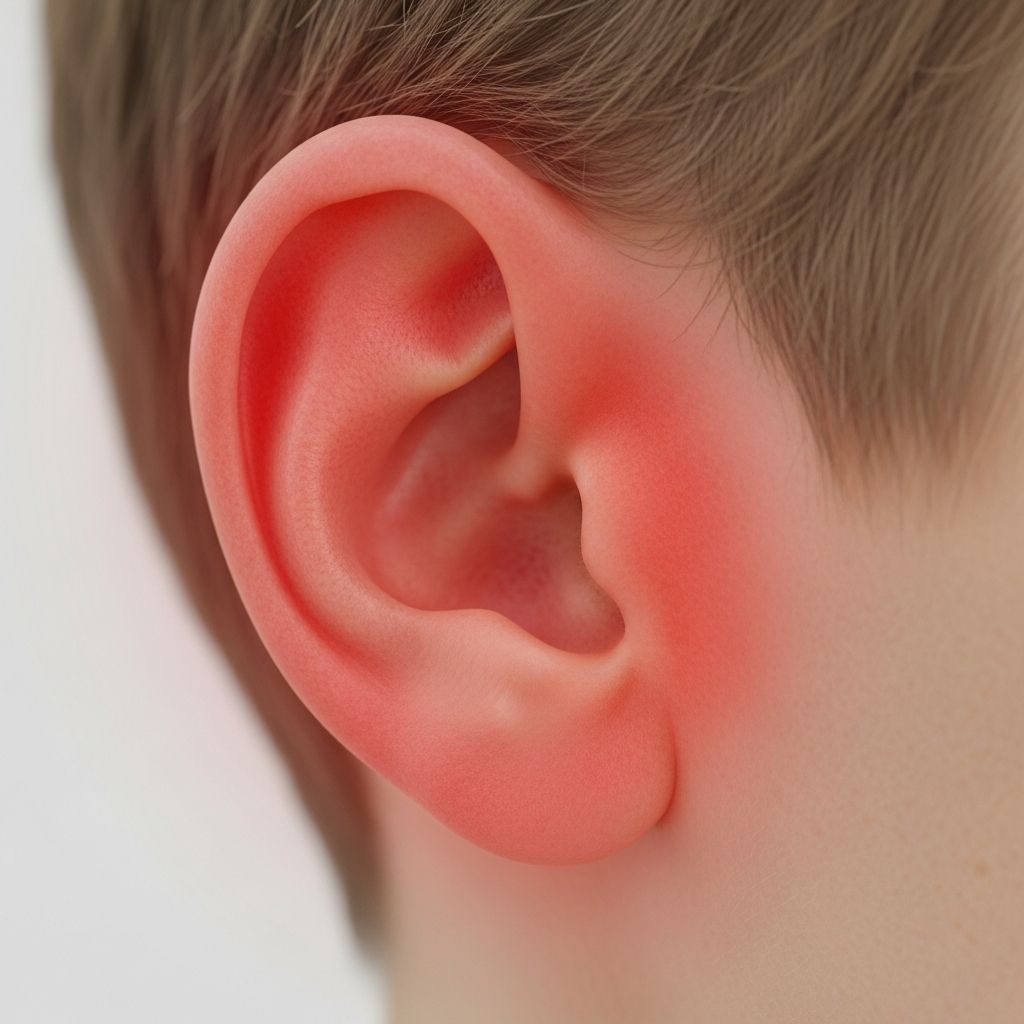
Red ear syndrome (RES) is a rare condition characterised by sudden, paroxysmal episodes of redness and burning pain affecting one or both external ears, sometimes extending to the adjacent cheek or neck. These attacks are typically unilateral but can be bilateral, lasting from minutes to hours, and may occur spontaneously or be triggered by specific stimuli.
What is red ear syndrome?
Red ear syndrome involves recurrent episodes of unilateral or bilateral erythema (redness) of the ear pinna, often accompanied by a burning or hot sensation. The external ear turns vividly red, mimicking sunburn, but without scaling or blistering. Pain, when present, is described as burning, stinging, or suffusing warmth. Episodes are self-limiting, resolving spontaneously, but can recur frequently, impacting quality of life.
The auricle (pinna) is primarily affected, though redness may spread to the preauricular or postauricular skin, cheek, or upper neck. Unlike inflammatory dermatoses, there is no oedema, induration, or crusting. The condition was first described in 1996 by Lance, who noted its association with migraine and cluster headaches.
Who gets red ear syndrome?
RES affects individuals across all ages, but primary RES is more common in children and young adults (under 40 years), while secondary RES predominates in older adults (over 60 years). It shows no strong gender predilection, though some series report a slight female predominance.
Primary RES often starts in childhood or adolescence, with episodes triggered by minor stimuli. Secondary cases link to underlying neurological or vascular disorders. Prevalence is unknown due to underdiagnosis, but case reports suggest it is rare, with fewer than 100 well-documented cases worldwide.
What causes red ear syndrome?
The precise aetiology remains unclear, but two main forms exist:
- Primary RES: Idiopathic, possibly due to dysfunction in the trigemino-autonomic reflex or sympathetic overactivity leading to vasodilation. The ear’s rich vascular supply and dual sympathetic/parasympathetic innervation may predispose it.
- Secondary RES: Associated with underlying conditions, including:
| Category | Examples |
|---|---|
| Headache disorders | Migraine (most common), cluster headache, trigeminal autonomic cephalalgias (TACs) |
| Neuropathic pain | Trigeminal neuralgia, glossopharyngeal neuralgia |
| Spinal disorders | Upper cervical spine pathology (spondylosis, arachnoiditis, traction injury), C3 root irritation |
| Temporomandibular | TMJ dysfunction |
| Central lesions | Thalamic syndrome, brainstem lesions |
| Other | Shingles (herpes zoster oticus), erythromelalgia |
Pathophysiological hypotheses include antidromic release of vasodilatory peptides (e.g., substance P, CGRP) from trigeminal or cervical nerves, enhanced sympathetic vasodilation in the ear, or thalamic disinhibition.
What are the clinical features of red ear syndrome?
Attacks are abrupt in onset, lasting 5–120 minutes (average 30–60 minutes), occurring multiple times daily to weekly. Key features include:
- Sudden redness of the ear lobe, helix, or entire pinna, sometimes extending to cheek/neck.
- Burning pain or dysaesthesia (abnormal sensation) in 50–80% of cases.
- No auditory symptoms, fever, or systemic signs.
- Normal ear examination between attacks.
In migraine-associated RES, ear symptoms coincide with headache onset and resolve concurrently, though not every migraine triggers RES.
Related Stories



How is red ear syndrome diagnosed?
Diagnosis is clinical, based on history and exclusion of mimics. No specific tests exist; criteria include:
- Paroxysmal unilateral/bilateral ear erythema ± burning sensation.
- Episodes lasting minutes to hours.
- Absence of dermatological pathology.
- Triggers in secondary forms.
Differential diagnosis:
- Dermatological: Erythema ab igne, relapsing polychondritis, seborrhoeic dermatitis, cellulitis.
- Infectious: Otitis externa, perichondritis, erysipelas.
- Vascular: Erythromelalgia, auricular pseudochondritis.
- Other: Sunburn, allergic contact dermatitis, emotional flushing.
Investigations for secondary causes: MRI cervical spine/brain, dental/TMJ assessment, neurological exam. Ear swab if infection suspected.
What is the treatment for red ear syndrome?
No standardised treatment exists; management targets symptoms and underlying causes. RES is often refractory, but options include:
| Approach | Examples | Efficacy |
|---|---|---|
| Non-pharmacological | Ice pack to ear during attack, avoidance of triggers (heat, touch) | Symptomatic relief in most |
| Migraine preventatives (if associated) | Propranolol, topiramate, amitriptyline | Moderate benefit |
| Anticonvulsants | Gabapentin (most studied, 70–90% response in small series), pregabalin | Reduces frequency/severity |
| Calcium channel blockers | Verapamil, flunarizine | Anecdotal success |
| NSAIDs | Ibuprofen, aspirin | For mild pain |
| Nerve blocks | Greater auricular nerve block | Diagnostic/therapeutic |
| Other | Botulinum toxin (case reports), treat underlying (e.g., TMJ splint) | Variable |
Primary RES may respond better to gabapentin; secondary requires aetiological treatment. Lifestyle: stress reduction, trigger avoidance.
What is the outcome for red ear syndrome?
Primary RES may persist lifelong but episodes often decrease with age. Secondary RES prognosis depends on the underlying condition. Many patients achieve partial control with therapy; spontaneous remission is rare but reported in children. Regular follow-up is advised to monitor for sinister associations.
Frequently Asked Questions
Q: Is red ear syndrome dangerous?
A: Generally benign, but secondary forms warrant investigation for serious causes like spinal pathology or neuralgia.
Q: Can red ear syndrome be cured?
A: No cure, but symptoms can be managed effectively in many cases with medications like gabapentin and trigger avoidance.
Q: Does red ear syndrome always cause pain?
A: No, up to 50% of episodes are painless; burning discomfort is common but not universal.
Q: Is red ear syndrome linked to migraine?
A: Yes, strongly in primary forms; episodes often coincide with migraine attacks.
Q: How do you differentiate RES from infection?
A: RES lacks fever, pus, swelling, or persistent changes; resolves quickly without antibiotics.
References
- Idiopathic red ear syndrome: A rare case report — Al-Rajehi et al. 2022-03-01. https://pmc.ncbi.nlm.nih.gov/articles/PMC8917311/
- Red Ears Syndrome: Symptoms, Causes, and Treatment — WebMD Medical Review. 2023-01-15. https://www.webmd.com/migraines-headaches/red-ear-syndrome
- Red ears: Symptoms, causes, and treatment — Medical News Today. 2024-05-20. https://www.medicalnewstoday.com/articles/320344
- Red ear syndrome — DermNet NZ. 2023-11-10. https://dermnetnz.org/topics/red-ear-syndrome
- Red ear syndrome — Wikipedia (sourced from peer-reviewed refs). 2024-08-05. https://en.wikipedia.org/wiki/Red_ear_syndrome
Similar Articles








Read full bio of Sneha Tete