Red Palms (Palmer Erythema): Causes, Symptoms & Treatment
Understanding palmer erythema: Learn about red palms causes, symptoms, diagnosis, and effective treatment options.
Understanding Red Palms: What is Palmer Erythema?
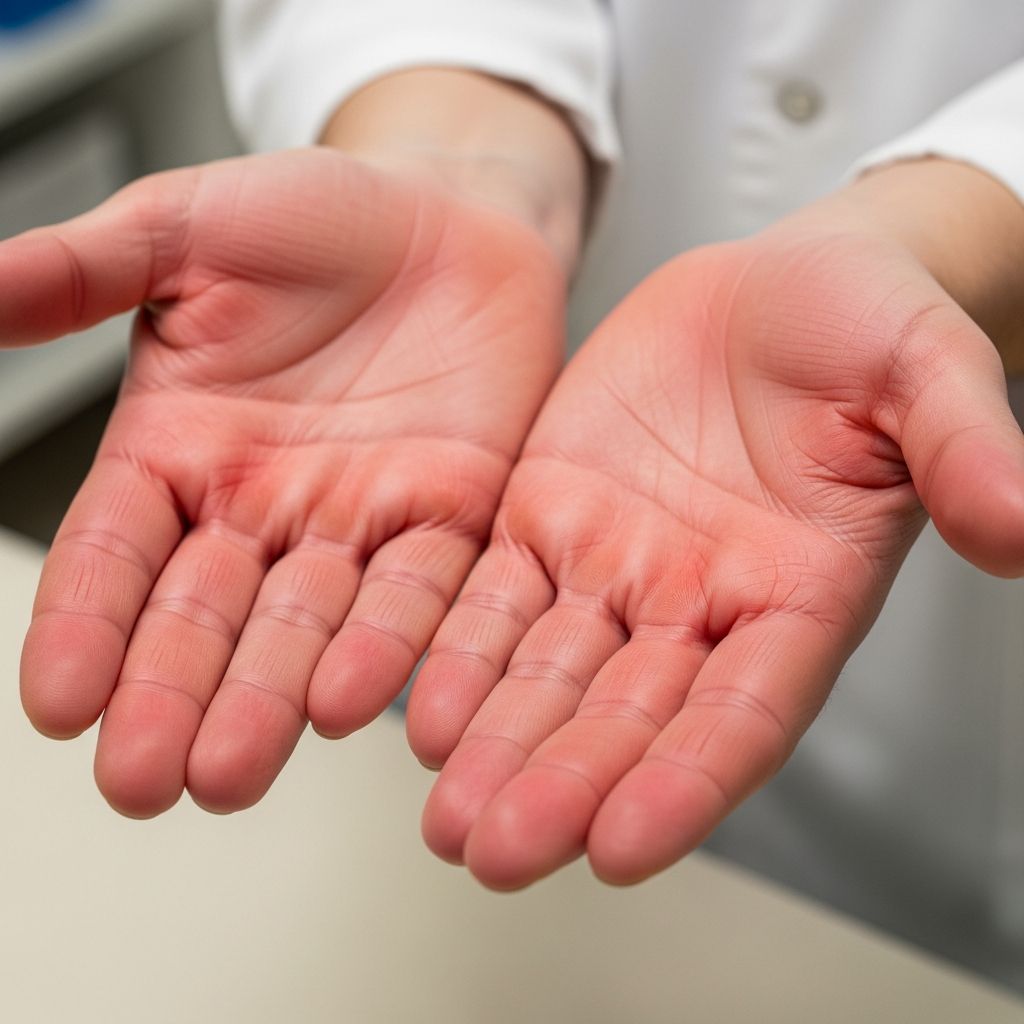
Palmer erythema, commonly known as red palms or liver palms, is a skin condition characterized by unusual redness of the palms of the hands. This condition causes the palms to develop red or flushed patches, typically appearing on both hands symmetrically. Unlike many skin conditions, palmer erythema is generally not painful, itchy, or accompanied by swelling. The redness may appear as a solid discoloration or develop as mottled patches across the palm surface.
The condition gets its alternate name “liver palms” because it is frequently associated with liver disease, though it can occur independently or due to various other underlying conditions. On darker skin tones, palmer erythema may appear darker than the natural skin tone rather than distinctly red or pink. The distinctive feature of this condition is that the skin will typically turn pale when pressed, and the degree of redness may fluctuate throughout the day based on body temperature, physical activity, and emotional state.
What Causes Red Palms?
Palmer erythema can develop from multiple causes, which are generally categorized as either primary (idiopathic) or secondary causes related to underlying conditions. Understanding the root cause is essential for effective management and treatment.
Primary Causes
Genetic Predisposition: Some individuals inherit a tendency toward red palms through a condition known as erythema palmare hereditarium. This is a rare, benign inherited alteration of the skin that produces distinctive, sharply demarcated redness, primarily on the palms and sometimes extending to the soles of the feet. Those with a family history of this condition may develop red palms without any underlying disease.
Pregnancy: Pregnancy is one of the most common causes of primary palmer erythema. Elevated estrogen levels during pregnancy temporarily increase the likelihood of developing palmar erythema. Fortunately, this pregnancy-related redness typically disappears after delivery when hormone levels return to normal.
Secondary Causes Related to Underlying Conditions
Palmer erythema frequently signals underlying health conditions that require medical attention. The following conditions are commonly associated with red palms:
- Liver Disease: Chronic liver conditions including cirrhosis and hepatitis C are among the most significant causes of palmer erythema, warranting careful medical evaluation
- Endocrine Disorders: Thyrotoxicosis, diabetes, and other hormonal imbalances can trigger palmar redness
- Autoimmune Conditions: Rheumatoid arthritis and HIV are associated with the development of palmer erythema
- Respiratory Diseases: Chronic obstructive pulmonary disease (COPD) and other lung conditions may contribute to red palms
- Skin Conditions: Atopic dermatitis, eczema, and other dermatological issues can manifest as palmar redness
- Infections: Viral or bacterial infections may cause secondary palmer erythema
- Cancer: Metastatic brain cancer has been documented as a cause of red palms
- Lifestyle Factors: Smoking and excessive alcohol consumption can result in persistent red palms from dilated capillaries
In children, palmer erythema may develop due to congenital syphilis, poisoning, hepatopulmonary hypertension, Kawasaki disease, or genetic predisposition.
The Mechanism Behind Red Palms
The redness characteristic of palmer erythema results from dilation of surface capillaries in the hands. These small blood vessels expand, drawing increased blood flow to the skin surface, which creates the visible red appearance. The degree of redness is often related to the severity of any underlying disease if one exists.
In many cases, this vasodilation can be related to circulating estrogen levels, which explains why the condition is particularly common during pregnancy and in certain hormonal disorders. The fluctuating nature of the redness—varying with emotional states, hand elevation, temperature, and pressure applied to the palm—reflects the dynamic responsiveness of these capillaries to various physiological factors.
Related Stories



Recognizing the Symptoms of Palmer Erythema
Palmer erythema presents with distinctive symptoms that make identification relatively straightforward. The primary symptom is obvious redness of the palms, which typically appears symmetrically on both hands. The redness usually develops on the lower part of the palm (the heel area) but may extend through the fingers.
Associated symptoms may include:
- Red or flushed patches extending from the palm to the fingers
- Warm sensation in the affected areas
- Burning sensation in the hands, though this is not universal
- Paleness when pressure is applied to the affected areas
Importantly, palmer erythema does not typically cause itching, pain, swelling, or scaling. However, the skin may become irritated by harsh soaps or exposure to hot water. Individuals with this condition should consider wearing gloves while washing dishes or cleaning to protect their hands.
When to See a Doctor
If you notice unexplained redness developing on your palms, scheduling a medical appointment is advisable. This is particularly important because palmer erythema often indicates an underlying condition requiring treatment. Early diagnosis and treatment of any underlying cause can prevent complications and may resolve the redness entirely.
You should seek immediate medical attention if the redness is accompanied by other symptoms such as abdominal pain, jaundice, or signs of infection.
Diagnosis of Palmer Erythema
Diagnosing palmer erythema involves a comprehensive evaluation to identify any underlying causes. Healthcare professionals typically begin with a thorough medical history and physical examination. During the examination, the doctor will assess the pattern and extent of redness and may perform specific tests to evaluate the skin’s response to pressure.
Laboratory Testing: Because liver disease is a common cause of palmer erythema, liver function tests are frequently ordered. These tests help determine whether hepatic pathology is present. Additional blood work may be performed based on clinical suspicion of other underlying conditions.
Imaging Studies: Depending on the suspected cause, healthcare professionals may order imaging tests such as CT scans or MRI to further investigate underlying conditions.
Idiopathic Diagnosis: Healthcare professionals typically only conclude that palmer erythema is idiopathic (having no identifiable cause) after testing all other diagnostic possibilities.
Treatment Options for Red Palms
There is no specific treatment that directly cures the redness caused by palmer erythema. Instead, treatment focuses on identifying and addressing any underlying causes.
Treatment Approaches by Cause
| Underlying Cause | Treatment Approach |
|---|---|
| Pregnancy-related | Monitor symptoms; redness typically resolves after delivery without intervention |
| Liver disease | Treat underlying liver condition; may involve medication, lifestyle changes, or specialist care |
| Hormonal disorders | Manage thyroid function or other endocrine issues through appropriate medical therapy |
| Autoimmune conditions | Address underlying autoimmune disease with appropriate immunosuppressive or anti-inflammatory therapy |
| Smoking or alcohol use | Cessation of harmful habits; gradual improvement may follow |
| Genetic/hereditary | No cure available; focus on monitoring and managing any associated conditions |
Symptomatic Management
While treating the underlying cause, several measures can help manage symptoms and protect affected skin:
- Wear protective gloves while washing dishes or performing household cleaning to prevent irritation from harsh soaps and hot water
- Use mild, gentle cleansers on affected areas
- Avoid prolonged exposure to extreme temperatures
- Maintain overall skin health through proper moisturization
Prognosis and Long-Term Outlook
The long-term outlook for palmer erythema depends largely on whether an underlying cause exists and how successfully it can be treated. For women who develop red palms during pregnancy, the prognosis is excellent, with symptoms typically resolving completely after delivery. For those with secondary causes related to treatable conditions, addressing the underlying disease often reduces symptoms partially or entirely.
In cases of hereditary palmer erythema, symptoms may persist indefinitely, though they typically remain benign and asymptomatic. For individuals with untreatable or chronic underlying conditions, red palms may persist as a long-term symptom requiring ongoing management.
Distinguishing Palmer Erythema from Similar Conditions
Palmer erythema may resemble other skin conditions, making professional medical evaluation important for accurate diagnosis. Similar conditions include:
- Erythema ab igne: A benign, reddish, net-like pattern resulting from long-term exposure to heat or infrared radiation, such as from heating pads. This condition may burn, itch, or sting
- Hand-foot syndrome: Caused by chemotherapy treatments, resulting in red, swollen, and painful palms
- Palmar telangiectasia: Persistent red palms from dilated capillaries, caused by smoking, excess alcohol consumption, or certain environmental factors
Frequently Asked Questions About Palmer Erythema
Q: Is palmer erythema serious?
A: Palmer erythema itself is not harmful or dangerous. However, it can indicate underlying health conditions that require medical attention, such as liver disease or hormonal imbalances. While the condition is benign, identifying and treating any underlying cause is important for overall health.
Q: Can red palms go away on their own?
A: In some cases, yes. If palmer erythema is pregnancy-related, it typically disappears after delivery. If caused by temporary factors like stress or temperature, it may resolve independently. However, if caused by underlying medical conditions, treatment of those conditions is necessary for resolution.
Q: How is palmer erythema different from a rash?
A: Palmer erythema is distinct from rashes in several ways. It typically doesn’t cause itching, scaling, or inflammation characteristic of rashes. While the skin may appear red and resemble a rash, palmer erythema is specifically caused by dilated capillaries rather than inflammation or infection.
Q: Can genetics cause red palms?
A: Yes. Erythema palmare hereditarium is a rare, benign inherited condition causing red palms. If family members have this condition, you may inherit a predisposition to developing red palms independently of any disease.
Q: What should I do if I notice red palms?
A: Contact your healthcare provider for evaluation. They can determine whether an underlying condition is present and recommend appropriate treatment. Early diagnosis and management of any underlying causes can prevent complications and potentially resolve the redness.
Q: Are there preventive measures for palmer erythema?
A: Prevention depends on the underlying cause. You can reduce risk by maintaining liver health, avoiding smoking and excessive alcohol, managing stress, and addressing hormonal imbalances. However, genetic forms cannot be prevented, and pregnancy-related cases are not preventable.
References
- Erythema Palmare Hereditarium (‘Red Palms’, ‘Lane’s Disease’) — National Institutes of Health (PMC). Accessed from https://pmc.ncbi.nlm.nih.gov/articles/PMC4255997/
- Palmar Erythema: Symptoms and Causes — Healthgrades. https://resources.healthgrades.com/right-care/skin-hair-and-nails/palmar-erythema
- Palmar Erythema: Causes, Symptoms, and Treatment — Medical News Today. https://www.medicalnewstoday.com/articles/320593
- Palmar Erythema: Symptoms, Causes, Treatment, and More — Healthline. https://www.healthline.com/health/skin-disorders/palmar-erythema
- Palmar Erythema — DermNet New Zealand. https://dermnetnz.org/topics/palmar-erythema
Similar Articles








Read full bio of medha deb