Refeeding Syndrome: Symptoms, Treatment & Risk Factors
Understanding refeeding syndrome: causes, symptoms, and safe nutritional restoration after malnutrition.
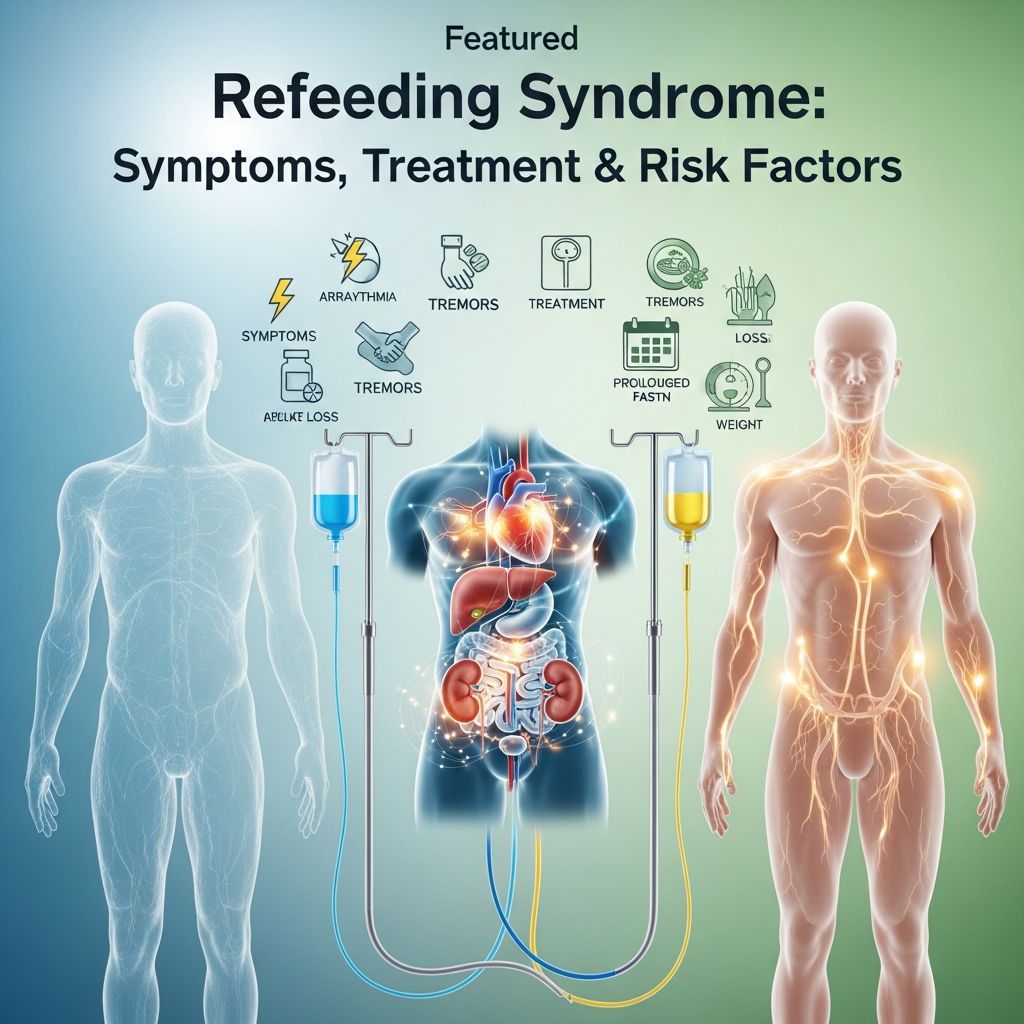
Understanding Refeeding Syndrome
Refeeding syndrome is a potentially life-threatening condition that can occur when someone who has been malnourished or starved begins eating again. While refeeding is a necessary step in treating malnutrition, the process itself can trigger dangerous metabolic complications if not managed carefully. This condition develops because of the profound changes your body undergoes during periods of nutrient deprivation and the challenges it faces when attempting to reverse those changes.
When your body is deprived of adequate nutrition, it adapts by entering a state of reduced metabolic activity. Your cells change how they function, your organs operate at diminished capacity, and your body chemistry shifts significantly. When refeeding begins, your body must essentially reverse all of these adaptations simultaneously. However, this rapid metabolic transition can overwhelm your system, leading to severe imbalances in electrolytes and other essential substances. The most critical aspect of refeeding syndrome is that it represents a paradoxical situation: the treatment for malnutrition—providing food and nutrients—can itself become dangerous if implemented too quickly or without appropriate medical supervision.
What Causes Refeeding Syndrome
The underlying mechanism of refeeding syndrome centers on severe electrolyte and micronutrient deficiencies that develop during periods of malnutrition. When someone is malnourished, their body becomes depleted of essential minerals and nutrients that are crucial for cellular function. The most common nutrients involved in refeeding syndrome include phosphorus, potassium, and magnesium—all critical electrolytes that regulate cellular processes throughout the body.
During malnutrition, your body’s stores of these electrolytes become severely depleted, even though the total amount of these substances in your body may appear normal on the surface. This occurs because these nutrients shift their location within your body, accumulating outside your cells rather than inside them where they’re needed. When refeeding begins, your body starts metabolizing nutrients again, which triggers a process that demands these electrolytes. Your cells desperately pull these scarce micronutrients from their already-depleted stores, causing dramatic shifts in your body chemistry.
The process is initiated by glucose reintroduction during refeeding. When you begin consuming carbohydrates after a prolonged period of starvation, your pancreas responds by releasing insulin. This insulin surge causes potassium and phosphorus to shift rapidly into your cells in an attempt to metabolize the glucose. However, because your total body stores of these electrolytes are already severely depleted, this intracellular shift creates a critical deficiency in your bloodstream, leading to the characteristic electrolyte imbalances of refeeding syndrome.
Risk Factors for Refeeding Syndrome
Certain individuals face higher risks of developing refeeding syndrome than others. Understanding these risk factors is essential for healthcare providers to identify patients who require especially careful monitoring and medical supervision during the refeeding process.
Risk factors include:
– Prolonged periods of inadequate food intake or complete starvation- Severe eating disorders, particularly anorexia nervosa and bulimia nervosa- Conditions affecting nutrient absorption, such as celiac disease or inflammatory bowel disease- Chronic alcoholism or substance abuse- Severe illness or critical care hospitalization- Uncontrolled diabetes or other metabolic disorders- Elderly individuals with poor nutritional intake- Body mass index below 70% of ideal body weight- Rapid weight loss over a short period- Conditions causing chronic diarrhea or vomiting
Patients with extremely low body mass or those who have been malnourished for extended periods face particularly high risks. Additionally, individuals with eating disorders requiring hospitalization represent a particularly vulnerable population, as do those recovering from severe illness or malnutrition-related complications.
Related Stories



Symptoms and Manifestations of Refeeding Syndrome
Refeeding syndrome can manifest through various physiological changes affecting multiple body systems. The specific symptoms experienced depend on which electrolytes become severely depleted and which organ systems are most affected.
Phosphorus Deficiency (Hypophosphatemia)
Phosphorus deficiency is the most common feature of refeeding syndrome. Phosphate plays a critical role in cellular energy metabolism, and its deficiency can affect virtually every cell in your body. Symptoms of hypophosphatemia include muscle weakness and pain, respiratory distress from muscular dysfunction affecting breathing muscles, confusion and altered mental status, seizures in severe cases, and rhabdomyolysis (breakdown of muscle tissue).
Thiamine Deficiency
Thiamine (vitamin B1) deficiency is particularly triggered when refeeding involves significant carbohydrate intake. This deficiency can result in severe neurological symptoms including Wernicke encephalopathy, characterized by confusion, eye movement abnormalities, and poor coordination, as well as Korsakoff syndrome, which causes memory problems and confusion. Peripheral neuropathy may develop, causing numbness and tingling in extremities.
Electrolyte Imbalances
Beyond phosphorus, refeeding can cause severe deficiencies in potassium (hypokalemia) and magnesium (hypomagnesemia). These electrolytes are essential for heart rhythm regulation, nerve function, and muscle contraction. Deficiencies can lead to dangerous cardiac arrhythmias, muscle weakness, and neurological symptoms.
Fluid and Sodium Imbalances
Metabolic changes during refeeding can disrupt the balance of sodium and water in your body, leading to either fluid overload or dehydration. Fluid overload can cause dependent edema (swelling in legs and feet), pulmonary edema (fluid in the lungs), congestive heart failure, or weight gain despite malnutrition. Alternatively, dehydration can cause hypotension (low blood pressure), dizziness, and organ dysfunction.
Glucose Metabolism Changes
Reintroducing glucose during refeeding can lead to hyperglycemia (high blood sugar), causing elevated blood sugar levels, increased thirst and urination, fatigue, and in severe cases, hyperglycemic crises.
Cardiovascular Complications
Cardiovascular manifestations are among the most concerning aspects of refeeding syndrome. These can include cardiac arrhythmias ranging from mild irregular heartbeats to life-threatening rhythm disturbances, hypotension and shock, sudden cardiac death in the most severe cases, and congestive heart failure.
Most cases of refeeding syndrome occur within the first five days of refeeding, making this period particularly critical for monitoring and early intervention.
Diagnosis and Medical Monitoring
Proper diagnosis of refeeding syndrome requires careful medical assessment and laboratory evaluation. Before beginning refeeding, healthcare providers will conduct comprehensive blood tests to measure baseline electrolyte levels and identify any existing deficiencies. This initial assessment is crucial for developing an appropriate refeeding protocol tailored to each patient’s specific needs.
During the refeeding process, healthcare teams monitor patients closely for any signs or symptoms of refeeding syndrome. This monitoring includes:
– Regular vital sign checks (heart rate, blood pressure, respiratory rate, temperature)- Daily electrolyte level measurements, particularly phosphorus, potassium, and magnesium- Continuous cardiac monitoring in high-risk patients- Input and output tracking to monitor fluid balance- Blood glucose monitoring- Neurological assessments- Kidney function tests- Urinalysis
If any abnormalities or symptoms appear during monitoring, healthcare providers conduct further investigation through blood tests to identify the specific imbalances and their severity. This allows for rapid intervention before complications become life-threatening.
Treatment and Management Strategies
The treatment of refeeding syndrome focuses on correcting electrolyte imbalances and adjusting the refeeding protocol to prevent further complications. When refeeding syndrome is recognized, healthcare teams can take several corrective measures:
Electrolyte Replacement
Missing micronutrients are replenished through both oral supplementation and intravenous administration. Healthcare providers prioritize replacing deficient electrolytes before introducing large amounts of carbohydrates. Phosphorus, potassium, magnesium, and thiamine are carefully supplemented to restore adequate levels.
Adjusted Refeeding Protocol
If refeeding syndrome symptoms appear, healthcare teams slow down the refeeding process. The amount of carbohydrates in the nutritional formula is reduced to decrease the insulin surge and its associated electrolyte shifts. Initial refeeding typically begins with lower caloric intake, often starting with 1,500 to 2,000 mL per day of caloric drinks, rather than free water.
Intravenous Therapy
Healthcare providers may replace missing nutrients through intravenous administration directly into the bloodstream. This ensures that critical electrolytes reach cells where they’re needed most, bypassing any absorption issues and providing more rapid correction of severe deficiencies.
Hospitalization and Monitoring
Patients at high risk or those showing signs of refeeding syndrome require hospitalization for continuous monitoring. In cases involving cardiac complications or severe electrolyte abnormalities, patients may require intensive care unit admission with telemetric cardiac monitoring until heart rhythm normalizes and heart rate returns to safe levels.
Although recognition of refeeding syndrome allows for immediate correction, the overall refeeding process takes considerably longer. It may take several weeks to fully treat the original micronutrient deficiencies and restore your body to nutritional health. However, once healthcare teams correct the imbalances involved, most symptoms are reversible, and long-term outcomes are generally favorable.
Prognosis and Complications
The prognosis for refeeding syndrome depends on early recognition and appropriate medical management. When refeeding syndrome is identified early and treated promptly, most patients recover completely without lasting effects. However, delayed recognition or inadequate treatment can lead to serious complications.
Potential complications include severe cardiac arrhythmias, respiratory failure requiring mechanical ventilation, seizures, rhabdomyolysis and acute kidney injury, sepsis, and in the most extreme cases, sudden death. However, serious complications are relatively uncommon when refeeding syndrome is recognized and managed appropriately. Fortunately, refeeding syndrome is largely preventable through careful medical monitoring and appropriate nutritional protocols.
Prevention Strategies
While it’s not always possible to avoid the need for refeeding, you can take certain precautions to minimize refeeding syndrome risk:
– Seek medical supervision for all refeeding after significant malnutrition- Undergo comprehensive blood testing before beginning refeeding- Follow medically-prescribed refeeding protocols carefully- Begin with lower caloric intake and increase gradually- Prioritize electrolyte supplementation before carbohydrate introduction- Maintain regular monitoring throughout the refeeding process- Report any unusual symptoms immediately to healthcare providers- Follow dietary recommendations without attempting to accelerate weight gain
The Importance of Medical Supervision
Refeeding is a delicate and complex process that should ideally be medically supervised. Refeeding syndrome represents a complication of treatment for an already-stressful condition for your body. While it may seem counterintuitive, too much nutritional intervention too quickly can actually be harmful. During medical refeeding, your healthcare team will monitor you closely, work to prevent refeeding syndrome, and be prepared to manage it immediately if symptoms develop.
This medical oversight ensures that your body receives the nutrition it desperately needs while protecting it from the dangerous metabolic complications that can arise when refeeding is not properly controlled. Your healthcare team understands that the goal is not just to restore nutrition, but to do so safely and sustainably, allowing your body time to adapt and recover.
Frequently Asked Questions
Q: How quickly can refeeding syndrome develop?
A: Refeeding syndrome typically occurs within the first five days of refeeding, making this period especially critical for close monitoring and early detection of any complications.
Q: Can refeeding syndrome be prevented?
A: Yes, refeeding syndrome is largely preventable through medical supervision, appropriate electrolyte supplementation, gradual caloric increases, and careful monitoring of electrolyte levels during the refeeding process.
Q: Who is most at risk for refeeding syndrome?
A: Individuals with severe eating disorders, prolonged starvation, critical illness, extremely low body mass, or chronic malabsorption conditions face the highest risk of developing refeeding syndrome.
Q: Is refeeding syndrome reversible?
A: Yes, most symptoms of refeeding syndrome are reversible once healthcare teams correct the underlying electrolyte imbalances. However, severe complications can be life-threatening if not treated promptly.
Q: How long does refeeding take?
A: While initial stabilization may take days to a few weeks, complete nutritional restoration and correction of micronutrient deficiencies typically takes several weeks to months, depending on the severity of initial malnutrition.
Q: What role does thiamine play in refeeding?
A: Thiamine is essential for carbohydrate metabolism. Thiamine deficiency can develop during refeeding with high carbohydrate loads, potentially causing severe neurological complications including Wernicke encephalopathy.
References
- Refeeding Syndrome: Symptoms, Treatment & Risk Factors — Cleveland Clinic. 2024. https://my.clevelandclinic.org/health/diseases/23228-refeeding-syndrome
- Recognizing and Managing Medical Consequences of Eating Disorders — Cleveland Clinic Journal of Medicine. 2014. https://www.ccjm.org/content/ccjom/81/4/255.full.pdf
- Hypophosphatemia in a Patient with an Eating Disorder — Cleveland Clinic Journal of Medicine. 2022. https://www.ccjm.org/content/89/11/625
- Malnutrition: Definition, Causes, Symptoms & Treatment — Cleveland Clinic. 2024. https://my.clevelandclinic.org/health/diseases/22987-malnutrition
- Medical Stabilization of Adolescents with Nutritional Insufficiency — PubMed Central. 2016. https://pubmed.ncbi.nlm.nih.gov/26597679/
- Anorexia Nervosa: What It Is, Signs & Symptoms, & Treatment — Cleveland Clinic. 2024. https://my.clevelandclinic.org/health/diseases/9794-anorexia-nervosa
Similar Articles








Read full bio of medha deb