Refractive Surgery: Comprehensive Guide For 2025
Discover how refractive surgery corrects vision errors like myopia and hyperopia, exploring procedures, benefits, and recovery for glasses-free sight.
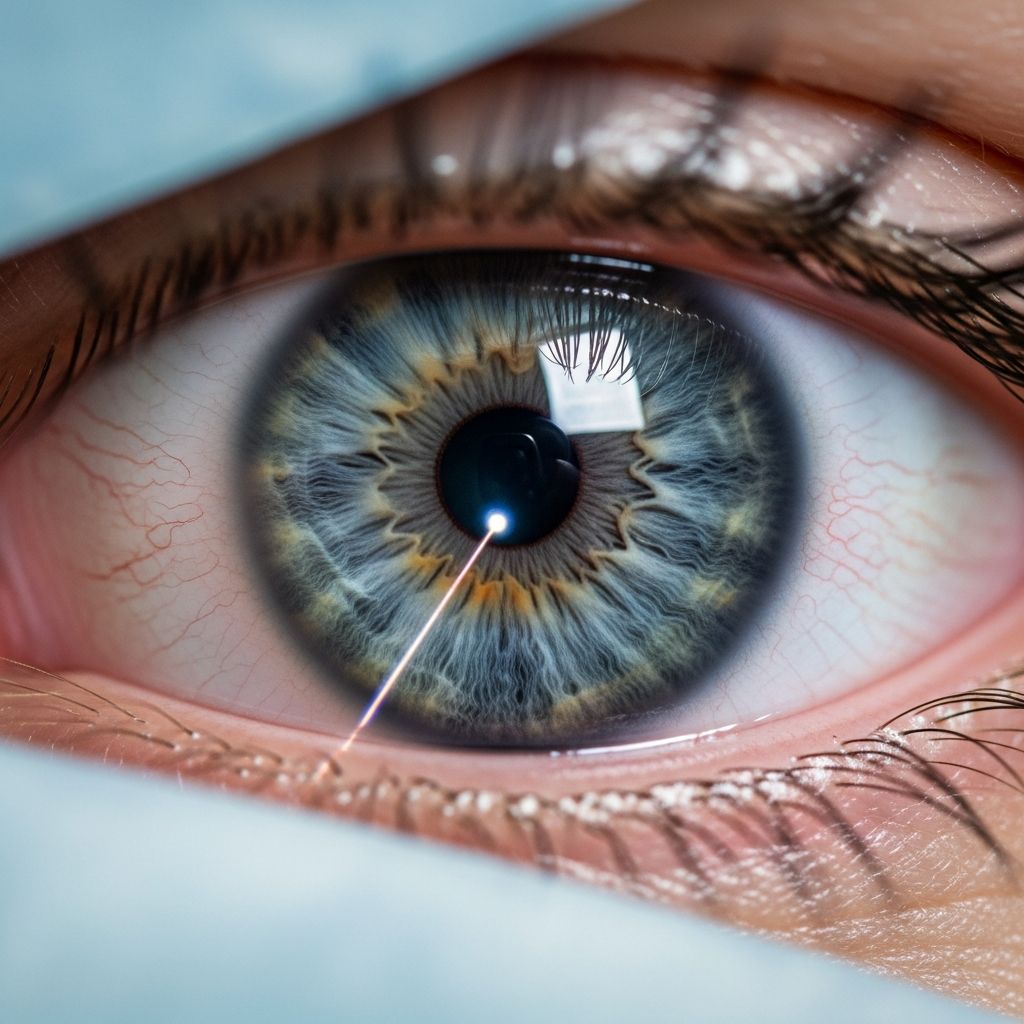
Refractive surgery encompasses a variety of procedures designed to reshape the eye’s focusing power, primarily by altering the cornea or lens, to correct common vision impairments and reduce reliance on glasses or contact lenses. These surgeries address refractive errors where light does not focus properly on the retina, leading to blurred vision.
Understanding Refractive Errors
Refractive errors occur when the eye’s shape prevents light from bending correctly onto the retina. The four primary types include myopia (nearsightedness), where distant objects appear blurry due to the eyeball being too long or the cornea too curved; hyperopia (farsightedness), where near vision is affected because the eyeball is shorter or the cornea flatter; astigmatism, caused by an irregularly shaped cornea or lens creating distorted vision at all distances; and presbyopia, an age-related loss of near focusing ability.
These conditions affect millions worldwide, often managed initially with corrective lenses. However, for those seeking permanent solutions, refractive surgery offers targeted interventions.
Primary Categories of Refractive Procedures
Refractive surgeries fall into two main groups: corneal surgeries, which modify the cornea’s surface or thickness, and lens-based surgeries, which involve implanting or replacing the eye’s natural lens. Corneal methods dominate due to their minimally invasive nature, while lens approaches suit specific cases like high prescriptions or corneal issues.
- Corneal surgeries: Use lasers or incisions to reshape the clear front layer of the eye.
- Lens surgeries: Involve intraocular lenses (IOLs) for patients unsuitable for corneal work.
Popular Laser-Based Corneal Surgeries
LASIK: The Gold Standard Procedure
Laser-Assisted In Situ Keratomileusis (LASIK) is the most performed refractive surgery, with nearly 18 million cases globally. A femtosecond laser or microkeratome creates a thin corneal flap, which is lifted to allow an excimer laser to reshape the underlying stroma. The flap is then repositioned, healing naturally without stitches. This corrects myopia, hyperopia, and astigmatism with rapid recovery—often clear vision within hours.
Ideal for moderate errors, LASIK boasts high success rates and minimal discomfort. Patients typically resume normal activities in 1-2 days.
PRK: Surface Ablation for Thin Corneas
Photorefractive Keratectomy (PRK) removes the epithelium (outer corneal layer) entirely before excimer laser ablation of the surface. No flap is created, making it safer for thin corneas, active lifestyles, or irregular surfaces. Healing takes longer (3-7 days for epithelium regrowth, weeks for full vision), but outcomes match LASIK for mild to moderate errors.
PRK variants like LASEK and Epi-LASIK preserve epithelium temporarily for potentially less pain.
SMILE: Minimally Invasive Alternative
Small Incision Lenticule Extraction (SMILE) uses a femtosecond laser to create and extract a lenticule within the cornea through a tiny 2-4 mm incision—no flap needed. This flapless method reduces dry eye risk and suits myopia/astigmatism correction. Recovery mirrors LASIK, with strength preserved for contact sports.
Related Stories



Incisional and Thermal Techniques
Older methods like Radial Keratotomy (RK) involve precise diamond scalpel incisions in a spoke-like pattern to flatten the cornea for myopia. Though effective historically, RK risks progressive weakening and has largely been supplanted by lasers.
Astigmatic Keratotomy (AK) makes arcuate cuts to regularize corneal shape for astigmatism. Conductive Keratoplasty (CK) applies radiofrequency to shrink collagen, steepening the cornea for hyperopia or presbyopia—non-incisional and outpatient.
Lens-Based Refractive Options
Implantable Collamer Lenses (ICL)
Phakic Intraocular Lenses (PIOL/ICL) are implanted behind the iris without removing the natural lens, ideal for high myopia/hyperopia or thin corneas. Reversible and preserving accommodation, ICLs offer excellent quality vision.
Refractive Lens Exchange (RLE)
RLE replaces the natural lens with a multifocal or monofocal IOL, mimicking cataract surgery. Best for presbyopia, hyperopia, or high errors in older patients (40+), it prevents future cataracts but risks retinal detachment.
Patient Eligibility and Preoperative Assessment
Not everyone qualifies. Candidates are typically 18-40 (stable prescription for 1+ year), healthy eyes (no keratoconus, severe dry eye, thin corneas <500 microns), and realistic expectations. Comprehensive exams measure corneal thickness, pupil size, tear film, and topography.
| Factor | Ideal Candidate | Contraindications |
|---|---|---|
| Age | 21-40 years | <18 or unstable Rx |
| Prescription | Mild-moderate | High (>-12D myopia) |
| Cornea | Thick enough | Thin or diseased |
| Health | No systemic issues | Autoimmune, pregnancy |
Procedure Day: What to Expect
Outpatient surgeries last 10-30 minutes per eye. Numbing drops, mild sedation, eye fixation on a light—painless during but possible afterward. Post-op: protective shields, antibiotics/steroids, frequent checkups.
Recovery Timelines and Tips
- LASIK/SMILE: Vision improves same day; avoid rubbing eyes, swimming 1-2 weeks, full stability 1-3 months.
- PRK: Bandage contact for 4-5 days; discomfort peaks days 2-3, vision stabilizes 1-3 months.
- Lens procedures: Quick visual gains, but adaptation to multifocals takes weeks.
Common advice: rest, UV protection, no makeup/driving until cleared. 95%+ achieve 20/40 or better uncorrected.
Potential Risks and Complications
Though safe (complication rate <1%), risks include dry eyes (temporary), halos/night glare, under/overcorrection (enhanceable), flap issues (LASIK), infection, or ectasia. Long-term: most stable, but presbyopia progresses with age.
Choosing experienced surgeons minimizes risks. Discuss personal odds during consults.
Financial Aspects and Insurance
Elective, rarely insured (except post-cataract astigmatism). Costs: $2,000-$5,000 per eye, varying by tech/location. Financing, FSAs/HSAs common. Weigh lifetime lens savings.
Latest Advances in Refractive Surgery
Wavefront-guided/Custom LASIK uses 3D eye mapping for aberration correction, enhancing contrast. Topography-guided for irregular corneas. Femtosecond lasers improve precision. Future: corneal inlays for presbyopia, gene therapy adjuncts.
Frequently Asked Questions (FAQs)
Is refractive surgery painful?
No—numbing drops ensure comfort during; mild discomfort post-op managed with drops/meds.
How long does vision last after surgery?
Lifelong for many, but age-related changes may require enhancements or reading glasses.
Can both eyes be done same day?
Yes, sequentially for safety.
Who isn’t a good candidate?
Those with unstable vision, certain diseases, or unrealistic goals.
What’s the difference between LASIK and PRK?
LASIK creates a flap (faster recovery); PRK removes surface (safer for thin corneas).
Choosing the Right Surgeon and Clinic
Seek board-certified ophthalmologists with high volumes (1,000+ cases/year), advanced tech, transparent outcomes. Reviews, consultations, before/after stats guide decisions. FDA-approved lasers standard.
References
- Types of Eye Surgery for Refractive Errors — University of Rochester Medical Center. 2023. https://www.urmc.rochester.edu/encyclopedia/content?contentid=P00515&contenttypeid=85
- Refractive Surgery: What Is It and Why Should You Consider It? — TLC Coral Gables. 2021-10-22. https://www.tlccoralgables.com/2021/10/22/refractive-surgery-what-is-it-and-why-should-you-consider-it/
- Refractive Surgery — Blue Cross NC Providers. 2024. https://www.bluecrossnc.com/providers/policies-guidelines-codes/commercial/surgery/updates/refractive-surgery
- Refractive Surgery: Types, Benefits, and Treatment Procedure — Dr. Agarwal’s Eye Hospital. 2024. https://www.dragarwal.com/eye-treatment/refractive-surgery/
- Basic Knowledge of Refractive Surgery — PMC/NIH. 2009-06-01. https://pmc.ncbi.nlm.nih.gov/articles/PMC2696744/
- Types of Refractive Surgery — Seattle EyeCare Doctor. 2024. https://seattleeyecaredoctor.com/types-of-refractive-surgery/
- Refractive Surgery: Types, Benefits, Risks & Recovery — Cleveland Clinic. 2024. https://my.clevelandclinic.org/health/treatments/8608-vision-correction-surgery
Similar Articles








Read full bio of medha deb