Refrigerate Promptly, Properly: 8 Essential Food Storage Tips
Master safe food refrigeration to prevent bacterial growth, reduce food poisoning risks, and extend freshness of perishables.
Refrigeration serves as a vital tool for preserving perishable foods by slowing bacterial growth and minimizing food poisoning risks. Maintaining your refrigerator at or below 40°F keeps foods out of the temperature danger zone—40°F to 140°F—where bacteria multiply rapidly.
Use a refrigerator thermometer placed near the front for easy monitoring to ensure consistent safe temperatures. Freezers should stay at 0°F or below, verified with an appliance thermometer, to extend shelf life further. Proper refrigeration not only enhances safety but also retains nutrients, flavor, and quality while stretching your food budget.
The Temperature Danger Zone
The
temperature danger zone
spans 40°F to 140°F, the range where harmful bacteria like Salmonella and E. coli thrive and double in number every 20 minutes. Foods left in this zone too long become unsafe, even if they appear, smell, or taste fine.- Perishable groceries, prepared ingredients, and leftovers should not sit at room temperature longer than
two hours
. - In hot weather (90°F or above), reduce this to
one hour
to limit bacterial proliferation. - Shop for refrigerated and frozen items last, transport them home quickly, and store immediately to avoid extended exposure.
Overloading the fridge hinders cold air circulation, raising internal temperatures and compromising safety. Keep doors closed as much as possible and avoid blocking vents.
Refrigerator Basics for Safety
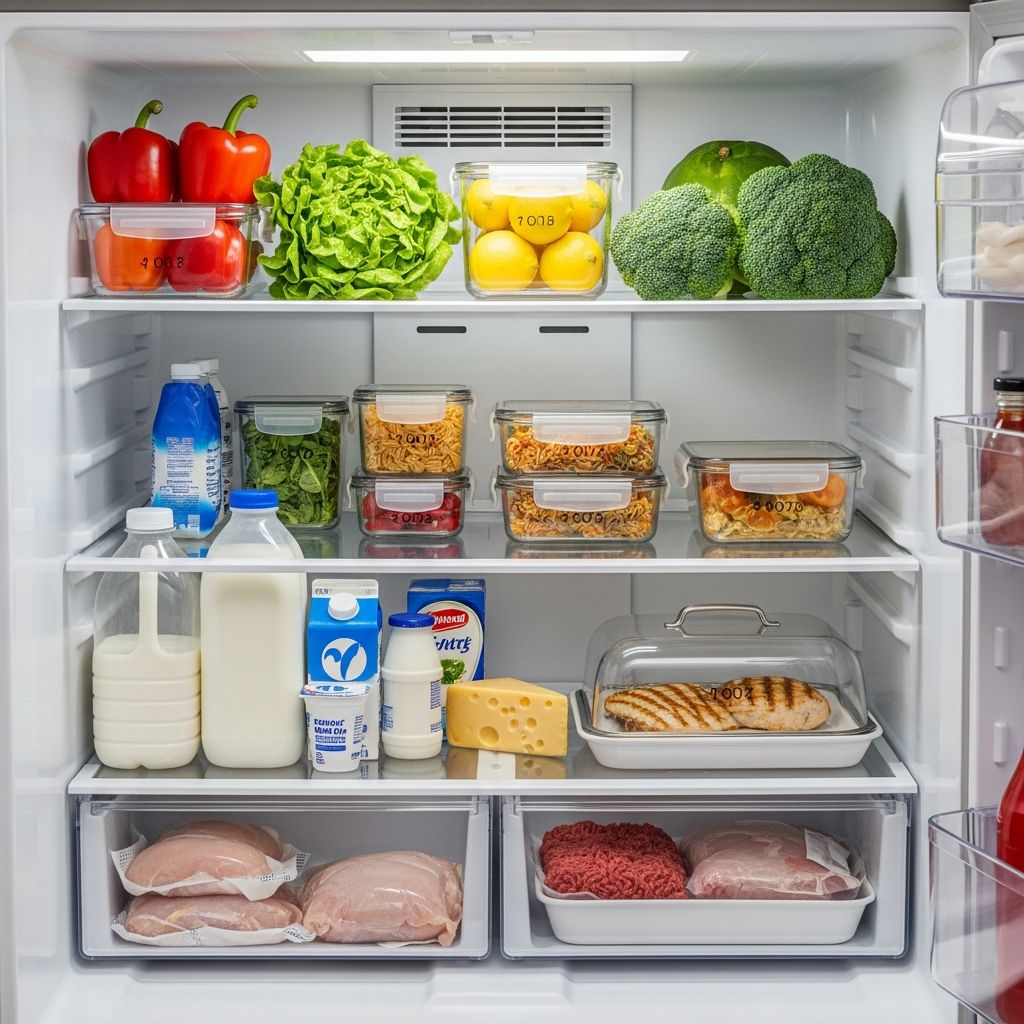
Optimal refrigerator performance starts with temperature control and organization. Set and monitor at 40°F or below; the back shelves and lowest areas are typically coldest.
- Install a thermometer in the front for regular checks.
- Clean weekly: Discard questionable items—when in doubt, throw them out to prevent foodborne illness.
- For moldy food, seal in a bag before disposal, clean the container and fridge surfaces, and inspect nearby items, especially produce.
Store food in appropriate containers: Use original packaging if resealable; otherwise, opt for airtight ones to prevent moisture loss, odor absorption, and contamination. Schedule weekly fridge checks using tools like the FoodKeeper app for precise storage timelines.
Storing Meat, Poultry, and Fish
Raw meats pose high contamination risks due to juices that can drip onto ready-to-eat foods. Always place packages in a separate plastic bag, bowl, or pan on the
lowest shelf
, the coldest spot.| Food Type | Storage Location | Max Fridge Time |
|---|---|---|
| Raw Meat, Poultry, Fish | Bottom shelf in container | 1-2 days |
| Ground Meats | Bottom shelf | 1-2 days |
| Cooked Leftovers | Middle/upper shelves | 3-4 days |
Discard if off-odor, slimy, sticky, or discolored. Wrap tightly or use sealed containers to contain juices. For large cuts, portion into smaller pieces for faster cooling.
Produce Storage Tips
Crisper drawers maintain humidity for freshness. Separate fruits from vegetables—fruits emit
ethylene gas
, accelerating spoilage in veggies.- Refrigerate cut, peeled, or cooked produce immediately.
- Room-temperature options: Whole citrus, melons, potatoes, onions (but refrigerate cut pieces).
- Wash produce before storage in breathable bags to retain moisture without sogginess.
Check ethylene-sensitive items like leafy greens, broccoli, and apples frequently; store away from bananas and tomatoes.
Fresh Dairy Products
Dairy requires the coldest spots to prevent spoilage. Store milk, yogurt, and cheese at the
back of the fridge
; avoid doors where temperatures fluctuate.Related Stories



- Milk: Back of bottom shelf; never return poured milk to original carton to avoid contamination.
- Yogurt: Tight lid, interior shelf, safe up to 10 days past sell-by date.
- Eggs: Original carton in center (not door) for consistent cold.
- Cheese: Wrap tightly to prevent drying and odor absorption.
Cover all dairy to block odors; discard if moldy or off-smelling.
Grains and Canned Foods
Whole grains store best airtight: 3-6 months pantry or 6-8 months freezer. Opened cans transfer to covered glass/plastic containers; flavor may alter if left in can.
- Rice, pasta: Cool completely before refrigerating in airtight bags.
- Canned goods: Refrigerate opened veggies, fruits, or proteins promptly; use within 3-4 days.
Avoid cross-contamination by labeling with dates.
Handling Leftovers Safely
Leftovers are prime food poisoning culprits if mishandled. Refrigerate within two hours (one in heat); divide large portions into shallow containers for rapid cooling.
- Date containers and place at fridge front for quick use.
- Discard after
four days
in fridge; freeze for longer. - Reheat to 165°F internal temperature, verified with thermometer.
- Minimize air in storage bags; handle minimally.
For buffets or holidays, discard perishables after two hours out.
Special Cases: Mini-Fridges and Surprises
Mini-fridges demand extra vigilance: Avoid overpacking, store perishables centrally (not door), and clean regularly. Leftovers safe 3-4 days.
Unexpected refrigeration needs: Tortillas, salami, ripe bananas, nuts, maple syrup, dried fruit, ketchup—extend freshness up to six months.
Frequently Asked Questions (FAQs)
Q: How long can food sit out before refrigerating?
A: No more than two hours at room temperature; one hour if over 90°F.
Q: What’s the ideal fridge temperature?
A: 40°F or below; freezer at 0°F or below. Use thermometers.
Q: Where to store raw meat?
A: Bottom shelf in a container to prevent drips.
Q: How long do leftovers last?
A: 3-4 days in fridge; discard after four days max.
Q: Can I refreeze thawed food?
A: Safe if thawed in fridge; quality may decline.
Q: Why separate fruit and veggies?
A: Ethylene gas from fruit speeds veggie spoilage.
Implementing these practices ensures family health, reduces waste, and maximizes food quality. Regular maintenance and vigilance are key to safe refrigeration.
References
- Refrigerate Promptly and Properly — Academy of Nutrition and Dietetics. 2023. https://www.eatright.org/food/home-food-safety/safe-food-storage/refrigerate-promptly-and-properly
- Refrigerate — The Basics — Academy of Nutrition and Dietetics. 2023. https://www.eatright.org/food/home-food-safety/safe-food-storage/refrigerate—the-basics
- Maximize Food Safety in a Mini-Fridge — Academy of Nutrition and Dietetics. 2023. https://www.eatright.org/food/home-food-safety/safe-food-storage/maximize-food-safety-in-a-mini-fridge
- Leftover Safety — Academy of Nutrition and Dietetics. 2023. https://www.eatright.org/food/home-food-safety/safe-food-storage/leftover-safety
- Does Your Refrigerator Need a Makeover? — Academy of Nutrition and Dietetics. 2023. https://www.eatright.org/food/home-food-safety/safe-food-storage/does-your-refrigerator-need-a-makeover
Similar Articles








Read full bio of medha deb