Refrigeration Basics: Comprehensive Guide To Safe Food Storage
Master essential refrigeration techniques to keep food safe, fresh, and flavorful while minimizing waste and foodborne illness risks.
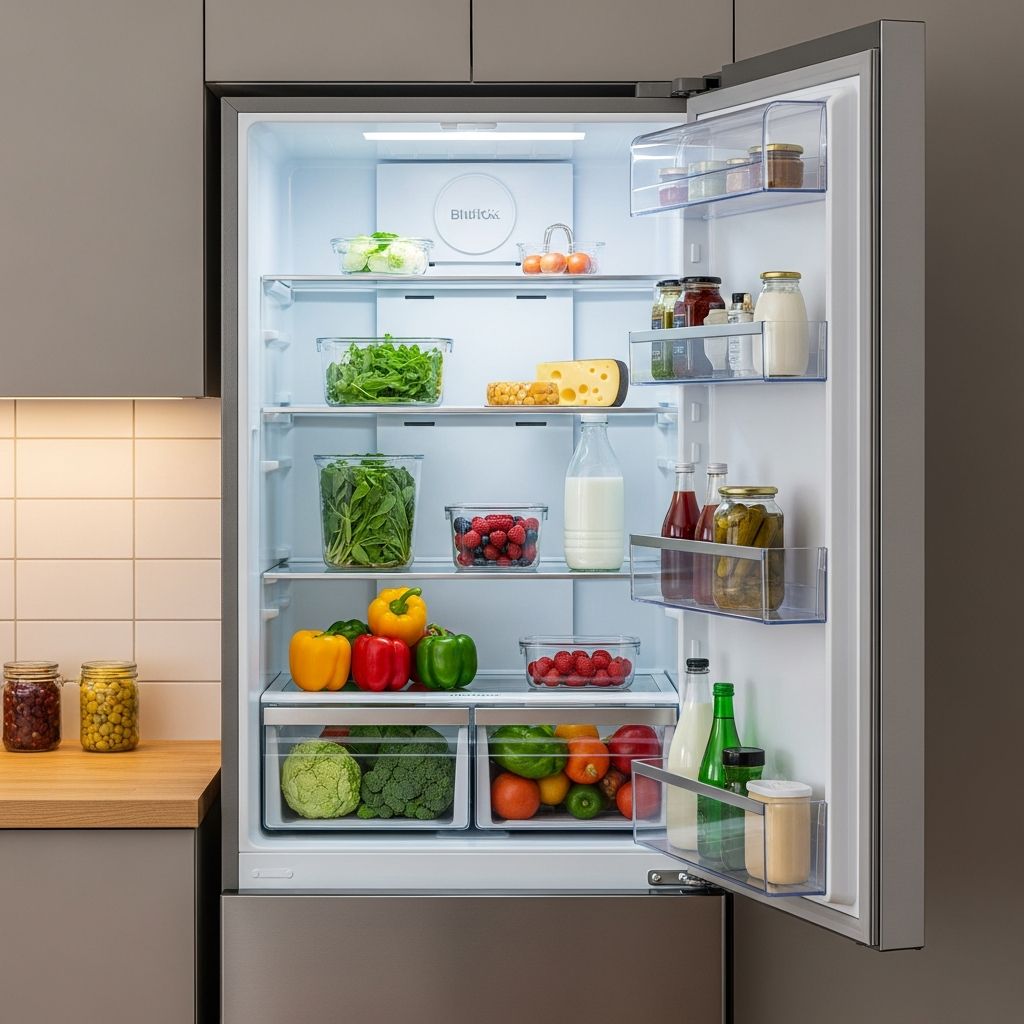
Proper refrigeration is a cornerstone of home food safety, helping to slow bacterial growth and preserve the quality, nutrients, and flavor of perishable foods. By maintaining your refrigerator at the correct temperature and following specific storage guidelines for different food types, you can significantly reduce the risk of foodborne illness while stretching your food budget and minimizing waste.
When foods are stored correctly in the right containers, at the optimal temperature, and for appropriate durations, they remain safe to eat longer. This guide covers fundamental principles for refrigerating meats, produce, grains, canned goods, and leftovers, drawing from expert recommendations by registered dietitian nutritionists.
In the Fridge
Your refrigerator acts as the first line of defense against the ‘danger zone’—the temperature range between 40°F and 140°F where harmful bacteria like Salmonella and E. coli multiply rapidly. To keep perishable items out of this risky zone, implement these core practices:
- Keep your refrigerator below 40°F. This temperature inhibits bacterial growth effectively. Invest in a refrigerator thermometer placed in the front for easy monitoring, and avoid prolonged door openings to maintain consistent cooling.
- Leave food in its original store wrapping if unopened and resealable; otherwise, transfer to airtight containers to prevent moisture loss, odor absorption, and contamination.
- Store food quickly. Perishables should not sit at room temperature longer than two hours (or one hour if ambient temperature exceeds 90°F), as bacteria can double in number every 20 minutes in the danger zone.
- Avoid overloading. Allow space for cold air circulation to ensure even cooling; overcrowding raises internal temperatures.
- Clean weekly. Remove expired or questionable items promptly—’when in doubt, throw it out.’ For moldy foods, discard in sealed bags to contain spores, then sanitize affected shelves and containers. Mold spreads quickly, especially on produce.
Regular maintenance like these steps not only enhances safety but also optimizes nutrient retention. For instance, vitamins in fruits and vegetables degrade faster in warmer, humid conditions.
Meat, Poultry and Fish
Raw animal proteins are among the most perishable refrigerator items, prone to pathogens like Listeria if mishandled. Proper storage prevents cross-contamination and extends usability.
- Place packages in a separate plastic bag, bowl, or pan on the lowest shelf—the coldest spot—to catch potential drips and avoid contaminating ready-to-eat foods above.
- Use within 1-2 days of purchase. Discard if you notice off odors, sliminess, or discoloration, as these signal spoilage.
According to USDA-aligned guidelines, refrigerating ground meats at 40°F or below can maintain safety for 1-2 days, while whole cuts last slightly longer. Always thaw frozen meats in the fridge, not on the counter, to prevent partial warming into the danger zone.
Produce
Fruits and vegetables require humidity control to stay crisp and flavorful. Improper storage accelerates ethylene-induced ripening and spoilage.
- Store in crisper drawers to retain moisture. Separate fruits from vegetables, as fruits emit ethylene gas that hastens vegetable decay.
- Refrigerate all cut, peeled, or cooked produce immediately. Whole items like citrus, melons, and potatoes can often stay at room temperature, but once cut, they must chill.
For optimal results, adjust crisper humidity settings: high for leafy greens (95%+ humidity) and low for apples or peppers. This can double storage life, per extension service charts.
Grains and Canned Foods
Dry goods and opened cans benefit from refrigeration to combat rancidity and flavor changes.
Related Stories



- Whole-grain flours in airtight containers last 3-6 months in a cool pantry or 6-8 months frozen/refrigerated.
- Opened canned foods should transfer to covered glass or plastic containers; refrigerating in the original can is okay short-term but may impart metallic tastes.
Grains like oats or rice, once opened, absorb pantry odors easily—refrigeration preserves texture and nutrition.
Leftovers
Leftovers are a common food poisoning source if not handled swiftly. Prompt refrigeration is key.
- Refrigerate within 2 hours (1 hour in hot weather) to avoid the danger zone.
- Divide large batches into shallow containers (less than 2 inches deep) for rapid cooling—hot food warms the fridge if piled high.
- Date and prioritize: Place at the front for quick use; discard after 4 days.
- Remove air from storage bags to extend freshness; freeze extras beyond 4 days.
Reheat to 165°F internal temperature, verified by thermometer, to kill surviving bacteria.
Food Storage Times
Refer to this table for refrigerator guidelines based on expert charts. Times assume 40°F or below.
| Food Type | Refrigerator Storage (Days) | Notes |
|---|---|---|
| Raw Poultry | 1-2 | Bottom shelf only |
| Ground Meat | 1-2 | Check for slime/odor |
| Fresh Fish | 1-2 | Use airtight wrap |
| Eggs (in shell) | 3-5 weeks | Original carton |
| Leftovers | 3-4 | Reheat to 165°F |
| Cooked Ham | 3-5 | Shallow containers |
| Opened Canned Soup | 3-4 | Transfer to clean container |
These timelines prioritize safety; quality may decline sooner.
Frequently Asked Questions (FAQs)
Should I refrigerate bread?
Bread stales faster in the fridge due to dry air. Store at room temp in a breadbox or freeze slices for longer life.
How do I know if my fridge is cold enough?
Use an appliance thermometer; aim for 37-40°F. Check multiple spots weekly.
Can I refreeze thawed meat?
Yes, if thawed in the fridge and still cold (below 40°F). Quality may suffer.
What if food smells fine but looks moldy?
Discard it—visible mold indicates deeper contamination, especially in soft foods.
Why separate fruits and veggies?
Ethylene from fruits speeds veggie spoilage; crisper separation maintains freshness.
References
- Refrigerate — The Basics — Academy of Nutrition and Dietetics. 2023. https://www.eatright.org/food/home-food-safety/safe-food-storage/refrigerate—the-basics
- Leftover Safety — Academy of Nutrition and Dietetics. 2023. https://www.eatright.org/food/home-food-safety/safe-food-storage/leftover-safety
- Refrigerate Promptly and Properly — Academy of Nutrition and Dietetics. 2023. https://www.eatright.org/food/home-food-safety/safe-food-storage/refrigerate-promptly-and-properly
- Freezing 101 — Academy of Nutrition and Dietetics. 2023. https://www.eatright.org/food/home-food-safety/safe-food-storage/freezing-101
- Safe Home Food Storage Chart — Texas A&M AgriLife Extension Service. 2020-04-01. https://taylor.agrilife.org/files/2020/04/safe-home-food-storage-chart.pdf
Similar Articles








Read full bio of Sneha Tete