Rehabilitation Nurse: Role, Responsibilities, and Impact
Discover the vital role rehabilitation nurses play in patient recovery and independence.
Rehabilitation Nurse: Role, Responsibilities, and Impact on Patient Recovery
Rehabilitation nursing represents a specialized and critical discipline within healthcare that focuses on helping patients recover from illness, injury, or surgery and regain their independence. Rehabilitation nurses work across various settings—from acute rehabilitation facilities to nursing homes, outpatient clinics, and home care environments—playing a pivotal role in the multidisciplinary team that supports patients through their healing journey. These skilled healthcare professionals combine clinical expertise with compassion, providing comprehensive care that extends beyond physical recovery to include emotional support, education, and family involvement.
The primary mission of rehabilitation nursing is to facilitate patients’ transition from dependence to independence, whether that means returning to their previous level of functioning or adapting to new circumstances. Rehabilitation nurses are instrumental in bridging the gap between acute care settings and community living, ensuring that patients not only recover physically but also gain the knowledge and confidence needed to manage their conditions independently.
Understanding the Role of Rehabilitation Nurses
Rehabilitation nurses are registered nurses (RNs) with specialized training and expertise in helping patients who are recovering from serious illnesses, injuries, or surgical procedures regain their independence and improve their quality of life. Unlike nurses in other specialties who may focus primarily on acute medical management, rehabilitation nurses concentrate on maximizing functional abilities and promoting self-care capabilities.
The role encompasses far more than traditional nursing tasks. Rehabilitation nurses serve as coordinators of care, educators, advocates, and motivators who work closely with patients and their families to develop and implement individualized rehabilitation plans. They assess patients’ physical, cognitive, emotional, and social needs, then collaborate with other healthcare professionals to create comprehensive treatment strategies tailored to each person’s unique circumstances and goals.
Key Responsibilities of Rehabilitation Nurses
Rehabilitation nurses perform a diverse array of responsibilities that distinguish their role from other nursing specialties. Their duties include:
Patient Assessment and Monitoring: Rehabilitation nurses conduct thorough assessments of patients’ physical abilities, limitations, and progress. They monitor vital signs, wound healing, medication responses, and any complications that may arise during the recovery process. This vigilant observation is essential for detecting changes in patient status and adjusting care plans accordingly.
Medication Management and Education: Nurses provide crucial patient education regarding appropriate medication use, including understanding why medications are prescribed, proper administration techniques, potential side effects, and the importance of adherence. They reinforce functional tasks learned in therapy while monitoring for potential adverse medication interactions or reactions.
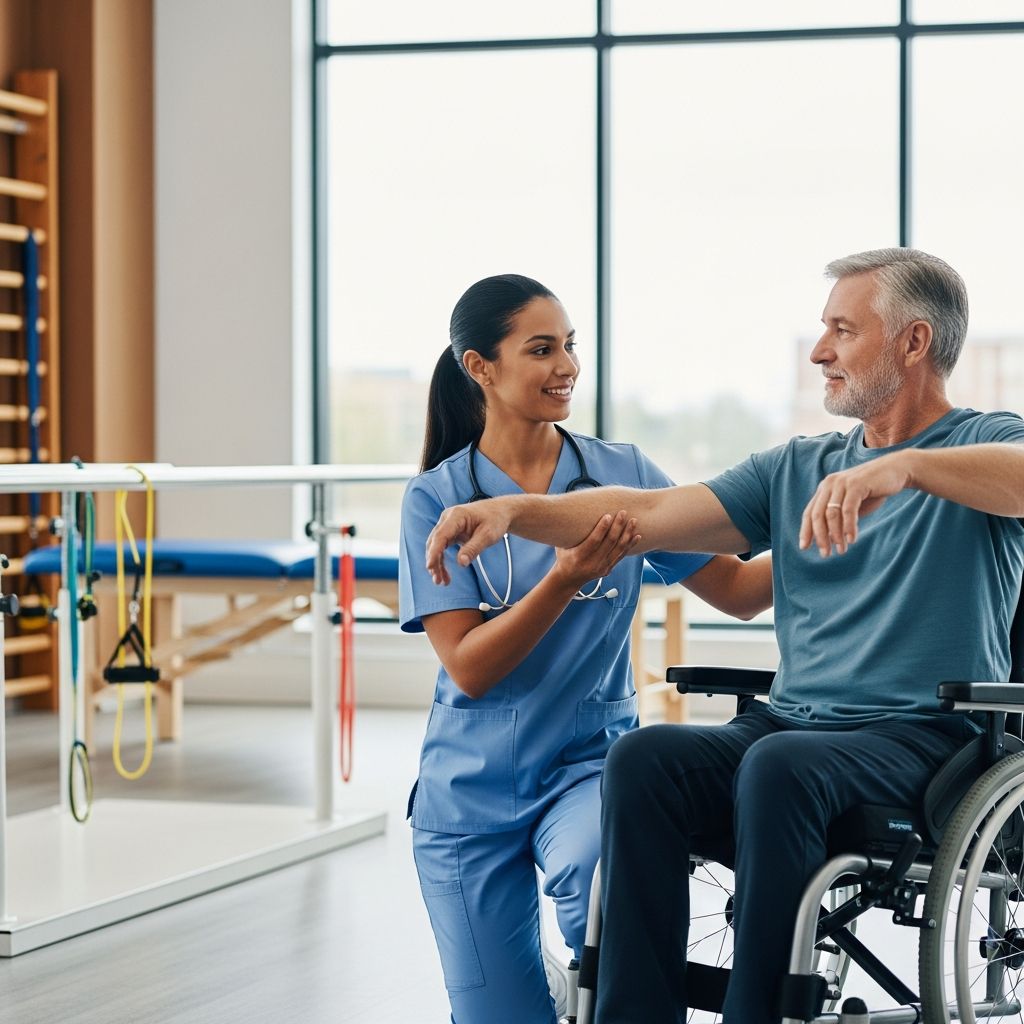
Reinforcement of Therapy Goals: Rehabilitation nurses work in close coordination with physical therapists, occupational therapists, and speech-language pathologists. They reinforce therapeutic exercises and functional tasks between formal therapy sessions, helping patients practice skills learned during structured therapy and ensuring consistent progress toward established goals.
Management of Bowel and Bladder Dysfunction: Many patients in rehabilitation settings experience continence challenges. Nurses develop and implement individualized toileting programs, manage catheter care when necessary, and educate patients about strategies to regain continence when possible.
Family Training and Education: One of the most important responsibilities involves preparing families for the patient’s discharge from inpatient settings. Nurses provide comprehensive training on patient care techniques, adaptation strategies, safety modifications, and recognizing warning signs that require medical attention.
Related Stories



Wound Care and Infection Prevention: Rehabilitation nurses manage surgical wounds, pressure injuries, and other skin conditions. They implement evidence-based wound care protocols, teach patients and families proper wound management techniques, and monitor for signs of infection.
Safety Advocacy: Rehabilitation nurses continuously assess and address safety concerns in the patient’s environment. They recommend home modifications, ensure proper use of assistive devices, and educate patients about fall prevention and other safety measures.
The Multidisciplinary Rehabilitation Team
Rehabilitation nursing does not exist in isolation. Instead, nurses function as essential members of a comprehensive multidisciplinary team that collectively brings diverse expertise to patient care. Understanding the roles of other team members helps illustrate how rehabilitation nurses coordinate and complement their contributions.
Core Team Members and Their Contributions
Physical Therapists work to maximize safe and independent mobility. They build patient strength and endurance, improve balance and coordination, enhance lower extremity joint range of motion, and teach proper transfer and ambulation techniques. They also manage orthotic and prosthetic devices and address wheelchair seating needs.
Occupational Therapists focus on maximizing safe and independent self-care abilities. They build upper extremity strength, fine motor skills, and coordination. They help patients adapt clothing and footwear for ease of use and enhance visual-perceptual and cognitive skills necessary for daily living.
Speech-Language Pathologists address communication and swallowing disorders that may result from stroke, brain injury, or other conditions. They help patients regain speech and language abilities or develop alternative communication strategies when recovery is not possible.
Recreational Therapists develop or enhance leisure activity skills, promote socialization, and help patients structure leisure time in meaningful ways. Their work is essential for addressing the psychological and social aspects of recovery.
Social Workers maximize informal and formal support systems, helping patients and families identify community resources, coordinate services, and address psychosocial concerns that may impact recovery.
Psychologists assess and assist with cognitive, affective, and problem-solving skills, addressing emotional challenges that frequently accompany physical recovery.
Physiatrists (Physical Medicine and Rehabilitation Physicians) evaluate patients’ functional needs, prescribe appropriate therapies, provide medical and rehabilitative guidance, and monitor overall progress.
Rehabilitation Settings: Where Nurses Provide Care
Rehabilitation nurses work in various settings, each with distinct characteristics, goals, and care intensity levels. The appropriate setting for each patient depends on their medical stability, functional impairments, recovery potential, and support systems.
Acute Rehabilitation Facilities
Acute rehabilitation facilities provide intensive, short-term rehabilitation services in hospital-like settings. These facilities focus heavily on restoration of physical functioning with the goal of enabling patients to return to their previous living situations. Patients in acute rehabilitation settings must be medically stable enough to participate actively in therapy for a combined total of at least three hours daily, five days per week. A physician-directed multidisciplinary team provides coordinated care that includes physical therapy, occupational therapy, speech-language pathology, physiatry, rehabilitative nursing, and social work services.
Skilled Nursing Facilities
Skilled nursing facilities serve as a bridge between acute hospital care and return to home or alternative living arrangements. These settings provide a more consistent level of support and attention than acute hospitals but typically less intensive therapy than acute rehabilitation facilities. They are particularly appropriate for frail elderly patients who need rehabilitation and have recovery potential.
Outpatient Rehabilitation
Outpatient rehabilitation services are appropriate for patients who are not homebound and can travel to a clinic or rehabilitation center. These programs typically provide less intensive services than inpatient settings but maintain the multidisciplinary approach to care. Patients attend scheduled therapy sessions while continuing to live at home.
Home-Based Rehabilitation
Home-based rehabilitation serves patients who are unable to leave their homes due to medical fragility or functional limitations. Services may include physical therapy, speech-language pathology, occupational therapy delivered in coordination with skilled nursing, and home adaptation services. This setting allows rehabilitation nurses to assess the actual home environment and make specific recommendations for modifications that enhance safety and independence.
Special Considerations in Rehabilitation Nursing
Managing Complex Medical Conditions
Patients receiving rehabilitation services often have multiple medical conditions requiring careful coordination. Rehabilitation nurses must understand each patient’s complete medical history, current medications, and potential complications. They monitor for medical events that may interrupt rehabilitation progress and communicate promptly with the physician when concerning changes occur.
Promoting Independence and Self-Efficacy
A fundamental principle of rehabilitation nursing is promoting patient independence rather than fostering dependence. Nurses encourage patients to perform self-care activities to the maximum extent possible, even when assistance would be faster or easier. This philosophy, sometimes called “purposeful delay,” builds patient confidence, maintains functional abilities, and supports long-term independence.
Addressing Psychosocial Dimensions of Recovery
Rehabilitation nurses recognize that recovery encompasses more than physical healing. They address emotional responses to disability, support patients in adjusting to functional changes, and help families adapt to new circumstances. Depression and anxiety are common among rehabilitation patients and require thoughtful nursing interventions.
Ensuring Safe Transitions
One of the most critical responsibilities involves preparing patients and families for transitions between care settings. Comprehensive discharge planning, patient and family education, and clear communication with receiving facilities are essential for ensuring continuity of care and preventing readmissions.
The Impact of Rehabilitation Nursing
Rehabilitation nurses profoundly influence patient outcomes and satisfaction. Their dedication to facilitating recovery, combined with their holistic approach to patient care, creates measurable improvements in functional abilities, independence levels, and quality of life. Patients who receive compassionate, knowledgeable rehabilitation nursing care report greater satisfaction, better adherence to rehabilitation protocols, and more successful transitions to community living.
Additionally, rehabilitation nurses contribute to cost-effective healthcare delivery by preventing complications, reducing readmissions, and enabling patients to return to productive lives more quickly. Their work with families reduces caregiver burden and supports sustainable home-based care arrangements.
Frequently Asked Questions About Rehabilitation Nursing
Q: What qualifications do rehabilitation nurses need?
A: Rehabilitation nurses must be registered nurses (RNs) with a current nursing license. Many pursue additional certification through the Association of Rehabilitation Nurses (ARN), which requires meeting specific educational and clinical experience requirements and passing a comprehensive examination.
Q: How do rehabilitation nurses differ from other nurses?
A: While all nurses provide compassionate care, rehabilitation nurses specifically focus on maximizing patient independence and functional abilities. They emphasize prevention of complications, patient education, and long-term outcomes rather than acute medical management.
Q: What can patients expect from rehabilitation nursing care?
A: Patients can expect comprehensive assessment, development of individualized care plans, coordinated multidisciplinary care, thorough patient and family education, monitoring for complications, and support in achieving rehabilitation goals. Rehabilitation nurses are committed to helping patients regain independence and return to meaningful living.
Q: How long does typical rehabilitation nursing care last?
A: Duration varies depending on the patient’s condition, recovery potential, and the rehabilitation setting. Acute rehabilitation may last weeks to a few months, while outpatient or home-based rehabilitation may continue for several months or longer.
Q: How can families support patients receiving rehabilitation nursing care?
A: Families should actively participate in education sessions, learn recommended techniques and adaptations, provide emotional support, maintain realistic expectations about recovery, and communicate openly with the rehabilitation team about concerns or observations.
Q: What happens after rehabilitation ends?
A: Rehabilitation nurses ensure careful transition planning with clear communication to the next care setting or to home care. They provide comprehensive written instructions, teach patients and families necessary skills, and ensure understanding of follow-up appointments and warning signs.
References
- Rehabilitation of Older Adult Patients with Arthritis — Johns Hopkins Arthritis Center. Accessed December 2025. https://www.hopkinsarthritis.org/patient-corner/disease-management/rehabilitation-of-older-adult-patients-with-arthritis/
- Nursing at Johns Hopkins Aramco Healthcare — Johns Hopkins Aramco Healthcare. Accessed December 2025. https://www.jhah.com/en/care-services/nursing/
- Registered Nurse RN Rehabilitation – Baltimore, MD — Indeed Job Postings. Accessed December 2025. https://www.indeed.com/viewjob?jk=158865ff1964043c
- Johns Hopkins Healthcare Registered Nurse RN Rehab Unit Job — ZipRecruiter. Accessed December 2025. https://www.ziprecruiter.com/c/Johns-Hopkins-Healthcare/Job/Registered-Nurse-RN-Rehab-Unit/-in-Baltimore,MD
- RN Skilled Nursing/Rehab – Johns Hopkins Healthcare — ZipRecruiter. Accessed December 2025. https://www.ziprecruiter.com/c/Johns-Hopkins-Healthcare/Job/RN-Skilled-Nursing-Rehab/-in-Washington,DC
Similar Articles








Read full bio of Sneha Tete