Rejected Belly Button Piercing
Understanding why your body rejects navel piercings, signs to watch for, prevention tips, and safe aftercare practices.
Rejected Belly Button Piercing: Causes, Signs, and What to Do
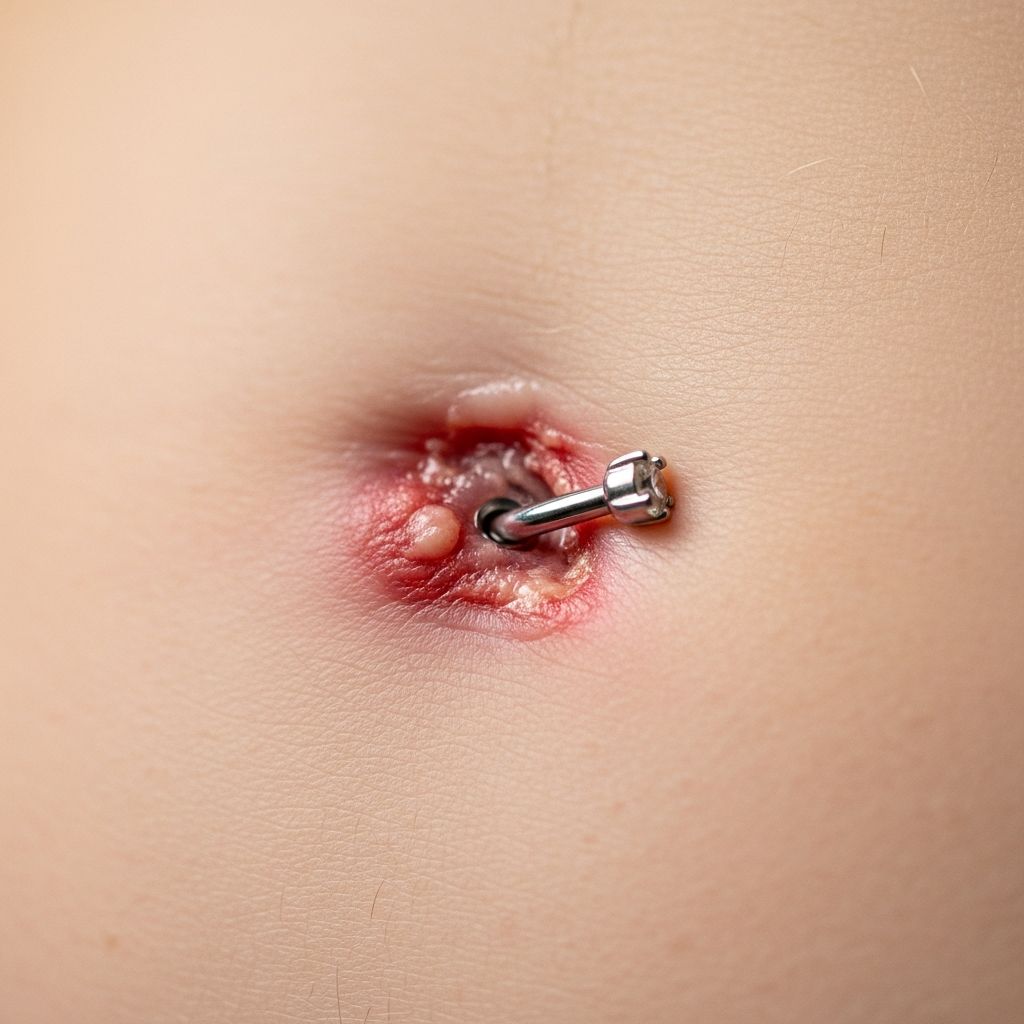
Belly button piercings, also known as navel piercings, are a popular form of body art, but they rank among the most prone to rejection by the body. Rejection occurs when the immune system treats the jewelry as a foreign object, pushing it out through a process called migration followed by ejection, similar to expelling a splinter.
This comprehensive guide covers everything from why rejections happen, early warning signs, prevention strategies, aftercare tips, and special considerations like pregnancy and health conditions that increase risks.
What Is Piercing Rejection?
Piercing rejection is the body’s natural defense mechanism where it identifies the jewelry as an invader and works to remove it. For navel piercings, this is common because the piercing sits flat against the skin surface, creating constant pressure and friction.
The process starts with migration, where the jewelry gradually moves toward the skin’s surface, thinning the tissue around it. If unchecked, it progresses to full rejection, with the jewelry emerging or falling out entirely. Surface piercings like navels have higher rejection rates than deeper ones because they don’t anchor securely in tissue.
Signs Your Belly Button Piercing Is Being Rejected
Early detection can prevent scarring or complications. Watch for these key indicators:
- Thinning or tightening skin around the piercing site, especially above or below the jewelry.
- Migration: The barbell or ring appears shorter or closer to the surface than when first pierced.
- Redness, swelling, or discomfort that persists beyond initial healing (typically 6-12 months for navels).
- Jewelry loosening or growing out, making it easy to pull.
- Scar tissue formation or keloids, which are thick, raised lumps.
If you notice these, consult a professional piercer or doctor immediately. Do not bandage or force the jewelry back in, as this can worsen irritation.
Causes of Belly Button Piercing Rejection
Several factors contribute to rejection, often in combination. Understanding them helps in prevention.
| Cause | Description | Risk Level |
|---|---|---|
| Improper Jewelry Size | Barbell too short (should be 7/16 inch or 11mm initially) or wrong gauge (use 14G or 1.6mm). | High |
| Allergic Reactions | Nickel in cheap jewelry triggers inflammation, leading to rejection. Opt for titanium or 14k gold. | Medium-High |
| Poor Piercing Technique | Incorrect placement with insufficient tissue (needs ~5/16 inch or 8mm between holes). | High |
| Genetics & Skin Type | Some heal slower; flat, taut skin around navel increases pressure. | Medium |
| Body Changes | Weight fluctuations, pregnancy, or illness stress the piercing. | Medium |
Navel piercings on flat surfaces are particularly vulnerable due to constant movement and clothing friction.
How to Prevent Belly Button Piercing Rejection
Prevention starts with preparation and proper care.
- Choose an experienced piercer using sterile 14G needles and implant-grade titanium jewelry.
- Ensure correct anatomy: Ideal for innie navels with enough skin depth.
- Maintain strict aftercare: Clean twice daily with saline solution, avoid pools/sweat, and don’t change jewelry early.
- Monitor for allergies: Test metal sensitivity beforehand.
- Avoid trauma: No tight clothing or heavy activity during healing (6-12 months).
Studies show unlicensed piercers increase risks like migration due to subpar techniques.
Treating a Rejected Belly Button Piercing
Once rejection begins, removal is often necessary to avoid infection or scarring.
- Remove jewelry promptly with clean hands or professional help.
- Clean the site with saline soaks to promote healing.
- Avoid repiercing immediately: Wait 3-6 months; scarring may prevent it.
- Seek medical advice if infection signs (pus, fever) appear.
Most recover fully, but keloid-prone individuals risk permanent marks.
Who Should Avoid Belly Button Piercings?
Not everyone is a candidate. Consult a doctor if you have:
- Diabetes, hemophilia, autoimmune disorders, heart conditions, or skin issues (rashes, moles).
- Outie navel: Scar tissue and blood vessels heighten infection risks.
- Keloid scarring history.
- Active lifestyle with frequent abdominal trauma.
Curvy individuals can get pierced, but seek piercers experienced with varied body types to minimize friction.
Belly Button Piercing and Pregnancy
Pregnancy poses unique challenges due to skin stretching and immune shifts.
- Don’t get pierced while pregnant: Infection risks (hepatitis, HIV) rise with non-sterile tools; healing is impaired.
- Existing piercings: May migrate; switch to flexible plastic or remove if irritating, but holes can close.
- Avoid ‘pregnancy jewelry’: Often unsafe materials per Association of Professional Piercers.
- Postpartum: Wait 3+ months after delivery for immune recovery; longer if baby rests on belly.
Rejection during pregnancy can cause tearing and scarring.
Belly Button Piercing Aftercare Tips
Proper care reduces rejection by 50-70% in studies.
- Saline soaks (1/4 tsp sea salt in 1 cup warm water) twice daily.
- Pat dry; no rubbing.
- Avoid alcohol, hydrogen peroxide, or ointments—they irritate.
- No swimming, saunas, or tight clothes for 6 weeks minimum.
- Check for issues weekly; downsize jewelry after swelling (2-4 weeks).
Healing timeline: 6-12 months fully.
Frequently Asked Questions (FAQs)
Can you get a belly button piercing with a belly?
Yes, body size doesn’t disqualify you, but loose skin may cause friction. Find a piercer skilled with diverse anatomies.
Do outie belly buttons pierce?
No, outies are scar tissue with infection risks; stick to innies.
How long does navel piercing rejection take?
3-12 months; monitor early signs like thinning skin.
Is rejection the same as infection?
No—infection involves pus/fever; rejection is gradual pushing out. Both need professional care.
Can you repierce a rejected navel?
Possibly after 3-6 months if no scarring; choose better placement/jewelry.
This guide equips you to enjoy your navel piercing safely or recognize when to act. Always prioritize professional, sterile practices.
References
- Belly Button Piercing and Your Health — WebMD. 2023-10-15. https://www.webmd.com/beauty/belly-button-piercing
- Piercing Rejection: Signs, Prevention, Treatment, Pictures, and More — Healthline. 2023-05-20. https://www.healthline.com/health/piercing-rejection
- How to Tell (And What to do) If Your Body Is Rejecting A Piercing? — Pierced.co. 2024-02-10. https://pierced.co/blogs/all/rejected-piercing-guide
- Piercing rejection: Signs, prevention, and how to stop it — Medical News Today. 2023-08-12. https://www.medicalnewstoday.com/articles/321770
- Body Piercing: Medical Concerns with Cutting-Edge Fashion — PMC (NCBI). 2002-03-15 (authoritative review). https://pmc.ncbi.nlm.nih.gov/articles/PMC1496593/
- 10 Dos and Don’ts Before You Get Your Body Pierced — Banner Health. 2024-01-08. https://www.bannerhealth.com/healthcareblog/advise-me/body-piercings-heres-everything-you-should-know
- How To Treat an Infected Belly Button Piercing — Cleveland Clinic. 2023-11-05. https://health.clevelandclinic.org/infected-belly-button-piercing
Similar Articles







Read full bio of medha deb