Relapsing Polychondritis: Symptoms, Diagnosis & Treatment
Rare autoimmune disorder causing recurrent cartilage inflammation in ears, nose, joints, and vital organs.
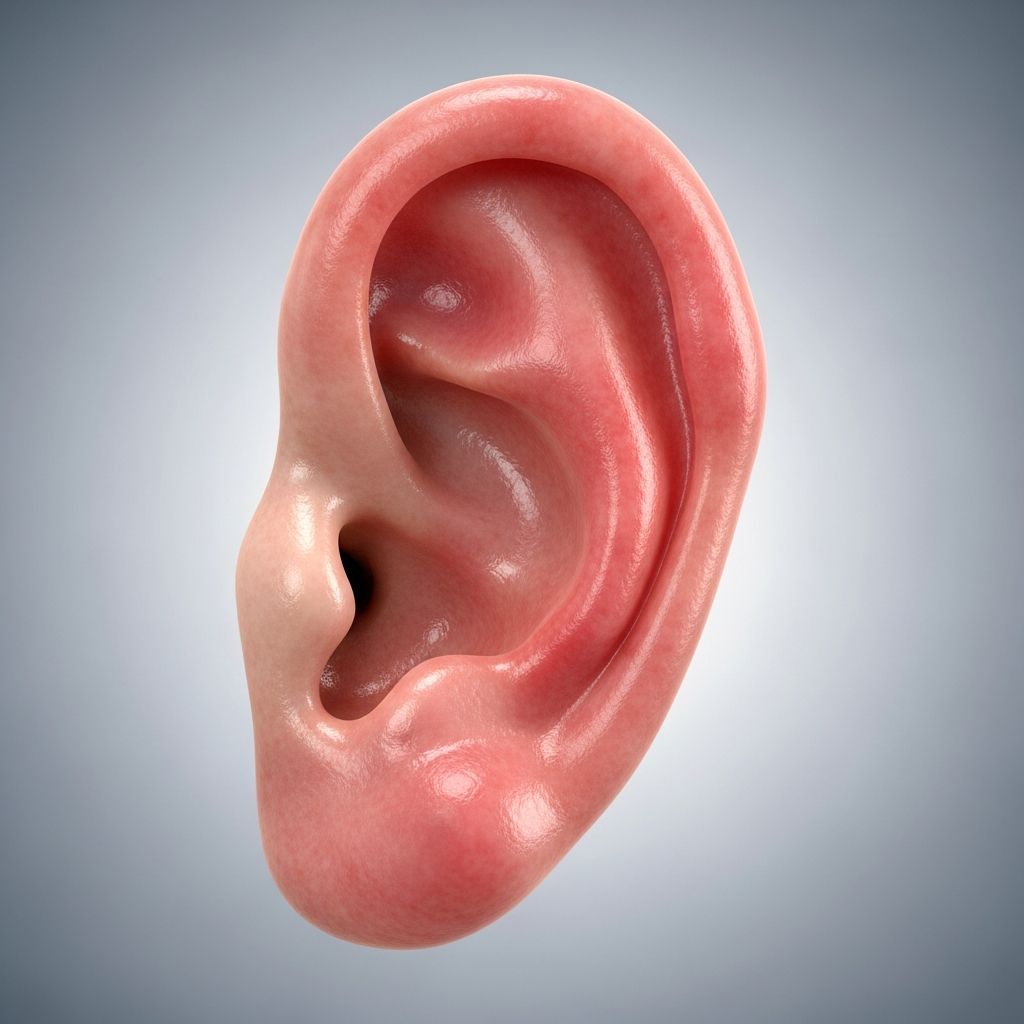
Relapsing polychondritis is a rare, episodic, inflammatory disease characterised by recurrent inflammation of cartilaginous structures including the ear, nose, trachea, larynx, ribs, and joints. It can also affect non-cartilaginous tissues such as the eyes, heart valves, and blood vessels. The disease often follows a relapsing-remitting course but can lead to progressive damage and life-threatening complications if untreated.
What is relapsing polychondritis?
Relapsing polychondritis (RP), also known as chronic atrophic polychondritis or Meyenburg disease, is an uncommon systemic autoimmune disorder. It primarily targets type II collagen-rich cartilaginous tissues throughout the body. The condition was first described in 1923 by the Austrian pathologist Erich Mayer but received its modern name from Pearson, McSharry, and Lapez in 1960 after reviewing 32 cases.
RP affects approximately 2–3.5 cases per million people annually, with onset typically between ages 40–60, though it can occur at any age. It has a slight female predominance (1.3:1 ratio) and is more common in White individuals. The disease is characterised by recurrent episodes of inflammation that spare the cartilage of the nose tip and ear lobule, which lack type II collagen.
Who gets relapsing polychondritis?
- Most commonly diagnosed between ages 40–60 years, but can affect children and elderly
- Slight female predominance (F:M ratio 1.3:1)
- Incidence: 2–3.5 per million per year
- Higher prevalence in White populations
- 20–30% of cases associated with other autoimmune diseases (e.g., rheumatoid arthritis, systemic vasculitis, Sjögren syndrome, systemic lupus erythematosus, etc.)
- Occasional association with myelodysplastic syndromes or solid malignancies
What causes relapsing polychondritis?
The exact aetiology remains unknown, but RP is widely considered an autoimmune disease triggered in genetically susceptible individuals. Key evidence includes:
- Autoantibodies: Circulating antibodies against collagen types II, IX, XI, and proteoglycans (aggrecan, decorin)
- Genetic factors: Association with HLA-DR4 and other MHC class II alleles
- Triggers: Possible infectious agents, trauma to cartilage (especially pinna), vaccinations, or drugs
- Immune mechanisms: T-cell mediated inflammation with CD4+ cells secreting cytokines (IL-8, MIP-1β, MCP-1) that recruit macrophages. These release matrix metalloproteinases (MMP-3), cathepsins causing cartilage destruction
Histopathology shows early perichondrial inflammation progressing to chondrocyte apoptosis, cartilage necrosis, and fibrosis.
What are the clinical features of relapsing polychondritis?
RP presents with recurrent inflammation affecting multiple organ systems. McAdam’s diagnostic criteria require 3+ of 6 features: bilateral auricular chondritis, nasal chondritis, nonerosive seronegative inflammatory polyarthritis, ocular inflammation, laryngeal/tracheal chondritis, or audiovestibular damage.
Auricular chondritis (86–95% of cases)
Most common initial manifestation: painful, red, swollen ears sparing the lobule. Acute episodes last 1–4 weeks; recurrent attacks cause ‘cauliflower ear’ deformity.
Nasal chondritis (65–89%)
Nasal pain, swelling, tenderness progressing to saddle-nose deformity in 25–76% of cases.
Respiratory tract involvement (47–56%)
Most dangerous complication: Laryngotracheal chondritis causing hoarseness, dyspnoea, stridor, cough. Can lead to airway collapse requiring tracheostomy (20–30% of cases). Tracheobronchomalacia is a major cause of mortality.
Related Stories



Ocular inflammation (21–67%)
- Scleritis/episcleritis (most common)
- Uveitis, retinal vasculitis, orbital myositis
- Can cause vision loss
Audiovestibular damage (39–58%)
Sensorineural hearing loss (most common), vertigo, tinnitus. Sudden deafness may occur.
Joint involvement (67–92%)
Nonerosive, seronegative polyarthritis affecting large and small joints. Usually migratory, responds well to treatment.
Other manifestations
- Costochondritis: Chest pain (sternal, costochondral)
- Cardiovascular: Aortitis, valvular regurgitation (aortic/mitral), pericarditis (5–11%)
- Renal: Glomerulonephritis (10–20%)
- Neurological: Cranial nerve palsies, aseptic meningitis (3%)
- Skin: Oral/genital ulcers, vasculitis, Sweet syndrome (<5%)
How is relapsing polychondritis diagnosed?
Diagnosis is clinical, supported by characteristic findings and exclusion of mimics (infectious chondritis, granulomatosis with polyangiitis, etc.).
Diagnostic criteria
| McAdam criteria (1962) (3+ of 6 required) | Damiani & Levine (1979) (Modified) | Michet (1986) (Simplified) |
|---|---|---|
| Bilateral auricular chondritis | Same + biopsy confirmation | 3 clinical features OR 1 clinical + biopsy |
| Nasal chondritis | ||
| Ocular inflammation | ||
| Laryngotracheal chondritis | ||
| Polyarthritis | ||
| Audiovestibular dysfunction |
Investigations
- ESR/CRP: Elevated during flares
- ANA, RF: Usually negative; ANCA positive in vasculitis overlap
- Anti-collagen II antibodies: 40–60% sensitivity
- Imaging: CT/MRI for airway assessment; CT chest for tracheobronchomalacia; echocardiography for valvular disease
- Biopsy: Perichondritis with lymphocytic/plasma cell infiltrate, cartilage necrosis
What is the differential diagnosis for relapsing polychondritis?
- Infectious chondritis: Bacterial (Staph/Strep), TB
- Granulomatosis with polyangiitis (GPA): ANCA+, saddle nose
- Microscopic polyangiitis:
- Rheumatoid arthritis: Erosions, RF+
- Systemic lupus erythematosus
- Relapsing polychondritis-myelodysplasia syndrome
What is the treatment for relapsing polychondritis?
No standardised treatment exists due to rarity; therapy is guided by severity and organ involvement.
Mild disease (ears, nose, joints)
- NSAIDs (ibuprofen)
- Colchicine 0.6 mg BD
- Dapsone 50–100 mg/day
- Low-dose prednisone (10–20 mg/day)
Moderate-severe disease
- Induction: IV methylprednisolone 1 g x 3 days, then oral prednisone 1 mg/kg
- Steroid-sparing agents:
- Methotrexate 15–25 mg/week
- Azathioprine 2–3 mg/kg/day
- Cyclophosphamide 1–2 mg/kg (pulse for severe disease)
Refractory/severe disease (airway, eyes, heart)
- Biologics: TNF inhibitors (infliximab, adalimumab), tocilizumab, anakinra
- Surgery: Tracheostomy, airway stenting, valve replacement
What is the prognosis for relapsing polychondritis?
RP follows a chronic relapsing course with increasing organ damage over time. 5-year survival: 74%; 10-year: 55%. Leading causes of death: airway collapse (50%), infection (25%), cardiac (20%). Early aggressive immunosuppression improves outcomes.
Emerging treatments
Promising agents include JAK inhibitors (tofacitinib), IL-6 inhibitors (tocilizumab), and IL-1 blockers (anakinra). Type II collagen desensitisation shows preliminary benefit.
Frequently asked questions
Q: Is relapsing polychondritis fatal?
A: Potentially yes; airway involvement causes 50% of deaths. Early treatment improves survival.
Q: Can relapsing polychondritis be cured?
A: No cure exists, but remission is achievable with immunosuppression.
Q: Does relapsing polychondritis affect the heart?
A: Yes, 5–11% develop aortitis/valvulitis requiring monitoring.
Q: Is biopsy required for diagnosis?
A: Not always; clinical criteria suffice in classic cases.
References
- Relapsing Polychondritis – Symptoms and Causes — Penn Medicine. 2023. https://www.pennmedicine.org/conditions/relapsing-polychondritis
- Relapsing Polychondritis – StatPearls — NCBI Bookshelf. 2023-07-17. https://www.ncbi.nlm.nih.gov/books/NBK436007/
- Relapsing Polychondritis — NORD (National Organization for Rare Disorders). 2023. https://rarediseases.org/rare-diseases/relapsing-polychondritis/
- Relapsing Polychondritis — Merck Manual Professional Edition. 2023. https://www.merckmanuals.com/home/bone-joint-and-muscle-disorders/systemic-rheumatic-diseases/relapsing-polychondritis
- Relapsing Polychondritis: Symptoms, Causes & Treatment — Cleveland Clinic. 2023. https://my.clevelandclinic.org/health/diseases/24846-relapsing-polychondritis
Similar Articles








Read full bio of medha deb