Renal Artery: Anatomy, Function & Health
Understanding the renal artery: Essential blood vessel supplying your kidneys with oxygenated blood.
What is the Renal Artery?
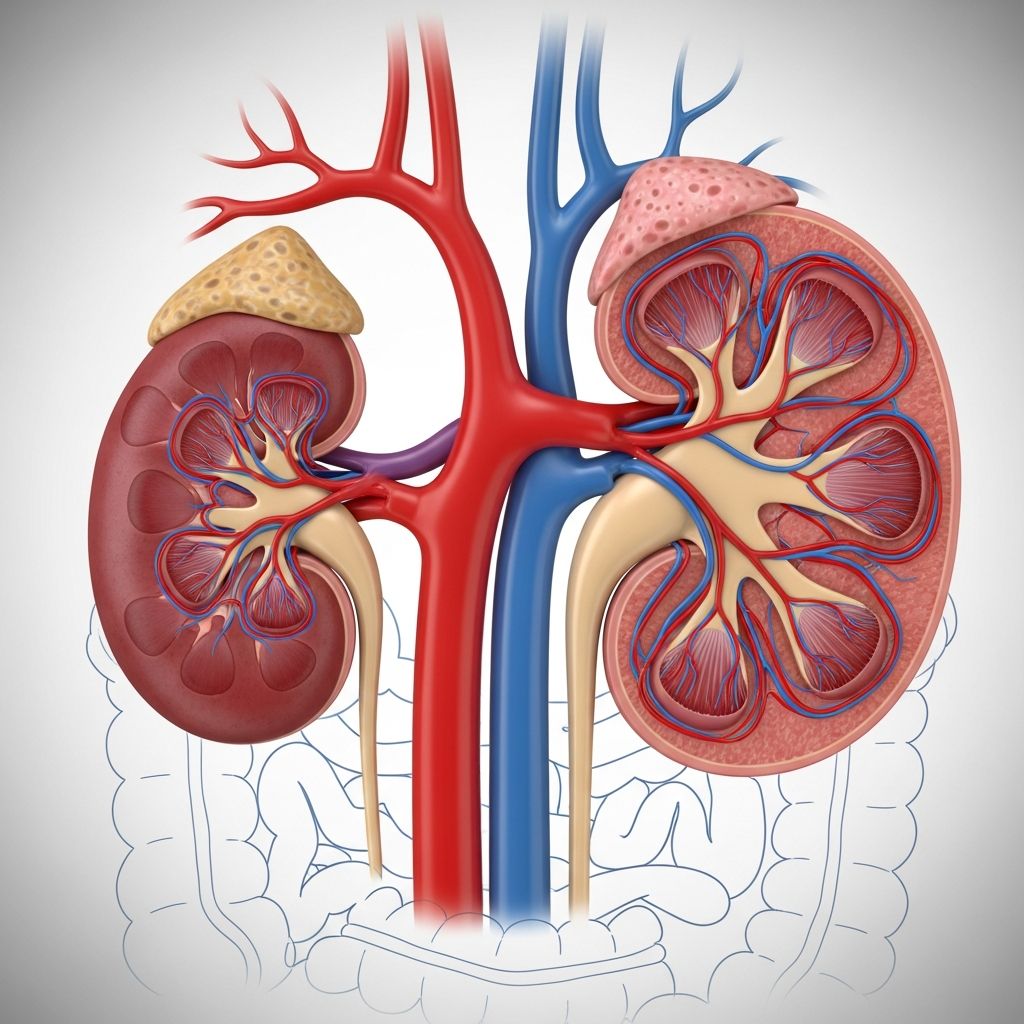
The renal artery is one of two large blood vessels that branch directly from the abdominal aorta, the major artery carrying blood from your heart throughout your body. These paired arteries play a crucial role in your circulatory system by delivering oxygenated blood to your kidneys, which are bean-shaped organs responsible for filtering waste products from your blood and maintaining fluid balance. Understanding the renal artery is essential to comprehending how your kidneys function and maintain overall health.
Anatomy of the Renal Artery
Each kidney receives blood through its own renal artery, which branches from the abdominal aorta at approximately the level of the L1 to L2 vertebrae. The renal arteries enter the kidneys through an opening on the inner concave surface called the hilum. Once inside the kidney, the renal artery divides into smaller branches to supply blood to the functional units of the kidney.
Branching Pattern and Structure
After entering through the hilum, each renal artery typically divides into anterior and posterior divisions, from which approximately five segmental terminal arteries originate. These segmental arteries further branch into interlobar arteries that penetrate the renal capsule and extend through the renal columns between the renal pyramids. The interlobar arteries then supply blood to the arcuate arteries, which run along the boundary between the renal cortex and medulla. Each arcuate artery subsequently supplies several interlobular arteries that feed into the afferent arterioles, which ultimately supply blood to the glomeruli—the filtering structures within the nephrons.
This hierarchical branching pattern ensures that blood is distributed efficiently throughout the kidney tissue, allowing every nephron to receive the oxygenated blood necessary for filtration and metabolic function.
Blood Flow and Volume
The renal arteries deliver approximately 1.2 liters of blood per minute to the kidneys in a person at rest, representing approximately one-quarter of the total cardiac output. This substantial blood flow is remarkable considering the kidneys comprise only about 0.5% of total body weight. The kidneys receive between 20 and 25 percent of cardiac output in the adult human body, demonstrating their critical importance in maintaining physiological homeostasis.
This high volume of blood flow enables the kidneys to filter waste products efficiently while maintaining appropriate fluid and electrolyte balance. The constant supply of oxygenated blood provides the energy necessary for active transport processes that occur during filtration and reabsorption.
Function of the Renal Artery
The primary function of the renal artery is to deliver oxygenated blood to the kidneys so they can perform their vital filtering functions. After the kidneys filter toxins and waste products from your blood, the processed blood exits through the renal veins, which carry the deoxygenated, filtered blood back to the heart through the inferior vena cava.
The renal arteries work in conjunction with an intricate system of smaller vessels and specialized filtering structures to remove metabolic waste, excess water, and other substances that need to be eliminated from the body. This filtered waste becomes urine, which travels through the ureter to the bladder for eventual elimination.
Related Stories



Self-Regulatory Mechanisms
Although various physical conditions can inhibit blood flow through the renal arteries, these vessels possess sophisticated self-regulatory mechanisms that allow them to adapt to changes in blood pressure. When total body blood pressure rises or drops, sensory receptors located in the smooth muscle wall of the renal arteries detect these changes.
In response to pressure variations, the renal arteries either expand or contract to maintain a constant volume of blood flow. This autoregulation is essential for protecting the kidney’s delicate filtering structures from damage due to excessive pressure changes and ensures consistent filtration regardless of systemic blood pressure fluctuations.
Nervous System Control
The kidney communicates with the nervous system through the renal plexus, whose fibers course along the renal arteries to reach each kidney. Input from the sympathetic nervous system triggers vasoconstriction in the renal arteries, thereby reducing renal blood flow when necessary. The kidney also receives input from the parasympathetic nervous system through the renal branches of the vagus nerve, though the specific function of this parasympathetic input remains unclear.
Conditions Affecting the Renal Artery
Renal Artery Stenosis
Renal artery stenosis occurs when the renal artery becomes narrowed, typically due to atherosclerotic plaque buildup or fibromuscular dysplasia. This narrowing restricts blood flow to the kidney and can result in hypertension, kidney damage, and reduced kidney function.
Renal Artery Aneurysm
Aneurysms of the renal artery are uncommon but clinically important, as they pose a risk of rupture with a high fatality rate. Most younger patients with renal artery aneurysms are women, and approximately two-thirds have fibromuscular dysplasia. The natural history typically shows slow growth at 0.06 to 0.09 mm per year, with rupture occurring in 3 to 5 percent of cases, with mortality rates near 10 percent.
Symptoms are rare but can include hypertensive crisis, shock, hematuria, flank and abdominal pain, and urinary obstruction. Signs may include a palpable abdominal mass and a renal bruit, an abnormal sound heard during physical examination.
Renal Artery Thrombosis
Blood clots can form in the renal artery, blocking blood flow and potentially causing acute kidney injury. This condition may result from trauma, atherosclerosis, or hypercoagulable states.
Fibromuscular Dysplasia
This condition involves abnormal development of muscle and fibrous tissue in the renal artery wall, causing it to narrow and restricting blood flow to the kidney. It is more common in younger patients and can lead to hypertension and kidney complications.
Diagnostic Imaging and Procedures
Renal Artery Angiography
In a typical angiography procedure, a needle is used to puncture the main artery in the groin, armpit, or crook of the arm and to place a coiled wire in the artery. The needle is withdrawn, and a small flexible hollow tube called a catheter is passed over the wire and into the artery. The wire is removed, and contrast medium is injected through the catheter. Both the arteries and the structures they supply with blood can then be visualized, allowing physicians to identify abnormalities in the renal artery and its branching pattern.
Other Imaging Techniques
Modern imaging methods including ultrasound, computed tomography angiography (CTA), and magnetic resonance angiography (MRA) allow detailed visualization of the renal arteries without requiring invasive catheterization. These techniques help identify stenosis, aneurysms, and other abnormalities affecting renal artery blood flow.
Surgical Anatomy Considerations
Understanding the detailed anatomy of the renal artery is critical for surgical procedures involving the kidney. Surgical renal anatomy fundamentally impacts partial nephrectomy surgery, a procedure that removes tumors while preserving kidney function. The renal artery divides into anterior and posterior divisions, from which approximately five segmental terminal arteries originate.
Variations in the vascular and lymphatic channels are common among individuals, which surgeons must account for when planning interventions. A contemporary ideal partial nephrectomy excises the tumor with a thin negative margin while delicately securing the tumor bed to maximize vascularized remnant parenchyma and minimizing global ischemia to the renal remnant with minimal complications.
Relationship Between Renal Arteries and Renal Veins
While the renal arteries carry oxygenated blood into the kidneys, the renal veins perform the complementary function of carrying filtered, deoxygenated blood out of the kidneys. The renal veins are not terminal vessels like the arteries; they form a more complex network. The right renal vein is typically shorter than the left renal vein. Because the left renal vein is longer and farther away from the inferior vena cava, it receives blood from other organs in your body, while the right renal vein only receives blood from the right kidney.
After the kidneys filter waste products and utilize oxygen and glucose as energy sources, the renal veins send the filtered and deoxygenated blood into the inferior vena cava, a large vein that carries deoxygenated blood from the lower part of the body back to the heart.
Clinical Significance and Health Maintenance
Maintaining healthy renal arteries is essential for optimal kidney function and overall cardiovascular health. Conditions that affect the renal arteries, such as stenosis or aneurysms, can have serious consequences including hypertension, kidney failure, and life-threatening hemorrhage.
Lifestyle factors that promote cardiovascular health also benefit the renal arteries. These include maintaining a healthy diet low in sodium, managing blood pressure and diabetes, avoiding smoking, and engaging in regular physical activity. Regular medical check-ups and monitoring of blood pressure and kidney function are important for early detection and management of renal artery conditions.
Treatment Approaches
Treatment of renal artery conditions depends on the specific diagnosis and severity. For renal artery stenosis, options range from medical management with antihypertensive medications to interventional procedures including angioplasty and stent placement. For renal artery aneurysms, indications for surgical or endovascular repair are based on aneurysm location and risk factors for rupture, such as aneurysm size, growth, and associated conditions. Regular surveillance with imaging is critical before and after intervention to guide treatment and monitor outcomes.
Frequently Asked Questions
Q: How much blood flows through the renal arteries?
A: The renal arteries deliver approximately 1.2 liters of blood per minute to the kidneys at rest, representing about one-quarter of total cardiac output. This constitutes 20 to 25 percent of the heart’s total output, demonstrating the kidneys’ critical importance in circulation.
Q: Where do the renal arteries originate?
A: The renal arteries branch directly from the abdominal aorta, the major artery that carries blood from the heart. They typically branch at the level of the L1 to L2 vertebrae in the abdomen.
Q: How do renal arteries adapt to blood pressure changes?
A: The renal arteries possess self-regulatory mechanisms that allow them to expand or contract in response to changes in blood pressure. Sensory receptors in the smooth muscle wall detect pressure variations and trigger these adaptive responses to maintain consistent blood flow.
Q: What is the difference between renal arteries and renal veins?
A: Renal arteries carry oxygenated blood from the heart into the kidneys for filtration, while renal veins carry filtered, deoxygenated blood from the kidneys back to the heart through the inferior vena cava.
Q: What conditions can affect the renal artery?
A: Common conditions affecting the renal artery include stenosis (narrowing), aneurysms (outpouchings), thrombosis (blood clots), and fibromuscular dysplasia (abnormal tissue development). These conditions can lead to hypertension, kidney damage, and other serious complications.
Q: How are renal artery problems diagnosed?
A: Renal artery conditions are diagnosed using various imaging techniques including angiography, ultrasound, CT angiography, and MR angiography. These methods allow visualization of the artery and identification of abnormalities.
Q: Why is understanding renal artery anatomy important for surgery?
A: Detailed knowledge of renal artery anatomy is critical for surgical procedures like partial nephrectomy. Variations in arterial branching patterns help surgeons plan interventions that preserve kidney function while minimizing ischemia and complications.
References
- Renal Artery: Renal Function, Blood Flow & Anatomy — Britannica. Accessed December 1, 2025. https://www.britannica.com/science/renal-artery
- A Literature Review of Renal Surgical Anatomy and Implications for Partial Nephrectomy — PubMed Central, National Institutes of Health. 2015. https://pubmed.ncbi.nlm.nih.gov/25911061/
- Kidney: Blood Supply and Anatomy — Wikipedia. Accessed December 1, 2025. https://en.wikipedia.org/wiki/Kidney
- Renal Vein: Anatomy & Function — Cleveland Clinic. Accessed December 1, 2025. https://my.clevelandclinic.org/health/body/renal-vein
- Optimal Surveillance and Treatment of Renal and Splenic Artery Aneurysms — Cleveland Clinic Journal of Medicine. 2020. https://www.ccjm.org/content/87/12/755
Similar Articles








Read full bio of medha deb