Renal Cell Carcinoma: Symptoms, Treatment & Prognosis
Comprehensive guide to renal cell carcinoma: understanding symptoms, diagnosis, treatment options and survival rates.
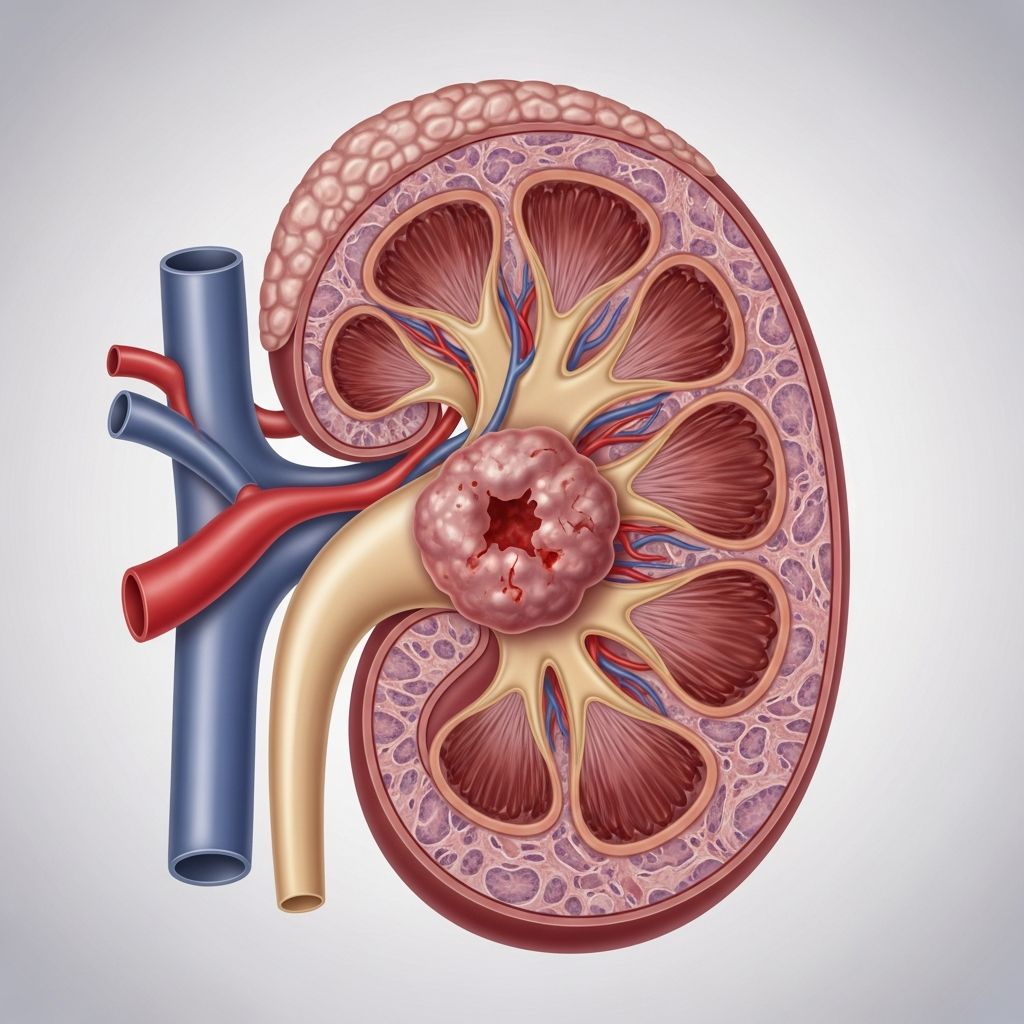
Understanding Renal Cell Carcinoma
Renal cell carcinoma (RCC) represents the most common type of kidney cancer, accounting for approximately 85% of all kidney cancer cases in adults. This malignant condition develops in the cells that line the interior of your kidneys, which are responsible for filtering waste from your blood to produce urine. RCC typically begins as a single tumor in one kidney but can potentially affect both kidneys simultaneously. The disease has been increasing at an annual rate of approximately 2% worldwide, making it an increasingly significant public health concern.
Understanding RCC requires knowledge of its various subtypes and how they progress. The most common form is clear cell renal cell carcinoma (ccRCC), which accounts for the majority of RCC cases. However, other subtypes exist with different characteristics and treatment considerations. Early detection and appropriate management have significantly improved survival outcomes, with increasingly more patients being diagnosed at earlier, more treatable stages.
Risk Factors and Causes
Several epidemiologic risk factors contribute to the development of renal cell carcinoma. Understanding these risk factors can help identify individuals who may benefit from closer monitoring and early screening. Research has identified multiple potential contributors to RCC development, including both modifiable and non-modifiable factors that healthcare providers consider when assessing patient risk.
Lifestyle factors, genetic predisposition, and certain medical conditions all play roles in RCC development. Individuals with a family history of kidney cancer, those with specific genetic syndromes, and people with certain chronic health conditions face elevated risk. Environmental exposures and occupational hazards may also contribute to disease development in some populations.
Recognizing RCC Symptoms
Many individuals with early-stage renal cell carcinoma experience no symptoms, which is why RCC is often discovered incidentally during imaging performed for other reasons. However, when symptoms do develop, they warrant prompt medical evaluation. The most common presenting symptoms include:
- Blood in your urine (hematuria), which may appear pink, red, or cola-colored
- Persistent flank or side pain
- A palpable mass or lump in your abdomen
- Unexplained weight loss
- Persistent fatigue or weakness
- Fever unrelated to infection
- Night sweats
It is important to recognize that these symptoms can result from various conditions, not exclusively RCC. However, persistent or unexplained symptoms warrant comprehensive medical evaluation to rule out malignancy or other serious underlying conditions.
Diagnostic Procedures and Testing
Healthcare providers employ multiple diagnostic approaches to confirm renal cell carcinoma and determine its characteristics. The diagnostic process begins with a thorough patient history and physical examination, followed by appropriate imaging and laboratory studies.
Imaging Studies
Advanced imaging technologies play a crucial role in RCC detection and evaluation. Computed tomography (CT) scans, magnetic resonance imaging (MRI), and ultrasound help visualize kidney tumors and assess their size, characteristics, and potential spread to other organs. These non-invasive imaging modalities provide detailed information about tumor location and extent, guiding treatment planning and prognostic assessment.
Tissue Diagnosis
Biopsies are often avoided in RCC evaluation because they carry significant risk of kidney damage and tumor seeding. Instead, providers typically examine tumor cells after removing the entire tumor during surgical treatment. This approach, called pathologic examination, allows definitive diagnosis and histologic classification of the RCC subtype. When imaging suggests cancer has spread beyond the kidney, healthcare providers may perform biopsies of metastatic lesions to confirm diagnosis and guide targeted therapy selection.
Related Stories



Cancer Staging and Prognosis
Cancer staging determines how advanced your malignancy is and whether it remains localized or has spread to distant sites. Accurate staging is essential for treatment planning, prognostic counseling, and predicting treatment outcomes.
TNM Staging System
Healthcare providers use the TNM (tumor, lymph node, metastasis) staging system to classify RCC. This internationally recognized system assigns stages ranging from I to IV, where:
- Stage I through Stage III represent localized cancer confined to the kidney region
- Stage IV indicates metastatic RCC that has spread to distant organs
The TNM system provides standardized language for oncologists and surgeons to communicate about disease extent and guides treatment selection and intensity.
Robson Classification
The Robson Modification of the Flocks/Kadefsky Staging System represents another classification approach used in RCC staging. This system divides RCC into distinct stages based on tumor location and extent of invasion. Stage I RCC remains confined to the renal parenchyma, while more advanced stages involve extension through the kidney capsule, involvement of major blood vessels, or lymph node involvement.
Treatment Options for Localized RCC
Surgery remains the most common and most effective treatment for localized renal cell carcinoma. The goal of surgical intervention is complete removal of tumor burden, as this offers the only potentially curative approach to RCC. Healthcare providers carefully evaluate each patient to determine the most appropriate surgical technique.
Surgical Approaches
Two primary surgical options exist for localized RCC: partial nephrectomy and radical nephrectomy. Partial nephrectomy involves removing only the cancerous portion of your kidney while preserving normal kidney tissue and function. This approach has become increasingly popular, particularly for smaller tumors, as it reduces the long-term risk of kidney dysfunction while effectively treating cancer.
Radical nephrectomy involves removing the entire kidney, surrounding tissues, and potentially nearby lymph nodes. This procedure may be necessary for larger tumors, those in central kidney locations, or cancers involving major blood vessels. Modern surgical techniques increasingly utilize minimally invasive and robotic approaches, including innovative single-port partial nephrectomy procedures that accelerate recovery and reduce surgical trauma.
Active Surveillance
For patients with small, slow-growing tumors that appear non-aggressive based on imaging characteristics, active surveillance may be recommended instead of immediate surgery. This approach involves regular monitoring with physical examinations and imaging to ensure the tumor is not progressing. Many small RCC tumors grow very slowly, and some patients never require surgical intervention during their lifetime. Active surveillance reserves surgery for situations where imaging demonstrates tumor growth or patients develop symptoms.
Ablation Procedures
For patients who cannot safely undergo surgery, ablation procedures offer alternative treatment options. These minimally invasive techniques destroy tumor tissue through various mechanisms, including radiofrequency ablation, cryoablation, and microwave ablation. While less established than surgical approaches, ablation may provide effective local control in carefully selected patients.
Treatment of Metastatic RCC
Metastatic renal cell carcinoma represents advanced disease that has spread beyond the kidney to distant organs. Although no cure currently exists for advanced RCC that extends beyond the kidney, remarkable progress in treatment options has significantly extended survival and improved quality of life for affected patients.
Immunotherapy
Immunotherapy has revolutionized metastatic RCC treatment by strengthening the immune system’s ability to detect and eliminate cancer cells. These medications enhance your body’s natural defenses against malignancy. Multiple immunotherapy agents have demonstrated efficacy in RCC, either as single agents or in combination with other treatments. The selection of specific immunotherapy depends on individual patient factors, cancer characteristics, and prior treatment history.
Targeted Therapy
Targeted therapy interferes with specific processes that allow cancer cells to multiply and survive. Many RCC tumors depend on angiogenesis—the formation of new blood vessels—to supply nutrients and oxygen. Targeted therapy drugs restrict blood supply to tumors, effectively slowing their growth and progression. These medications specifically target molecular pathways dysregulated in RCC, offering more precise cancer control compared to traditional chemotherapy approaches.
Combination Approaches
Depending on various clinical factors, immunotherapy and targeted therapy are frequently combined to enhance treatment efficacy. Combination approaches may produce superior outcomes compared to single-agent therapy in select patient populations. Your healthcare team will recommend the most appropriate combination based on your specific cancer characteristics and overall health status.
Surgical Debulking
Even with metastatic RCC, surgical removal of tumors may be recommended to relieve symptoms and potentially delay initiation of systemic therapy. While surgery alone cannot cure metastatic disease, it may improve symptom burden and quality of life. Some patients experience extended survival periods after undergoing surgical cytoreduction combined with medical therapies.
Survival Rates and Prognosis
Prognosis for renal cell carcinoma varies substantially based on stage at diagnosis, tumor characteristics, and individual patient factors. Early detection has significantly improved survival outcomes across all RCC stages.
The five-year survival rate for Stage I RCC reaches 90%, reflecting excellent outcomes when cancer remains confined to the kidney. This high survival rate underscores the importance of early detection and prompt treatment initiation. Even for advanced stages, survival has dramatically improved in recent years.
Historically, patients with Stage IV metastatic RCC faced survival measured in months. However, with modern immunotherapy and targeted therapy approaches, many patients now live for several years following diagnosis. This substantial improvement reflects rapid progress in understanding RCC biology and developing increasingly effective treatment strategies.
Metastatic RCC remains among the more chemotherapy-refractory malignancies, meaning traditional chemotherapy offers limited benefit. Historically, the five-year survival rate for metastatic RCC was less than 2%, but newer immunotherapy and targeted approaches have substantially improved these outcomes.
Managing Treatment Side Effects
Both immunotherapy and targeted therapy can produce side effects requiring careful management and monitoring. Different medications cause varying side effect profiles, and individual patients experience different tolerability. Common side effects may include fatigue, skin reactions, gastrointestinal symptoms, and in some cases, immune-related adverse events.
Your healthcare provider will discuss expected side effects before initiating treatment, allowing you to prepare and recognize concerning symptoms early. Open communication with your care team enables prompt intervention if side effects develop, ensuring optimal quality of life during cancer treatment.
Personalized Treatment Planning
Your renal cell carcinoma treatment experience depends on multiple factors including your overall health status, specific RCC type, cancer stage, and individual response to treatment. Each patient’s situation is unique, requiring personalized treatment planning that considers your specific circumstances and preferences.
Developing a strong relationship with your cancer care team is essential. Do not hesitate to ask questions about your diagnosis, discuss the benefits and risks of potential treatment options, and inquire about likely treatment outcomes. Your healthcare provider represents your best resource for explaining what having RCC means for your individual situation and guiding you through the complex treatment decision-making process.
Frequently Asked Questions
Q: What is the difference between localized and metastatic RCC?
A: Localized RCC (Stages I-III) remains confined to the kidney region and can potentially be cured with surgery. Metastatic RCC (Stage IV) has spread to distant organs and cannot be cured but can be managed with immunotherapy and targeted therapy to extend survival and maintain quality of life.
Q: Why are biopsies usually avoided in RCC diagnosis?
A: Biopsies carry significant risk of kidney damage and potential tumor seeding. Instead, providers typically examine tumor cells after surgical removal, making biopsy unnecessary for most RCC cases.
Q: What is the difference between partial and radical nephrectomy?
A: Partial nephrectomy removes only the cancerous portion while preserving kidney tissue and function. Radical nephrectomy removes the entire kidney and surrounding tissues. Partial nephrectomy is preferred when possible to maintain long-term kidney function.
Q: Can metastatic RCC be cured?
A: There is currently no cure for advanced RCC that has spread beyond the kidney. However, newer immunotherapy and targeted therapy approaches have significantly extended survival, with many patients living several years following diagnosis.
Q: How often should I be monitored after RCC treatment?
A: Follow-up schedules depend on your cancer stage, treatment type, and individual risk factors. Your healthcare team will establish a personalized monitoring plan including regular physical exams and imaging studies to detect any recurrence early.
Q: What are the main side effects of immunotherapy for RCC?
A: Immunotherapy side effects vary by medication but may include fatigue, skin reactions, gastrointestinal symptoms, and immune-related adverse events affecting various organ systems. Your provider will discuss expected side effects and management strategies before treatment begins.
References
- Clinical Practice Guidelines: Renal Cell Carcinoma — Cleveland Clinic Journal of Medicine. 2001. https://www.ccjm.org/content/ccjom/64/5_suppl_1/SI-4.full.pdf
- Renal Cell Carcinoma: Symptoms, Treatment & Prognosis — Cleveland Clinic. 2024. https://my.clevelandclinic.org/health/diseases/24906-renal-cell-carcinoma
- Kidney Cancer: Symptoms, Signs, Causes & Treatment — Cleveland Clinic. 2024. https://my.clevelandclinic.org/health/diseases/9409-kidney-cancer-overview
- Kidney Cancer Surgery and Treatment — Cleveland Clinic. 2024. https://pages.clevelandclinic.org/kidney-cancer-index-8.html
- National Cancer Institute: Renal Cell Cancer Treatment (PDQ®)–Health Professional Version — U.S. National Institutes of Health. 2024. https://www.cancer.gov/types/kidney/hp/kidney-treatment-pdq
- Clinical Practice Guidelines: Renal Cell Carcinoma — PubMed/NCBI. 1998. https://pubmed.ncbi.nlm.nih.gov/9239949/
Similar Articles








Read full bio of medha deb