Respiratory Alkalosis: Causes, Symptoms & Treatment
Understanding respiratory alkalosis: causes, symptoms, diagnosis and effective treatment strategies.
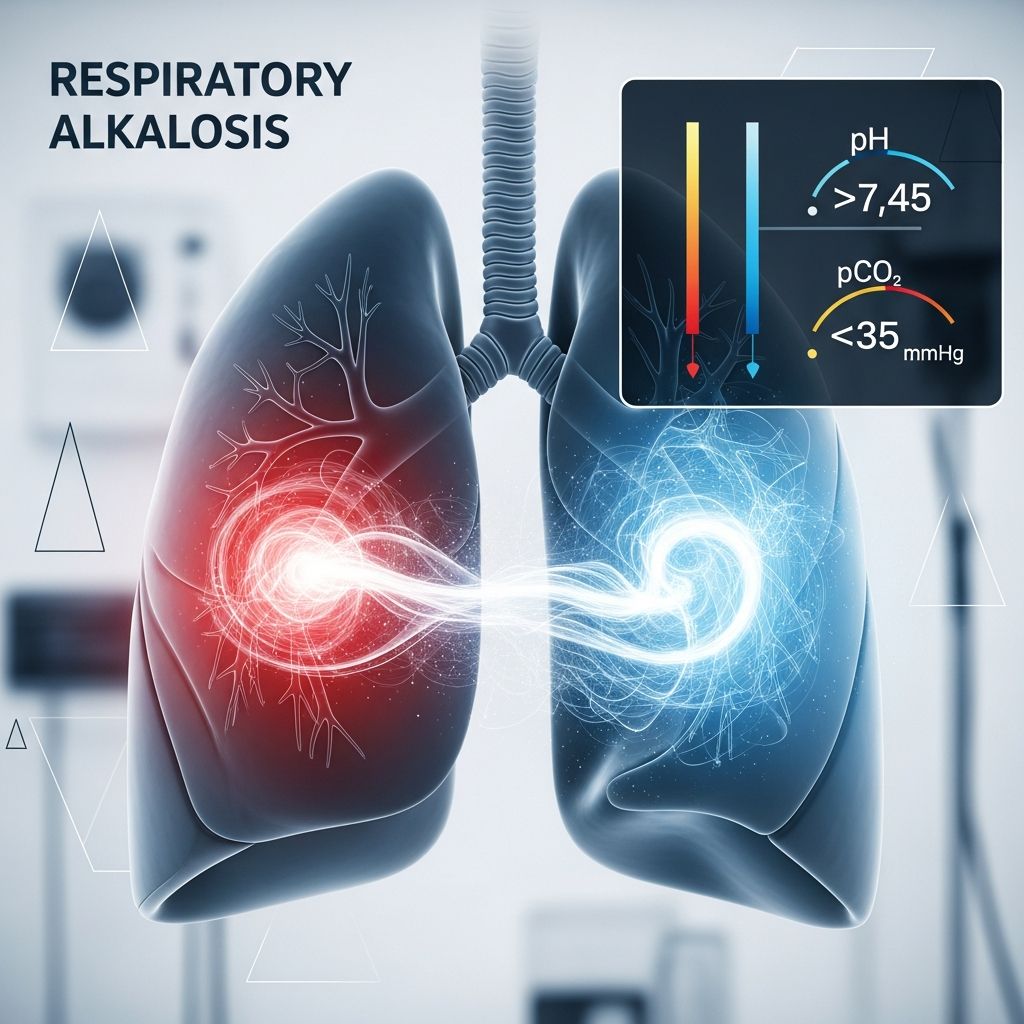
Respiratory alkalosis is a disturbance in your body’s acid-base balance characterized by decreased blood carbon dioxide levels and an increased pH, reflecting a more basic state than normal. This condition occurs when your lungs remove too much carbon dioxide through rapid or excessive breathing, also known as hyperventilation. Understanding this condition is essential for recognizing symptoms early and seeking appropriate treatment.
What is Respiratory Alkalosis?
Respiratory alkalosis happens when blood carbon dioxide levels are decreased due to overventilation or breathing very quickly, causing an imbalance between inhaling oxygen and exhaling carbon dioxide (CO2). This results in an increased pH in the body. Your body needs to regulate its acid-base balance within a specific range for physiologic processes to function optimally.
To maintain a healthy pH level, your bicarbonate buffer system provides immediate but temporary adjustments, while respiratory and renal compensation mechanisms offer longer-term regulation of acid-base balance. Your lungs play a crucial role in regulating blood pH by eliminating carbon dioxide through respiration. When there is excessive removal of carbon dioxide from the lungs due to hyperventilation secondary to insufficient oxygen levels (hypoxia), metabolic acidosis, pain, anxiety, or increased metabolic demands, the pH rises, resulting in respiratory alkalosis.
The pH scale ranges from 0 (very acidic) to 14 (very basic or alkaline), with a normal blood pH range between 7.35 to 7.45. When respiratory alkalosis occurs, the pH rises above 7.45, indicating a shift toward a more alkaline state.
Types of Respiratory Alkalosis
Respiratory alkalosis can occur in two distinct forms, each with different characteristics and underlying causes.
Acute Respiratory Alkalosis
Acute respiratory alkalosis arises suddenly due to hyperventilation that occurs secondary to anxiety, pain, hypoxia, or fever. This type develops quickly and can cause immediate symptoms. The body compensates for this change in pH by reducing how quickly deep breathing occurs to allow carbon dioxide levels to increase and pH to return to normal. Common triggers include panic attacks, severe pain, high fever, or sudden exposure to high altitudes.
Chronic Respiratory Alkalosis
Chronic respiratory alkalosis develops gradually and persists over time, often due to chronic lung conditions like chronic obstructive pulmonary disease (COPD) or living at a high altitude. In this situation, the kidneys compensate by excreting bicarbonate ions, causing a gradual decrease in bicarbonate levels in the blood to attempt to normalize pH despite ongoing respiratory alkalosis. For every 10-millimeter mercury (mm Hg) decrease in carbon dioxide, bicarbonate should decrease by 2 millimoles per liter (mmol/L) in the first 48 hours and 5 mmol/L after that period.
Causes of Respiratory Alkalosis
Multiple factors can trigger respiratory alkalosis, ranging from psychological conditions to physical health issues:
Related Stories



– Anxiety, panic attacks, and emotional stress- Acute pain or severe discomfort- Fever or infection- Hypoxemia (low blood oxygen levels)- Metabolic acidosis- Pregnancy- Liver disease- Pneumonia or other respiratory infections- Pulmonary embolism- Asthma- Living at high altitudes- Mechanical ventilation settings that are too aggressive- Medication side effects (salicylates, progesterone)- Sepsis- Thyroid disorders- Excessive caffeine consumption
Symptoms of Respiratory Alkalosis
The symptoms of respiratory alkalosis vary depending on severity and duration. Early symptoms may develop quickly in acute cases, while chronic cases may produce fewer noticeable symptoms.
Early Symptoms
Early symptoms of respiratory alkalosis include dizziness, tingling sensations in the fingers, toes, and lips (paresthesia), and heart palpitations. You may experience lightheadedness or a sensation that the room is spinning. These symptoms result from changes in blood electrolyte levels and the shift in pH.
Severe Symptoms
In more serious cases, respiratory alkalosis can produce muscle spasms, tetany (involuntary muscle contractions), confusion, and loss of consciousness. Tetany is particularly concerning as it indicates significant electrolyte imbalances. Severe cases may also include seizures, which require immediate medical intervention.
Chronic Symptoms
Individuals with chronic respiratory alkalosis may experience ongoing fatigue, weakness, cognitive difficulties, or be asymptomatic if the condition develops gradually and the body adjusts over time.
Diagnosis of Respiratory Alkalosis
Diagnosing respiratory alkalosis involves a comprehensive approach combining clinical evaluation and laboratory testing.
Physical Examination
A thorough physical examination should be performed, paying close attention to vital signs like respiratory rate, breathing pattern, and signs of distress. Signs of hyperventilation, such as rapid or deep breathing, may suggest respiratory alkalosis. The healthcare provider will also assess for signs of underlying conditions that might be causing the hyperventilation.
Arterial Blood Gas Analysis
The arterial blood gas (ABG) analysis is the primary test for confirming respiratory alkalosis. This test measures oxygen and carbon dioxide levels in arterial blood. In respiratory alkalosis, the ABG will show:
– pH elevated above 7.45 (indicating alkalemia)- Decreased PCO2 (less than 35 mm Hg), indicating a respiratory etiology of the alkalemia- Variable bicarbonate levels depending on the degree of renal compensation
Additional Laboratory Tests
Additional testing may include:
– Electrolyte panels to assess associated metabolic imbalances- Toxicology screening when substance use or overdose is suspected- Pulmonary function tests if chronic lung disease is suspected- Imaging studies such as chest X-rays to evaluate for lung pathology- Thyroid function tests if thyroid disorder is suspected
Management and Treatment
Treatment of respiratory alkalosis focuses on stabilizing the patient’s acid-base balance and addressing the underlying cause.
Immediate Management
The immediate management of respiratory alkalosis can incorporate breathing techniques like breathing into a paper bag to rebreathe carbon dioxide and support pH levels when hyperventilation is present. This technique increases the concentration of CO2 that the individual rebreathes, helping to raise blood CO2 levels and lower pH back toward normal.
Supplemental oxygen therapy may be helpful when hypoxemia is present or if respiratory alkalosis persists despite other interventions. In severe or refractory cases, mechanical ventilation is used, with careful adjustment of ventilator settings to avoid excessive removal of carbon dioxide.
Addressing the Underlying Cause
It is crucial to identify and address the underlying causes of respiratory alkalosis, such as anxiety, pain, fever, lung diseases, or medication side effects. Treatment approaches include:
– For anxiety or panic: relaxation techniques, cognitive behavioral therapy, or appropriate medications such as benzodiazepines for acute anxiety- For pain: adequate pain management through medications or other pain relief strategies- For fever: treating the underlying infection or cause of the fever- For lung conditions: management with appropriate therapies such as bronchodilators, antibiotics, or oxygen therapy- Medication adjustment: medications known to increase respiratory rate or affect acid-base balance, such as salicylates or progesterone, may need to be adjusted or discontinued
Distinguishing Respiratory Alkalosis from Other Conditions
It is important to understand how respiratory alkalosis differs from related conditions:
Respiratory Acidosis
Respiratory acidosis is the opposite of respiratory alkalosis. While respiratory alkalosis results from excessive CO2 removal causing low PCO2 and high pH, respiratory acidosis occurs when lungs cannot adequately remove carbon dioxide, resulting in high PCO2 and low pH (below 7.35). Respiratory acidosis is potentially fatal and requires immediate treatment.
Metabolic Alkalosis
Metabolic alkalosis is an imbalance where high bicarbonate levels cause elevated pH, differing from respiratory alkalosis where the primary problem is decreased CO2. In metabolic alkalosis, the kidneys may compensate by slowing breathing to retain CO2, a process that cannot always be achieved effectively and may result in hypoxemia.
Metabolic Acidosis
Metabolic acidosis occurs when acids build up in body fluids either because the body produces too much acid or the kidneys do not remove enough acids from the blood. In response, the body may increase respiratory rate to blow off CO2 and lower pH.
Complications and Long-Term Outlook
While acute respiratory alkalosis is often self-limiting with appropriate treatment, chronic respiratory alkalosis requires ongoing management to prevent complications. Untreated or poorly managed respiratory alkalosis can lead to persistent electrolyte imbalances, muscle weakness, cognitive impairment, and worsening of underlying lung conditions.
Regular monitoring and follow-up can prevent complications and maintain optimal acid-base balance. Working with healthcare providers to address underlying causes and adjusting treatment as needed ensures the best possible outcomes.
Prevention Strategies
While not all causes of respiratory alkalosis can be prevented, several strategies may reduce risk:
– Managing anxiety and stress through relaxation techniques, exercise, or professional counseling- Seeking prompt treatment for respiratory infections and lung diseases- Avoiding excessive caffeine consumption- Maintaining proper hydration- Gradual acclimatization when traveling to high altitudes- Regular monitoring for those with chronic lung conditions- Careful medication management under healthcare provider supervision
Frequently Asked Questions
Q: How quickly does respiratory alkalosis develop?
A: Acute respiratory alkalosis can develop within minutes, while chronic respiratory alkalosis develops gradually over weeks to months. The rate of development depends on the underlying cause and severity of hyperventilation.
Q: Can respiratory alkalosis be life-threatening?
A: While mild respiratory alkalosis is typically not immediately life-threatening, severe cases with significant electrolyte imbalances can cause serious complications including seizures and cardiac arrhythmias that require urgent medical attention.
Q: What should I do if I experience symptoms of respiratory alkalosis?
A: Seek immediate medical attention if you experience severe symptoms such as muscle spasms, confusion, or loss of consciousness. For mild hyperventilation episodes, controlled breathing techniques or breathing into a paper bag may help, but medical evaluation is still recommended.
Q: Is respiratory alkalosis the same as hyperventilation syndrome?
A: Hyperventilation syndrome is a condition characterized by excessive breathing that leads to respiratory alkalosis. While hyperventilation causes respiratory alkalosis, not all respiratory alkalosis is caused by hyperventilation syndrome, as other medical conditions can also cause this acid-base disturbance.
Q: How is respiratory alkalosis monitored during treatment?
A: Monitoring involves repeat arterial blood gas tests to track pH, PCO2, and bicarbonate levels. Vital signs, respiratory rate, and clinical symptoms are also continuously assessed to ensure treatment effectiveness and adjust interventions as needed.
References
- What is Respiratory Alkalosis? Understanding Causes, Symptoms and Treatment — Rupa Health. 2024. https://www.rupahealth.com/post/what-is-respiratory-alkalosis
- The Devil is in the Details: Approach to Refractory Hypokalemia — Cleveland Clinic Journal of Medicine. 2022. https://www.ccjm.org/content/89/4/182
- Respiratory Acidosis: Causes, Symptoms & Treatment — Cleveland Clinic. 2024. https://my.clevelandclinic.org/health/diseases/24834-respiratory-acidosis
- A Patient with Altered Mental Status and an Acid-Base Disturbance — MDedge Clinical Care. 2024. https://mdedge.com/ccjm/article/126539/critical-care/patient-altered-mental-status-and-acid-base-disturbance
- Acid-Base Disturbance Recognition and Management — Cleveland Clinic Journal of Medicine. 2017. https://www.ccjm.org/content/84/1/27
- Respiratory System: Organs, Facts, Anatomy & Function — Cleveland Clinic. 2024. https://my.clevelandclinic.org/health/body/21205-respiratory-system
Similar Articles








Read full bio of medha deb