Reticulohistiocytosis Guide: Symptoms, Diagnosis, & Treatments
Rare histiocytosis affecting skin, joints, and organs: from solitary lesions to severe multicentric disease with arthritis.
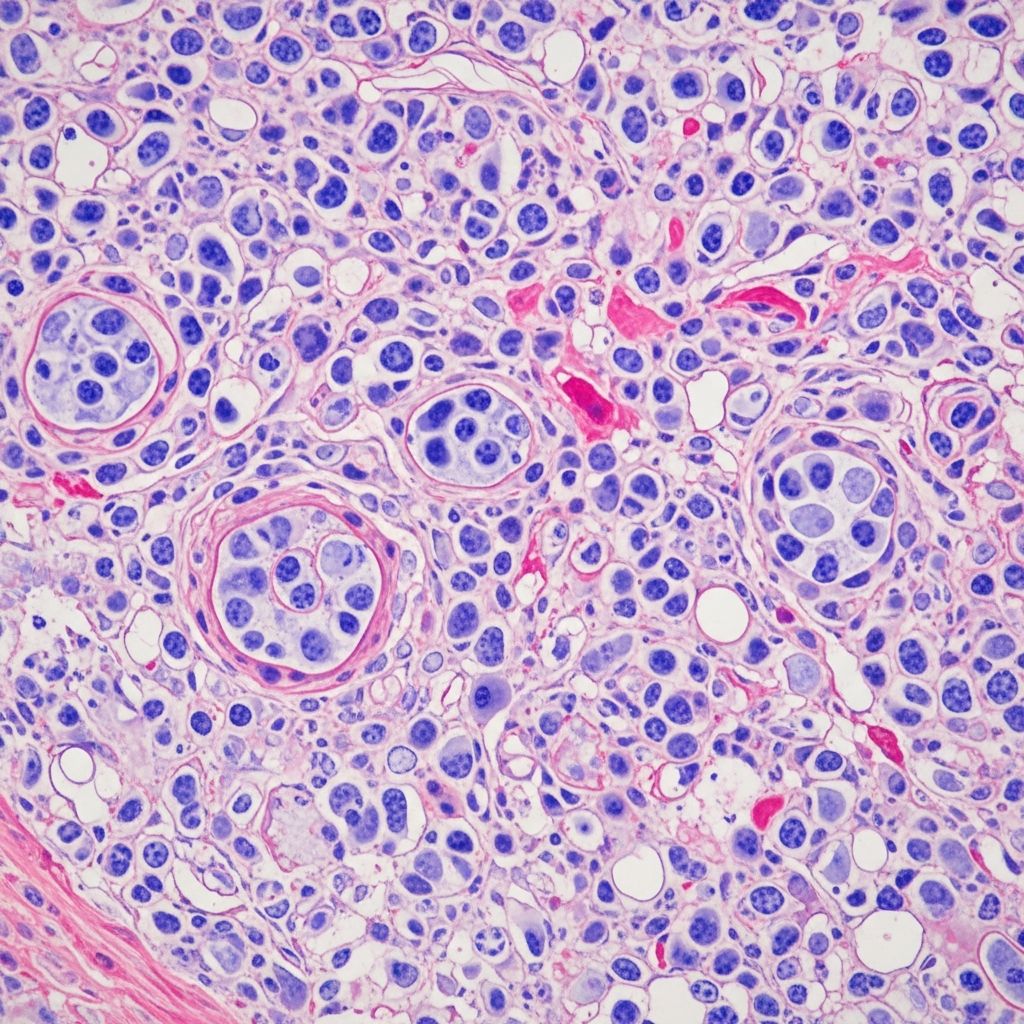
Reticulohistiocytosis encompasses a spectrum of rare non-Langerhans cell histiocytoses characterized by proliferation of histiocytes, ranging from benign solitary skin lesions to aggressive multicentric disease involving skin, joints, mucosa, and internal organs.
What is reticulohistiocytosis?
Reticulohistiocytosis refers to a group of uncommon disorders involving abnormal accumulation of reticulohistiocytes, a type of histiocyte (macrophage-like immune cell) with distinctive ground-glass cytoplasm. These conditions are classified as non-Langerhans cell histiocytoses, distinguishing them from Langerhans cell histiocytosis by the absence of Birbeck granules and specific immunohistochemical markers. The disease spectrum includes solitary reticulohistiocytoma (a localized cutaneous form) and multicentric reticulohistiocytosis (a systemic arthropathic variant). Severity varies widely: from a single self-resolving skin nodule to multisystem involvement with destructive arthritis and internal organ damage. It predominantly affects adults, particularly middle-aged women in the multicentric form.
Pathophysiology remains incompletely understood but involves clonal or reactive proliferation of histiocytes. Multicentric reticulohistiocytosis (MRH), also termed lipoid dermatoarthritis or giant cell reticulohistiocytosis, is the most aggressive subtype, often leading to severe joint destruction if untreated.
Who gets reticulohistiocytosis?
Reticulohistiocytosis primarily occurs in adults aged 40–60 years. Solitary reticulohistiocytoma can affect any age but is most common in middle-aged individuals without systemic symptoms. Multicentric reticulohistiocytosis shows a female predominance (3:1 ratio) and typically presents in perimenopausal women. Risk factors are not well-defined, but associations with autoimmune diseases, hyperlipidemia, and malignancy (in 25% of MRH cases) suggest multifactorial etiology.
- Demographics: Adults > children; females > males in multicentric form.
- Prevalence: Extremely rare; <1 per million annually, with over 200 MRH cases reported historically.
What causes reticulohistiocytosis?
The exact cause is unknown. Proposed mechanisms include:
- Reactive histiocytic proliferation triggered by infections, autoimmunity, or lipids.
- Clonal histiocyte expansion in some cases, akin to low-grade malignancies.
- Associations with tuberculosis (positive tuberculin test in 12–50% of MRH patients, higher in endemic areas).
- No consistent genetic mutations identified, unlike other histiocytoses (e.g., BRAF in Langerhans).
Hypercholesterolemia occurs in one-third of patients, potentially contributing to lipid-laden histiocytes.
What are the clinical features of reticulohistiocytosis?
Solitary reticulohistiocytoma
This benign form presents as a single yellowish-red to reddish-brown papule or nodule (0.5–2 cm) on the skin, often on the face, trunk, or extremities. Lesions have a smooth surface and may exhibit a ‘setting sun’ dermoscopic appearance (central yellow hue with pink-orange rim). It is asymptomatic, grows slowly, and spontaneously regresses over months to years without systemic involvement. Affected individuals remain healthy post-resolution.
Generalized reticulohistiocytosis (multiple lesions)
Multiple skin lesions signal higher risk of extracutaneous involvement. Common sites include upper body (face, ears, hands). Systemic symptoms: fever, weight loss, anemia. Internal organs affected: liver, spleen, lymph nodes, lungs, heart (potentially fatal). Elevated cholesterol in 33%.
Multicentric reticulohistiocytosis
The most severe variant, affecting skin (75–95%), mucosa (30–50%), and joints (100%). Initial presentation:
- Arthritis first: 50% of cases.
- Skin lesions first: 25%.
- Simultaneous: 25%.
Skin and mucosal lesions: Firm, discrete, reddish-brown papules/nodules (1 mm–2 cm), often clustered in ‘coral bead’ periungual pattern on fingers. Predilection for face (‘saddlebag’ cheeks), ears, nose, lips, tongue, gums. Lesions coalesce into plaques; mucosal involvement causes cobblestoning. Dermoscopy: yellow center, pink rim, brown reticular lines.
Arthritis: Symmetrical, destructive polyarthritis targeting distal interphalangeal (DIP) joints (90%), proximal interphalangeal (PIP), metacarpophalangeal (MCP), knees, shoulders. Rapid progression to erosions, telescoping fingers (‘arthritis mutilans’ in 45%). Stiffness, swelling; may be asymptomatic initially, requiring radiology.
Related Stories



Systemic features:
- Fever, malaise, weight loss.
- Anemia, elevated ESR.
- Hyperlipidemia (cholesterol, triglycerides).
- Organ involvement: thyroid, eyes, lungs, kidneys, heart, GI tract.
Diagnosis of reticulohistiocytosis
Diagnosis relies on clinicopathologic correlation.
- Clinical suspicion: Characteristic skin lesions + destructive arthritis (DIP emphasis atypical for RA).
- Skin biopsy (gold standard): Dense dermal infiltrate of large mononuclear histiocytes (50–60%) and multinucleated giant cells (40–50%) with abundant eosinophilic, ground-glass cytoplasm due to lipid vacuoles. PAS-positive, diastase-resistant. Immunohistochemistry: CD68+, CD163+, Factor XIIIa+; negative for S100, CD1a, langerin (distinguishes from Langerhans).
Radiology: Hand X-rays show marginal erosions (‘opera glass’ hands), periarticular osteopenia. MRI/ultrasound for early synovitis.
Laboratory: Anemia, high ESR/CRP, hypercholesterolemia. Negative RF, ANA (usually). Screen for TB (tuberculin).
Differential diagnosis:
| Condition | Key Distinguishers |
|---|---|
| Rheumatoid arthritis | MCP/PIP > DIP; RF+; no ground-glass histiocytes. |
| Tattoo sarcoidosis | Granulomas; no giant cells with ground-glass. |
| Langerhans cell histiocytosis | S100/CD1a+; Birbeck granules. |
| Hyperlipidemias (xanthoma) | Foamy histiocytes; lipid profile extreme. |
| Malignancy-associated nodules | Biopsy differentiates; screen required. |
Treatment of reticulohistiocytosis
No curative therapy; management is symptomatic and immunosuppressive.
- Solitary lesions: Observation or excision (cures).
- Multicentric: Early intervention to halt joint damage.
First-line: NSAIDs, low-dose prednisone (0.5–1 mg/kg/day).
Second-line DMARDs: Methotrexate (7.5–25 mg/week, most effective), ciclosporin, hydroxychloroquine.
Advanced/refractory: TNF inhibitors (etanercept, infliximab), IL-1 blockers (anakinra), JAK inhibitors, rituximab, chlorambucil, cyclophosphamide. IVIG and plasmapheresis reported.
Skin: Intralesional steroids, excision for cosmetics.
Surgery: Joint replacements for end-stage destruction.
Malignancy screening mandatory; treat if present.
What is the outcome for reticulohistiocytosis?
Solitary: Excellent; spontaneous resolution.
Multicentric: 50% remission after 8–12 years, but 40–50% have residual crippling arthritis/deformities. Mortality 10–25% from organ failure or malignancy (lung, breast, ovary, lymphoma most common; precedes by 2–3 years in 25%). Early DMARDs improve joint preservation.
Related topics
- Non-Langerhans cell histiocytosis
- Juvenile xanthogranuloma
- Erdheim-Chester disease
- Rosai-Dorfman disease
- Histiocytosis overview
Frequently Asked Questions
What is the hallmark histological finding in reticulohistiocytosis?
Multinucleated giant cells and histiocytes with eosinophilic ground-glass cytoplasm on biopsy.
Does multicentric reticulohistiocytosis always involve joints?
Yes, arthritis is universal, often rapidly destructive affecting DIP joints prominently.
Is reticulohistiocytosis associated with cancer?
Yes, 25% of multicentric cases link to malignancy; screen thoroughly at diagnosis and follow-up.
Can solitary reticulohistiocytoma recur?
Rarely; excision is curative, or it resolves spontaneously.
What is the ‘coral bead’ sign?
Periungual papules arranged like beads around nail folds, classic for MRH skin lesions.
How is multicentric reticulohistiocytosis differentiated from RA?
DIP joint predominance, negative RF, characteristic histopathology.
References
- Reticulohistiocytosis — DermNet NZ. 2023. https://dermnetnz.org/topics/reticulohistiocytosis
- Multicentric reticulohistiocytosis — DermNet NZ. 2023. https://dermnetnz.org/topics/multicentric-reticulohistiocytosis
- Multicentric reticulohistiocytosis — Indian Journal of Dermatology, Venereology and Leprology (PMC). 2012-09-28. https://pmc.ncbi.nlm.nih.gov/articles/PMC3481828/
- Multicentric Reticulohistiocytosis–A rare and disabling disease — Clinical Case Reports (Wiley). 2023. https://onlinelibrary.wiley.com/doi/full/10.1002/ccr3.7846
Similar Articles








Read full bio of medha deb