Retiform Purpura: Clinical Presentation and Diagnosis
Understanding retiform purpura: causes, symptoms, diagnosis, and management of this serious vascular condition.
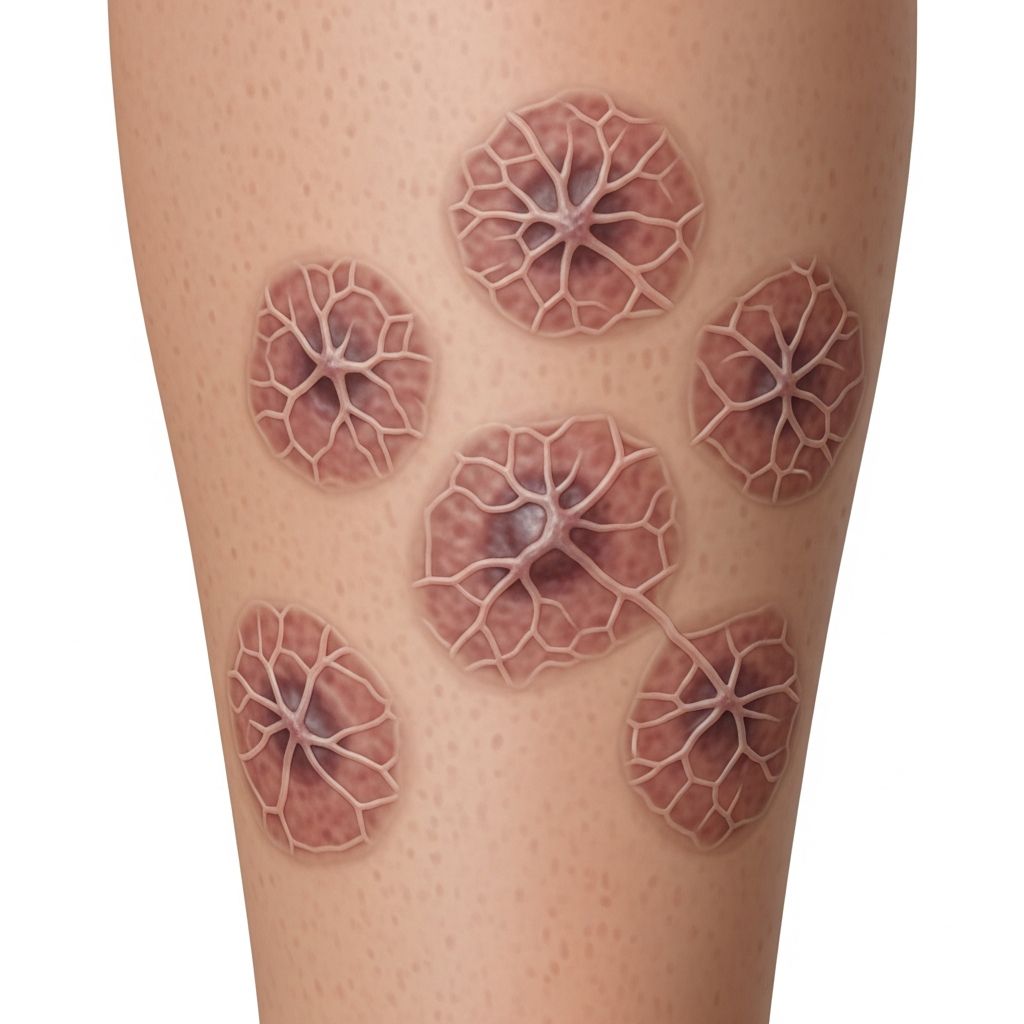
Retiform purpura is a branching, non-blanching patch or plaque often characterized by skin necrosis and ulceration due to skin ischemia. This distinctive cutaneous presentation represents a serious underlying vascular compromise that requires prompt clinical recognition and investigation. The condition develops when blood vessels supplying the skin become obstructed or damaged, leading to downstream cutaneous ischemia, hemorrhage, and potential tissue necrosis.
What is Retiform Purpura?
Retiform purpura is a cutaneous morphology that presents as a specific pattern of non-blanching hemorrhagic lesions with characteristic branching or angulated features. The term “retiform” refers to the net-like or branching pattern that distinguishes this condition from other types of purpura. Unlike typical purpuric lesions that may fade with pressure, retiform purpura does not blanch (lighten) when pressure is applied, indicating true hemorrhage within the skin.
The condition results from complete vascular obstruction and damage to the skin’s blood vessels. This can occur through two primary mechanisms: vessel wall damage (such as in vasculitis or calciphylaxis) or vessel lumen occlusion (caused by thrombotic or embolic disease). The outcome is the same—downstream skin ischemia that manifests as the characteristic purpuric lesions.
Pathophysiology and Mechanism
Understanding the pathophysiology of retiform purpura is essential for comprehending why it represents such a serious clinical finding. When blood vessels supplying the skin become obstructed, blood flow to the downstream tissue ceases. This vascular insufficiency, known as cutaneous ischemia, deprives the skin of oxygen and nutrients, leading to cell death and tissue damage.
The obstruction can result from several mechanisms:
- Blood clots (thrombi) forming within vessel lumens
- Emboli (particles traveling through vessels) from distant sources
- Protein deposition blocking vessel flow
- Direct inflammatory damage to vessel walls
- Vessel wall calcification in conditions like calciphylaxis
As ischemia progresses, the affected skin undergoes hemorrhage (bleeding into tissue), purpura (purple discoloration from blood), and eventually necrosis (tissue death). In severe cases, the affected tissue may ulcerate, creating open wounds. The severity of the lesion depends on the extent of vascular compromise and the duration of ischemia.
Clinical Presentation and Appearance
Retiform purpura presents with distinctive clinical features that alert healthcare providers to its serious nature. The characteristic appearance includes:
- Dark red or purple patches or plaques that do not blanch with pressure
- Branching or angulated borders with a net-like pattern
- Peripheral erythema (redness) surrounding the lesions
- Central purpura, necrosis, and/or ulceration
- Significant pain, often severe
The lesions can vary considerably in size, ranging from small patches of 1–2 cm to large lesions exceeding 10 cm in diameter. They may present as single isolated lesions or multiple lesions that are localized to one area or disseminated across the body. The branching pattern may be subtle and visible only at the edge of one or two lesions, yet this finding is a crucial diagnostic clue to potentially serious underlying disease.
Related Stories



In darker skin types, retiform purpura typically appears as a dark purple color rather than the bright red observed in lighter skin. This distinction is important for clinicians evaluating patients across diverse populations, as the purpura may be less immediately apparent.
Classification of Retiform Purpura
Retiform purpura can be categorized into two main types based on underlying pathophysiology:
Inflammatory Retiform Purpura: This type features redness and inflammation around the lesion with associated central necrosis caused by vasculitic or infectious processes. The inflammatory response is prominent and reflects active vessel wall damage.
Noninflammatory Retiform Purpura: This variant presents with central necrosis and surrounding redness caused primarily by occlusive processes rather than inflammation. The lesions result from vascular obstruction without prominent inflammatory infiltration.
Significant overlap between these two classifications frequently occurs in clinical practice. Many conditions present with features of both inflammatory and noninflammatory retiform purpura, making classification challenging but not necessarily essential for clinical management.
Underlying Causes and Differential Diagnosis
The differential diagnosis of retiform purpura is extensive, reflecting the numerous conditions that can lead to cutaneous vessel wall damage or lumen occlusion. Understanding potential causes is essential for appropriate investigation and treatment.
Vasculitic Causes
Various forms of vasculitis can present as retiform purpura:
- Septic vasculitis from bacterial or fungal infections
- Vasculitis related to autoimmune diseases such as lupus or rheumatoid arthritis
- Primary systemic vasculitis affecting small and medium vessels
- Cryoglobulinemic vasculitis (types 2 and 3), often associated with hepatitis C infection
Thrombotic and Embolic Causes
Conditions causing vessel lumen occlusion include:
- Purpura fulminans, a rapidly progressive and life-threatening condition associated with disseminated intravascular coagulation (DIC)
- Cholesterol emboli from atherosclerotic plaques
- Calciphylaxis, a serious condition involving vascular calcification and occlusion
- Warfarin-induced skin necrosis
Infectious Causes
Severe opportunistic infections can manifest as retiform purpura, particularly in immunocompromised patients. Meningococcemia represents a dermatologic emergency presenting with retiform purpura, fever, and headache requiring immediate recognition and treatment.
Other Important Causes
Additional conditions presenting as retiform purpura include:
- Livedoid vasculopathy, a chronic condition with recurrent painful lesions
- Pyoderma gangrenosum, a rare neutrophilic dermatosis
- Primary hyperoxaluria with vascular involvement
- Levamisole-contaminated cocaine use, causing a characteristic pattern of vasculitis with thrombosis
Patient Assessment and Diagnostic Approach
Proper assessment of patients with retiform purpura is critical for identifying the underlying cause and guiding appropriate treatment. A systematic approach should include:
Clinical History
A detailed history should explore:
- Onset and progression of lesions
- Presence of systemic symptoms such as fever, malaise, or weight loss
- Recent infections or illnesses
- Current medications, including anticoagulants and levamisole exposure
- Substance use, particularly cocaine
- History of autoimmune or connective tissue disease
- Renal disease or other conditions increasing risk for calciphylaxis
- Recent vaccinations or procedures
Physical Examination
Careful examination should evaluate:
- Distribution and characteristics of purpuric lesions
- Presence or absence of blanching with pressure
- Associated skin findings such as livedo reticularis or other rashes
- Signs of systemic disease including lymphadenopathy or hepatosplenomegaly
- Vital signs, particularly fever or hemodynamic instability
Laboratory and Imaging Studies
Routine investigations should include:
- Complete blood count to assess platelet count and identify cytopenias
- Comprehensive metabolic panel including renal function and electrolytes
- Coagulation studies (PT, PTT, INR) to evaluate for DIC
- Fibrinogen levels and D-dimer in suspected DIC
- Blood cultures if infection is suspected
- Tissue culture from biopsy specimens if indicated
- Serologic testing for vasculitis markers (ANCA, cryoglobulins, hepatitis C antibodies)
Skin Biopsy
A skin biopsy is essential for confirming retiform purpura and determining the underlying pathology. A punch or excisional wedge biopsy taken from the peripheral purpuric rim provides optimal diagnostic information. Histological findings vary with the underlying diagnosis, including characteristic patterns in warfarin necrosis, calciphylaxis, and cholesterol embolism.
Complications
Retiform purpura can lead to serious complications depending on the underlying cause:
- Progression to widespread purpura fulminans with sepsis
- Extensive tissue necrosis requiring surgical debridement
- Infection of necrotic tissue and sepsis
- Systemic manifestations of underlying disease
- Shock and multi-organ failure in severe cases
Early recognition and appropriate management are crucial to prevent these serious complications.
Management and Treatment Principles
Treatment of retiform purpura is directed at identifying and managing the underlying cause. Because the disease manifests in multiple ways through different pathophysiological mechanisms, determining the underlying etiology is crucial when planning treatment. General management principles include:
- Identifying and treating the underlying vascular disease
- Providing supportive care including circulatory support
- Managing pain and infection
- Treating systemic complications
- Monitoring for disease progression
Specific treatments vary widely depending on the cause, ranging from anticoagulation in thrombotic disease to immunosuppression in vasculitic conditions to wound care in calciphylaxis.
Population Affected
The demographic group affected by retiform purpura depends on the underlying diagnosis. Both adults and children can present with this condition. Certain causes are more common in specific populations—for example, calciphylaxis typically affects patients with chronic kidney disease, while meningococcemia affects individuals without appropriate meningococcal vaccination.
Clinical Pearls and Key Points
- Retiform purpura represents a serious underlying condition requiring urgent evaluation
- The branching pattern with angulated features distinguishes retiform purpura from small vessel vasculitis
- A thorough history and physical examination are essential for identifying risk factors
- Skin biopsy is instrumental for confirming diagnosis and determining underlying pathology
- Early recognition is particularly important in acutely ill patients and those with fever and headache suggesting meningococcemia
- Appearance may differ in darker skin types, appearing as dark purple rather than bright red
Frequently Asked Questions (FAQs)
Q: What is the difference between retiform purpura and other types of purpura?
A: Retiform purpura is distinguished by its branching or net-like pattern and the presence of central necrosis or ulceration. It does not blanch with pressure and represents serious underlying vascular compromise, unlike other purpuric eruptions that may result from small vessel vasculitis.
Q: Is retiform purpura always an emergency?
A: Retiform purpura warrants urgent evaluation and investigation as it indicates potentially serious vascular disease. Certain presentations, particularly purpura fulminans with fever and systemic symptoms, represent true dermatologic emergencies requiring immediate recognition and treatment.
Q: Can retiform purpura occur in children?
A: Yes, retiform purpura can present in both children and adults. The underlying causes may differ by age group, but prompt recognition and investigation are equally important in pediatric populations.
Q: How is retiform purpura diagnosed?
A: Retiform purpura is primarily a clinical diagnosis based on characteristic appearance. However, skin biopsy is important to confirm the diagnosis and determine the underlying pathology. Additional investigations depend on clinical presentation and suspected underlying causes.
Q: What is the prognosis for patients with retiform purpura?
A: The prognosis depends on the underlying cause, speed of diagnosis, and appropriateness of treatment. Early recognition and management of the underlying condition significantly improve outcomes and reduce the risk of serious complications.
References
- Retiform purpura — DermNet New Zealand. 2024. https://dermnetnz.org/topics/retiform-purpura
- Retiform purpura: A diagnostic approach — PubMed Central, Journal of the American Academy of Dermatology. 2019. https://pubmed.ncbi.nlm.nih.gov/31479689
- Cutaneous manifestations of systemic disease: Retiform purpura recognition — Next Steps in Dermatology. 2024. https://nextstepsinderm.com/derm-topics/high-yield-hitters-cutaneous-manifestations-of-systemic-disease
- Retiform purpura in plaques: Levamisole-associated disease — Actas Dermo-Sifiliográficas. 2015. https://www.actasdermo.org/en-retiform-purpura-in-plaques-articulo-S1578219015002772
- Retiform purpura: Pathophysiology and clinical manifestations — Journal of the American Academy of Dermatology. 2025. https://journals.lww.com/jaad
Similar Articles








Read full bio of Sneha Tete