The Retina: Anatomy, Function, and Eye Health
Understand how your retina works to transform light into vision and maintain eye health.
Understanding the Retina: Your Eye’s Vision Powerhouse
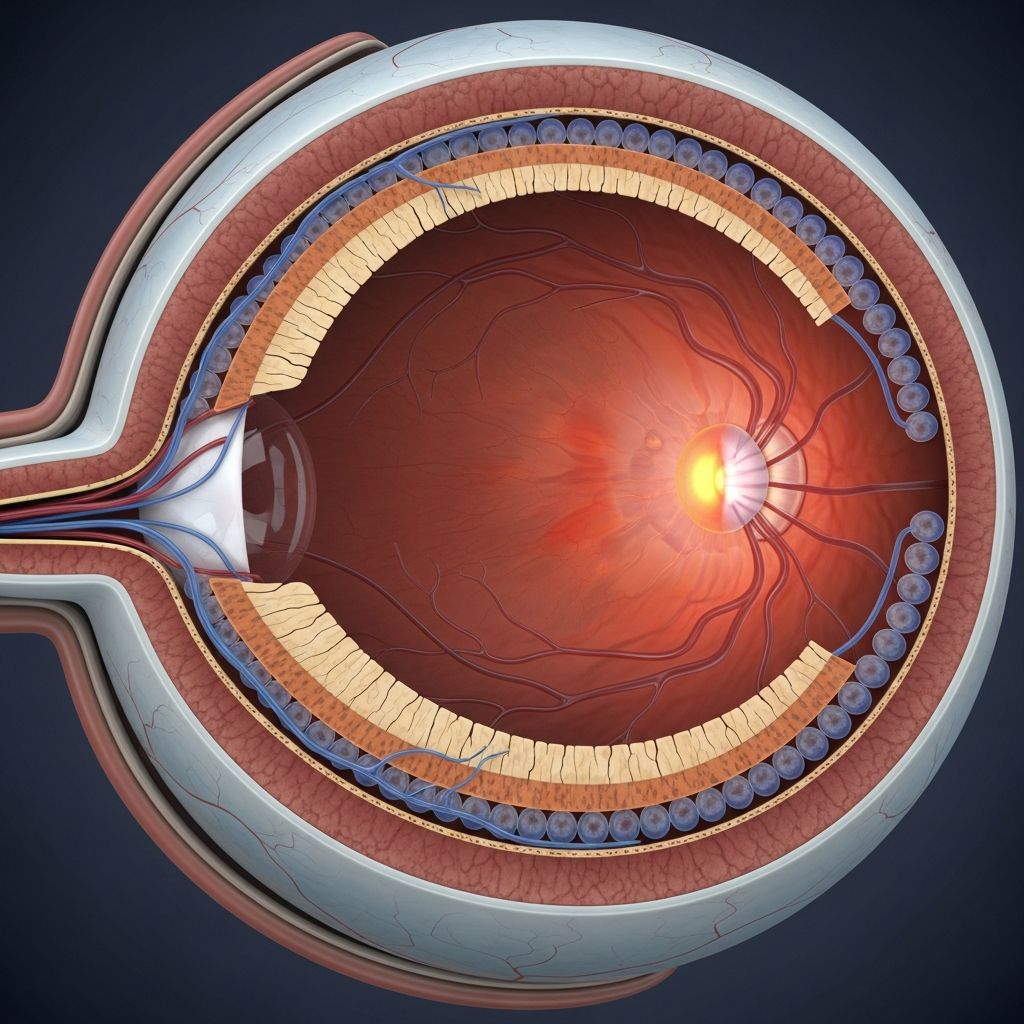
The retina is a specialized light-sensitive tissue layer located at the back of your eye that plays a crucial role in your ability to see. This remarkable structure is responsible for capturing light and converting it into electrical signals that your brain interprets as the images you perceive every day. The retina is composed of multiple layers, each containing different types of cells that work together in a complex, coordinated process to enable vision. Without a healthy, functioning retina, clear vision would not be possible, making it one of the most important structures in your visual system.
Retina Anatomy: The Structural Components
The retina is an intricate structure composed of several distinct layers and specialized cells, each serving a specific function in the visual process. Understanding the anatomy of the retina helps explain how light is detected and converted into images that your brain can understand.
The Macula and Fovea
At the center of your retina lies the macula, a small but incredibly important area approximately 5 millimeters in diameter. The macula is responsible for your central vision, allowing you to see objects directly in front of you with clarity and detail. Within the macula is an even smaller depression called the fovea, which contains the highest concentration of cone cells in your entire retina. The fovea provides the sharpest, most detailed vision and is critical for tasks such as reading, recognizing faces, and driving. This central area is essential for activities requiring fine visual acuity and is the most sensitive part of your retina.
Photoreceptor Cells: Rods and Cones
Your retina contains approximately 125 million light-sensitive cells called photoreceptors, which come in two main types: rods and cones. These specialized cells are the fundamental components that initiate the visual process by detecting light and converting it into electrical signals.
Cones are photoreceptor cells concentrated primarily in the macula and fovea. These cells are responsible for color vision and the perception of fine details in well-lit conditions. There are three types of cones, each sensitive to different wavelengths of light (red, green, and blue), which allows your brain to perceive the full spectrum of colors. While cones provide superior visual acuity and color perception, they require relatively bright light to function effectively.
Rods are distributed throughout the peripheral retina and are highly sensitive to light, making them essential for vision in low-light conditions. Rods enable you to see in dim environments and contribute to your peripheral vision, though they do not perceive color. The abundance of rods throughout the retina makes them invaluable for detecting movement and navigating in darkness.
The Peripheral Retina
Beyond the macula lies the peripheral retina, which encompasses the outer regions of your retina. This area is responsible for your peripheral vision, allowing you to detect movement and objects in your visual field outside of your direct line of sight. The peripheral retina contains primarily rod cells, making it particularly effective for detecting motion and functioning in low-light environments.
Related Stories



Additional Retinal Structures
The retina also contains an inner limiting membrane, nerve fiber layers, and various support cells that work together to facilitate the conversion of light into neural signals. The retinal pigment epithelium supports the photoreceptor cells and helps maintain the health and function of the retina. Blood vessels supply oxygen and nutrients to the retina, ensuring its optimal function.
How the Retina Functions in Vision
The retina’s primary function is to transform light into electrical signals that your brain can process and interpret as images. This remarkable process happens in just milliseconds and involves multiple steps and cellular interactions.
The Visual Process: Five Essential Steps
Understanding how the retina contributes to vision requires examining the complete visual pathway:
Step 1: Light Entry – Light enters your eye through the cornea and passes through the pupil, which controls the amount of light entering your eye.
Step 2: Light Focusing – The cornea, which provides approximately 65-75% of your eye’s focusing power, and the lens, which contributes approximately 25-35% of focusing power, work together to bend and focus light rays precisely onto the retina.
Step 3: Image Formation – Light creates an inverted image on the retina’s photoreceptor layer.
Step 4: Signal Conversion – Photoreceptor cells in the retina convert light energy into electrical signals through complex chemical and electrical processes.
Step 5: Brain Processing – These electrical signals travel through the optic nerve to the visual cortex in your brain, where they are decoded and processed into the images you perceive.
The Role of Photoreceptors in Signal Conversion
When light lands on rods and cones, it activates chemical and electrical processes within these cells. The light-sensitive pigment in these cells undergoes a chemical change that triggers a cascade of events. This cascade generates electrical signals that are transmitted to other retinal cells, including bipolar cells and ganglion cells. These cells process and refine the signals before they are transmitted through the optic nerve to the brain. The entire conversion process demonstrates the extraordinary precision of your visual system.
The Retina and Optic Nerve Partnership
The retina and optic nerve work together seamlessly to transmit visual information from your eye to your brain. The optic nerve, composed of millions of nerve fibers, serves as the communication pathway carrying all visual information, including brightness perception, color, and contrast. After the retina converts light into electrical signals, these signals are organized and transmitted through the optic nerve to the visual cortex. This partnership ensures that every detail you observe is accurately communicated to your brain for processing and interpretation.
Maintaining Retinal Health and Vision
Protecting your retina is essential for maintaining clear vision throughout your life. Several preventive measures can help preserve retinal health:
- Eat a balanced diet rich in antioxidants and omega-3 fatty acids to support retinal health
- Wear protective eyewear and sunglasses with UV protection to shield your retina from harmful radiation
- Manage chronic conditions such as diabetes and high blood pressure, which can affect the blood vessels supplying your retina
- Exercise regularly to improve blood circulation and support overall eye health
- Avoid smoking, which increases the risk of age-related macular degeneration
- Schedule regular comprehensive eye exams to detect retinal problems early
- Limit screen time and practice the 20-20-20 rule: every 20 minutes, look at something 20 feet away for 20 seconds
Common Retinal Conditions and Problems
Several conditions can affect retinal function and vision. Age-related macular degeneration is one of the leading causes of vision loss in older adults, affecting the macula’s ability to process central vision. Diabetic retinopathy occurs when high blood sugar damages blood vessels in the retina, potentially leading to vision loss. Retinal detachment, where the retina separates from the underlying tissue, is a serious emergency requiring immediate medical attention. Regular eye examinations help detect these conditions early, allowing for more effective treatment and preservation of vision.
Frequently Asked Questions About the Retina
Q: What happens if the retina is damaged?
A: Retinal damage can result in vision loss ranging from mild to severe, depending on the extent and location of the damage. Damage to the macula typically affects central vision and the ability to read or recognize faces, while damage to the peripheral retina may affect side vision. Prompt medical attention is essential for addressing retinal damage and preventing further deterioration.
Q: Can the retina repair itself?
A: The retina has limited ability to repair itself naturally. Photoreceptors do not regenerate, so damage is typically permanent. However, early detection and appropriate treatment of retinal conditions can sometimes prevent further damage and help preserve existing vision. This underscores the importance of regular eye examinations.
Q: How often should I have my retina examined?
A: Adults should have comprehensive eye exams at least every two years, or more frequently if they have risk factors such as diabetes, high blood pressure, or a family history of eye disease. Your eye care professional can recommend an appropriate examination schedule based on your individual health status.
Q: Can diet affect retinal health?
A: Yes, diet plays a significant role in retinal health. Foods rich in antioxidants like lutein, zeaxanthin, vitamins C and E, zinc, and omega-3 fatty acids support retinal function and may reduce the risk of age-related macular degeneration. Leafy greens, colorful vegetables, fish, and nuts are particularly beneficial for eye health.
Q: What is the difference between rods and cones?
A: Rods are more sensitive to light and function well in dim conditions, but they do not perceive color. Cones provide color vision and detailed visual acuity in bright light but require more light to function. Your retina uses both types of photoreceptors to provide comprehensive vision across varying light conditions.
Q: Why is the fovea important for vision?
A: The fovea contains the highest concentration of cone cells and provides the sharpest, most detailed central vision. It is critical for tasks requiring precise visual acuity, such as reading and driving. Damage to the fovea can result in significant loss of central vision clarity.
The Complexity and Precision of Retinal Function
The retina represents one of nature’s most sophisticated biological systems. Its ability to detect billions of photons of light and convert them into precise neural signals that your brain interprets as detailed, colorful images is remarkable. Each component of the retina, from the macula’s specialized cone cells to the rod-dominated peripheral regions, has evolved to maximize visual function across different lighting conditions and visual tasks. The seamless integration of these components creates a visual system of extraordinary sensitivity and precision. Understanding your retina’s structure and function emphasizes the importance of protecting this delicate but powerful tissue through regular eye care and healthy lifestyle choices.
References
- Retina: Anatomy, Function, and Related Eye Conditions — Oscar Wylee. Accessed 2025. https://www.oscarwylee.com.au/glasses/eye/anatomy/retina
- Eye Anatomy Explained by Experts — Cannon EyeCare. Accessed 2025. https://seattleeyecaredoctor.com/eye-anatomy-101/
- Eye Anatomy — Vision Direct AU. Accessed 2025. https://www.visiondirect.com.au/optical-centre/eye-care/eye-anatomy/
- Photoreceptors (Rods & Cones): Anatomy & Function — Cleveland Clinic. Accessed 2025. https://my.clevelandclinic.org/health/body/photoreceptors-rods-and-cones
- Macula: What It Is, Anatomy & Function — Cleveland Clinic. Accessed 2025. https://my.clevelandclinic.org/health/body/23185-macula
- Anatomy of the Eye — Cleveland Eye Clinic. 2024-02-23. https://clevelandeyeclinic.com/2024/02/23/anatomy-of-the-eye/
- Eyes: How They Work, Anatomy & Common Conditions — Cleveland Clinic. Accessed 2025. https://my.clevelandclinic.org/health/body/21823-eyes
Similar Articles








Read full bio of medha deb