Retinal Tears and ERM: Diagnosis to Recovery
Explore effective treatments for retinal tears and epiretinal membrane formation, from laser therapy to advanced surgery for optimal eye health.
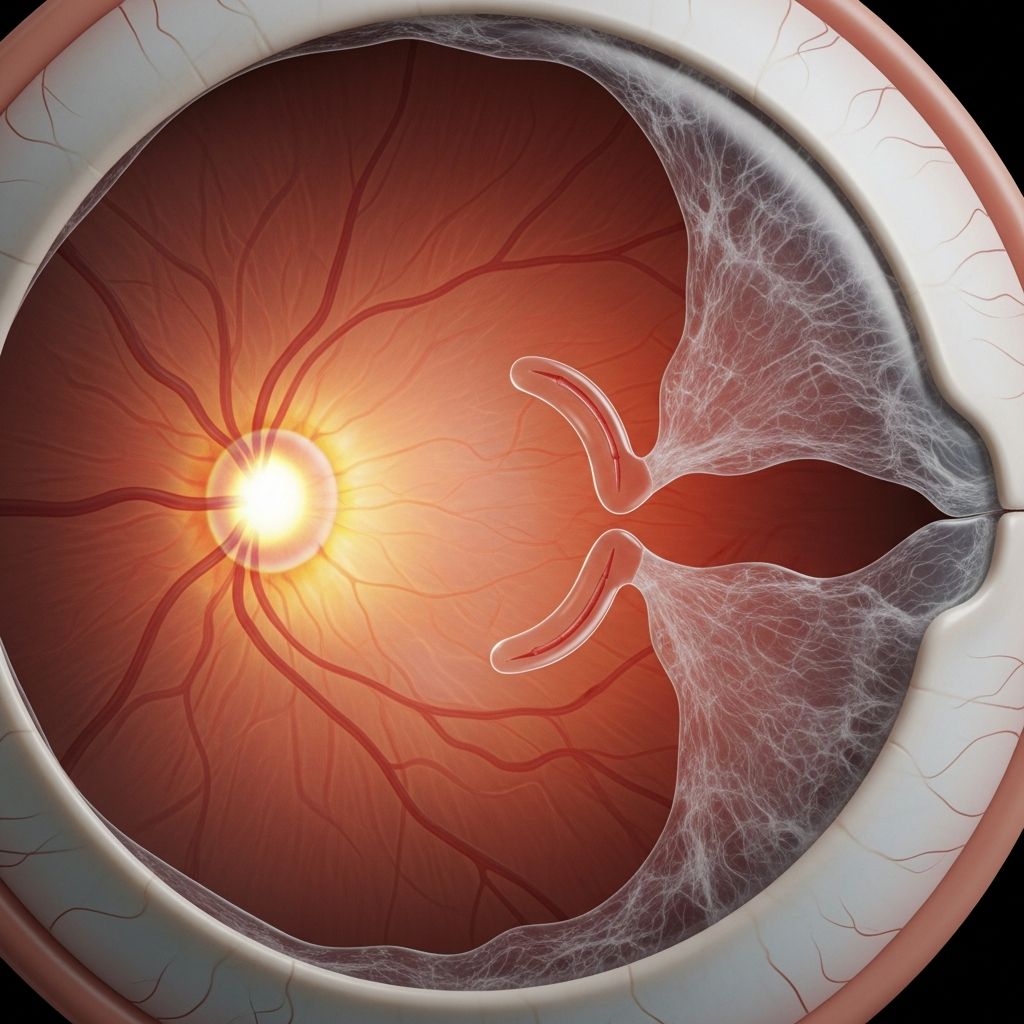
Retinal tears occur when the thin, light-sensitive tissue at the back of the eye develops a rip, potentially leading to detachment if untreated. Epiretinal membrane (ERM), a layer of scar-like tissue on the retina’s surface, can complicate healing and distort vision. Early intervention using laser photocoagulation, cryopexy, or surgical methods like vitrectomy restores retinal integrity and prevents permanent damage.
Understanding the Retinal Structure and Vulnerabilities
The retina functions as the eye’s inner lining, converting light into neural signals for vision. Composed of multiple layers, it relies on the vitreous—a gel-like substance—for support. Age-related shrinkage of the vitreous can tug on the retina, causing tears, especially at weak points like lattice degeneration areas.
Symptoms of retinal tears include sudden floaters, light flashes, or a shadow in peripheral vision. These signs warrant immediate ophthalmologic evaluation, as untreated tears progress to detachment in about 50% of cases without intervention.
Primary Mechanisms Behind Retinal Tears
- Vitreous Traction: Posterior vitreous detachment pulls on the retina, creating tears.
- Trauma or Inflammation: Injury or conditions like uveitis weaken retinal adhesion.
- Predisposing Factors: Myopia, prior surgery, or family history heighten risk.
ERM forms post-tear when inflammatory cells and fibroblasts deposit on the retinal surface, contracting and wrinkling the macula, which impairs central vision.
Diagnostic Approaches for Accurate Assessment
Comprehensive dilated exams using slit-lamp biomicroscopy and indirect ophthalmoscopy detect tears. Optical coherence tomography (OCT) visualizes ERM thickness and macular involvement, guiding treatment. Wide-field imaging captures peripheral tears often missed in standard views.
| Diagnostic Tool | Purpose | Advantages |
|---|---|---|
| Indirect Ophthalmoscopy | Peripheral retina exam | High magnification, stereopsis |
| OCT Imaging | ERM and macular detail | Non-invasive, cross-sectional views |
| Wide-Field Fundus Photography | Documentation and monitoring | Captures 200° field |
Laser Photocoagulation: First-Line Defense
Laser photocoagulation delivers targeted burns around the tear, forming adhesive scars that seal the retina to the underlying pigment epithelium. Performed in-office under topical anesthesia, it numbs the eye for 10-20 minutes. Success rates exceed 90% in preventing detachment when applied promptly.
Post-procedure, patients avoid strenuous activity for 2-4 weeks. Mild discomfort or blurred vision resolves quickly, with follow-ups confirming scar formation.
Cryopexy: Alternative for Challenging Locations
Cryopexy applies a freezing probe to the sclera over the tear, inducing cryonecrosis and scarring. Ideal for anterior tears inaccessible to lasers, it requires local injection anesthesia. Patients may feel cold pressure, followed by drops to reduce inflammation.
Healing involves scar maturation over weeks, monitored via exams. It’s effective standalone or combined with other therapies.
Addressing ERM Formation and Complications
ERM arises from proliferative vitreoretinopathy (PVR), where cells proliferate post-tear. Symptoms include metamorphopsia (distorted vision) and reduced acuity. Mild cases observe; severe ones require pars plana vitrectomy (PPV) with membrane peeling.
Related Stories



During PPV, surgeons remove vitreous gel, peel ERM using dyes like trypan blue, and apply endolaser or tamponade agents. Intraoperative OCT enhances precision, minimizing trauma.
Surgical Interventions for Advanced Cases
Pneumatic Retinopexy
This outpatient procedure injects a gas bubble into the vitreous, pressing the retina against the wall. Laser or cryopexy seals tears simultaneously. Patients maintain face-down positioning for days, with 70-85% success for superior detachments.
Scleral Buckling
A silicone band encircles the eye, indenting the sclera to relieve traction. Combined with drainage and cryotherapy, it suits younger patients or multiple tears. Permanent but invisible, it achieves 85-95% anatomic success.
Advanced Vitrectomy Techniques
PPV removes vitreous, relieves traction, and repairs tears. Tamponade with gas, oil, or air supports reattachment. For PVR/ERM, peeling restores macular anatomy, improving vision outcomes.
| Procedure | Indications | Success Rate | Recovery Time |
|---|---|---|---|
| Laser/Cryopexy | Simple tears | 90-95% | 1-2 weeks |
| Pneumatic Retinopexy | Small detachments | 70-85% | 2-4 weeks |
| Scleral Buckle | Proliferative cases | 85-95% | 4-6 weeks |
| Vitrectomy | ERM/PVR | 80-90% | 4-8 weeks |
Post-Treatment Recovery and Monitoring
Recovery varies: office treatments allow same-day return; surgeries involve positioning aids and restrictions on flying or lifting. Anti-inflammatory drops prevent swelling. Serial exams track reattachment and ERM regression.
- Avoid rubbing eyes or high-impact sports.
- Report new floaters or vision changes immediately.
- Annual check-ups for high-risk patients.
Preventive Strategies and Risk Reduction
Regular exams for myopes or post-vitrectomy patients catch issues early. Protective eyewear prevents trauma. Controlling diabetes reduces vascular risks.
Frequently Asked Questions (FAQs)
What causes sudden floaters and flashes?
These signal vitreous separation, potentially tearing the retina. Seek urgent care.
Is laser treatment painful?
Minimal discomfort under anesthesia; feels like bright light.
Can ERM resolve without surgery?
Some thin spontaneously; thick ones distort vision and need peeling.
How soon after treatment can I drive?
24-48 hours for lasers; weeks for gas bubbles due to blur.
What if treatment fails?
Reoperation with alternative methods succeeds in most cases.
Long-Term Prognosis and Vision Outcomes
Prompt treatment preserves vision in 95% of tears. ERM peeling restores acuity to 20/40 or better in 70% of cases. Lifelong monitoring prevents recurrences.
(Word count: 1678)
References
- Laser Surgery and Freeze Treatment for Retinal Tears — National Eye Institute (NEI). 2023. https://www.nei.nih.gov/eye-health-information/eye-conditions-and-diseases/retinal-detachment/laser-surgery-and-freeze-treatment-retinal-tears
- Retinal Detachment – Diagnosis and treatment — Mayo Clinic. 2025-02-01. https://www.mayoclinic.org/diseases-conditions/retinal-detachment/diagnosis-treatment/drc-20351348
- Retinal Detachments and Retinal Tears — Bascom Palmer Eye Institute, University of Miami. 2024. https://umiamihealth.org/en/bascom-palmer-eye-institute/specialties/retina-and-vitreous-diseases/retinal-detachments-and-retinal-tears
- Retinal Tears — American Society of Retina Specialists (ASRS). 2024. https://www.asrs.org/patients/retinal-diseases/26/retinal-tears
- Retinal Tear: Symptoms, Causes & Treatment — Cleveland Clinic. 2024-10-15. https://my.clevelandclinic.org/health/diseases/25107-retinal-tear
Similar Articles








Read full bio of Sneha Tete