Understanding Retinitis Pigmentosa: Causes and Clinical Features
A comprehensive guide to recognizing and understanding this inherited retinal condition
Retinitis pigmentosa represents a significant group of inherited retinal conditions that progressively compromise vision through the deterioration of light-sensitive cells in the eye. This collection of genetic disorders affects approximately 1 in 3,000 to 1 in 5,000 individuals worldwide, impacting over 1.5 million people across the globe. Despite its relatively low prevalence, retinitis pigmentosa remains a leading cause of inherited blindness in working-age adults. Understanding the fundamental mechanisms of this disease, its clinical presentation, and available management strategies is essential for patients, families, and healthcare providers seeking to optimize care and quality of life.
The Genetic Foundation of Retinal Disease
Retinitis pigmentosa stems from mutations in genes responsible for producing proteins critical to photoreceptor function and survival. The disease exhibits remarkable genetic heterogeneity, with mutations in numerous genes contributing to its development. Key genes implicated in retinitis pigmentosa include RHO, RPGR, and PRPS1, each associated with distinct inheritance patterns and disease severity variations. These genetic mutations disrupt the normal physiological processes within rod and cone photoreceptors, ultimately leading to their progressive dysfunction and death.
The inheritance patterns of retinitis pigmentosa vary considerably depending on which gene carries the mutation. Autosomal dominant forms occur when a single mutated gene copy from either parent triggers disease development. Autosomal recessive patterns require mutation inheritance from both parents, while X-linked variants affect males more severely than females. This genetic diversity explains why different families experience variable disease progression rates and symptom severity, making personalized medicine approaches increasingly important in management strategies.
How Photoreceptors Function and Fail
The retina contains two primary types of light-sensing cells: rods and cones. Rods provide vision in low-light conditions, enabling night vision and peripheral sight, while cones function in bright light and are responsible for color discrimination and detailed central vision. These photoreceptors operate through a complex biological cascade wherein light triggers chemical reactions that generate electrical signals transmitted to the brain via the optic nerve.
In retinitis pigmentosa, rod photoreceptors are typically affected first, with cone degeneration following in later disease stages. The pathological process involves both direct photoreceptor dysfunction and secondary damage to the retinal pigment epithelium, a supportive tissue layer underlying the photoreceptor layer. Histopathological studies reveal shortened or absent outer segments of photoreceptors, along with abnormal structural inclusions within affected cells. Additionally, both typical retinal pigment epithelium cells and macrophage-like cells invade affected retinal areas, representing the eye’s reactive response to progressive photoreceptor damage.
Early Recognition: Symptoms That Warrant Attention
The clinical presentation of retinitis pigmentosa typically begins with symptoms directly related to rod dysfunction. Night blindness, or nyctalopia, frequently represents the earliest manifestation, often noticed during adolescence or early adulthood. Affected individuals struggle with vision in dimly lit environments, experiencing difficulty navigating dark hallways, driving at night, or adapting when moving from brightly lit to dark spaces.
Progressive peripheral vision loss accompanies night blindness as the disease advances. Patients gradually experience a constricting visual field, initially affecting the outer edges of their peripheral vision. This progressive narrowing creates a tunnel-like vision pattern, where individuals retain relatively good central vision initially but lose awareness of their surroundings in side directions. The combination of poor night vision and peripheral field loss significantly impacts daily functioning, affecting mobility, safety, and independence.
Related Stories



Some individuals develop additional visual symptoms including:
- Difficulty recognizing faces at a distance due to peripheral vision loss
- Challenges navigating cluttered or crowded environments
- Sensitivity to bright light and glare, particularly in early disease stages
- Floaters or visual disturbances in some cases
- Blurred or reduced central vision as cone photoreceptors deteriorate in advanced disease
Clinical Examination Findings: What Eye Specialists Observe
Eye care specialists recognize retinitis pigmentosa through characteristic findings during comprehensive ocular examination. The classic clinical triad consists of arteriolar narrowing, retinal pigmentary changes, and optic disc pallor.
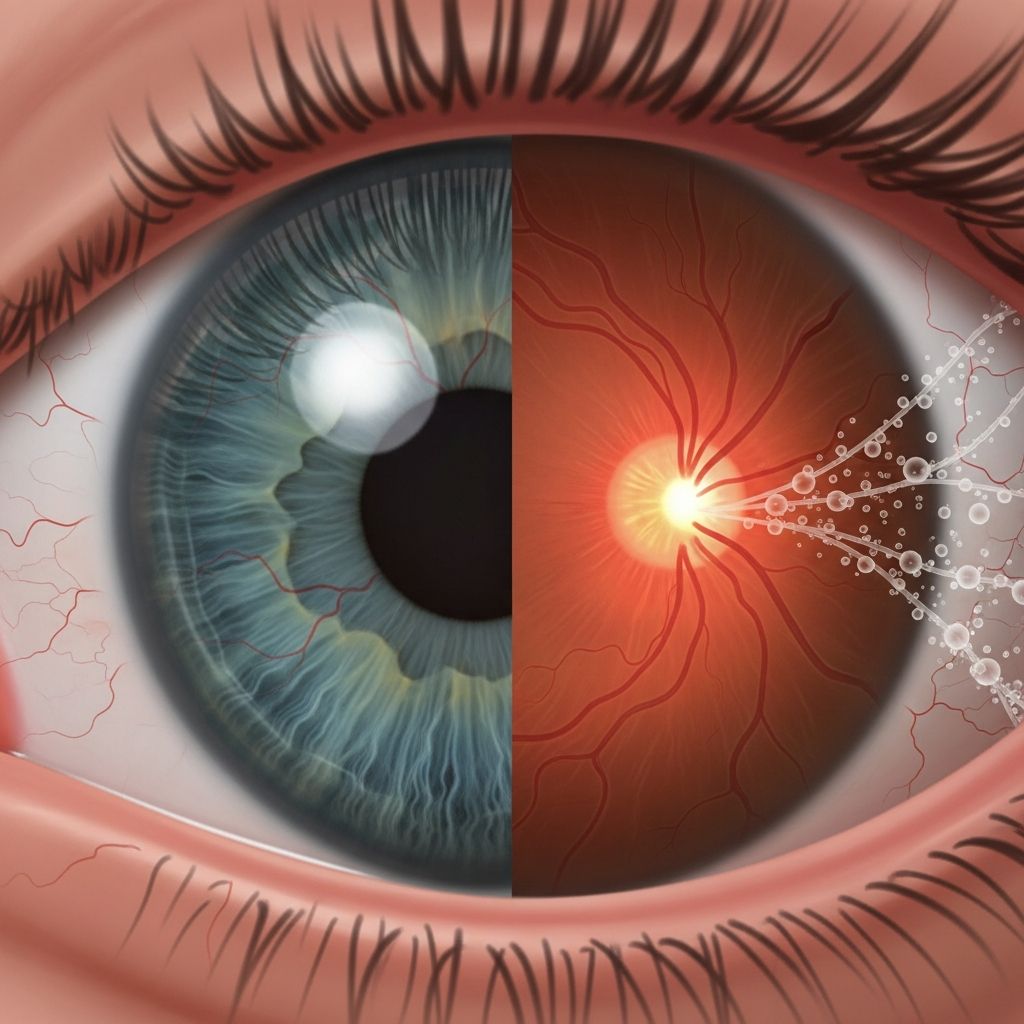
During funduscopic examination (direct visualization of the retina), the most distinctive finding involves hyperpigmentation in a bone-spicule configuration, typically appearing in the midperipheral retina where rod photoreceptors predominantly concentrate. These dark pigmented deposits resemble bone spicules radiating outward from the retina’s middle regions. Accompanying these characteristic pigment changes, retinal arterioles appear abnormally narrow, and the optic disc displays a waxy yellow or pale appearance. Additional findings may include:
- Cystoid macular edema (swelling in the central retina affecting detailed vision)
- Posterior subcapsular cataracts (cloudiness in the lens)
- Cells floating within the vitreous humor (the gel filling the eye)
- Myopia (nearsightedness) or myopic shift in some patients
Diagnostic Procedures: Confirming the Diagnosis
While clinical examination findings provide important clues, several specialized tests confirm retinitis pigmentosa diagnosis and assess disease progression.
Electroretinography: Measuring Photoreceptor Function
Electroretinography (ERG) represents the gold standard for confirming retinitis pigmentosa diagnosis. This procedure measures electrical potentials generated by rods and cones in response to light stimuli. The test quantifies specific parameters including a-wave and b-wave amplitudes and implicit times, which reflect the timing and strength of photoreceptor and supporting cell responses.
In early retinitis pigmentosa stages, ERG demonstrates reduced a-wave and b-wave amplitudes with potentially prolonged implicit times. As disease progresses, these abnormalities become more pronounced. Patients in advanced disease stages may show nondetectable or extinguished ERG responses, indicating severe photoreceptor dysfunction. Dark-adapted ERG testing specifically assesses rod function, while light-adapted testing evaluates cone responses, allowing clinicians to stage disease severity and predict disease trajectory.
Visual Field Assessment
Goldmann perimetry or automated visual field testing quantifies the extent and pattern of peripheral vision loss. These tests map the patient’s visual field sensitivity at different locations, creating a detailed picture of how retinitis pigmentosa affects vision in different retinal regions. Progressive field loss on serial testing confirms the diagnosis and demonstrates disease progression over time.
Retinal Imaging Technologies
Optical coherence tomography (OCT) provides cross-sectional images of retinal layers, detecting structural changes associated with retinitis pigmentosa. OCT effectively identifies cystic macular lesions, epiretinal membranes, and vitreomacular traction syndrome that may contribute to central vision loss. Advanced imaging reveals outer retinal layer thinning and sometimes inner retinal changes, correlating with photoreceptor degeneration.
Fundus autofluorescence imaging visualizes retinal pigment epithelium health and identifies areas of photoreceptor loss. Fluorescein angiography documents early retinal pigment epithelium deterioration and identifies abnormal vascular patterns, particularly in female carriers of X-linked retinitis pigmentosa and patients with cystic macular lesions.
Genetic Testing
Genetic testing identifies specific gene mutations responsible for an individual’s retinitis pigmentosa, providing valuable information about inheritance patterns, disease prognosis, and potential family members who may require screening. This testing increasingly guides treatment decisions and identifies candidates for emerging gene therapy approaches.
Associated Conditions and Complications
While typical retinitis pigmentosa primarily affects the retina, some patients develop additional ocular complications requiring monitoring and management. Cystoid macular edema represents a common secondary complication affecting central vision in advanced disease stages. This retinal swelling can be addressed through topical or oral medications to reduce inflammation.
Cataract formation occurs at higher rates in retinitis pigmentosa patients compared to the general population. The posterior subcapsular variety develops relatively early, potentially causing additional vision degradation. Some patients also experience myopic shift or progressive myopia throughout disease course.
Systemic Associations
While typical retinitis pigmentosa exists in isolation, some genetic variants associate with systemic manifestations. Refsum disease combines retinitis pigmentosa with peripheral neuropathy and ataxia, while Kearns-Sayre syndrome involves retinitis pigmentosa with cardiac conduction defects and neurological features. Bassen-Kornzweig syndrome presents retinitis pigmentosa alongside fat malabsorption and neurological symptoms. Recognizing these rare syndromic forms is essential, as some respond to specific nutritional interventions.
Current Management Approaches
Although no cure currently exists for retinitis pigmentosa, evidence supports several interventions that may slow vision loss progression and optimize remaining vision.
Nutritional Supplementation
Research indicates that specific micronutrients may reduce the rate of visual decline. Current recommendations include vitamin A palmitate supplementation at doses of 15,000 IU daily, which appears particularly beneficial when red blood cell docosahexaenoic acid (DHA) levels are adequately maintained through omega-3 fatty acid consumption or supplementation. Lutein and zeaxanthin, carotenoid antioxidants concentrated in the retina, show promise at doses of 12 mg daily in combination with vitamin A and omega-3 supplementation. These compounds protect photoreceptors from oxidative damage contributing to cell death.
Photoprotection Strategies
Excessive light exposure may accelerate retinitis pigmentosa progression, making photoprotection an important management consideration. Blue-violet light, possessing the highest energy content in the visible spectrum, particularly contributes to photophobia and retinal damage in susceptible individuals. Specialized filters and lenses that reduce harmful light wavelengths while preserving useful vision can improve comfort and potentially slow disease progression. Sunglasses providing ultraviolet protection and blue-light filtration represent practical photoprotection measures.
Clinical Monitoring and Follow-up
Regular ophthalmologic examinations enable early detection of complications and assessment of disease progression. Annual comprehensive eye exams measuring visual acuity, visual fields, and ocular health typically suffice for stable patients. When medical treatments are implemented, more frequent monitoring with laboratory evaluation of vitamin A levels and liver function becomes necessary, as high-dose vitamin A carries potential hepatotoxicity risks requiring surveillance.
Frequently Asked Questions
Is retinitis pigmentosa inherited?
Yes, retinitis pigmentosa is inherited through genetic mutations. The inheritance pattern varies—autosomal dominant (one mutated gene copy), autosomal recessive (two mutated gene copies), or X-linked (affecting the X chromosome). Genetic testing can identify specific mutations and inheritance patterns in affected families.
Will I definitely go blind?
Retinitis pigmentosa progression varies widely among individuals. While some experience significant vision loss by adulthood, others maintain useful central vision into later life. Modern management strategies and emerging therapies aim to slow progression and optimize remaining vision throughout life.
Can retinitis pigmentosa be cured?
Currently, no cure exists for retinitis pigmentosa. However, research into gene therapy, stem cell treatments, and retinal implants shows promise. Nutritional interventions and photoprotection can help slow progression and optimize vision quality during present management.
How often should I have eye examinations?
Annual comprehensive eye exams are typically recommended for monitoring disease progression. If medical treatments are initiated, more frequent visits and laboratory monitoring may be necessary to assess treatment response and detect complications early.
Should my family members be screened?
Family screening recommendations depend on inheritance patterns. First-degree relatives of affected individuals face varying risks based on the inheritance mode. Genetic counseling helps families understand their specific risks and determine appropriate screening timing and methods.
The Role of Genetic Counseling and Family Planning
Individuals diagnosed with retinitis pigmentosa benefit from genetic counseling to understand their inheritance pattern, recurrence risks for offspring, and implications for family members. Genetic counselors help patients navigate complex inheritance patterns and discuss family planning considerations. This information proves particularly valuable for reproductive decision-making and identifying asymptomatic relatives who may benefit from preventive monitoring or early intervention strategies.
Emerging Therapeutic Horizons
The landscape of retinitis pigmentosa treatment is evolving rapidly. Gene therapy approaches targeting specific genetic mutations show promising results in clinical trials. Retinal prosthetics and artificial vision devices offer potential alternatives for severe vision loss. Anti-vascular endothelial growth factor injections address cystoid macular edema complications. Staying informed about emerging treatments through ophthalmologists and patient advocacy organizations enables individuals to evaluate novel therapeutic opportunities as they become available.
Understanding retinitis pigmentosa fundamentals empowers patients and families to engage actively in disease management, make informed decisions about care, and maintain realistic expectations regarding vision preservation and quality of life throughout disease course. While the diagnosis carries significant implications, advances in diagnostic precision and therapeutic options continue expanding possibilities for optimizing outcomes and supporting individuals living with this complex retinal condition.
References
- Retinitis Pigmentosa – Eye Disorders – Merck Manuals — Merck Sharp & Dohme Corp. Accessed February 2026. https://www.merckmanuals.com/professional/eye-disorders/retinal-disorders/retinitis-pigmentosa
- Retinitis Pigmentosa – EyeWiki — American Academy of Ophthalmology. Accessed February 2026. https://eyewiki.org/Retinitis_Pigmentosa
- Managing Retinitis Pigmentosa: A Literature Review of Current Non-Surgical Interventions — PMC/NIH. 2024. https://pmc.ncbi.nlm.nih.gov/articles/PMC11765533/
- Current Understanding on Retinitis Pigmentosa: A Literature Review — Frontiers in Ophthalmology. 2025. https://www.frontiersin.org/journals/ophthalmology/articles/10.3389/fopht.2025.1600283/full
- Retinitis Pigmentosa (RP) — Prevent Blindness. Accessed February 2026. https://preventblindness.org/retinitis-pigmentosa/
- What Is Retinitis Pigmentosa? — Cleveland Clinic. Accessed February 2026. https://my.clevelandclinic.org/health/diseases/17429-retinitis-pigmentosa
Similar Articles








Read full bio of Sneha Tete