Retinoblastoma Genetics And Treatment: Clinical Guide 2025
Explore how genetic insights into RB1 mutations shape retinoblastoma diagnosis, personalized therapies, and lifelong patient care strategies.
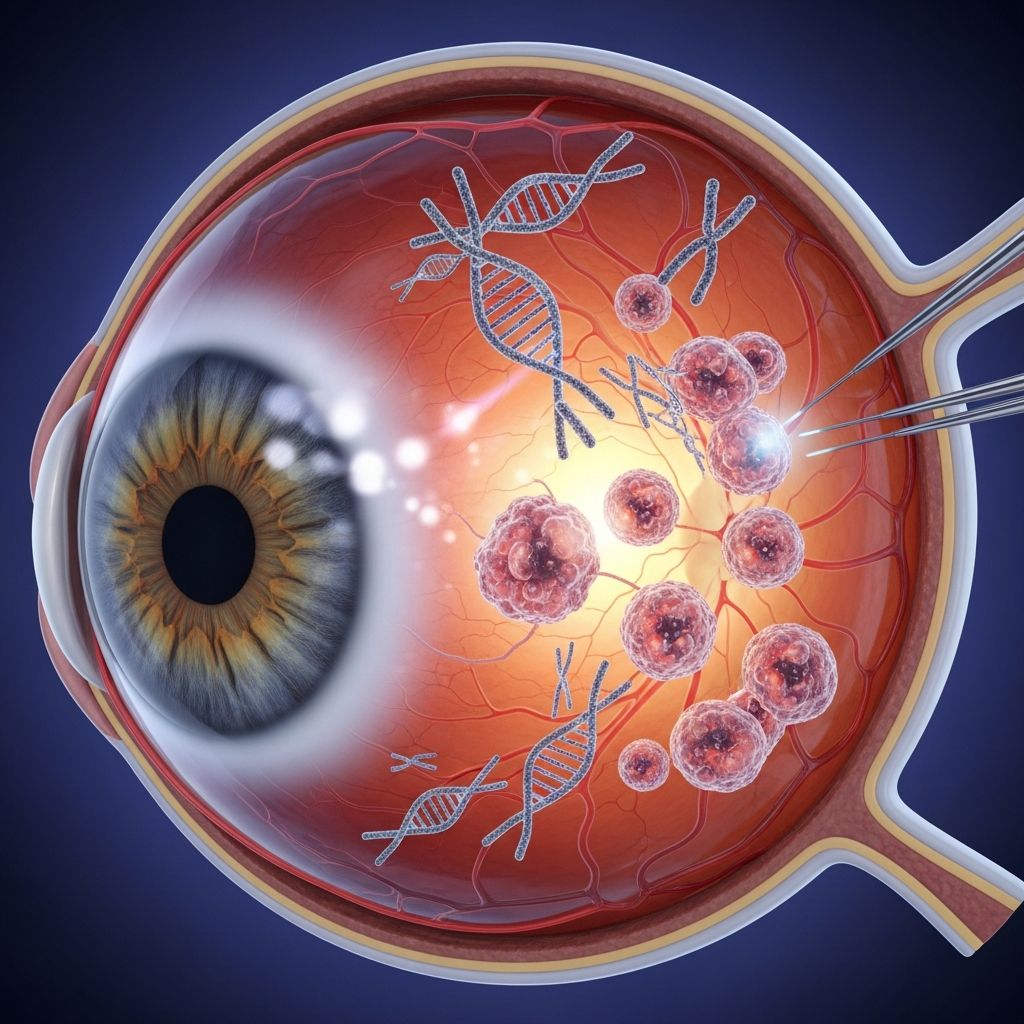
Retinoblastoma, a rare eye cancer primarily affecting young children, originates from genetic alterations in retinal cells, with the RB1 gene at the forefront. Understanding these genetic drivers not only informs precise diagnosis but also dictates treatment choices, family risk assessment, and surveillance for secondary malignancies.
The Genetic Basis of Retinoblastoma
Retinoblastoma follows Knudson’s two-hit hypothesis, where both alleles of the RB1 tumor suppressor gene must be inactivated for cancer to develop. In heritable cases, comprising 30-40% of instances, a germline mutation represents the first hit, inherited in an autosomal dominant pattern with high penetrance. The second somatic hit occurs in retinal cells, often leading to bilateral or multifocal tumors. Non-heritable forms involve two somatic mutations within the same cell, typically resulting in unilateral disease.
Clinically, heritable retinoblastoma presents earlier, with risks extending to secondary cancers like osteosarcoma or pineoblastoma due to lifelong RB1 deficiency. Low-penetrance variants exist, where specific RB1 mutations yield milder phenotypes, such as unilateral tumors despite germline involvement. Emerging research identifies additional modifiers like MYCN amplification or mutations in BCOR and CREBBP, influencing tumor behavior independent of RB1.
Diagnostic Approaches Informed by Genetics
Early detection hinges on recognizing signs like leukocoria or strabismus, followed by imaging and genetic confirmation. Genetic testing is recommended for all patients, prioritizing bilateral, familial, or multifocal cases. Blood samples detect germline mutations via sequencing, while tumor tissue reveals somatic events through techniques like whole-exome sequencing, copy number variation analysis, and methylation profiling.
A structured testing protocol begins with RB1 analysis in peripheral blood for suspected heritable forms. If negative, tumor biopsy via enucleation provides material for comprehensive genomic profiling. Advanced methods, including long-read sequencing, uncover complex rearrangements missed by standard assays. Prenatal and preimplantation genetic diagnosis offer reproductive options for at-risk families.
Treatment Strategies Shaped by Genetic Profile
Treatment selection integrates genetic status, tumor stage, and laterality. Heritable cases favor eye-preserving approaches to maintain vision, while avoiding radiation due to secondary cancer risks.
Intraocular Disease Management
For early groups (A-C), chemoreduction with intravenous regimens like vincristine, etoposide, and carboplatin (VEC) achieves 90-100% salvage rates, followed by focal therapies such as cryotherapy, laser thermotherapy, or plaque brachytherapy. Intravitreal chemotherapy targets vitreous seeds, and intra-arterial infusion delivers high-dose drugs directly to the eye.
Advanced and Extraocular Extensions
Group D/E tumors or extraocular spread require intensified protocols: systemic chemotherapy, high-dose chemotherapy with stem cell rescue, and sometimes external-beam radiation. Trilateral retinoblastoma, involving pineal tumors, combines chemotherapy, surgery, and radiation. Metastatic disease prognosis remains guarded, emphasizing clinical trials.
Genetic Influence on Therapy: RB1-deficient tumors respond to chemotherapy, but MYCN-amplified subtypes may necessitate alternative strategies. Radiation is minimized in germline carriers to curb secondary malignancies.
Table: Retinoblastoma Treatment by Stage and Genetics
| Stage/Group | Heritable (Germline RB1) | Non-Heritable | Key Therapies |
|---|---|---|---|
| Early Intraocular (A-C) | Chemoreduction + focal therapy; avoid radiation | Chemoreduction + focal therapy | VEC chemo, cryotherapy, laser |
| Advanced Intraocular (D/E) | Intra-arterial/intravitreal chemo; enucleation if needed | Intra-arterial/intravitreal chemo; enucleation | High-dose carboplatin, stem cell rescue |
| Extraocular/Metastatic | Systemic chemo + high-dose + radiation (sparingly) | Systemic chemo + high-dose + radiation | Trials for targeted therapy |
Related Stories



Emerging Targeted Therapies
Precision medicine advances include oncolytic viruses targeting RB1-deficient cells, injected directly into tumors with promising anticancer effects. Tumor profiling for gene changes guides personalized targeted drugs, minimizing damage to healthy tissue. Liquid biopsy and prognostic biomarkers like MYCN amplification herald future non-invasive monitoring. Chemoplaque and tylectomy represent innovative local control methods.
Family Screening and Counseling
Genetic confirmation triggers cascade screening for relatives. At-risk siblings undergo exams under anesthesia from birth until age 7. Parents of germline probands face low recurrence risk (2-5%) but benefit from counseling. Long-term follow-up for survivors includes annual imaging for secondary cancers, tailored by RB1 status.
- Germline carriers: Lifetime surveillance for sarcomas, melanomas.
- Non-carriers: Standard pediatric follow-up.
- Family implications: Reproductive counseling, PGD.
Long-Term Outcomes and Survival
In high-resource settings, intraocular retinoblastoma boasts >95% survival, dropping for extraocular disease. Heritable patients contend with 2-3x secondary cancer risk, mitigated by genetic-informed care. Multidisciplinary teams, including oncologists and geneticists, optimize prognosis.
Frequently Asked Questions (FAQs)
What causes retinoblastoma?
Primarily biallelic RB1 inactivation; heritable via germline mutation, non-heritable somatically.
Is retinoblastoma hereditary?
30-40% cases; autosomal dominant with high penetrance.
How is genetic testing done?
Blood/tumor sequencing, CNV, methylation analysis.
Can retinoblastoma be cured?
What are secondary cancer risks?
Elevated in germline carriers; avoid radiation.
Future Directions in Retinoblastoma Care
Whole-genome sequencing refines mutation detection, while biomarkers enable risk-stratified therapy. International trials explore immunotherapies and gene editing. Integrating genetics into practice promises precision medicine, slashing morbidity and costs.
References
- Retinoblastoma Treatment – NCI — National Cancer Institute. 2023-10-05. https://www.cancer.gov/types/retinoblastoma/patient/retinoblastoma-treatment-pdq
- Retinoblastoma – A comprehensive review, update and recent advances — PMC/NCBI. 2024-07-15. https://pmc.ncbi.nlm.nih.gov/articles/PMC11232864/
- Genetics of Retinoblastoma: An Overview and Significance — PMC/NCBI. 2024-08-20. https://pmc.ncbi.nlm.nih.gov/articles/PMC12469762/
- Hereditary Retinoblastoma (RB1) — American Cancer Society. 2024-01-12. https://www.cancer.org/cancer/risk-prevention/genetics/family-cancer-syndromes/hereditary-retinoblastoma.html
- Retinoblastoma — EyeWiki (AAO). 2025-11-18. https://eyewiki.org/Retinoblastoma
- Retinoblastoma – Diagnosis and treatment — Mayo Clinic. 2024-06-22. https://www.mayoclinic.org/diseases-conditions/retinoblastoma/diagnosis-treatment/drc-20351013
Similar Articles








Read full bio of medha deb