Retrobulbar Neuritis: Causes, Symptoms, and Treatment
Complete guide to retrobulbar neuritis: understanding inflammation behind the eye and its treatment options.
Retrobulbar Neuritis: A Comprehensive Guide
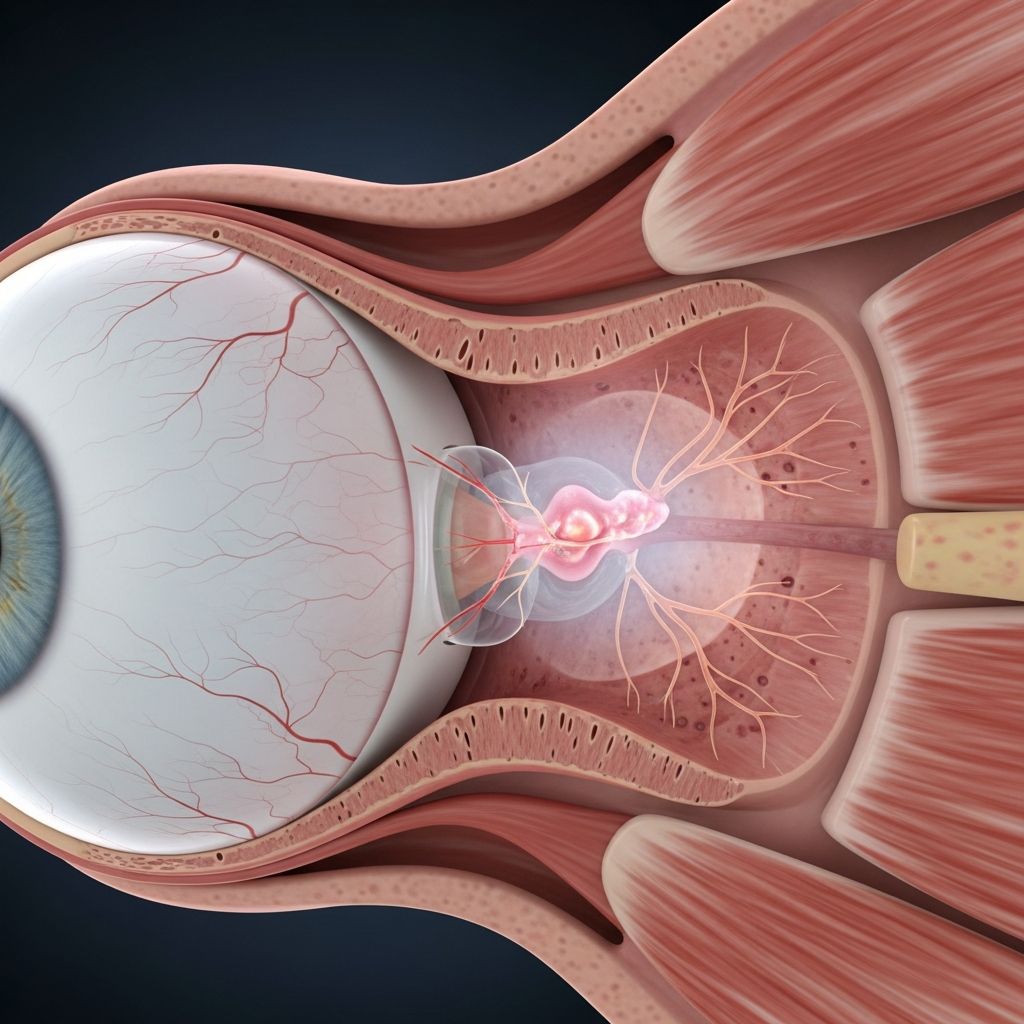
Retrobulbar neuritis is an inflammatory condition affecting the optic nerve, specifically the portion located behind the eye (retrobulbar region). This condition causes sudden vision loss and eye pain, particularly during eye movements. Understanding retrobulbar neuritis is crucial because it can be an early indicator of multiple sclerosis (MS) or other demyelinating diseases, making prompt diagnosis and treatment essential for preserving vision and preventing progression to systemic neurological conditions.
What Is Retrobulbar Neuritis?
Retrobulbar neuritis, also known as optic neuritis, is an inflammation of the optic nerve that occurs behind the eyeball. The optic nerve transmits visual information from the eye to the brain, and when inflammation affects this nerve, it disrupts the normal transmission of visual signals. The term “retrobulbar” specifically refers to inflammation behind the globe of the eye, distinguishing it from papillitis, where swelling of the optic nerve head is visible during eye examination.
This condition is characterized by the loss of myelin, the protective sheath surrounding nerve fibers. This demyelination impairs the nerve’s ability to transmit electrical signals efficiently, resulting in vision loss. The inflammation typically affects one eye at a time, though bilateral involvement can occur in some cases, particularly in patients with multiple sclerosis or neuromyelitis optica spectrum disorder.
Symptoms of Retrobulbar Neuritis
The symptoms of retrobulbar neuritis typically develop rapidly and can be quite distressing. Recognizing these symptoms early is important for seeking timely medical attention.
Primary Symptoms
Eye Pain: Most patients experience pain in or around the affected eye, which often worsens with eye movements. This pain can range from mild to severe and is one of the most characteristic features of retrobulbar neuritis. The pain typically precedes vision loss by a few days.
Vision Loss: Blurred or dim vision typically develops within a few days of symptom onset. Patients often describe the vision loss as resembling a “thumbprint” or smudge obscuring their vision. Some experience progressive darkening of the visual field, and in severe cases, vision loss can progress from minor blurring to significant impairment within a week or two.
Color Vision Abnormalities: Reduced color perception is extremely common in retrobulbar neuritis. Patients frequently report that colors appear washed out or less vibrant, particularly reds and greens. This symptom, called dyschromatopsia, can be one of the earliest signs of the condition and persists even when central vision remains relatively intact.
Visual Field Defects: A blind spot (scotoma) may develop in the center of vision or spread throughout the visual field. Some patients experience an altitudinal defect, where the upper or lower portion of the visual field is affected.
Causes and Risk Factors
Retrobulbar neuritis can occur as an isolated event or as part of a broader demyelinating disease. Understanding the underlying causes and risk factors is essential for appropriate management and prognosis.
Related Stories



Associated Conditions
Multiple Sclerosis: Retrobulbar neuritis is significantly associated with MS, occurring in approximately 15-20% of MS patients and serving as the initial presentation in 5% of MS cases. Patients experiencing retrobulbar neuritis have a substantially elevated risk of developing clinically definite MS within the following years, particularly if brain MRI reveals additional demyelinating lesions.
Neuromyelitis Optica Spectrum Disorder (NMOSD): This rare autoimmune condition frequently presents with optic neuritis, often bilateral and more severe than typical MS-associated optic neuritis. NMOSD is characterized by the presence of aquaporin-4 (AQP4) antibodies or myelin oligodendrocyte glycoprotein (MOG) antibodies.
Systemic Autoimmune Conditions: Retrobulbar neuritis can occur in patients with systemic lupus erythematosus, sarcoidosis, and other autoimmune disorders. These cases may present with atypical features and require specific immunosuppressive treatment approaches.
Infectious Causes: In some cases, infections such as syphilis, Lyme disease, and viral infections can trigger optic nerve inflammation. Careful evaluation for these treatable conditions is necessary, particularly in patients with atypical presentation.
Risk Factors
Age is an important risk factor, with retrobulbar neuritis most commonly affecting individuals between 18 and 45 years old. Women are affected more frequently than men, with a female-to-male ratio of approximately 2:1. Genetic predisposition may also play a role, as HLA-DQ2 and HLA-DR15 genotypes are associated with increased risk of both optic neuritis and multiple sclerosis.
Diagnosis of Retrobulbar Neuritis
Accurate diagnosis of retrobulbar neuritis requires a systematic clinical approach combining ophthalmologic examination, imaging studies, and laboratory tests when indicated.
Clinical Examination
A comprehensive neuro-ophthalmologic examination is the foundation of diagnosis. The physician will assess visual acuity, perform color vision testing (typically using Ishihara plates or similar tests), and evaluate the visual field through confrontation testing or automated perimetry. A careful assessment for a relative afferent pupillary defect (rAPD), which indicates asymmetric optic nerve dysfunction, is essential. Funduscopic examination typically reveals no visible abnormalities in pure retrobulbar neuritis, as the inflammation occurs behind the eye. However, mild optic disc edema may be present if inflammation extends anteriorly.
Magnetic Resonance Imaging (MRI)
MRI of the brain and orbits is a critical diagnostic tool for all patients with retrobulbar neuritis. Brain MRI can identify additional demyelinating lesions that may not cause symptoms, which significantly increases the risk stratification for MS development. Orbital MRI with gadolinium contrast can directly visualize optic nerve inflammation, showing T2 hyperintensity and gadolinium enhancement of the affected nerve segment. The presence of additional brain lesions warrants consideration of disease-modifying therapy even after the initial optic neuritis episode.
Lumbar Puncture and Cerebrospinal Fluid Analysis
Lumbar puncture (spinal tap) may be performed to analyze cerebrospinal fluid (CSF) for oligoclonal bands and other abnormalities. The presence of oligoclonal bands unique to the CSF compared to serum significantly increases the likelihood of an underlying demyelinating disease and is associated with higher risk of developing MS. While not required for diagnosis in typical cases, CSF analysis can be particularly helpful when MRI findings are equivocal or when atypical features suggest alternative diagnoses.
Laboratory Tests
Blood tests should include assessment for AQP4 and MOG antibodies to exclude NMOSD. Additional testing for syphilis, Lyme disease, and systemic autoimmune markers (such as antinuclear antibodies and anti-aquaporin-4 antibodies) may be indicated when clinical features suggest these alternative diagnoses. These tests help differentiate retrobulbar neuritis from other conditions that can present with similar symptoms.
Clinical Course and Prognosis
The natural history of retrobulbar neuritis typically follows a characteristic pattern, though individual variation exists. Vision loss typically worsens over approximately 7-10 days and then gradually begins to improve over 1-3 months. Most patients achieve substantial visual recovery, with approximately 70% of patients recovering normal or near-normal vision (20/20 or better) within 6 months. However, patients with initial vision worse than 20/60 have a higher risk of permanent visual loss.
Some patients experience unusually prolonged vision loss, with progressive deterioration lasting several weeks rather than the typical pattern. This atypical evolution may indicate an alternative diagnosis or a more aggressive inflammatory process requiring intensified treatment. Long-term follow-up studies demonstrate that approximately 30-50% of patients with optic neuritis will develop MS within 15 years, though this risk varies based on MRI findings at presentation.
Treatment Options
Treatment approaches for retrobulbar neuritis aim to reduce inflammation, accelerate visual recovery, and reduce the risk of MS development in appropriate candidates.
Corticosteroid Therapy
Intravenous methylprednisolone (1 gram daily for 3-5 days) remains the standard acute treatment for retrobulbar neuritis. This potent anti-inflammatory agent reduces the duration of acute vision loss and accelerates visual recovery. The mechanism involves immunosuppression and reduction of blood-brain barrier permeability. Some patients may benefit from subsequent oral corticosteroid tapering over 1-2 weeks. While corticosteroids accelerate recovery during the acute phase, they do not appear to significantly improve long-term visual outcomes for most patients.
Immunosuppressive Agents
For patients with evidence of demyelinating disease on brain MRI, disease-modifying therapies are often initiated following optic neuritis. Oral medications such as fingolimod (Gilenya), dimethyl fumarate (BG-12/Tecfidera), and teriflunomide (Aubagio) have demonstrated efficacy in reducing the risk of progression to clinically definite MS. These agents should be considered for patients with multiple demyelinating lesions on brain MRI at presentation.
Plasma Exchange
Plasma exchange (plasmapheresis) may be considered in severe cases of retrobulbar neuritis, particularly those with atypical features or incomplete response to corticosteroids. This procedure removes pathogenic antibodies and immune complexes from the blood and has shown benefit in some patients with severe vision loss and rapid progression. It is particularly useful in patients with evidence of autoantibodies such as AQP4 or MOG antibodies.
Rehabilitation and Supportive Care
During the acute phase and recovery period, patients may benefit from occupational therapy to adapt to temporary vision loss. Low-vision aids can help patients continue essential activities during the recovery phase. Psychological support is important, as the sudden vision loss and uncertainty regarding MS risk can be emotionally challenging.
Frequently Asked Questions
Q: Is retrobulbar neuritis the same as optic neuritis?
A: Retrobulbar neuritis is a specific type of optic neuritis where inflammation occurs behind the eye. While all retrobulbar neuritis is optic neuritis, not all optic neuritis is retrobulbar—some inflammation may affect the visible optic nerve head (papillitis).
Q: What is the connection between retrobulbar neuritis and multiple sclerosis?
A: Retrobulbar neuritis is often an early manifestation of MS. Patients with optic neuritis have a significantly elevated risk of developing MS within 15 years, especially if brain MRI shows additional demyelinating lesions at the time of diagnosis.
Q: Will my vision return to normal after retrobulbar neuritis?
A: Most patients experience substantial visual recovery within 3-6 months, with approximately 70% achieving normal or near-normal vision. However, those with initially severe vision loss (worse than 20/60) have a higher risk of permanent visual loss.
Q: How long does retrobulbar neuritis take to develop?
A: Symptoms typically develop over several days to a week. Eye pain usually precedes vision loss, which typically worsens most during the first 7-10 days before beginning to improve gradually.
Q: Are there any long-term complications of retrobulbar neuritis?
A: Beyond the risk of MS development, some patients may experience permanent color vision abnormalities or subtle visual field defects even after apparent recovery. Recurrent optic neuritis in the same eye is uncommon but can occur.
Q: What tests should I expect if I have retrobulbar neuritis?
A: Standard evaluations include MRI of the brain and orbits, visual field testing, and color vision assessment. Lumbar puncture and blood tests for autoantibodies may be performed in certain cases to evaluate for alternative diagnoses or prognostic information.
When to Seek Medical Attention
Immediate evaluation is warranted for sudden vision loss, particularly when accompanied by eye pain and color vision abnormalities. While retrobulbar neuritis is one important cause of acute optic nerve dysfunction, other serious conditions such as arteritic anterior ischemic optic neuropathy, central retinal artery occlusion, and other inflammatory or infectious conditions can present with similar symptoms. Prompt neuro-ophthalmologic evaluation is essential to establish the correct diagnosis and initiate appropriate treatment.
Conclusion
Retrobulbar neuritis is an important neuro-ophthalmologic condition that requires prompt recognition and appropriate management. While the acute episode typically resolves with significant visual recovery in most patients, the association with demyelinating diseases such as MS necessitates comprehensive evaluation including brain MRI and consideration of disease-modifying therapy in appropriate candidates. With modern diagnostic tools and treatment approaches, the prognosis for vision has improved significantly, though careful long-term monitoring remains essential.
References
- Variation in Evolving Optic Neuritis — National Institutes of Health, National Center for Biotechnology Information. 2024. https://pmc.ncbi.nlm.nih.gov/articles/PMC10870830/
- Patient’s Guide to Optic Neuritis — Brigham and Women’s Hospital, Neuro-Ophthalmology Division. 2024. https://www.brighamandwomens.org/neurology/neuro-ophthalmology/optic-neuritis
- Risk of Nonarteritic Anterior Ischemic Optic Neuropathy in Patients With History of Optic Neuritis — JAMA Ophthalmology, Published by American Medical Association. 2024. https://jamanetwork.com/journals/jamaophthalmology/fullarticle/2820255
- The Optic Neuritis Treatment Trial — National Eye Institute. https://www.nei.nih.gov
- Multiple Sclerosis and Optic Neuritis — National Multiple Sclerosis Society. https://www.nationalmssociety.org
Similar Articles








Read full bio of medha deb