Retrocuspid Papilla: A Comprehensive Guide For Dental Exams
Common benign swelling on lower gums near canine teeth, often seen in children and persisting in some adults.
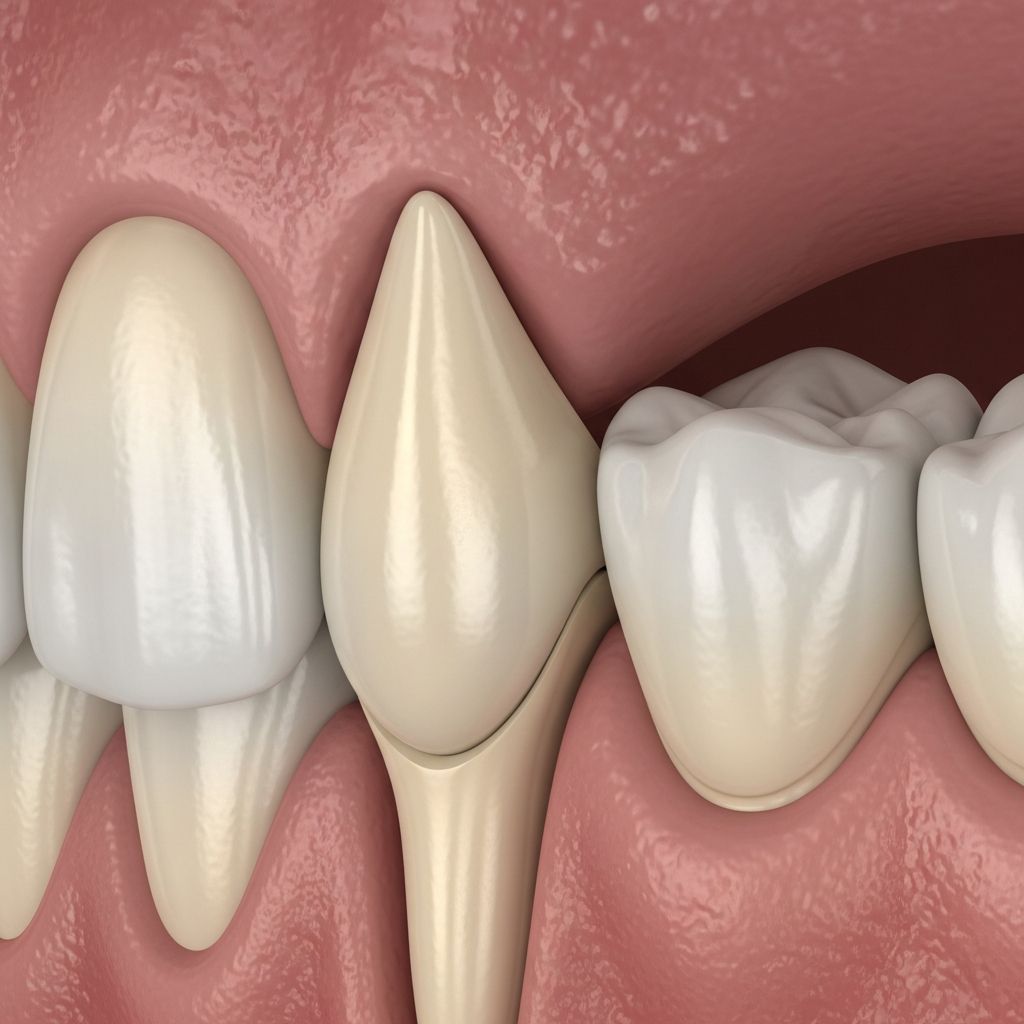
Retrocuspid papilla is a common, benign swelling located on the lingual aspect of the lower gums, specifically behind the mandibular canine teeth. It is widely regarded as a normal anatomical variation, most frequently observed in young children, though it may persist into adulthood in a smaller percentage of individuals.
Introduction
The retrocuspid papilla (RCP), also known as retrocuspid papule, represents a small, elevated nodule on the gingival mucosa. First described in scientific literature in the mid-20th century, it has been recognized as a harmless structure that does not require intervention. Its presence is often incidental, discovered during routine oral examinations, and it poses no symptoms or health risks to the patient. This condition highlights the importance of distinguishing normal anatomical variants from pathological lesions in oral diagnostics.
Understanding RCP is crucial for dental professionals to avoid unnecessary biopsies or treatments. It serves as a reminder of the diverse presentations of healthy oral tissues, particularly in pediatric populations where prevalence is highest.
Demographics
Retrocuspid papilla exhibits a striking prevalence pattern, appearing in up to 75% of children under 5 years old. Surveys indicate it affects 25% to 99% of children and young adults, with rates declining to 6-19% in older adults, suggesting age-related regression. A female predominance is consistently reported across studies, though it occurs in all races when specifically examined.
Early reports from 1947 and 1965 noted its existence, with a 1994 Swedish study of 1150 patients aged 20-75 identifying RCP in 10 cases (approximately 0.87%). In biopsy archives from Lund University (1989-1992), 15 out of 2000 cases met RCP criteria, underscoring its commonality despite underreporting. It may be present at birth, emphasizing its developmental nature.
- Prevalence by Age: Highest in <5 years (up to 75%); young adults (25-99%); adults >20 years (~10%); older adults (6-19%).
- Gender: Female predominance in multiple surveys.
- Ethnicity: Observed across all races.
Clinical Features
Clinically, retrocuspid papilla presents as a smooth, soft, well-defined round or oval swelling on the lingual gingiva of the mandible, positioned 1 mm below the free gingival margin adjacent to the canine teeth. It measures 1-3 mm in diameter and height, covered by normal pink mucosa, though it can appear red. The lesion is typically bilateral but may be unilateral.
In some cases, it adopts a pedunculated form, resembling a mushroom on a short stalk, with an erect tip that can be folded, mimicking a periodontal abscess entrance—though no duct is present. It is asymptomatic, unnoticed by patients, and radiographs reveal no bone involvement or deepened periodontal pockets. Rarely, it appears in the molar region lingually.
| Feature | Description |
|---|---|
| Location | Lingual to mandibular canines; occasionally molars |
| Size | 1-3 mm wide/high; <5 mm diameter |
| Appearance | Smooth, soft, pink/red nodule; pedunculated possible |
| Symptoms | None; asymptomatic |
| Bilaterality | Usually bilateral; unilateral possible |
These features align with descriptions in oral pathology texts, where bilateral pink papules lingual to canines are classic.
Related Stories



Diagnosis
Diagnosis of retrocuspid papilla is primarily clinical, based on its characteristic location, appearance, and asymptomatic nature. No advanced imaging is typically needed, as radiographs show no pathology.
Differential diagnosis includes gingival abscess, draining dental sinus, pyogenic granuloma, or other reactive lesions, particularly if erythematous. Biopsy, though uncommonly required, confirms the entity and excludes malignancy. Clinicians should consider patient age and bilaterality to favor RCP over pathology.
- Key Diagnostic Clues: Pediatric patient, bilateral location, soft consistency, no pain/inflammation.
- Red Flags for Biopsy: Rapid growth, pain, ulceration, unilateral in adults.
Histology
Histologically, RCP consists of loosely arranged, delicate fibrous connective tissue with stellate and multinucleated fibroblasts prominent in 80% of cases. Elongated, blunt rete ridges overlie vascular connective tissue. Immunohistochemistry reveals FXIIIa-positive spindle- or stellate-shaped cells in connective tissue papillae, akin to mucosal dendrocytes.
These “young” fibroblasts, often multinucleated, are observed in over 50% of patients aged 10-69 and are not unique to RCP but indicate reactive processes. No bone destruction or significant inflammation is noted. This profile supports its classification as a normal variant rather than a neoplasm.
Treatment
No treatment is necessary for retrocuspid papilla, as it is a benign anatomical variant. It often flattens or regresses spontaneously with age, explaining declining prevalence in adults. Reassurance suffices following clinical diagnosis.
Biopsy is reserved for atypical presentations to rule out mimics. Post-biopsy, the site heals uneventfully without recurrence. Patient education on its innocuous nature prevents anxiety.
Frequently Asked Questions (FAQs)
Is retrocuspid papilla cancerous?
No, it is a normal anatomical structure, not associated with malignancy.
Does retrocuspid papilla go away?
Yes, it frequently regresses with age, though it may persist in some adults.
Why is retrocuspid papilla more common in children?
It is considered a developmental variant that diminishes as gingival tissues mature.
Should I be worried if I have retrocuspid papilla?
No, it is asymptomatic and harmless; monitor for changes only.
Can retrocuspid papilla be mistaken for an abscess?
Yes, due to its foldable tip, but lack of pain/pus and clinical context differentiate it.
Related Topics
References
- Retrocuspid papilla – Wikipedia — Wikipedia. 2023. https://en.wikipedia.org/wiki/Retrocuspid_papilla
- Retrocuspid papilla – DermNet — Dr Delwyn Dyall-Smith, DermNet NZ. 2010-01-01. https://dermnetnz.org/topics/retrocuspid-papilla
- The retrocuspid papilla of the mandibular lingual gingiva — PubMed (Journal of Periodontology). 1990-11-01. https://pubmed.ncbi.nlm.nih.gov/2213469/
- The Oral Pathology Top Seven List — North State Periodontics (Neville textbook excerpt). 2020. https://northstateperio.com/wp-content/uploads/Top-Seven-Handout-Neville.pdf
- Putting the Pieces Together – Dimensions of Dental Hygiene — Dimensions of Dental Hygiene. 2023. https://dimensionsofdentalhygiene.com/article/oral-pathology/
Similar Articles








Read full bio of medha deb