Retrograde Ejaculation: Causes, Symptoms & Treatment
Understanding retrograde ejaculation: A comprehensive guide to causes, symptoms, and treatment options.
What Is Retrograde Ejaculation?
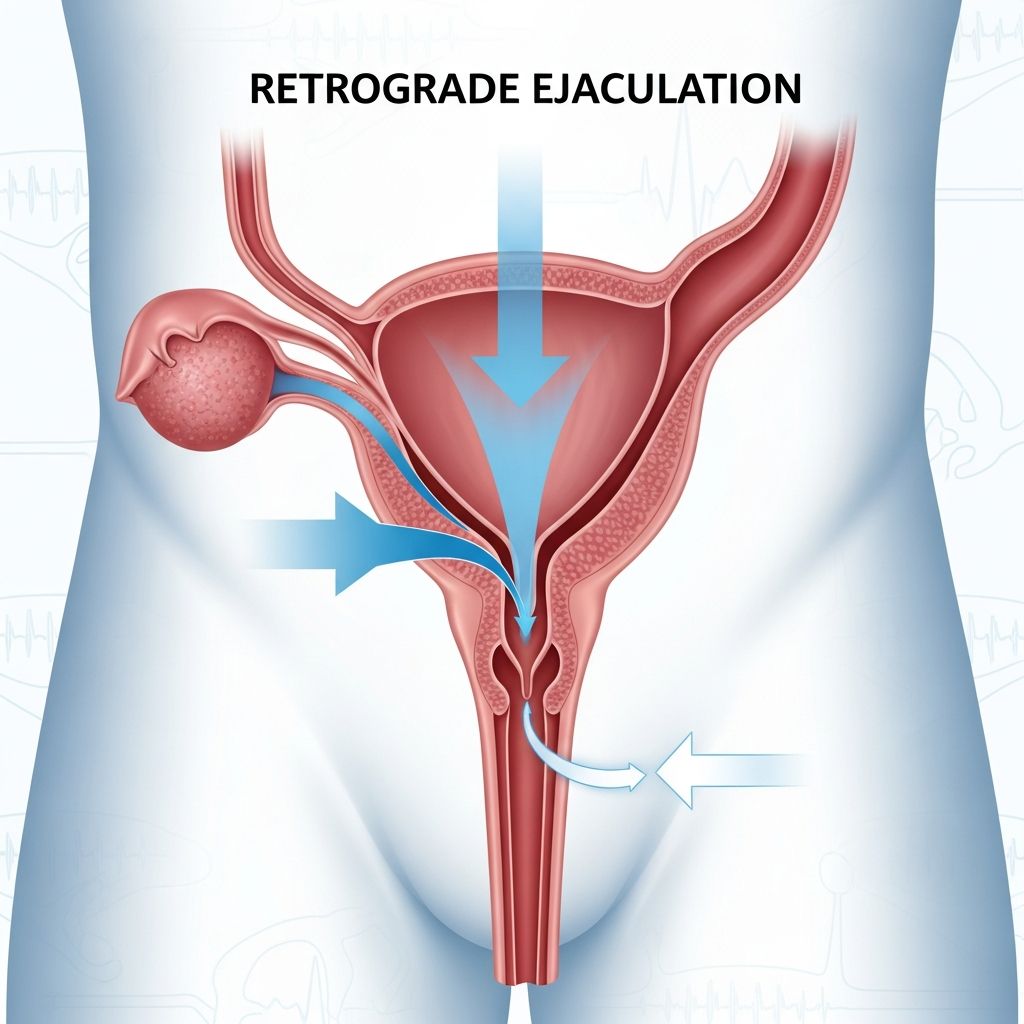
Retrograde ejaculation is a medical condition in which semen travels backward into the urinary bladder during orgasm instead of exiting the body through the urethra and penis. Under normal circumstances, the bladder sphincter—a circular muscle that functions as a valve—closes during ejaculation to prevent semen from entering the bladder while simultaneously allowing the seminal fluid to exit through the urethra. When this muscle fails to close properly, semen is redirected into the bladder rather than being expelled outward.
This condition is sometimes referred to as a “dry orgasm” because men may experience little to no seminal fluid expulsion during climax. Retrograde ejaculation is not inherently dangerous or painful, and it does not interfere with a man’s ability to achieve erections or experience orgasms. However, it can significantly impact fertility and may be emotionally distressing for some individuals.
How Common Is Retrograde Ejaculation?
Retrograde ejaculation occurs with varying frequency depending on the underlying cause. Research suggests that it affects approximately 14 to 18 percent of individuals diagnosed with ejaculatory disorders and contributes to 0.3 to 2 percent of male infertility cases. The condition is particularly common following certain surgical procedures. For example, retrograde ejaculation develops in 65 to over 90 percent of men who undergo transurethral resection of the prostate (TURP). Additionally, men with spinal cord injuries experience retrograde ejaculation at rates ranging from 8 to 37 percent.
Causes of Retrograde Ejaculation
Retrograde ejaculation can develop from multiple underlying causes, which are broadly categorized into surgical, neurological, and medication-related factors.
Surgical Causes
Prostate surgery is one of the most common causes of retrograde ejaculation. Transurethral resection of the prostate (TURP), performed to improve urinary flow in men with benign prostatic hyperplasia, frequently results in retrograde ejaculation as a side effect. During TURP, surgeons remove prostate tissue that narrows the urethra, but this tissue removal can damage the muscles and nerves controlling the bladder neck, preventing it from closing properly during ejaculation.
Pelvic radiation therapy used to treat prostate cancer produces retrograde ejaculation in approximately 89 percent of patients. Other surgical procedures affecting the bladder neck or surrounding structures can similarly contribute to this condition.
Neurological Causes
Conditions affecting the nervous system can impair the nerve signals responsible for bladder neck closure during ejaculation. The sympathetic nervous system, originating from the T12-L2 spinal cord segments, controls this reflex. Spinal cord injuries, nerve damage, and certain neurological diseases can disrupt these signals, leading to retrograde ejaculation.
Medication-Related Causes
Certain medications can interfere with the bladder sphincter function or affect nerve signaling involved in ejaculation. Medications used to treat high blood pressure (antihypertensives) and depression (antidepressants) are common culprits. The positive aspect of medication-induced retrograde ejaculation is that it typically resolves shortly after switching to an alternative medication.
Related Stories



Bladder Neck and Urethral Disorders
Congenital broad bladder necks or surgically induced injuries to the bladder neck can result in insufficient closure and retrograde ejaculation. Additionally, urethral conditions such as urethral valve syndrome or strictures caused by trauma or inflammation can heighten urethral resistance, obstructing semen flow and potentially leading to retrograde ejaculation.
Symptoms and Signs
Retrograde ejaculation presents with distinct, recognizable symptoms that men typically notice during sexual activity.
Common signs include:
- Dry orgasms with little to no visible semen expelled from the penis
- Cloudy or milky urine after orgasm, resulting from the presence of sperm in the bladder
- Inability to impregnate a female partner despite regular sexual intercourse without contraception
- A noticeable reduction in seminal fluid volume compared to previous experiences
It is important to note that retrograde ejaculation does not affect erectile function or the sensation of orgasm itself. Men retain the ability to achieve and maintain erections and experience climax normally; the only difference is the direction of semen travel. Some men with mild retrograde ejaculation may not notice any symptoms, particularly if only a small quantity of semen is diverted into the bladder.
Diagnosis
Healthcare providers diagnose retrograde ejaculation through a combination of clinical history, symptom assessment, and specific diagnostic tests.
Initial Evaluation
The diagnostic process begins with a thorough discussion of symptoms and sexual history. Your healthcare provider will ask about the characteristics of your orgasms, whether you produce visible ejaculate, and any associated conditions or medications you take.
Post-Orgasm Urinalysis
The primary diagnostic test involves collecting a urine sample immediately after orgasm. If retrograde ejaculation is present, the urine will contain sperm cells, which can be identified under a microscope. This simple, non-invasive test provides definitive evidence of the condition.
Semen Analysis
A standard semen analysis may reveal a reduced or absent semen volume, which can suggest retrograde ejaculation, though other causes must be ruled out.
Additional Testing
Depending on the suspected underlying cause, your healthcare provider may recommend imaging studies, nerve conduction tests, or other evaluations to identify the specific factor contributing to your retrograde ejaculation.
Impact on Fertility
Retrograde ejaculation can significantly affect male fertility because sperm that enters the bladder cannot fertilize an egg. When semen is redirected into the bladder instead of being ejaculated through the urethra, the sperm cannot reach the female reproductive tract during intercourse.
The degree of fertility impact depends on the proportion of semen diverted into the bladder. Complete retrograde ejaculation, where all semen enters the bladder, results in complete infertility through natural intercourse. Partial retrograde ejaculation may still allow some sperm to be expelled naturally, preserving some fertility potential.
Men with retrograde ejaculation who wish to father children still have viable options through assisted reproductive technologies, which are discussed in the treatment section below.
Treatment Options
The approach to treating retrograde ejaculation depends on its underlying cause and whether fertility restoration is desired.
Medication Management
If retrograde ejaculation is caused by medications such as antihypertensives or antidepressants, switching to alternative medications often resolves the problem. Your healthcare provider can work with you to identify alternative treatments that do not interfere with ejaculatory function. This medication adjustment typically results in restoration of normal ejaculation within a relatively short timeframe.
Surgical Interventions
For men with benign prostatic hyperplasia requiring surgical treatment, newer minimally invasive surgical approaches may reduce the risk of retrograde ejaculation. These include:
- Prostatic urethral lift (PUL): A procedure that lifts obstructing prostate tissue without removing it, potentially preserving bladder neck function
- Rezūm procedure: A minimally invasive technique using water vapor energy to reduce prostate volume while minimizing damage to ejaculatory structures
Discussing these alternatives with your healthcare provider can help determine which approach offers the best balance between treating urinary symptoms and preserving ejaculatory function.
Fertility Treatment
For men seeking to achieve pregnancy, several approaches are available:
- Sperm retrieval from urine: After ejaculation, urine is collected and processed to isolate and concentrate sperm cells from the bladder
- In vitro fertilization (IVF): Retrieved sperm can be used for IVF, where eggs and sperm are combined in a laboratory setting to create embryos for transfer into the uterus
- Intracytoplasmic sperm injection (ICSI): A specialized technique in which a single sperm is injected directly into an egg to maximize fertilization rates
These assisted reproductive techniques have demonstrated success in helping men with retrograde ejaculation achieve biological fatherhood.
Medications for Symptom Management
In some cases, healthcare providers may prescribe medications that help the bladder sphincter close more effectively during ejaculation. However, the evidence supporting these approaches is limited, and they are typically considered only after other options have been explored.
Prognosis and Long-Term Outlook
The long-term outlook for retrograde ejaculation varies significantly depending on its underlying cause.
If the condition results from medication, the prognosis is generally excellent—changing medications typically resolves the problem. Retrograde ejaculation caused by reversible factors generally has a favorable long-term outlook.
However, retrograde ejaculation stemming from severe nerve damage, spinal cord injury, or permanent structural changes from surgery may be long-lasting or even permanent. In these cases, healthcare providers will provide individualized assessments based on the specific underlying pathology.
Prevention
While retrograde ejaculation cannot always be prevented, men can take steps to minimize their risk, particularly those facing surgical procedures.
Before undergoing prostate surgery, discuss your concerns about ejaculatory function with your urologist. Choosing minimally invasive surgical techniques when appropriate—such as prostatic urethral lift or the Rezūm procedure—may reduce the likelihood of developing retrograde ejaculation compared to traditional TURP.
For men taking medications associated with retrograde ejaculation, working with your healthcare provider to identify alternative treatments before problems develop can prevent the condition from occurring in the first place.
Men with conditions that may predispose them to retrograde ejaculation should discuss preventive strategies with their healthcare providers to understand their individual risk and available options.
Frequently Asked Questions
Q: Is retrograde ejaculation dangerous to my health?
A: No, retrograde ejaculation is not harmful to your health. It does not cause pain, does not damage organs, and does not indicate a serious underlying disease. The primary concern is its potential impact on fertility and the psychological effects some men experience.
Q: Can retrograde ejaculation go away on its own?
A: This depends on the cause. If it results from temporary medication effects or reversible factors, it may resolve spontaneously or after treatment. However, if it stems from permanent nerve damage or surgical changes, it may persist indefinitely.
Q: Will retrograde ejaculation affect my ability to have an erection?
A: No. Retrograde ejaculation does not affect erectile function. Men with this condition retain the ability to achieve and maintain erections and experience normal sensations during orgasm.
Q: How can I have children if I have retrograde ejaculation?
A: Assisted reproductive technologies offer viable pathways to fatherhood. Sperm can be retrieved from urine and used for in vitro fertilization or other fertility treatments with good success rates.
Q: What should I expect after TURP surgery regarding ejaculation?
A: Retrograde ejaculation is a common consequence of TURP, occurring in the majority of patients. Your urologist should discuss this possibility before surgery and explain what to expect postoperatively.
Q: Are there medications that can help treat retrograde ejaculation?
A: Medication management primarily involves addressing medication-induced cases by switching to alternative treatments. Some medications may help in specific situations, but evidence is limited. Your healthcare provider can assess whether medication might help your individual case.
References
- Retrograde Ejaculation: Causes, Symptoms & Treatment — Cleveland Clinic. 2024. https://my.clevelandclinic.org/health/diseases/21870-retrograde-ejaculation
- What Happens to Ejaculation After Prostatectomy Surgery? — LIV Hospital. 2024. https://int.livhospital.com/what-happens-to-ejaculation-after-prostatectomy-surgery/
- Retrograde Ejaculation: Treatment and Causes — Medical News Today. 2024. https://www.medicalnewstoday.com/articles/320332
- Recent Advances in the Diagnosis and Management of Retrograde Ejaculation — National Center for Biotechnology Information (NCBI). 2025. https://pmc.ncbi.nlm.nih.gov/articles/PMC11941111/
- Retrograde Ejaculation — Symptoms & Causes — Mayo Clinic. 2024. https://www.mayoclinic.org/diseases-conditions/retrograde-ejaculation/symptoms-causes/syc-20354890
Similar Articles








Read full bio of Sneha Tete