Can You Reverse Kidney Disease? Evidence-Based Guide 2025
Explore if kidney disease can be reversed, strategies to slow progression, and lifestyle changes for better kidney health.
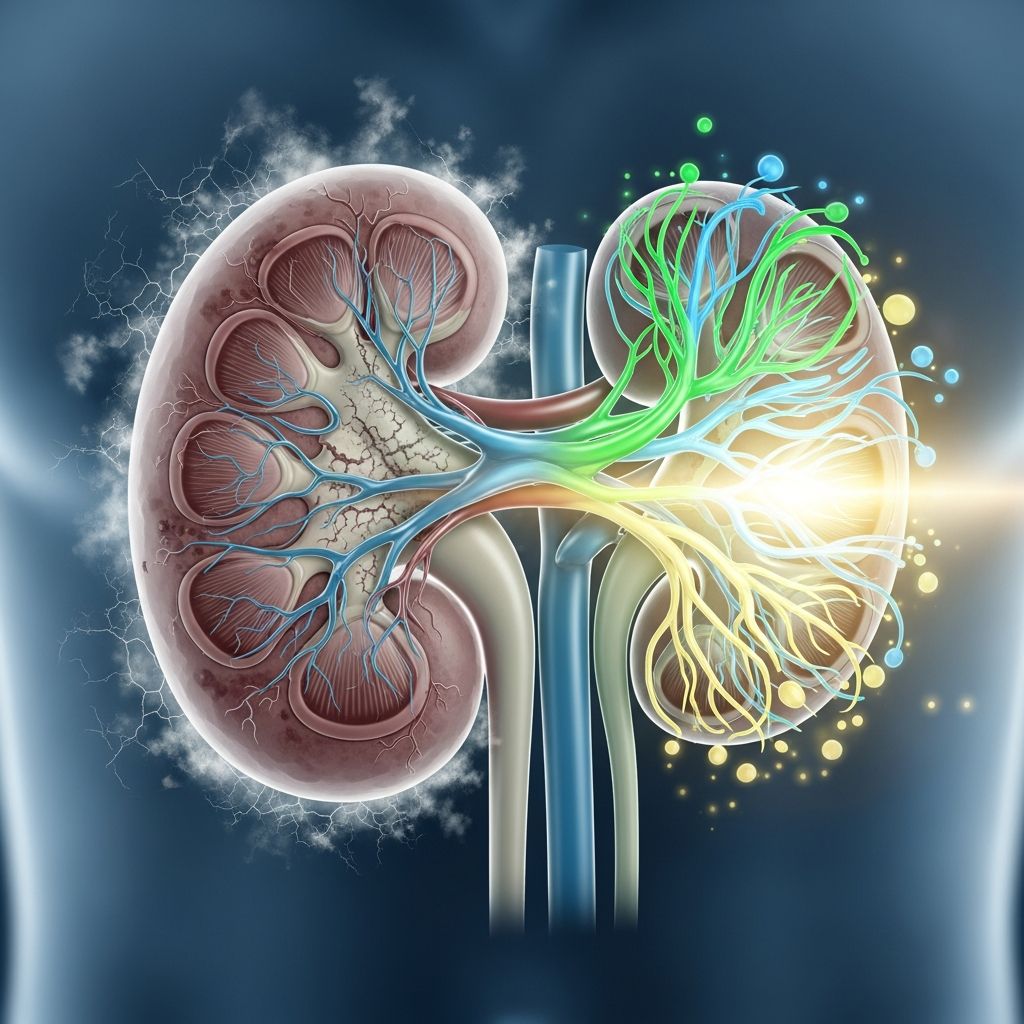
Chronic kidney disease (CKD) affects millions worldwide, but can it be reversed? While advanced stages are often irreversible, early intervention through diet, medications, and lifestyle changes can slow progression, and some research suggests partial reversal is possible in specific cases like diabetic kidney damage.
What Is Kidney Disease?
Kidney disease occurs when kidneys lose their ability to filter waste from the blood effectively. Chronic kidney disease (CKD) is progressive damage lasting over three months, leading to toxin buildup if untreated. Acute kidney injury (AKI), by contrast, can be sudden and sometimes reversible.
CKD stages range from 1 (mild) to 5 (end-stage renal disease, requiring dialysis or transplant). Early stages may lack symptoms, making regular screening crucial, especially for those with diabetes or hypertension.
- Stage 1: Kidney damage with normal GFR (>90 mL/min).
- Stage 2: Mildly reduced GFR (60-89 mL/min).
- Stage 3: Moderate reduction (30-59 mL/min).
- Stage 4: Severe reduction (15-29 mL/min).
- Stage 5: Kidney failure (<15 mL/min).
Common symptoms include fatigue, swelling (edema), changes in urination, nausea, and itchy skin. High-risk groups include people with diabetes, high blood pressure, heart disease, or family history.
Can Kidney Disease Be Reversed?
The traditional medical view holds that CKD cannot be fully reversed once established, but its progression can be slowed or halted with interventions. However, emerging evidence challenges this: A Mount Sinai study showed a ketogenic (low-carb, high-fat) diet reversed diabetic kidney damage in mice by resetting gene expression linked to kidney failure.
Human applications are promising but limited. Acute kidney injury from reversible causes (e.g., dehydration, medications) can often be fully reversed with prompt treatment. For CKD, early stages (1-3) respond best to lifestyle and meds, potentially stabilizing or improving function. Advanced CKD (stages 4-5) rarely reverses without transplant.
| CKD Stage | Reversibility Potential | Key Interventions |
|---|---|---|
| Early (1-2) | High – can stabilize or improve | Diet, exercise, blood sugar/BP control |
| Moderate (3) | Moderate – slow progression | Medications like SGLT2 inhibitors, ACE inhibitors |
| Advanced (4-5) | Low – manage to dialysis/transplant | Dialysis, transplant |
Personalized lifestyle changes, including quitting smoking and increasing activity, correlate with improved GFR over years.
Causes of Kidney Disease
The leading causes are diabetes (high blood sugar damages kidney vessels) and hypertension (strains kidney filters). Other factors include glomerular diseases, infections, obstructions, and autoimmune conditions.
- Diabetes: Accounts for ~40% of CKD cases; hyperglycemia clogs renal vessels.
- Hypertension: ~25% of cases; damages glomeruli over time.
- Glomerular disease: Inflammation of filtering units; may resolve with treatment but can lead to failure.
- Other: Polycystic kidney disease, prolonged NSAID use, heart disease.
Treatment Options to Slow or Reverse Progression
Treatment focuses on underlying causes and protecting remaining function. No single cure exists, but combinations work well.
Medications
SGLT2 inhibitors (e.g., empagliflozin) slow CKD decline by 30-40%, reduce proteinuria, and cut heart risks, even in non-diabetics. ACE inhibitors/ARBs lower BP and protect kidneys. GLP-1 agonists show slower GFR decline in trials.
Dietary Changes
Related Stories



A low-carb ketogenic diet reversed kidney pathology in diabetic mice by blocking glucose toxicity and resetting stress genes. Plant-based, low-protein diets reduce kidney workload. Limit sodium (<2g/day), phosphorus, potassium based on stage.
- Emphasize fruits/veggies (low-potassium options).
- Reduce processed foods, red meat.
- Stay hydrated but monitor fluids in advanced stages.
Lifestyle Modifications
Quit smoking, limit alcohol, exercise 150 min/week, manage weight. These improve GFR and microalbuminuria.
Lifestyle Changes to Protect Your Kidneys
Proactive habits are key to prevention and management:
- Control blood sugar/BP: Target A1C <7%, BP <130/80 mmHg.
- Healthy diet: DASH or Mediterranean style; low in sodium/sugar.
- Exercise: Aerobic + strength training boosts circulation.
- Weight management: Obesity accelerates CKD.
- Avoid nephrotoxins: NSAIDs, certain antibiotics.
- Regular checkups: eGFR, urine albumin tests.
Trials like SeeKD show combined BP control + lifestyle slows eGFR loss.
Recent Research and Hope for Reversal
2025 research reversed kidney damage in mice by targeting ceramides damaging mitochondria. Ketogenic diets offer short-term ‘reset’ potential. SGLT2s and GLP-1s provide clinical benefits, reducing proteinuria and stabilizing function.
Personalized approaches yield big differences; high-risk patients benefit most from tailored plans.
Frequently Asked Questions (FAQs)
Can stage 3 kidney disease be reversed?
Stage 3 CKD is rarely fully reversed but can be stabilized or slowed with meds like SGLT2 inhibitors, diet, and lifestyle. Early intervention improves outcomes.
Is keto diet good for kidneys?
In mice, it reversed diabetic damage. Consult a doctor; not for all CKD stages due to protein/electrolyte needs.
What foods reverse kidney damage?
No foods fully reverse, but low-sodium, plant-focused diets help. Berries, fish, greens support health.
How can I improve my GFR naturally?
Control BP/sugar, exercise, quit smoking, low-protein diet. Gains possible in early stages.
Can you reverse stage 4 kidney disease?
Unlikely without transplant; focus on slowing to delay dialysis.
Prevention Tips
Screen if at risk. Manage comorbidities. Healthy habits prevent 50% of cases.
References
- Diabetic Kidney Failure May Be Reversed with Low-Carbohydrate Diet — Mount Sinai School of Medicine. 2011-04-20. https://www.mountsinai.org/about/newsroom/2011/diabetic-kidney-failure-may-be-reversed-with-lowcarbohydrate-diet
- Can Chronic Kidney Disease Be Reversed? Everything to Know — Healthgrades. 2023. https://resources.healthgrades.com/right-care/kidney-disease/can-kidney-disease-be-reversed
- Can You Reverse Kidney Disease? — MyKidneyDiseaseTeam. 2024. https://www.mykidneydiseaseteam.com/resources/can-you-reverse-kidney-disease
- Did Scientists Discover a Way to Reverse Kidney Damage? — YouTube (Kidney Experts Discussion). 2024. https://www.youtube.com/watch?v=kqVKxWOlQ-0
- Kidney Disease: Personalized Lifestyle Health Care Makes a Big Difference — PMC (Peer-reviewed). 2017-02-15. https://pmc.ncbi.nlm.nih.gov/articles/PMC5312831/
- What Doctors Wish Patients Knew About Kidney Disease Prevention — American Medical Association. 2024. https://www.ama-assn.org/public-health/prevention-wellness/what-doctors-wish-patients-knew-about-kidney-disease-prevention
- Scientists Reverse Kidney Damage in Mice, Hope for Humans Next — ScienceDaily. 2025-11-14. https://www.sciencedaily.com/releases/2025/11/251114094525.htm
Similar Articles








Read full bio of Sneha Tete