Rheumatic Fever: 2025 Guide To Diagnosis, Treatment, Prevention
Rheumatic fever: Inflammatory disease following streptococcal infection, affecting heart, joints, skin, and brain.
What is rheumatic fever?
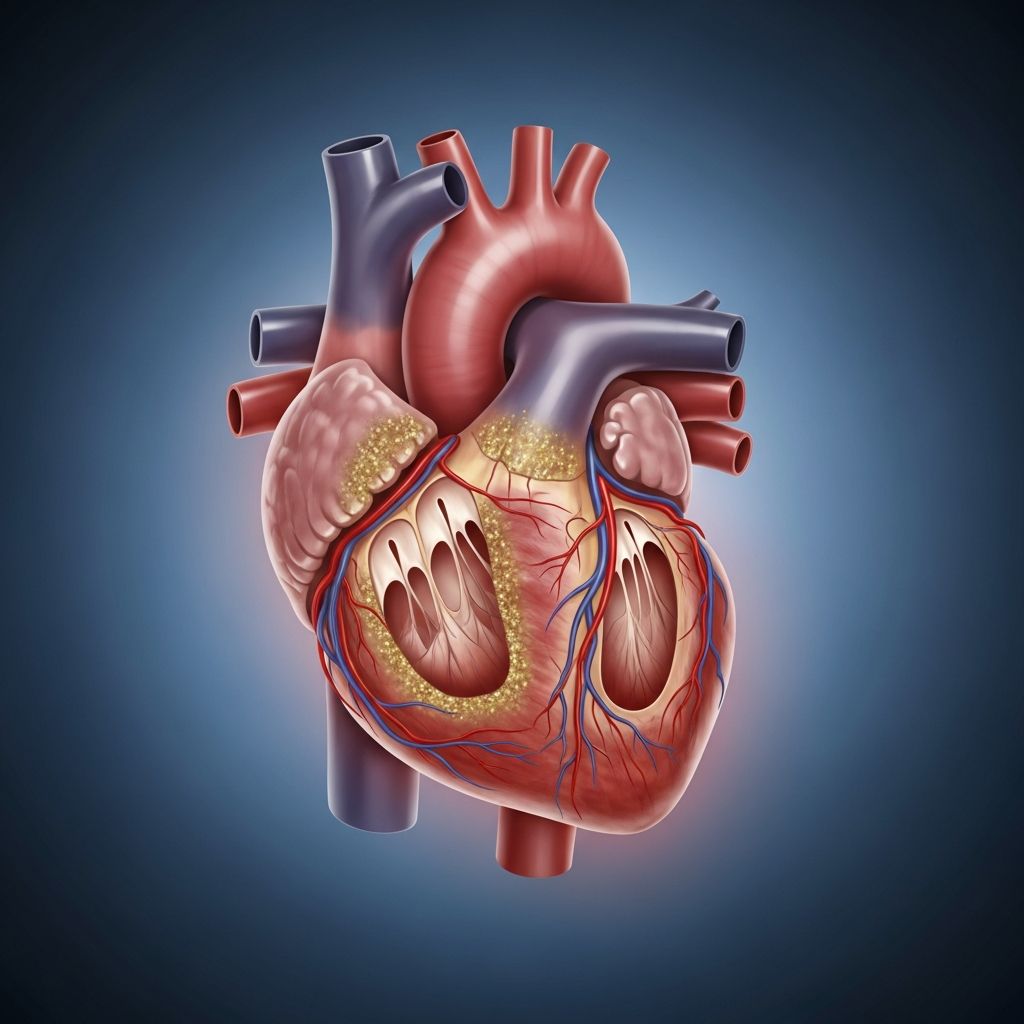
Rheumatic fever is a multisystem inflammatory disease that occurs as a delayed autoimmune response to acute group A beta-haemolytic streptococcal (GABHS) pharyngitis. It primarily affects children aged 5–15 years in developing countries but can occur at any age. The condition targets the heart, joints, brain, skin, and subcutaneous tissues, potentially leading to lifelong complications such as rheumatic heart disease (RHD).
The disease typically manifests 2–4 weeks after an untreated or inadequately treated streptococcal throat infection. It is characterised by major manifestations including carditis, polyarthritis, Sydenham chorea, subcutaneous nodules, and erythema marginatum, alongside minor criteria like fever and elevated inflammatory markers.
Who gets rheumatic fever?
Rheumatic fever predominantly affects children and adolescents aged 5–15 years, with peak incidence around 8 years. It is more common in developing countries due to overcrowding, poor sanitation, and limited access to antibiotics. Indigenous populations, such as Aboriginal Australians and New Zealand Māori, experience higher rates.
Risk factors include:
- Recent GABHS pharyngitis
- Genetic predisposition (e.g., HLA-DR associations)
- Socioeconomic deprivation
- Previous episodes of rheumatic fever
Males and females are equally affected, though chorea is more common in females.
What causes rheumatic fever?
Rheumatic fever results from molecular mimicry, where antibodies against GABHS M protein cross-react with host tissues, particularly heart valves, joints, and basal ganglia. Not all GABHS strains are rheumatogenic; ‘rheumatogenic’ serotypes like M1, M3, M5, M6, M18, and M24 predominate.
Pathophysiology involves:
- Suppurative complications of GABHS pharyngitis
- Immune-mediated damage via type II hypersensitivity
- T-cell infiltration in affected tissues
Skin lesions like erythema marginatum arise from immune complex deposition in dermal vessels.
What are the clinical features of rheumatic fever?
Clinical features align with the modified Jones criteria. Major manifestations occur in 75–80% of cases, often in combination.
Carditis (45–70%)
Valvulitis affecting mitral (most common) and aortic valves, leading to regurgitation. Pancarditis may involve pericardium (pericardial rub, effusion) and myocardium (tachycardia, heart failure). Murmurs include apical pansystolic for mitral regurgitation.
Polyarthritis (70–75%)
Migratory, painful arthritis affecting large joints (knees, ankles, elbows, wrists). Flaccid, ‘waxing and waning’ without residual deformity. Responsive to anti-inflammatories.
Sydenham chorea (10–30%)
Delayed manifestation (weeks to months post-infection). Involuntary, purposeless movements, muscle weakness, emotional lability (‘milkmaid’s grip’). More common in females, self-limiting over 3–6 months.
Subcutaneous nodules (1–10%)
Painless, firm nodules over bony prominences (occiput, elbows, knees, Achilles). Evanescent, associated with severe carditis.
Erythema marginatum (5–10%)
Evanescent, non-pruritic, serpiginous erythematous patches with pale centres on trunk and proximal limbs. Pathognomonic but rare; lasts hours to days.
Minor criteria: Fever (>38.5°C), arthralgia, elevated ESR/CRP, prolonged PR interval on ECG.
How is the diagnosis made?
Diagnosis uses 2015 revised Jones criteria, requiring evidence of preceding GABHS infection plus:
| Low-risk populations | Moderate/high-risk populations |
|---|---|
| 2 major OR 1 major + 2 minor | 2 major OR 1 major + 2 minor OR 3 minor |
Related Stories



Major criteria: Carditis, polyarthritis, chorea, nodules, erythema marginatum.
Minor criteria: Fever, arthralgia, ESR ≥60 mm/h or CRP ≥3.0 mg/dL, prolonged PR.
Evidence of GABHS: Positive throat culture, rapid antigen test, elevated/rising ASO/anti-DNase B.
Investigations:
- Blood tests: ASO, anti-DNase B, CRP, ESR, FBC
- ECG: PR prolongation, ST-T changes
- Echocardiography: Valve regurgitation, vegetations
- Chest X-ray: Cardiomegaly, pulmonary congestion
- Throat swab: Culture/rapid test
Differential diagnosis includes juvenile idiopathic arthritis, infective endocarditis, Kawasaki disease, and lupus.
What is the differential diagnosis for rheumatic fever?
- Post-streptococcal glomerulonephritis: Similar trigger but renal involvement
- Juvenile idiopathic arthritis: Chronic, deforming arthritis
- Infective endocarditis: Positive blood cultures, destructive lesions
- Kawasaki disease: Mucocutaneous lymph node syndrome in younger children
- Systemic lupus erythematosus: Malar rash, multiorgan involvement
- Lyme disease: Tick exposure, erythema migrans
What is the treatment for rheumatic fever?
Treatment targets GABHS eradication, symptom relief, and inflammation control. Hospitalisation recommended for moderate-severe cases.
Antibiotics
- Benzathine penicillin G 1.2 million units IM single dose (adults); 600,000 units (children <27 kg)
- Alternatives: Phenoxymethylpenicillin 250 mg QDS PO x10 days or Cephalexin
Anti-inflammatories
- Aspirin: 75–100 mg/kg/day (max 4g/day) in 4 divided doses x4–6 weeks
- Corticosteroids: Prednisone 1–2 mg/kg/day (max 60 mg) for carditis/pericarditis x2–3 weeks, then taper
Sydenham chorea
- Valproate 15–20 mg/kg/day or Carbamazepine
- Symptomatic: Diazepam, haloperidol
Heart failure
Diuretics, ACE inhibitors, beta-blockers as needed.
What is the outcome for rheumatic fever?
Acute episode resolves in 75–90% within 3 months with treatment. Chorea may persist 3–6 months. Recurrent episodes (25%) increase RHD risk. Overall mortality <1%, but 30–70% develop chronic valve disease, mitral stenosis most common.
Long-term follow-up with echocardiography essential.
How can rheumatic fever be prevented?
Primary prophylaxis
Treat GABHS pharyngitis within 9 days: Benzathine penicillin IM or 10-day oral penicillin.
Secondary prophylaxis
| Risk category | Duration |
|---|---|
| No carditis | 5 years or until 21 years, whichever longer |
| Carditis, no residual disease | 10 years or until 21 years |
| Carditis with residual disease | Lifelong |
Benzathine penicillin G IM every 3–4 weeks preferred.
Related topics
- Impetigo
- Scarlet fever
- Pericarditis
- Rheumatic heart disease
Frequently asked questions
Can rheumatic fever be cured?
Acute rheumatic fever is treatable and often fully resolves, but cardiac valve damage may be permanent, requiring lifelong monitoring and prophylaxis.
Is rheumatic fever contagious?
No, rheumatic fever itself is not contagious; it follows untreated GABHS infection, which is spread person-to-person.
How long does rheumatic fever last?
Most symptoms resolve in 1–3 months with treatment; chorea may last longer. Acute phase managed inpatient, full recovery in weeks to months.
Does rheumatic fever damage the heart permanently?
Up to 60% develop rheumatic heart disease with valve scarring; early treatment and prophylaxis reduce risk significantly.
What does erythema marginatum look like?
Pink, ring-like patches with clear centres on trunk/limbs; non-itchy, fleeting (hours-days), pathognomonic for rheumatic fever.
References
- Pediatric Rheumatic Fever – Conditions and Treatments — Children’s National Hospital. 2025. https://www.childrensnational.org/get-care/health-library/rheumatic-fever
- Rheumatic fever | Better Health Channel — Better Health Channel, Victoria Government. 2025. https://www.betterhealth.vic.gov.au/health/conditionsandtreatments/rheumatic-fever
- Clinical Guidance for Acute Rheumatic Fever — Centers for Disease Control and Prevention (CDC). 2025. https://www.cdc.gov/group-a-strep/hcp/clinical-guidance/acute-rheumatic-fever.html
- Acute Rheumatic Fever – StatPearls — National Center for Biotechnology Information (NCBI), NIH. 2025. https://www.ncbi.nlm.nih.gov/books/NBK594238/
- Rheumatic fever – Diagnosis and treatment – Mayo Clinic — Mayo Clinic. 2025. https://www.mayoclinic.org/diseases-conditions/rheumatic-fever/diagnosis-treatment/drc-20354594
- Rheumatic Fever: Causes, Symptoms & Treatment — Cleveland Clinic. 2025. https://my.clevelandclinic.org/health/diseases/16616-rheumatic-fever
- Rheumatic fever – NHS — National Health Service (NHS). 2025. https://www.nhs.uk/conditions/rheumatic-fever/
Similar Articles








Read full bio of Sneha Tete