Rheumatoid Arthritis Skin Manifestations: 7 Key Conditions
Understanding skin manifestations of rheumatoid arthritis and treatment options.
Rheumatoid Arthritis and the Skin
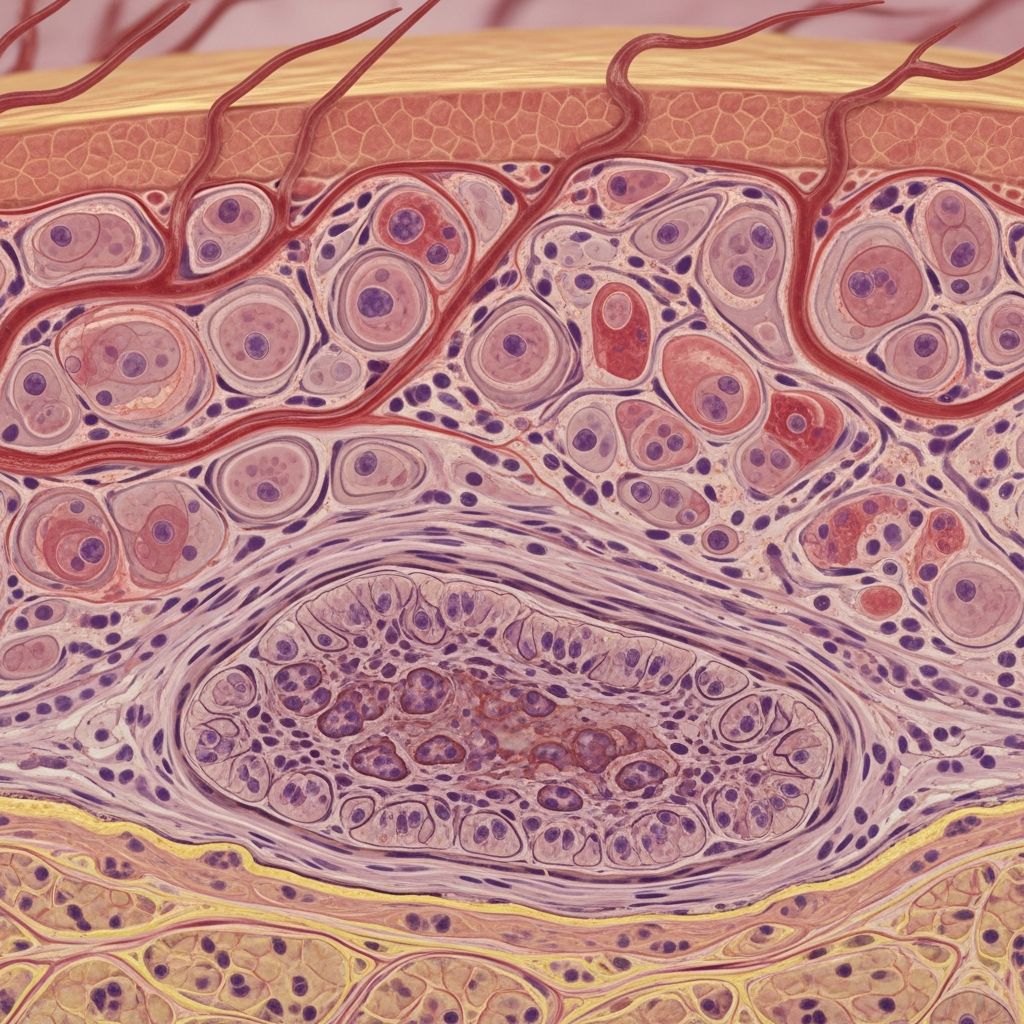
Rheumatoid arthritis (RA) is a chronic autoimmune disorder that primarily affects the joints, causing inflammation and progressive damage. However, the systemic nature of RA means that multiple organs and body systems can be affected, including the skin. Around 1 in 3 people with rheumatoid arthritis develop RA-related skin issues, which can range from benign nodules to more serious dermatological conditions. Additionally, various medications used to treat RA can also cause cutaneous manifestations as side effects. Understanding these skin conditions is crucial for patients and healthcare providers to ensure early recognition, appropriate management, and prevention of complications.
Overview of Cutaneous Manifestations
The skin manifestations associated with rheumatoid arthritis vary widely in presentation, severity, and prevalence. These cutaneous conditions can occur at any stage of the disease, though some are more commonly associated with longstanding RA. The manifestations range from non-inflammatory conditions, such as thin and fragile skin, to actively inflammatory conditions, including vasculitis and neutrophilic dermatoses. Some patients may experience multiple skin conditions simultaneously, while others may develop them sequentially over the course of their disease.
Skin involvement in RA can significantly impact a patient’s quality of life, causing pain, discomfort, and psychological distress. Early recognition and appropriate management of these conditions can help prevent complications and improve overall well-being. The diagnosis of cutaneous manifestations of RA typically involves clinical examination, dermatological assessment, and sometimes biopsy or serological testing to confirm the diagnosis and rule out other conditions.
Rheumatoid Nodules
Rheumatoid nodules are the most common skin manifestation of rheumatoid arthritis, occurring in approximately 40% of RA patients over the course of their disease. These are subcutaneous, firm lumps that typically develop over bony or pressure-bearing areas of the body. Nodules are significantly more common in patients with seropositive RA—those who test positive for rheumatoid factor (RF) or anti-cyclic citrullinated peptide (anti-CCP) antibodies.
Characteristics and appearance: Rheumatoid nodules vary in size, ranging from approximately the size of a pea to that of a golf ball. They may appear the same color as the surrounding skin or may be slightly reddened. The nodules can be moveable or firmly attached to underlying tissue, and they are typically painless unless they compress or irritate nearby nerves. Some patients describe their texture as doughy or firm to the touch.
Common locations: These nodules most frequently develop on areas subject to pressure or repetitive stress, including:
- Elbows
- Finger joints and forearms
- Heels and ankles
- Bony prominences of the feet
Less commonly, rheumatoid nodules may form around the eyes or on the vocal cords. In rare cases, particularly in patients with longstanding seropositive RA, nodules can develop on internal organs such as the lungs, typically as a side effect of RA treatment.
Clinical significance: While most rheumatoid nodules are asymptomatic and benign, they can occasionally cause functional impairment if they develop over joints or interfere with movement. Some nodules may ulcerate or become infected, particularly if they are in areas subject to trauma or pressure. Nodules generally persist and may slowly enlarge over time, though their growth rate is typically slow.
Related Stories



Rheumatoid Vasculitis
Rheumatoid vasculitis is an inflammatory condition affecting blood vessels in patients with RA, and it represents one of the most significant extra-articular manifestations of the disease. When vasculitis affects the skin, it can cause serious complications if left untreated, as inflammation of blood vessels can damage vessel walls and reduce blood flow to the skin and other organs, leading to tissue ischemia and necrosis.
Symptoms of rheumatoid vasculitis: Patients with cutaneous rheumatoid vasculitis may experience a variety of skin manifestations, including:
- Small red dots that do not blanch when pressed (petechiae)
- Red or purplish raised spots or patches (purpura)
- Painful or tender rashes, often on the legs or lower body
- Sores or discoloration on or near fingertips and nails
- Deep leg sores or ulcers
- Bruising in affected areas
- Pain in the hands, fingers, feet, or toes
- Pins and needles sensation or numbness in extremities
- Weak muscles in affected areas
Systemic manifestations: Beyond skin involvement, rheumatoid vasculitis can affect multiple organ systems. Ocular involvement may include scleritis, inflammation of the white part of the eye, which can cause pain and vision problems. Peripheral neuropathy may develop due to vasculitis affecting peripheral nerves. In severe cases, vasculitis can affect the heart, lungs, and kidneys, making this a potentially life-threatening condition requiring prompt medical attention.
Rheumatoid Arthritis Rashes
While skin rashes are not a common feature of rheumatoid arthritis, they can develop through several different mechanisms. The presentation, severity, and distribution of rashes associated with RA vary depending on the underlying cause.
Vasculitis-related rashes: When inflammation damages blood vessels, blood flow to the skin can be compromised, resulting in a rash that typically appears as small to large red, brown, or purple dots or patches. The rash may be painful or itchy, and in more severe cases, can progress to ulcers or open sores. These rashes commonly appear on the legs and lower body but may also affect the fingers and toes. In severe cases, inadequately treated vasculitis can lead to the development of large ulcers or even gangrene if secondary infection occurs.
Palindromic rheumatism rash: Some patients experience palindromic rheumatism, a type of arthritis characterized by episodic inflammation. This condition causes rapid swelling of joints accompanied by a red or purple rash around the affected area. These episodes can last for several hours to days, and approximately half of patients with palindromic rheumatism eventually develop classic RA.
Medication-induced rashes: Skin rashes can develop as a side effect of RA medications. Patients experiencing medication-related rashes should inform their healthcare provider, who may adjust the dose, switch medications, or implement additional management strategies.
Systemic juvenile idiopathic arthritis rash: In children with systemic juvenile idiopathic arthritis (systemic JIA), a systemic form of juvenile RA affecting approximately 1 in 1,000 children with the condition, a characteristic rash can develop. Affected children often present with high fever and an evanescent salmon-colored rash that typically appears on the trunk and proximal extremities.
Rheumatoid Neutrophilic Dermatitis
Rheumatoid neutrophilic dermatitis (RND) is a rare skin condition that occurs exclusively in patients with rheumatoid arthritis but is not caused by vasculitis. Instead, the lesions consist primarily of neutrophils, a type of white blood cell that accumulates in the dermis and causes inflammation. This condition highlights the diverse immunological mechanisms by which RA can affect the skin.
Clinical presentation: The appearance of rheumatoid neutrophilic dermatitis may vary depending on skin tone. Affected individuals typically develop:
- Red or bluish-purple bumps or nodules
- Raised patches of flaky skin (plaques)
- Swollen or hive-like spots
- Lesions that are generally painless but may itch or feel tender
Common locations include the arms, legs, chest, and abdominal area, though lesions may also appear on the neck and scalp. The lesions may spontaneously resolve or improve with treatment, sometimes without leaving permanent scarring. However, some patients experience long-lasting changes in skin pigmentation in affected areas.
Differential diagnosis: Rheumatoid neutrophilic dermatitis can resemble other RA-associated skin conditions, particularly Sweet syndrome (acute febrile neutrophilic dermatosis). An important distinguishing feature is that RND typically does not cause systemic symptoms, whereas Sweet syndrome is accompanied by fever, malaise, and body aches. Accurate diagnosis requires dermatological assessment and sometimes skin biopsy.
Skin Ulcers and Pyoderma Gangrenosum
Rheumatoid skin ulcers represent a serious manifestation of RA and typically develop on the lower extremities. The risk of developing ulcers increases with disease duration, with one study finding that approximately 1 in 4 patients developed leg ulcers 25 years after diagnosis. These ulcers often result from severe vasculitis or other inflammatory processes that compromise skin integrity and blood flow.
A particularly severe manifestation is pyoderma gangrenosum, a rare but aggressive condition characterized by large, painful ulcers that typically develop on the legs and grow rapidly. This condition requires urgent medical intervention to prevent further tissue destruction, infection, and potentially life-threatening complications. Treatment typically involves immunosuppressive therapy and sometimes surgical intervention.
Thin and Fragile Skin
Many patients with RA develop thin, fragile skin that bruises easily and is prone to cuts and scratches. This change in skin quality can result from the chronic inflammatory state of RA, nutritional deficiencies, or as a side effect of long-term corticosteroid use, a common treatment for RA. Affected individuals may notice that their skin appears translucent, lacks normal elasticity, and is exceptionally sensitive to minor trauma.
When fingers become swollen due to joint inflammation, the overlying skin becomes especially tight and thin, making it more prone to bruising and tearing. Some patients also notice changes in their nails, including the development of ridges or other abnormalities. The skin’s reduced ability to heal properly can lead to complications if injured, requiring careful attention to wound care and protection of affected areas.
Other Rare Cutaneous Manifestations
Beyond the more common manifestations, patients with RA may occasionally develop other rare dermatological conditions. Interstitial granulomatous dermatitis and rheumatoid papules represent examples of less frequently encountered conditions that present as asymptomatic plaques, typically affecting the trunk and skin fold areas. The diversity of cutaneous manifestations in RA underscores the systemic nature of the disease and the importance of comprehensive clinical evaluation in patients presenting with unexplained skin changes.
Diagnosis of RA-Related Skin Conditions
Diagnosing cutaneous manifestations of RA requires a combination of clinical assessment, laboratory testing, and sometimes specialized investigations. Blood tests can identify serological markers of RA, including rheumatoid factor (RF) and anti-cyclic citrullinated peptide (anti-CCP) antibodies, which help confirm the diagnosis. Imaging studies such as X-rays can reveal joint erosions and other structural changes characteristic of RA.
When skin involvement is unclear, dermatological consultation and skin biopsy may be necessary to establish the diagnosis and rule out other conditions. Biopsy can help differentiate between various types of RA-related skin conditions and identify the specific histopathological features, such as the presence of vasculitis or neutrophilic infiltration, that characterize different manifestations.
Management and Treatment
The primary approach to managing RA-related skin conditions involves controlling the underlying rheumatoid arthritis. Effective disease-modifying antirheumatic drugs (DMARDs) and biologic therapies can help reduce systemic inflammation and consequently improve or prevent cutaneous manifestations. As RA becomes better controlled, associated rashes and other inflammatory skin conditions often improve significantly or resolve entirely.
In addition to systemic treatment, dermatologists may recommend topical medications for specific skin conditions. Topical corticosteroids, moisturizers, and other specialized preparations can provide symptomatic relief and promote healing of affected skin. For more serious manifestations such as vasculitis or pyoderma gangrenosum, systemic immunosuppressive therapy and sometimes specialized dermatological interventions may be necessary.
Patients should protect fragile skin from trauma, maintain good wound hygiene, and seek prompt treatment for any signs of infection. Regular monitoring by both rheumatologists and dermatologists ensures comprehensive care and early intervention when new cutaneous manifestations develop.
Frequently Asked Questions
Q: How common are skin problems in rheumatoid arthritis?
A: Approximately 1 in 3 people with RA develop RA-related skin issues. The most common manifestation is rheumatoid nodules, occurring in about 40% of RA patients over their disease course. Other conditions are less frequent but can still significantly impact patients.
Q: Are rheumatoid nodules dangerous?
A: Most rheumatoid nodules are benign and painless. However, they can occasionally cause problems if they develop over joints, compress nerves, or become infected. Nodules on internal organs are rare but may require monitoring.
Q: Can skin problems from RA be treated?
A: Yes, the primary treatment involves controlling RA through DMARDs and biologics. Additional options include topical medications, corticosteroids, and dermatological interventions for specific conditions. As RA improves, skin manifestations often improve as well.
Q: What should I do if I develop a painful rash with RA?
A: Contact your healthcare provider immediately. Painful rashes, especially if accompanied by ulcers or signs of infection, may indicate serious conditions like vasculitis or pyoderma gangrenosum that require urgent treatment.
Q: Can RA medications cause skin problems?
A: Yes, some RA medications can cause skin rashes as a side effect. If you suspect medication-related skin issues, inform your doctor, who may adjust your dose or switch medications.
References
- When Rheumatoid Arthritis Causes Skin Problems — WebMD. 2024. https://www.webmd.com/rheumatoid-arthritis/rheumatoid-arthritis-skin-problems
- Rheumatoid arthritis rash: Causes, symptoms, and images — Medical News Today. 2024. https://www.medicalnewstoday.com/articles/319869
- Rheumatoid Arthritis and Skin Problems: What You Need to Know — CreakyJoints. 2024. https://creakyjoints.org/about-arthritis/rheumatoid-arthritis/ra-and-skin-problems/
- Dermatologic Signs of Rheumatoid Arthritis — U.S. Pharmacist. 2024. https://www.uspharmacist.com/article/dermatologic-signs-of-rheumatoid-arthritis
- Cutaneous Manifestations of Rheumatoid Arthritis: Diagnosis and Management — National Center for Biotechnology Information (NCBI). 2023. https://pmc.ncbi.nlm.nih.gov/articles/PMC10608460/
- Rheumatoid Vasculitis: Symptoms & Treatment — Cleveland Clinic. 2024. https://my.clevelandclinic.org/health/diseases/13290-rheumatoid-vasculitis
- Rheumatoid arthritis – Symptoms and causes — Mayo Clinic. 2024. https://www.mayoclinic.org/diseases-conditions/rheumatoid-arthritis/symptoms-causes/syc-20353648
Similar Articles








Read full bio of Sneha Tete