Understanding Rheumatoid Arthritis: The 4 Stages Explained
A complete guide to the four stages of rheumatoid arthritis and how treatment evolves.
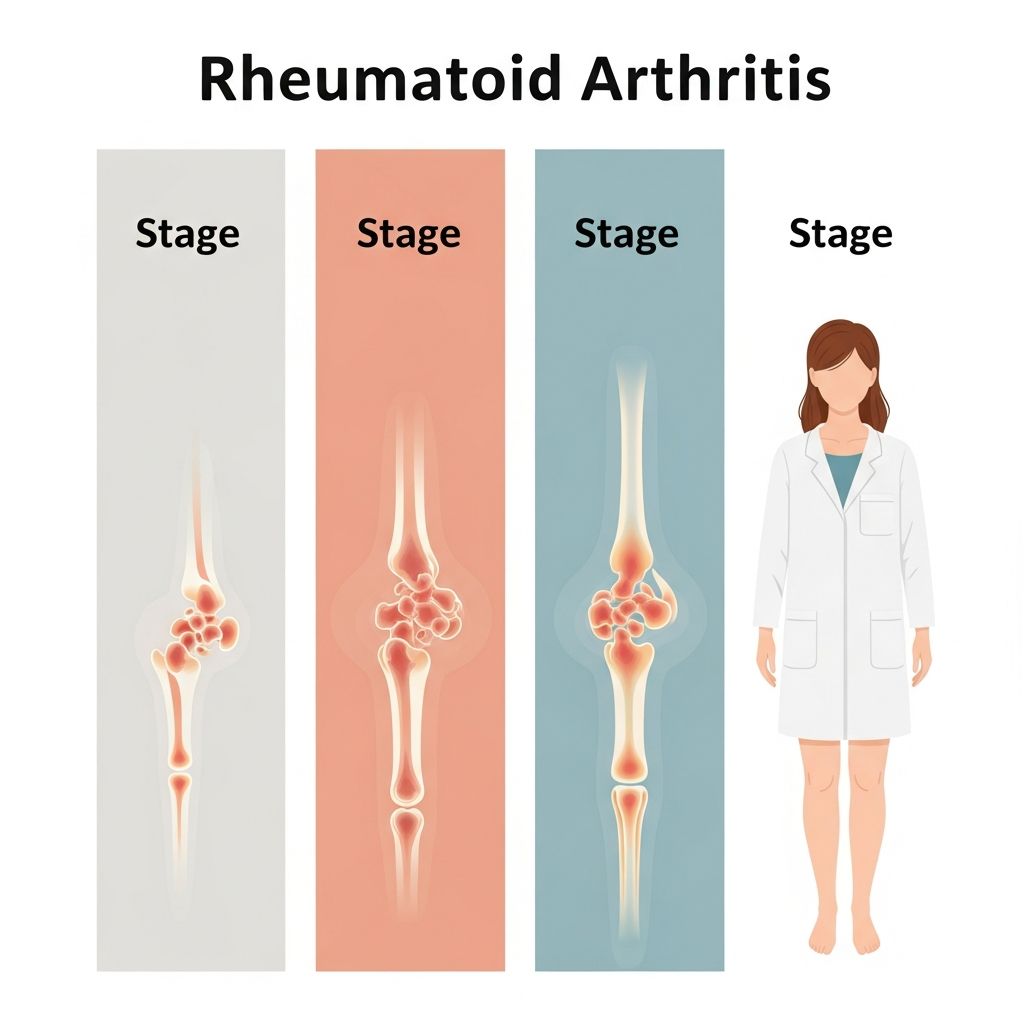
Rheumatoid arthritis (RA) is a chronic autoimmune disorder that progressively affects the joints and, in some cases, other parts of the body. Unlike some diseases that follow a predictable path, RA affects each person differently. However, doctors use a four-stage classification system to help determine disease severity, guide treatment decisions, and predict outcomes. Understanding these stages is crucial for patients and caregivers, as early intervention can significantly improve quality of life and slow disease progression.
What Is Rheumatoid Arthritis?
Rheumatoid arthritis is an autoimmune disease where the body’s immune system mistakenly attacks healthy joint tissue. This results in inflammation, pain, swelling, and eventually joint damage if left untreated. Unlike osteoarthritis, which develops from wear and tear, RA can affect multiple joints simultaneously and is often symmetrical, meaning it affects the same joints on both sides of the body. The condition typically appears in smaller joints first, such as those in the hands and feet, before potentially progressing to larger joints.
The Four Stages of Rheumatoid Arthritis
Medical professionals classify RA into four distinct stages based on clinical findings, imaging results, and disease activity. Each stage represents a different level of disease progression and requires tailored treatment approaches.
Stage 1: Early Rheumatoid Arthritis
Stage 1 represents the earliest phase of RA, characterized by inflammation and swelling in the joints. During this critical stage, symptoms are typically mild and may include:
- Joint inflammation and swelling, particularly in small joints of the fingers and feet
- Joint stiffness, especially noticeable in the morning
- Mild to moderate joint pain
- Fatigue and general malaise
- Possible low-grade fever
At stage 1, X-rays typically do not show bone damage, though blood tests may reveal elevated inflammatory markers such as C-reactive protein (CRP) and erythrocyte sedimentation rate (ESR). This stage is critical because early diagnosis and treatment can potentially prevent or significantly slow disease progression. Many patients experience relatively mild symptoms during this phase, which is why prompt medical attention is essential when joint symptoms persist for more than a few weeks.
Stage 2: Mild Rheumatoid Arthritis with Antibody Formation
In stage 2, the disease becomes more established as the body begins forming antibodies specific to RA. The most notable antibodies include rheumatoid factor (RF) and anti-citrullinated protein antibodies (ACPA). These antibodies continue attacking the body’s healthy cells, leading to progression of symptoms. Typical characteristics of stage 2 include:
- More persistent and obvious joint pain
- Increased and more noticeable joint swelling
- Joint stiffness that worsens in the morning and may last for hours
- Decreased range of motion in affected joints
- Symptoms spreading beyond the initially affected small joints
- Continued fatigue and low energy levels
Early X-rays in stage 2 still may not show significant bone damage, but imaging may begin to reveal subtle changes. Blood tests confirm the presence of RA antibodies and elevated inflammatory markers. This stage is considered a critical window for intervention. Beginning disease-modifying antirheumatic drugs (DMARDs) or biologic therapies during stage 2 can help slow or halt disease progression and potentially achieve remission.
Related Stories



Stage 3: Moderate Rheumatoid Arthritis
Stage 3 represents moderate RA, where the disease has caused significant structural damage to joints. During this stage, the disease extends beyond inflammation to cause actual destruction of cartilage and bone. Physical changes become more apparent, and patients often experience more severe symptoms, including:
- Severe joint pain and swelling
- Visible joint deformities, such as twisted fingers or thickened knuckles
- Development of rheumatoid nodules (firm lumps under the skin)
- Significantly reduced range of motion
- Carpal tunnel syndrome and nerve compression issues
- Involvement of larger joints such as knees, hips, and shoulders
- Possible extraarticular manifestations affecting eyes, lungs, or heart
X-ray imaging in stage 3 clearly shows cartilage loss and bone erosion. Joint function becomes noticeably impaired, and patients may struggle with daily activities such as opening jars, typing, or walking. At this stage, aggressive treatment with combination therapies is typically necessary to prevent further deterioration.
Stage 4: Severe Rheumatoid Arthritis (End-Stage)
Stage 4, or end-stage RA, represents the most severe form of the disease. At this point, joints may become completely non-functional due to extensive damage and, in some cases, fusion of the joint surfaces. Symptoms at this stage include:
- Extreme pain and severe swelling
- Severe joint deformity and ankylosis (joint fusion)
- Extremely limited or absent range of motion
- Significant disability affecting daily functioning
- Possible loss of hand function or mobility
- Widespread involvement of multiple large and small joints
Notably, as joints fuse and become completely immobile, some patients experience a paradoxical decrease in inflammation because there is no longer joint tissue to inflame. However, the functional disability remains severe. It is important to note that with modern treatment options, reaching stage 4 is becoming increasingly rare, as potent medications can now halt or slow disease progression substantially.
Disease Progression and Individual Variation
Rheumatoid arthritis is a progressive disease, but its progression varies significantly among individuals. Some people experience rapid symptom worsening over weeks, while others progress gradually over months or years. Several factors influence how quickly RA progresses:
- Family history: Genetic predisposition increases RA risk and may influence severity
- Age at diagnosis: Younger patients sometimes experience more aggressive disease
- Antibody status: Presence and levels of RF and ACPA antibodies
- Disease activity at diagnosis: More active disease at baseline often predicts faster progression
- Lifestyle factors: Smoking significantly accelerates disease progression
- Treatment response: How quickly and effectively a patient responds to therapy
- Comorbidities: Other health conditions can influence disease course
Many patients experience periods of remission or low disease activity alternating with flare-ups when symptoms worsen. With early and aggressive treatment, some patients achieve complete remission and maintain normal joint function indefinitely.
Treatment Approaches by Stage
Treatment strategies are tailored to the stage of disease and individual patient factors:
Early Stage Treatment (Stages 1-2)
Early intervention is paramount during stages 1 and 2. Treatment typically includes NSAIDs for symptom relief, DMARDs to slow disease progression, and potentially biologic agents. Physical therapy is often recommended to maintain joint function and flexibility. Early initiation of DMARDs has been shown to prevent joint damage and allow many patients to achieve remission.
Moderate Stage Treatment (Stage 3)
Treatment at stage 3 usually involves combination therapy with multiple DMARDs and biologic agents. Physical and occupational therapy become increasingly important to maximize remaining joint function. Pain management and anti-inflammatory medications are typically required, and some patients may benefit from joint injections or other interventional approaches.
Severe Stage Treatment (Stage 4)
In end-stage RA, treatment focuses on managing pain, maintaining function, and preventing further complications. While disease-modifying medications are continued, some patients may require surgical interventions such as joint replacement to restore function. Comprehensive symptom management and rehabilitation become central to treatment.
Early Diagnosis: Why It Matters
Early diagnosis is perhaps the most critical factor in determining RA outcomes. The window of opportunity to prevent irreversible joint damage is within the first three to six months of symptom onset. During this period, aggressive treatment can prevent progression to later stages and potentially achieve long-term remission. Patients who seek treatment promptly when experiencing persistent joint symptoms have significantly better long-term functional outcomes compared to those diagnosed years after symptom onset.
Signs of Disease Progression
Patients should be alert to indicators that RA is progressing despite treatment:
- Flares occurring with increasing frequency
- Flares lasting longer than previously
- Increasing joint pain and swelling despite medication
- Symptoms spreading to new joints
- Development of rheumatoid nodules
- Rising inflammatory markers on blood tests
- Decreased response to current medications
- Development of extraarticular symptoms
If any of these signs appear, patients should contact their rheumatologist promptly, as adjustments to treatment may be necessary.
Living Well With Rheumatoid Arthritis
While RA is a serious chronic condition, modern treatments have transformed the disease outlook. Many patients achieve remission or low disease activity and live full, active lives. Key components of successful RA management include:
- Regular monitoring with your rheumatology team
- Adherence to prescribed medications
- Physical and occupational therapy
- Regular exercise adapted to your abilities
- Stress management and adequate sleep
- Healthy diet and weight management
- Smoking cessation if applicable
- Support from family, friends, or support groups
Frequently Asked Questions
Q: Can rheumatoid arthritis be cured?
A: Currently, RA cannot be cured, but modern treatments can suppress disease activity, prevent joint damage, and allow many patients to achieve remission. With early diagnosis and appropriate treatment, many people maintain normal joint function indefinitely.
Q: Is it possible to skip stages of RA?
A: Disease progression varies individually. Some people progress rapidly through multiple stages, while others progress very slowly or stabilize at an early stage with effective treatment. Not everyone experiences every stage.
Q: How often should I see my rheumatologist?
A: In early RA, frequent visits (every 1-3 months) are typically recommended to monitor response to treatment. As disease activity is controlled, visits may become less frequent. Your rheumatologist will recommend a schedule based on your individual situation.
Q: Can I prevent progression to later stages?
A: Early diagnosis and aggressive treatment significantly reduce the risk of progression to later stages. Starting DMARDs within the first three to six months of symptom onset offers the best chance of preventing joint damage and achieving remission.
Q: What role does lifestyle play in RA progression?
A: Lifestyle factors, particularly smoking, can accelerate RA progression. Maintaining a healthy weight, regular exercise, adequate sleep, stress management, and smoking cessation can all support better disease control and overall health outcomes.
Q: Are there any new treatments for RA?
A: Yes, rheumatology is a rapidly evolving field with new biologic and targeted synthetic DMARDs being developed regularly. Discuss with your rheumatologist which treatments are most appropriate for your specific disease characteristics.
References
- Rheumatoid Arthritis — American College of Rheumatology. 2024. https://www.rheumatology.org/I-Am-A/Patient-Caregiver/Diseases-and-Conditions/Rheumatoid-Arthritis
- Rheumatoid Arthritis: Overview — National Institute of Arthritis and Musculoskeletal and Skin Diseases (NIAMS), National Institutes of Health. 2024. https://www.niams.nih.gov/health-topics/rheumatoid-arthritis
- Early RA Network: Disease-Modifying Antirheumatic Drugs in Early RA — American College of Rheumatology Guidelines. 2021. https://www.rheumatology.org/Practice-Management/Clinical-Support/Clinical-Practice-Guidelines
- Smoking and Rheumatoid Arthritis: Risk and Progression — CDC Arthritis Program. 2024. https://www.cdc.gov/arthritis/basics/rheumatoid-arthritis.html
- Pathogenesis of Rheumatoid Arthritis — UpToDate Medical Database. 2025. https://www.uptodate.com
Similar Articles








Read full bio of Sneha Tete