Rhinophyma: Comprehensive Guide To Signs, Causes, And Treatment
Understanding rhinophyma: causes, symptoms, diagnosis, and effective treatments for this advanced rosacea subtype affecting the nose.
Authoritative facts about rhinophyma: what it is, who gets it, causes, diagnosis, and treatment options from DermNet New Zealand.
What is rhinophyma?
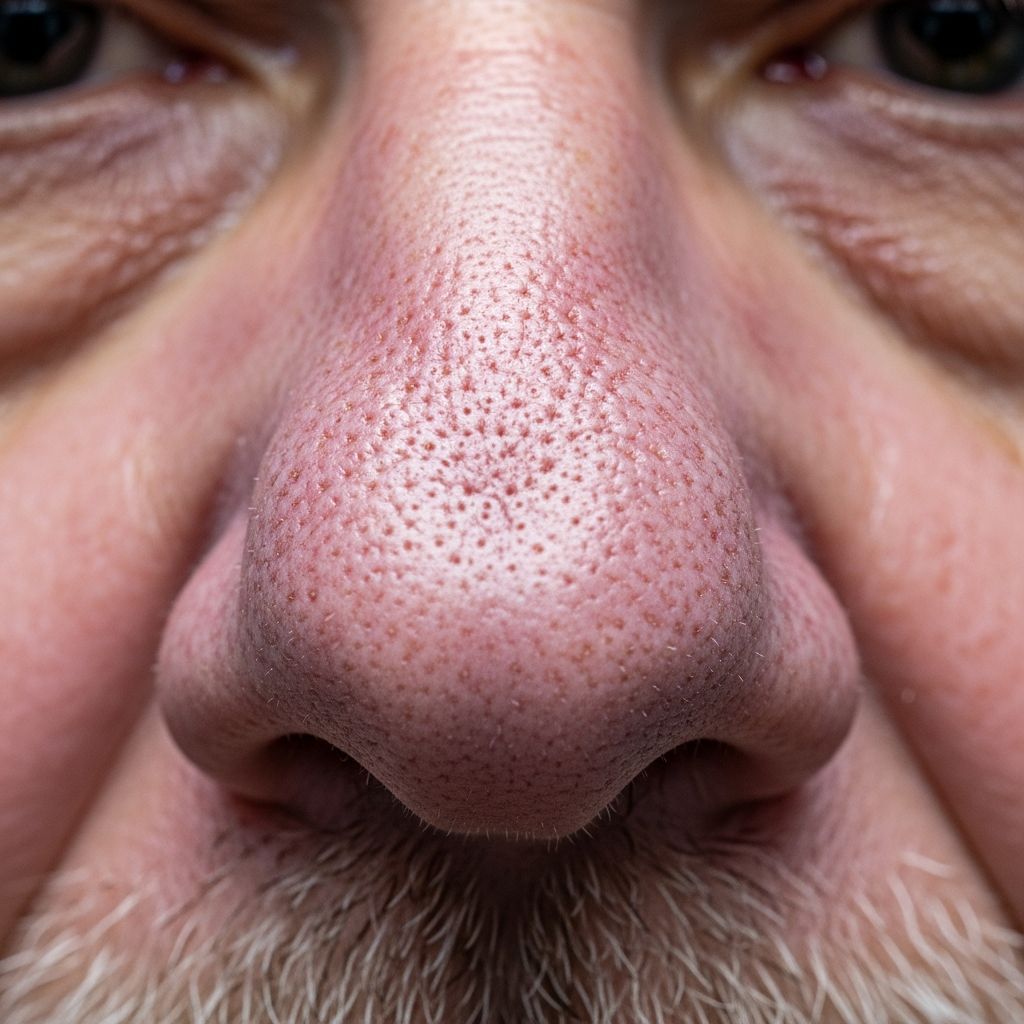
Rhinophyma is a rare skin condition characterized by a progressive enlargement and deformity of the nose, resulting in a bulbous, irregular appearance. It represents subtype 3 rosacea, an advanced form of the chronic inflammatory skin disorder known as rosacea. Primarily affecting the lower two-thirds of the nose, rhinophyma leads to thickened skin, prominent sebaceous glands, and telangiectasias (visible dilated blood vessels).
The condition develops gradually over years, often starting with facial flushing and redness typical of rosacea. As it advances, the nasal skin becomes hypertrophic, with enlarged pores and a waxy, rough texture. While not life-threatening, rhinophyma can cause significant cosmetic distress, emotional impact, and functional issues such as nasal obstruction impairing breathing.
Rhinophyma is more common in men over 50, particularly those of Celtic origin, though it can occur in women and other ethnicities. It is often misattributed to alcohol abuse, perpetuating stigma, but no direct causal link exists between alcohol and the condition—though alcohol can exacerbate rosacea flares.
Who gets rhinophyma?
Rhinophyma predominantly affects middle-aged and older men, with a strong male predominance due to the influence of androgens on sebaceous gland hyperplasia. Women with rosacea rarely progress to severe rhinophyma, possibly because lower androgen levels limit glandular overgrowth.
- Demographics: Most cases occur in individuals aged 40–60 years.
- Ethnic predisposition: Fair-skinned individuals of Irish, Scottish, or Scandinavian descent (Fitzpatrick skin types I–II).
- Rosacea history: Nearly all patients have a background of rosacea subtypes 1 (erythematotelangiectatic) or 2 (papulopustular).
- Risk factors: Family history of rosacea, chronic sun exposure, smoking, and triggers like spicy foods or hot drinks that provoke flushing.
Early intervention in rosacea significantly reduces the risk of progression to rhinophyma, highlighting the importance of prompt dermatological care.
What causes rhinophyma?
The precise etiology of rhinophyma remains unclear, but it is widely regarded as the end-stage manifestation of untreated or severe rosacea. Key pathological processes include chronic inflammation, sebaceous gland hyperplasia, fibrosis, and vascular abnormalities.
Contributing factors include:
- Sebaceous gland overgrowth: Enlarged oil glands produce excess sebum, leading to thickened, oily skin.
- Vascular dilatation: Persistent flushing damages blood vessels, causing telangiectasias and plasma leakage that promotes fibrosis.
- Inflammatory cascade: Accumulation of inflammatory cells, Demodex mites, and leakage of blood coagulation factor XIII contribute to tissue buildup.
- Hormonal influences: Androgens stimulate sebaceous activity, explaining male predominance.
- Genetic and environmental triggers: Familial predisposition combined with UV exposure, heat, and alcohol as exacerbators.
Histologically, rhinophyma shows sebaceous gland hypertrophy out of proportion to hair follicles, dermal fibrosis, and chronic lymphocytic infiltration. It is not caused by alcoholism, despite historical myths.
Related Stories



What are the clinical features of rhinophyma?
Rhinophyma evolves through stages, beginning subtly and progressing to marked deformity if untreated. Early features mimic rosacea, while advanced stages are distinctive.
| Stage | Clinical Features |
|---|---|
| Early/Mild | Persistent erythema, telangiectasias, enlarged pores, oily skin, mild swelling. |
| Moderate | Thickened nasal skin, prominent follicles, bumpy texture, reddish-purple hue. |
| Advanced/Severe | Bulbous enlargement (especially nasal tip), waxy/rough surface, pitted scars, crusting/oozing, nasal obstruction. |
Symptoms may include irritation, burning, and secondary infections due to blocked follicles trapping bacteria. Associated rosacea features like ocular irritation or phymatous changes elsewhere (e.g., cheeks) can occur.
Diagnosis
Diagnosis is clinical, based on characteristic nasal morphology in a patient with rosacea history. No specific tests are required, though dermoscopy may reveal follicular plugging and telangiectasias.
- Differential diagnosis: Include basal cell carcinoma (rule out with biopsy if ulcerated/asymmetric), sarcoidosis, lupus pernio, actinic keratosis, or gouty tophi.
- Biopsy indications: Atypical features, rapid growth, or ulceration to exclude malignancy (rare basal cell carcinoma association).
- Staging: Assessed by severity to guide treatment (mild: medical; severe: surgical).
Treatment of rhinophyma
Treatment is tailored to severity. Early rosacea management prevents progression; established rhinophyma often requires surgery for optimal results.
Medical therapy
Useful for mild cases or pre/post-surgery:
- Topical agents: Metronidazole, azelaic acid, or retinoids to reduce inflammation.
- Oral medications: Low-dose doxycycline (anti-inflammatory), isotretinoin for sebaceous reduction (monitor lipids/liver).
- Laser/vascular treatments: Pulsed dye laser for telangiectasias.
These slow progression but rarely reverse advanced changes.
Surgical treatments
Gold standard for moderate-severe rhinophyma, aiming to debulk tissue, reshape the nose, and preserve function.
| Technique | Description | Pros/Cons |
|---|---|---|
| Tangential excision (scalpel/shave) | Surface tissue removal with healing by secondary intention. | Simple, low cost; risk of scarring/contraction. |
| Laser ablation (CO2/Erbium:YAG) | Precise vaporization of tissue layers. | Minimal bleeding, good cosmesis; requires expertise. |
| Electrosurgery/radiofrequency | Thermal destruction of tissue. | Quick; potential thermal damage. |
| Cryosurgery | Freezing tissue for sloughing. | Office-based; hypopigmentation risk. |
| Dermabrasion | Sanding down surface irregularities. | Smooth finish; prolonged healing. |
Post-op care includes antibiotics, emollients, and sun protection. Recurrence is low (<15%) with combined approaches.
What is the outcome for rhinophyma?
Surgical correction yields excellent cosmetic and functional results, with high patient satisfaction. Early intervention preserves nasal shape; delayed treatment may require reconstructive surgery. Maintenance rosacea therapy prevents relapse. Psychological benefits are profound, alleviating stigma.
Prevention
- Treat rosacea aggressively with triggers avoidance (sun, alcohol, heat).
- Daily sunscreen and gentle skincare.
- Regular dermatologist follow-up for high-risk patients.
Frequently asked questions
Is rhinophyma caused by alcohol?
No, despite myths. Alcohol may trigger rosacea flares but does not cause rhinophyma.
Can rhinophyma be reversed without surgery?
Early stages may respond to medications like isotretinoin, but advanced cases require surgery.
Does rhinophyma affect breathing?
Yes, severe cases cause nasal obstruction.
Is rhinophyma cancerous?
Rarely associated with basal cell carcinoma; biopsy suspicious lesions.
How long does recovery take after surgery?
1–4 weeks, with full cosmesis in months.
References
- Rhinophyma – StatPearls — NCBI Bookshelf, NIH. 2023-07-17. https://www.ncbi.nlm.nih.gov/books/NBK544373/
- Rhinophyma Treatment | Causes, Symptoms & Surgical Options — Phoenix Surgical Dermatology Group. 2024. https://www.psdermgroup.com/dermatology/rhinophyma-treatment
- Rhinophyma: Causes, pictures, and treatment — Medical News Today. 2023-05-12. https://www.medicalnewstoday.com/articles/322166
- Rhinophyma | Condition — UT Southwestern Medical Center. 2024. https://utswmed.org/conditions-treatments/rhinophyma/
- Rhinophyma: What It Is, Causes, Diagnosis, Treatment, and More — Osmosis. 2023. https://www.osmosis.org/answers/rhinophyma
- Rhinophyma: Rosacea at its Worst Can Be Treated — National Rosacea Society. 1996. https://www.rosacea.org/rosacea-review/1996/summer/rhinophyma-rosacea-at-its-worst-can-be-treated
Similar Articles








Read full bio of Sneha Tete