Rhinoplasty (Nose Job): Surgery, Recovery, Before & After
Complete guide to rhinoplasty: cosmetic nose surgery, recovery timeline, and expected results.
Understanding Rhinoplasty: What You Need to Know
Rhinoplasty, commonly referred to as a nose job, is one of the most popular cosmetic surgery procedures performed today. This surgical procedure reshapes and resizes your nose to improve its appearance and, in many cases, enhance breathing function. Over 350,000 rhinoplasty procedures are performed annually in the United States, making it a well-established and refined surgical intervention. While women constitute the majority of rhinoplasty patients, men account for nearly 20% of all rhinoplasty surgeries performed each year, demonstrating that this procedure appeals to a diverse patient population seeking to enhance their facial aesthetics and functionality.
The decision to undergo rhinoplasty is highly personal and individualized. Whether you’re considering this procedure for cosmetic enhancement or to address functional breathing issues, understanding the process, recovery, and realistic outcomes is essential for making an informed decision about your care.
Why People Choose Rhinoplasty
Patients pursue rhinoplasty for various reasons, each with unique motivations and desired outcomes. Understanding these reasons can help you determine whether rhinoplasty is right for you.
Cosmetic Reasons: Many patients seek rhinoplasty to enhance their facial appearance by improving nose shape and proportions. Common cosmetic concerns include:
– Reducing or removing a prominent bump on the bridge of the nose- Refining an overly large or bulbous nasal tip- Narrowing a wide nose or nostrils- Straightening a crooked nose- Balancing facial proportions and improving overall facial harmony- Correcting asymmetry caused by injury or developmental variations
Functional Reasons: Beyond appearance, rhinoplasty can address medical issues that affect breathing and quality of life. These functional improvements include:
– Correcting a deviated septum that obstructs airflow- Addressing internal nasal structures that impede breathing- Alleviating difficulties caused by allergies or chronic sinus conditions- Restoring nasal function after injury or trauma
Many patients benefit from addressing both cosmetic and functional concerns during a single surgical procedure, allowing for comprehensive improvement of both appearance and function.
Are You a Candidate for Rhinoplasty?
Determining candidacy for rhinoplasty involves multiple factors that your surgeon will evaluate during your consultation. Being an ideal candidate typically means meeting several criteria:
– You are in good overall health with no serious medical conditions that would contraindicate surgery- Your nasal bone growth is complete (typically after age 16-17)- You have realistic expectations about surgical outcomes and understand that perfect symmetry may not be achievable- You are motivated by your own desires rather than external pressure- You understand the risks and potential complications of surgery- You are willing to follow pre- and post-operative instructions carefully- You have specific, well-defined concerns about your nose that you can articulate to your surgeon
Your cosmetic surgeon will conduct a thorough evaluation to determine your candidacy and recommend the most appropriate surgical approach for your unique nasal anatomy and desired outcomes.
The Rhinoplasty Consultation Process
Your journey toward rhinoplasty begins with a comprehensive consultation with your surgical team. This initial meeting is crucial for establishing clear communication, understanding your goals, and developing a personalized surgical plan.
What to Expect During Your Consultation
During your consultation, your surgeon will conduct several important assessments:
– Medical History Review: A detailed discussion of your medical background, including any previous surgeries, current medical conditions, and medications you’re taking- Breathing Assessment: Evaluation of any breathing difficulties or functional concerns you may experience- Physical Examination: Comprehensive examination of both the external and internal structures of your nose- Facial Analysis: Assessment of how your nose relates to your other facial features and proportions- Photographic Review: Examination of before-and-after photographs from your surgeon’s previous rhinoplasty patients- Your Own Photography: Professional photographs taken of your nose from multiple angles for surgical planning and documentation
Related Stories



This consultation provides an excellent opportunity for you to discuss your specific concerns, ask questions about the surgical process, and ensure that you and your surgeon have aligned expectations regarding surgical goals and outcomes.
Pre-Operative Preparation for Rhinoplasty
Proper preparation before your rhinoplasty surgery is essential for ensuring a smooth procedure and optimal results. Your surgical team will provide detailed pre-operative instructions that typically include:
Medical Preparation
– Medication Review: You will receive specific instructions regarding your current medications. Most importantly, you’ll need to discontinue blood-thinning medications such as aspirin and other anti-inflammatory drugs approximately two weeks before surgery to reduce bleeding risk- Smoking Cessation: If you smoke, your surgeon will strongly recommend quitting well in advance of surgery, as smoking impairs healing- Alcohol Avoidance: Avoid alcohol consumption for at least one week before surgery- Fasting Instructions: Follow pre-operative fasting guidelines, typically nothing to eat or drink after midnight the night before surgery
Practical Preparation
– Arrange for transportation to and from the surgical facility- Prepare your home for recovery with comfortable pillows, soft foods, and entertainment- Wear loose, comfortable clothing on the day of surgery- Remove jewelry, nail polish, and makeup before arriving at the facility
Rhinoplasty Surgical Techniques
Your surgeon may employ different surgical techniques depending on the extent of reshaping needed and your specific goals. Understanding these approaches helps you appreciate the complexity and precision involved in rhinoplasty surgery.
Closed Rhinoplasty
Closed rhinoplasty is typically used for minor to moderate nose reshaping. In this technique, your surgeon makes incisions inside the nose, hidden from external view. This approach offers several advantages:
– No visible scars since incisions are made internally- Shorter operative time- Less tissue trauma and swelling- Faster initial recovery- Ideal for patients requiring modest changes to nasal structure
Through internal incisions, your surgeon separates the nasal skin from the underlying bone and cartilage framework. Changes in nose shape are achieved by carefully altering the supporting structures. Common modifications include shaving bone and cartilage on the bridge to remove a bump, reshaping a bulbous tip through cartilage removal or strategic suturing, or augmenting the tip with cartilage grafted from your septum or ear.
Open Rhinoplasty
Open rhinoplasty is employed when major nose reshaping is necessary. This technique provides superior visualization and access to nasal structures. The key difference is that your surgeon makes an additional incision across the columella, the narrow vertical strip of tissue separating your nostrils. This allows the surgeon to lift the skin and soft tissue completely off the nasal framework for comprehensive visualization and manipulation of underlying structures.
While open rhinoplasty results in a small external scar, this scar typically heals beautifully and becomes nearly imperceptible with proper wound care. The enhanced visualization provided by this approach often results in more precise reshaping and refined aesthetic outcomes.
Secondary (Revision) Rhinoplasty
Secondary or revision rhinoplasty is performed when patients experience persistent problems after previous nose surgery or when unsatisfactory results develop over time. While some issues may be minor and easily corrected, others can be more complex, making revision surgery technically more challenging. Your surgeon may use either open or closed techniques depending on the specific concerns being addressed.
Filler Rhinoplasty (Nonsurgical Rhinoplasty)
For patients seeking less invasive options, nonsurgical rhinoplasty utilizing injectable dermal fillers offers an alternative approach. This technique involves strategically injecting dermal fillers to fill depressions, smooth sharp angles, or adjust the nasal tip angle. While effective and producing immediate results, these fillers provide temporary enhancement and require periodic maintenance treatments to sustain results.
What Happens During Your Rhinoplasty Surgery
Understanding the surgical process can help reduce anxiety and set realistic expectations about what occurs in the operating room.
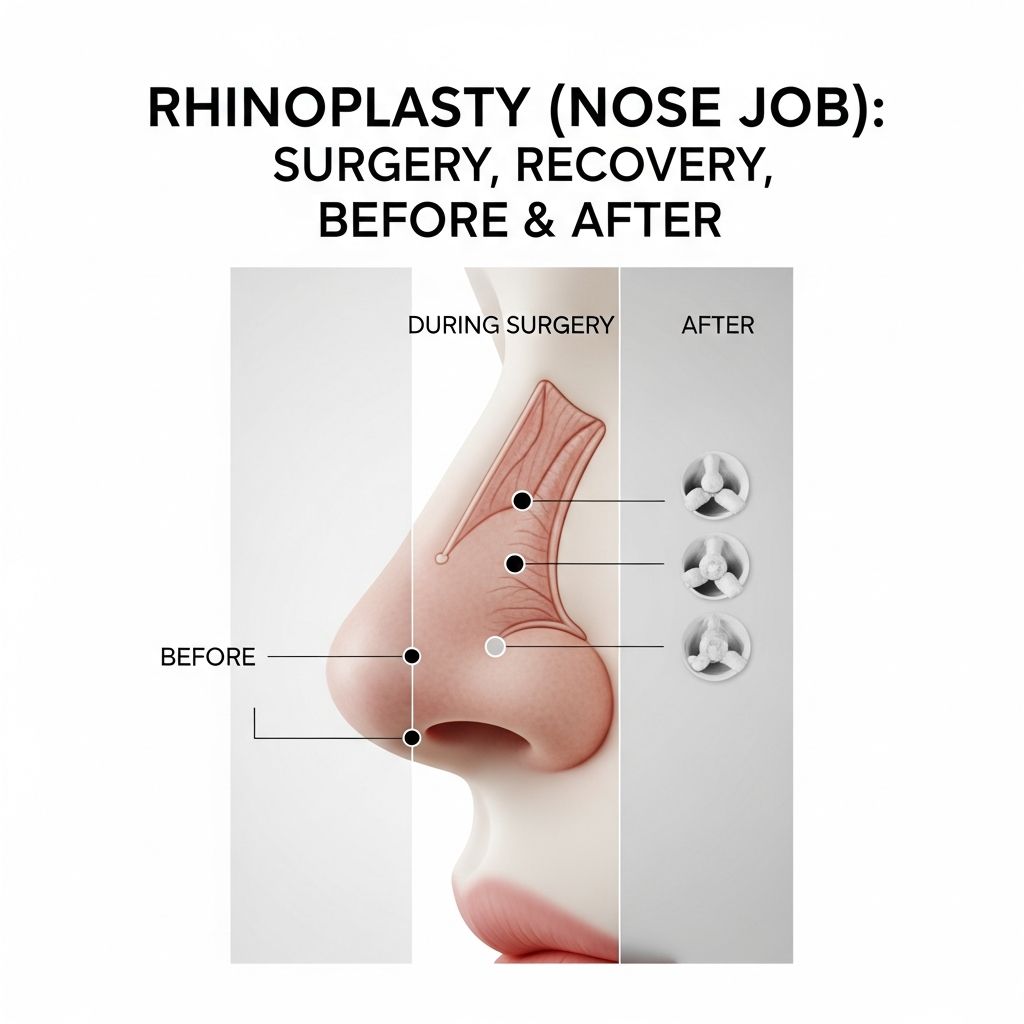
Rhinoplasty typically takes one to two hours to complete, though complex cases may require additional time. After you receive anesthesia and the surgical field is prepared and sterilized, your surgeon makes planned incisions either internally (closed technique) or across the columella (open technique). Your surgeon then gently raises the soft tissues covering your nose to access the underlying bone and cartilage structure.
Your nasal framework is then carefully resculpted according to your pre-operative surgical plan. If your septum is deviated, it can be straightened to improve breathing. The projection of internal nasal structures may be reduced to enhance airflow. The nasal skin and soft tissue are then carefully redraped over the newly sculpted framework, and incisions are closed with fine sutures.
Your surgeon may place internal splints or tubes to support your nose during the initial healing phase. If you desire alteration of nostril size, your surgeon may place additional incisions in the natural creases of your nostrils. In some cases, your surgeon might recommend complementary procedures, such as chin augmentation, to improve overall facial proportions and enhance the rhinoplasty result.
Recovery After Rhinoplasty Surgery
Understanding the recovery process helps you prepare for the post-operative period and manage expectations regarding return to normal activities.
Immediate Post-Operative Period
Rhinoplasty is performed as an outpatient procedure, meaning you’ll return home the same day as surgery. You won’t be able to drive, so arrange for someone to drive you home. You may experience grogginess and disorientation from anesthesia, so rest is important immediately following surgery.
First Week of Recovery
Your nose will likely have a splint placed externally to support the underlying structure as it begins healing. Depending on your specific procedure, you may have light medicated gauze packing inside your nose or an external splint as the primary support. Your surgeon will remove splints and any internal packing after approximately one week.
During this initial week, you may experience:
– Swelling and bruising around the nose and eyes- Discomfort managed with prescribed pain medication- Congestion from internal healing- Drainage of blood-tinged fluid- Difficulty sleeping due to nasal obstruction
Weeks Two Through Six
As you progress through recovery, swelling gradually diminishes, though some swelling may persist for several weeks. Most patients can return to light activities and work after one to two weeks, though you should avoid strenuous activity and heavy lifting for at least four to six weeks. Avoid contact sports and activities that risk nose trauma for at least eight weeks.
Long-Term Healing
While initial healing occurs within the first few weeks, complete nasal reshaping refinement continues for several months. Final results typically become apparent after six to twelve months as residual swelling fully resolves and your nose settles into its new shape.
Rhinoplasty Results and Timeline
Understanding realistic expectations regarding rhinoplasty results helps you appreciate the gradual transformation that occurs post-operatively.
Initial results become apparent once splints are removed, though significant swelling obscures the final outcome. Over the following weeks and months, as swelling gradually resolves, your new nasal shape becomes increasingly apparent. The bridge refines, the tip achieves greater definition, and overall nasal proportions become evident.
Most patients observe dramatic improvements by three months post-operatively. However, subtle refinement continues throughout the first year as residual swelling completely resolves and tissues settle into their permanent configuration. Some patients report continued subtle improvement even into the second year following surgery.
Risks and Complications
While rhinoplasty is generally safe when performed by experienced surgeons, all surgical procedures carry inherent risks. Potential complications include:
– Infection- Bleeding- Adverse reaction to anesthesia- Nasal asymmetry or unsatisfactory aesthetic results- Persistent breathing difficulties despite functional corrections- Septal perforation- Numbness or altered sensation- Need for revision surgery
Your surgeon will discuss these risks during your consultation and explain measures taken to minimize complication risks.
Frequently Asked Questions About Rhinoplasty
Q: At what age can I have rhinoplasty?
A: Ideally, rhinoplasty should be performed after nasal bone growth is complete, typically around age 16 to 17. However, functional rhinoplasty to correct breathing problems may be performed earlier if medically necessary.
Q: How long do rhinoplasty results last?
A: Surgical rhinoplasty results are permanent because your nasal structure is permanently altered. However, natural aging and gravity will continue to affect your appearance over many years.
Q: Can rhinoplasty improve my breathing?
A: Yes, functional rhinoplasty can significantly improve breathing by correcting a deviated septum, reducing nasal obstruction, and optimizing internal nasal airflow. Many patients undergo combined cosmetic and functional procedures.
Q: Will rhinoplasty leave visible scars?
A: Closed rhinoplasty leaves no visible scars since incisions are made inside the nose. Open rhinoplasty creates a small scar on the columella that typically heals imperceptibly.
Q: How much does rhinoplasty cost?
A: Rhinoplasty costs vary based on surgical complexity, surgeon experience, geographic location, and facility fees. Cosmetic rhinoplasty is typically not covered by insurance, though functional procedures addressing breathing problems may be covered.
Q: Can I combine rhinoplasty with other procedures?
A: Yes, many patients combine rhinoplasty with complementary procedures such as chin augmentation to improve overall facial balance and proportions.
Q: When can I resume normal activities after rhinoplasty?
A: Most patients return to work and light activities within one to two weeks. Strenuous exercise and contact sports should be avoided for at least four to six weeks, with full recovery typically occurring within eight weeks.
Q: Is rhinoplasty reversible?
A: Surgical rhinoplasty is generally permanent. While revision rhinoplasty can address unsatisfactory results, reversing changes completely to your original nose shape is typically not possible.
References
- Rhinoplasty (Nose Job): Surgery, Recovery, Before & After — Cleveland Clinic. 2022-11-03. https://my.clevelandclinic.org/health/treatments/11011-rhinoplasty
- Cosmetic Nose Surgery: Rhinoplasty — Cleveland Clinic Cosmetic & Plastic Surgery. 2025. https://my.clevelandclinic.org/cosmetic-plastic-surgery/procedures/rhinoplasty-nose-surgery
- Exploring the Resurgence of Preservation Rhinoplasty — PubMed Central (PMCID: PMC10130993). 2023. https://pubmed.ncbi.nlm.nih.gov/37130993/
- Nonsurgical Rhinoplasty (Nose Job): What It Is, Uses & Procedure — Cleveland Clinic. 2022-04-26. https://my.clevelandclinic.org/health/treatments/22880-nonsurgical-rhinoplasty-nose-job
- The Logical Sequence of Primary Open Rhinoplasty Founded on Anatomical Principles — PubMed Central. 2023. https://pubmed.ncbi.nlm.nih.gov/37365310/
Similar Articles








Read full bio of Sneha Tete