Rhinoscleroma: 3 Stages, Symptoms, Diagnosis & Treatment
Rare chronic granulomatous disease caused by Klebsiella rhinoscleromatis affecting the upper respiratory tract.
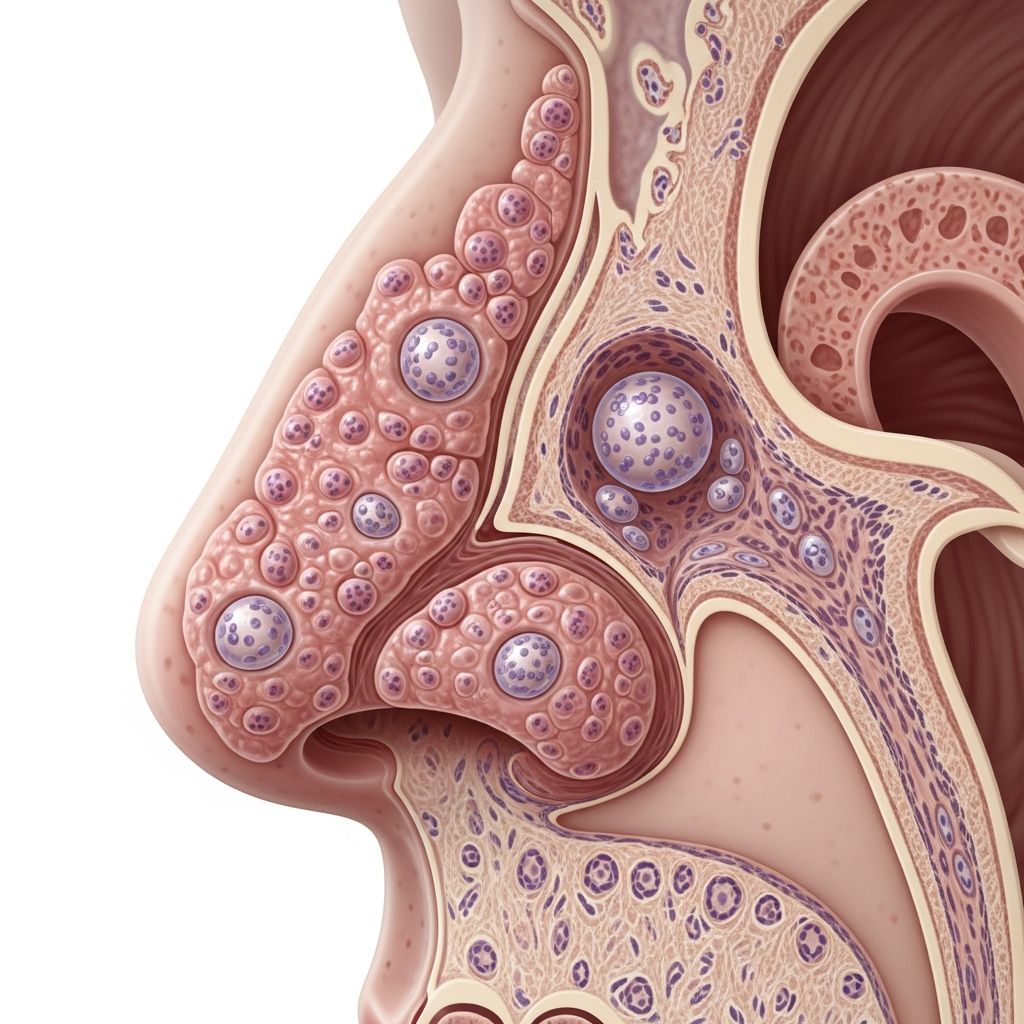
Rhinoscleroma is a rare, chronic granulomatous disease primarily affecting the upper respiratory tract, caused by the bacterium Klebsiella rhinoscleromatis. It progresses slowly through distinct stages, leading to destructive lesions if untreated.
What is rhinoscleroma?
Rhinoscleroma, also known as ozena scleroticans or Slavic leprosy, is a progressive inflammatory condition characterized by firm, granulomatous swellings in the nasal cavity, nasopharynx, larynx, trachea, and occasionally other sites like the lips, gums, or bronchi. The disease is endemic in regions with poor sanitation and typically manifests in young adults aged 10-30 years, though it can occur at any age. It spreads via inhalation of infected droplets or contaminated materials, with risk factors including poverty, poor hygiene, immunodeficiency (e.g., HIV), and close contact with infected individuals.
The causative agent, Klebsiella rhinoscleromatis, is a Gram-negative, encapsulated, non-motile bacillus closely related to Klebsiella pneumoniae. First described by Hebra in 1870, the disease remains underdiagnosed in non-endemic areas, leading to delayed treatment and complications.
Who gets rhinoscleroma?
Rhinoscleroma predominantly affects individuals in endemic areas such as Central and South America, parts of Africa, the Middle East, India, the Philippines, Central and Eastern Europe, and some Pacific regions. It is more common in middle-aged women living in poor hygienic and nutritional conditions. Sporadic cases occur worldwide, often in immigrants or travelers from endemic zones.
Risk factors include:
- Poverty and overcrowding
- Poor personal hygiene
- Immunodeficiency, particularly HIV infection
- Prolonged exposure to infected persons, with evidence of intrafamilial transmission
- Rural or economically disadvantaged backgrounds
The disease shows no strong racial predilection but is associated with altered cellular immunity, possibly involving impaired CD4:CD8 ratios, contributing to its chronicity.
What causes rhinoscleroma?
The primary cause is infection with Klebsiella rhinoscleromatis, a bacterium with high affinity for respiratory mucosa. Transmission occurs through airborne droplets or fomites. The exact pathogenesis involves an altered host immune response, leading to persistent infection rather than acute clearance. Impaired cellular immunity allows the bacteria to evade destruction, resulting in granuloma formation.
Histologically, the bacteria reside intracellularly within characteristic Mikulicz cells (foamy macrophages), evading immune detection. Environmental factors like malnutrition exacerbate susceptibility.
What are the clinical stages of rhinoscleroma?
Rhinoscleroma evolves through three well-defined clinical and histopathological stages, progressing over months to years if untreated:
- Catarrhal (rhinitic) stage: Initial phase with non-specific rhinitis, purulent foul-smelling nasal discharge, crusting, epistaxis, and nasal obstruction. Lasts weeks to months. Histology shows subepithelial polymorphonuclear infiltrates and granulation tissue.
- Granulomatous (proliferative/nodular) stage: Characteristic phase with firm nodular masses causing significant obstruction. Involves nose, nasopharynx, larynx. Features dense infiltrates of plasma cells, lymphocytes, Russell bodies, and pathognomonic Mikulicz cells. Most diagnoses occur here.
- Sclerotic (cicatricial/fibrotic) stage: Advanced destructive phase with fibrosis, scarring, nasal deformity (e.g., ‘frog face’), anosmia, dysphonia, stridor, and airway compromise. Histology dominated by fibrosis with scant inflammation.
Extranasal involvement (larynx 15-20%, trachea/bronchi 10%) can lead to fatal obstruction.
What does rhinoscleroma look like?
In the early catarrhal stage, patients present with chronic rhinitis and fetid discharge. The granulomatous stage features rubbery, reddish-purple nodules filling the nasal cavity, extending to lips, palate, or larynx, causing hoarseness or stridor. Advanced sclerotic stage shows nasal saddle deformity, septal perforation, and pharyngeal stenosis.
Rare presentations include oral involvement like gingival hypertrophy, lip fissuring, or verrucous lesions, as in a reported case of a middle-aged woman with peri-oral swelling and foamy macrophages on biopsy. Skin lesions are uncommon but may mimic leishmaniasis or malignancy.
Related Stories



How is rhinoscleroma diagnosed?
Diagnosis relies on clinical suspicion, histopathology, and microbiology:
- Biopsy: Gold standard. Catarrhal: PMNs; Granulomatous: Mikulicz cells (large macrophages with vacuolated cytoplasm containing bacilli), plasma cells, Russell bodies; Sclerotic: fibrosis.
- Special stains: Gram (Gram-negative rods), PAS, Giemsa, Warthin-Starry, or Grocott’s silver highlight intracytoplasmic bacilli.
- Culture: Positive in 50% of granulomatous stage cases; challenging due to fastidious growth.
- Imaging: CT/MRI for extent (e.g., sinus opacification, tracheal narrowing).
- Serology/PCR: Detect Klebsiella type III antigen or DNA; supportive.
Differential includes syphilis, tuberculosis, leishmaniasis, Wegener’s, lymphoma.
How is rhinoscleroma treated?
Treatment combines prolonged antibiotics and surgery:
- Antibiotics: First-line: ciprofloxacin + doxycycline or rifampicin + cotrimoxazole for 6-12 months. Alternatives: aminoglycosides, tetracyclines. Response confirms diagnosis.
- Surgery: For obstruction (laser ablation, tracheostomy) or deformity correction in sclerotic stage.
- Supportive: Nasal irrigation, steroids for inflammation.
Early treatment prevents progression; relapse common without completion.
What is the outcome for rhinoscleroma?
With antibiotics, granulomatous stage lesions regress in 60-90%; sclerotic changes are irreversible. Untreated, mortality from airway obstruction reaches 10%. Regular follow-up essential. Rare extrapulmonary spread (e.g., orbit, middle ear) worsens prognosis.
Frequently Asked Questions (FAQs)
Q: Is rhinoscleroma contagious?
A: Yes, via respiratory droplets, but requires close/prolonged contact; not highly infectious.
Q: Can rhinoscleroma be fatal?
A: Yes, if untreated laryngeal/tracheal involvement causes asphyxia.
Q: How long does treatment last?
A: Typically 6-12 months of antibiotics to prevent relapse.
Q: Does rhinoscleroma affect children?
A: Less common; peak incidence 10-30 years, but pediatric cases reported.
Q: Is there a vaccine for rhinoscleroma?
A: No vaccine available; prevention focuses on hygiene and sanitation.
References
- Rhinoscleroma: An Unusual Presentation — PMC – PubMed Central. 2018-05-24. https://pmc.ncbi.nlm.nih.gov/articles/PMC5956869/
- Rhinoscleroma — DermNet NZ. 2010 (updated). https://dermnetnz.org/topics/rhinoscleroma
- Rhinoscleroma | Clinical Keywords — Yale Medicine. N/A. https://www.yalemedicine.org/clinical-keywords/rhinoscleroma
- Rhinoscleroma — VisualDx. N/A. https://www.visualdx.com/visualdx/diagnosis/?moduleId=101&diagnosisId=52272
- Rhinoscleroma — MalaCards. N/A. https://www.malacards.org/card/rhinoscleroma
Similar Articles








Read full bio of medha deb