Rice Vs Quinoa: Which Has More Protein And Fiber?
Discover which grain wins for protein, fiber, and overall nutrition: detailed rice vs. quinoa comparison.
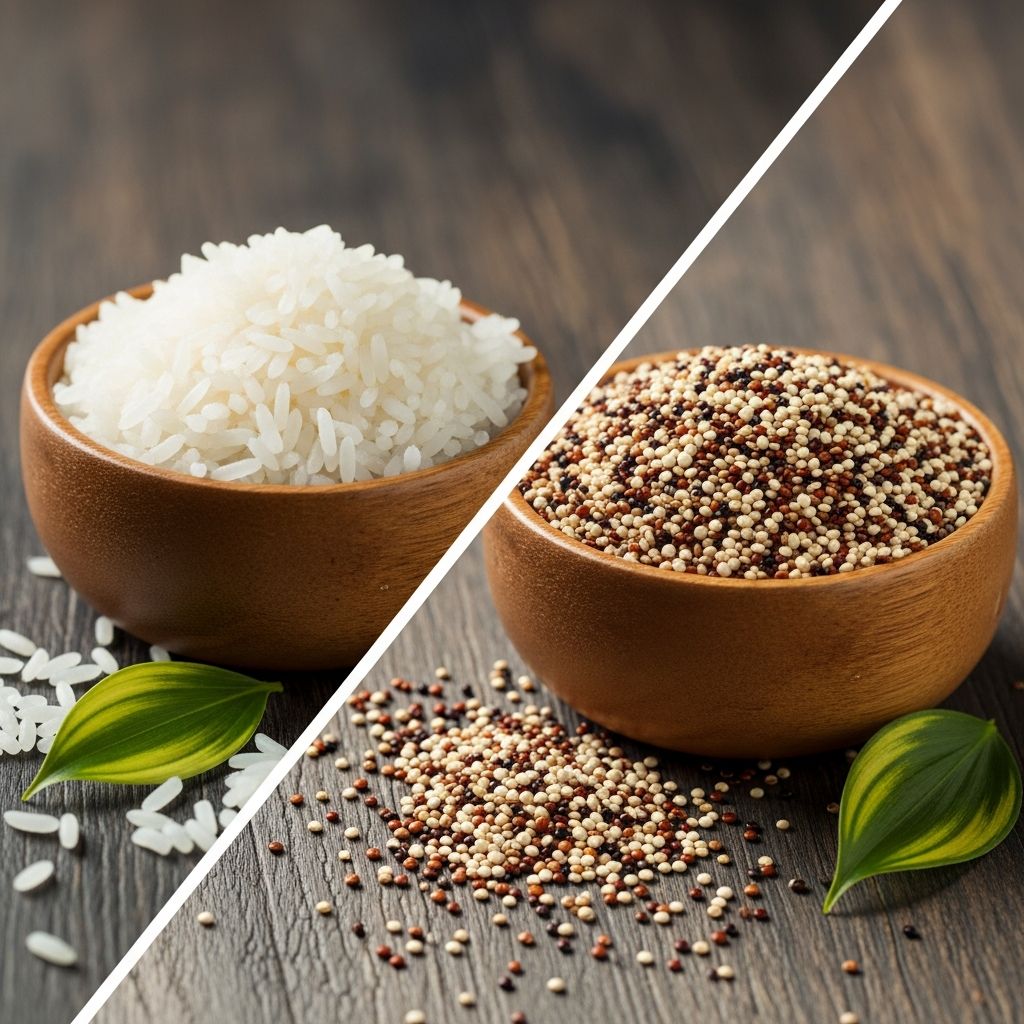
Rice and quinoa are staple grains in many diets, but they differ significantly in protein and fiber content. Quinoa offers higher protein (about 8g per cooked cup) and fiber (5g per cup) compared to brown rice (5g protein, 4g fiber) and white rice (4g protein, 1g fiber), making it superior for plant-based nutrition and digestive health.
What Is the Difference Between Rice and Quinoa?
Rice is a true cereal grain from the grass family, available as white (refined) or brown (whole grain). Quinoa is a pseudocereal seed from the Chenopodium plant, naturally gluten-free and nutrient-dense. While both provide energy from carbs, quinoa’s complete protein profile and higher fiber set it apart.
- Rice: Primarily starch-based; white rice lacks bran, reducing nutrients.
- Quinoa: Seed with all essential amino acids, higher fats, and minerals.
Rice vs. Quinoa: Nutritional Comparison
Per cooked cup (approximately 185g quinoa, 158g white rice, 202g brown rice), quinoa excels in protein and fiber.
| Nutrient (per cooked cup) | Quinoa | Brown Rice | White Rice |
|---|---|---|---|
| Calories | 220 | 215 | 200 |
| Protein (g) | 8 | 5 | 4 |
| Carbs (g) | 39 | 45 | 45 |
| Fiber (g) | 5 | 4 | 1 |
| Fat (g) | 3.5 | 1.6 | 0.4 |
Quinoa is 1.6 times richer in protein and 7 times in fiber than white rice. Brown rice offers more B-vitamins like niacin, but quinoa leads in magnesium, iron, and folate.
Protein Content
Quinoa provides 4.4g protein per 100g, versus 2.7g in white rice. It’s a complete protein with all nine essential amino acids, including higher lysine and histidine—ideal for vegans.
Fiber Content
Quinoa’s 5g fiber per cup supports digestion, satiety, and blood sugar control, outperforming brown rice (4g) and white rice (1g). Fiber reduces risks of heart disease and aids weight management.
Carbohydrates and Glycemic Index
Quinoa has fewer net carbs (18.5g per 100g vs. white rice’s 27.8g) and a lower glycemic index (GI around 53) than white rice (GI 73), promoting stable energy. Brown rice GI is 50-55, similar to quinoa.
Micronutrients
Quinoa is rich in iron, magnesium, phosphorus, manganese, zinc—up to 16 times more vitamin E than white rice. Brown rice provides selenium and thiamine.
Health Benefits of Quinoa vs. Rice
Quinoa’s profile supports muscle repair, gut health, and anti-inflammation. Rice offers easy digestion, especially white varieties.
- Quinoa benefits: Prebiotic effects for gut bacteria, cholesterol reduction, weight control via fiber.
- Rice benefits: Brown rice lowers blood pressure; white rice suits sensitive stomachs.
Quinoa for Weight Loss
Higher protein and fiber promote fullness, reducing calorie intake. Fewer carbs make it suitable for low-carb diets.
Rice for Blood Sugar
Brown rice’s fiber stabilizes glucose better than white, but quinoa’s edge in protein enhances this.
Related Stories



Glycemic Index: Quinoa vs. Rice
Quinoa’s medium GI (53) vs. white rice’s high (73) means slower digestion and less insulin spike. Brown rice matches quinoa at medium GI.
| Grain | Glycemic Index | Impact |
|---|---|---|
| Quinoa | 53 (medium) | Stable blood sugar |
| Brown Rice | 50-55 (medium) | Moderate release |
| White Rice | 73 (high) | Quick spikes |
Which Is Better for Weight Loss?
Quinoa wins due to superior satiety from 5g fiber and 8g protein per cup, aiding portion control. Studies link high-fiber grains to lower BMI.
How to Cook Quinoa and Rice
Quinoa: Rinse to remove saponins, cook 1:2 ratio water, 15 minutes. Fluffy texture.
Rice: Brown: 1:2 ratio, 40-45 minutes. White: 1:1.5, 15-20 minutes.
- Tip: Toast quinoa for nutty flavor; pair rice with veggies for balance.
Rice vs. Quinoa Taste and Texture
Quinoa: Nutty, fluffy. Brown rice: Chewy, earthy. White rice: Soft, neutral. Quinoa suits salads; rice for stir-fries.
Price and Availability
Quinoa costs more ($4-6/lb) than rice ($1-2/lb) but offers better nutrition per serving. Widely available organic options.
Storage Tips
Store both in airtight containers in cool, dry places. Cooked: Refrigerate 4-5 days; freeze up to 6 months.
Substitution Guide
- Use quinoa in rice bowls for protein boost.
- Swap white rice with quinoa in low-carb recipes.
- Combine with beans for complete proteins if using rice.
Which Is Healthier Overall?
Quinoa is healthier for most due to complete protein, higher fiber, and minerals—especially for vegans or weight loss. Brown rice beats white rice; choose based on dietary needs.
Frequently Asked Questions (FAQs)
Is quinoa healthier than rice?
Yes, quinoa has more protein, fiber, and nutrients than white or brown rice, though brown rice is a good whole-grain alternative.
Does quinoa have more protein than rice?
Yes, 8g per cup vs. 5g brown rice and 4g white rice, plus complete amino acids.
Is quinoa better than brown rice for fiber?
Quinoa edges out with 5g vs. 4g per cup, supporting better digestion.
Can I eat quinoa every day?
Yes, in moderation; vary grains for balanced nutrition.
Is quinoa low-carb?
Lower than white rice (18.5g net carbs/100g), suitable for moderate low-carb diets.
Which has a lower glycemic index?
Quinoa and brown rice (medium GI) vs. high-GI white rice.
References
- Quinoa vs Rice: A Complete Nutritional Comparison Guide — GetLabTest. 2024. https://www.getlabtest.com/news/post/quinoa-vs-rice-nutritional-comparison
- Quinoa vs. Rice: A Comprehensive Comparison — Thrive Market. 2024. https://thrivemarket.com/blog/quinoa-vs-rice
- Quinoa vs Rice Nutritional Value – Carbs, Glycemic Index, Calories — FoodStruct. 2024. https://foodstruct.com/nutrition-comparison-text/quinoa-cooked-vs-rice
- Quinoa vs. Rice: Health Benefits — Healthline. 2024-10-15. https://www.healthline.com/health/food-nutrition/quinoa-vs-rice
Similar Articles








Read full bio of medha deb