Rifampicin: Uses, Side Effects, Interactions, And Precautions
Comprehensive guide to rifampicin: antibiotic uses in dermatology, side effects, interactions, and precautions for skin conditions.
Rifampicin is a potent antibiotic primarily used to combat serious bacterial infections, with significant applications in dermatology for conditions such as recurrent boils and hidradenitis suppurativa.
Introduction
Rifampicin, also known as rifampin, is a semi-synthetic antibiotic derived from Streptomyces mediterranei. It is bactericidal against a range of pathogens and plays a crucial role in treating mycobacterial diseases like tuberculosis and leprosy. Dermatologists prescribe it for recalcitrant skin infections where other antibiotics fail, including recurrent furunculosis (boils), staphylococcal infections, and as adjunct therapy in hidradenitis suppurativa. Its broad-spectrum activity targets Gram-positive bacteria like Staphylococcus aureus and coagulase-negative staphylococci, as well as mycobacteria and Neisseria meningitidis.
Beyond infectious uses, emerging research highlights rifampicin’s anti-inflammatory properties, potentially beneficial in atopic dermatitis by suppressing mast cell degranulation and reducing inflammatory mediators like IgE, IL-4, TNF-α, and PGD2. It is also employed off-label for cholestatic pruritus by lowering serum autotaxin levels.
How it works
Rifampicin exerts its antibacterial effect by inhibiting bacterial DNA-dependent RNA polymerase, thereby blocking RNA synthesis essential for bacterial replication. This mechanism is highly specific to prokaryotes, sparing human cells. Against mycobacteria such as Mycobacterium tuberculosis and Mycobacterium leprae, it penetrates cell walls effectively, achieving sterilizing activity in combination regimens.
In dermatological contexts, rifampicin disrupts staphylococcal biofilms and treats deep-seated infections like furunculosis. Its immune-modulatory effects include suppression of mast cell activation, reduction in intracellular calcium levels, and inhibition of histamine and β-hexosaminidase release, offering therapeutic potential in inflammatory skin disorders. For brucellosis and meningococcal carriers, it clears persistent infections by eradicating intracellular bacteria.
Prescription
Rifampicin is rarely used as monotherapy due to rapid development of bacterial resistance; it is combined with other antibiotics like clindamycin for hidradenitis suppurativa or isoniazid/dapsone for leprosy. In New Zealand, it is available as 150 mg and 300 mg capsules, with typical adult doses of 450–600 mg daily for tuberculosis or 300 mg twice daily for skin infections.
- For recurrent boils (furunculosis): Often combined with fusidic acid or clindamycin for 5–10 days, repeated if necessary to eradicate nasal carriage of S. aureus.
- Hidradenitis suppurativa: Clindamycin 300 mg twice daily plus rifampicin 300 mg twice daily for 12 weeks as first-line medical therapy; used as rescue for severe flares or bridging to surgery.
- Tuberculosis/leprosy: Part of multi-drug regimens; intermittent dosing (2–3 times weekly) for adherence.
- Meningococcal prophylaxis: Single 600 mg dose for carriers.
- Cholestatic pruritus: 150–600 mg daily as second-line, reducing itch via autotaxin inhibition.
Administer on an empty stomach, 30 minutes before or 2 hours after meals, to optimize absorption. Antacids should be spaced 1 hour apart.
SIDE EFFECTS
Rifampicin is generally well-tolerated but commonly affects skin and gastrointestinal systems. Bodily secretions (urine, sweat, tears, saliva) turn orange-red, a harmless effect that may permanently stain contact lenses.
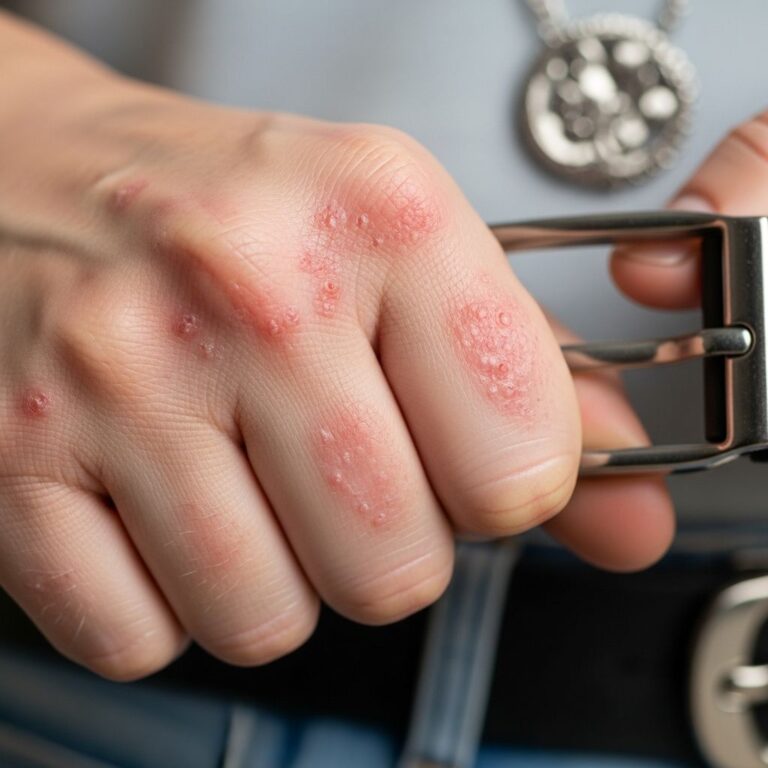
Common cutaneous reactions
- Flushing and pruritus, often without rash.
- Urticaria, rash, erythema multiforme, Stevens-Johnson syndrome (rare).
- Lichenoid drug eruption (LDE): Violaceous papules/plaques on trunk/extremities, resolving on discontinuation but recurring with dose escalation.
- Exfoliative dermatitis: Generalized scaling, reported in tuberculosis patients.
Gastrointestinal side effects include nausea, vomiting, abdominal pain, and diarrhea. Hepatotoxicity occurs in 1–2% of patients, necessitating baseline liver function tests.
Intermittent dosing risks
With <2–3 doses weekly (e.g., for TB/leprosy), rifampicin may induce flu-like syndrome (fever, chills, myalgias), thrombocytopenia, acute renal failure, hypotension, and shock due to antibody formation against rifampicin-protein complexes.
Other effects
- Mild leukopenia, anemia.
- Adrenal insufficiency (rare, via CYP3A4 induction).
- Anti-inflammatory benefits in atopic dermatitis models, reducing severity scores and scratching without significant toxicity.
Related Stories



In a case of rifampicin-induced LDE in a TB patient, lesions resolved with topical steroids/antihistamines upon cessation, but recurred on rechallenge, manageable with dose adjustment and topicals.
Drug interactions
As a potent inducer of CYP3A4, CYP2C9, and P-glycoprotein, rifampicin accelerates metabolism of numerous drugs, reducing their efficacy. Dosage adjustments are essential.
| Drug Class | Examples | Effect |
|---|---|---|
| Antiretrovirals | Protease inhibitors, NNRTIs | Decreased levels; monitor/avoid |
| Anticoagulants | Warfarin | Increased clearance; frequent INR monitoring |
| Contraceptives | Oral pills | Reduced efficacy; alternative contraception |
| Antiepileptics | Phenytoin, carbamazepine | Decreased seizure control |
| Cardiac drugs | Digoxin, beta-blockers | Lower plasma levels |
| Immunosuppressants | Cyclosporine, tacrolimus | Risk of rejection; dose increase |
Rifampicin impairs absorption of doxycycline, ketoconazole, and isoniazid if co-administered. Conversely, antacids and food delay absorption.
Precautions
Baseline assessments include liver/renal function, CBC, and urinalysis. Monthly monitoring during therapy detects hepatotoxicity early. Contraindicated in jaundice, acute hepatitis, or porphyria.
- Pregnancy: Category C; avoid unless benefits outweigh risks (crosses placenta).
- Breastfeeding: Excreted in milk; infant jaundice risk.
- Hepatic impairment: Reduce dose or avoid.
- HIV co-infection: Complex interactions with antiretrovirals.
- Allergies: Cross-reactivity with rifamycins.
Advise patients on orange discoloration and soft contact lens avoidance. In lepra reactions, continue rifampicin with steroids if needed. For LDE, early recognition prevents TB treatment interruption.
Frequently Asked Questions
What is rifampicin used for in dermatology?
Rifampicin treats recurrent boils, hidradenitis suppurativa, staphylococcal infections, leprosy, and off-label for cholestatic pruritus.
Does rifampicin turn urine orange?
Yes, it harmlessly colors urine, tears, sweat, and saliva orange-red; contact lenses may stain permanently.
Can rifampicin cause skin rashes?
Commonly flushing/pruritus; rare reactions include lichenoid eruptions, exfoliative dermatitis, or severe SJS.
Is rifampicin safe in pregnancy?
Use only if essential (Category C); monitor infant for jaundice.
How to manage drug interactions?
Monitor levels of warfarin, antiretrovirals, contraceptives; use alternatives or adjust doses.
Why combine rifampicin with other antibiotics?
To prevent resistance development, especially in mycobacterial and staphylococcal infections.
This comprehensive overview equips healthcare providers and patients with essential knowledge on rifampicin’s role in dermatology, balancing efficacy against risks.
References
- Rifampicin Alleviates Atopic Dermatitis-Like Response in vivo and in vitro — Kim MJ et al. PMC. 2017-10-24. https://pmc.ncbi.nlm.nih.gov/articles/PMC5685433/
- Rifampicin-induced lichenoid drug eruption — Sharma NL et al. Postgrad Med J (Oxford Academic). 2020-12-01. https://academic.oup.com/pmj/article/96/1142/782/6959061
- Rifampicin – DermNet — DermNet NZ. Updated 2023. https://dermnetnz.org/topics/rifampicin
- Hidradenitis Suppurativa (Acne Inversa) — DermNet NZ. Updated 2023. https://dermnetnz.org/topics/hidradenitis-suppurativa
- Cholestatic Pruritus — DermNet NZ. Updated 2023. https://dermnetnz.org/topics/cholestatic-pruritus
Similar Articles








Read full bio of medha deb