Rings Around the Iris: Causes and Meanings
Discover what colored or white rings in your eyes reveal about health, from harmless aging signs to serious conditions like copper buildup.
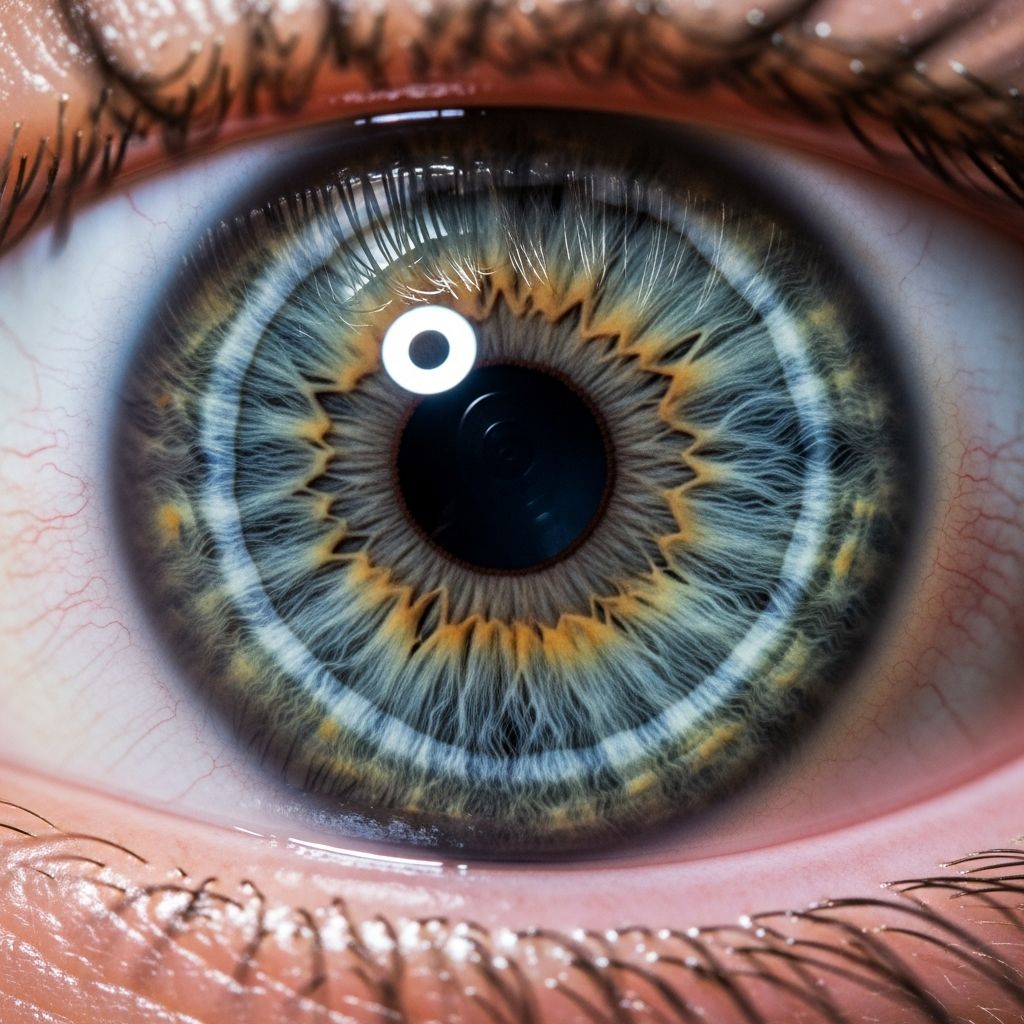
Rings encircling the iris can appear in various colors and forms, often sparking curiosity or concern during routine mirror checks or eye exams. These circular markings, located where the cornea meets the iris, range from white lipid deposits signaling potential cholesterol issues to brownish copper accumulations linked to rare disorders. While many are benign, especially in older adults, others warrant prompt medical evaluation to address underlying systemic conditions.
Understanding the Anatomy of Iris Rings
The iris, the colored portion of the eye, is bordered by the cornea at its outer edge, known as the limbus. Rings form in this peripheral zone due to deposits of pigments, lipids, or metals. Their visibility depends on eye color—more prominent in lighter irises—and can develop gradually or suddenly.
- Location: Primarily at the corneoscleral junction, starting as arcs at the top and bottom before forming complete circles.
- Colors: White, gray, blue, brown, green, or gold, each tied to specific substances.
- Symptoms: Typically asymptomatic, with no impact on vision, but may prompt discovery during dilated exams.
Normal anatomical features like limbal rings—dark pigment bands enhancing eye contrast—are distinct and usually fade with age without health implications.
Common Benign Rings: Corneal Arcus and Arcus Senilis
The most frequent iris ring is corneal arcus, also called arcus senilis, characterized by white, gray, or bluish lipid deposits in the corneal periphery. It affects over 60% of people over 60 and is a normal aging process.
In older individuals, these rings result from cholesterol and triglycerides accumulating as blood lipids decrease in solubility. They pose no threat to vision or eye function but serve as a visible marker of metabolic shifts.
| Type | Age Group | Appearance | Implications |
|---|---|---|---|
| Arcus Senilis | Over 50 | White/gray full ring | Benign, age-related |
| Corneal Arcus (younger) | Under 40 | Partial or full white ring | Possible high cholesterol |
However, arcus in those under 40, termed arcus juvenilis, correlates with hyperlipidemia, elevating cardiovascular risks like heart disease or stroke. Early detection via eye exam allows lipid profile testing and lifestyle interventions.
Kayser-Fleischer Rings: A Sign of Copper Overload
Kayser-Fleischer (KF) rings manifest as rusty-brown, green, or golden circles from copper deposition in Descemet’s membrane, the inner corneal layer. Unlike lipid rings, KF rings signal Wilson’s disease—a genetic disorder impairing copper metabolism, leading to toxic buildup in liver, brain, and eyes.
Prevalent in nearly all Wilson’s patients with neurological symptoms, these rings develop bilaterally, more visible in blue eyes. They form silently, often detected during slit-lamp exams. Untreated Wilson’s disease progresses to liver failure, tremors, or psychiatric issues, but chelation therapy with penicillamine mobilizes copper, potentially fading the rings.
- Diagnosis: Slit-lamp biomicroscopy confirms copper via spectral analysis.
- Treatment: Lifelong copper-restricted diet and medications; rings may regress with therapy.
- Prognosis: Excellent if caught early; liver transplant for advanced cases.
Other Colored Rings and Their Origins
Beyond arcus and KF rings, hazel or green pigmentation shifts near the pupil, known as peripupillary rings, arise from melanin concentration influenced by genetics. These enhance iris depth without health risks.
Related Stories



Rarely, gold-brown rings stem from chalcosis, intraocular copper from trauma, mimicking KF but unilateral. Stress rings, a misnomer for arcus, link to vascular tension rather than psychological stress, per some optometric views, though evidence favors lipid causes.
When Iris Rings Signal Systemic Health Risks
Eye rings mirror bodily homeostasis. White peripheral rings in youth flag familial hypercholesterolemia, where LDL cholesterol exceeds 190 mg/dL, accelerating atherosclerosis. Studies show 30-50% of such patients develop early coronary events without statins or diet control.
KF rings, present in 95% of neurologic Wilson’s cases, underscore hepatolenticular degeneration’s ocular hallmark. Both underscore eyes as metabolic sentinels—routine exams detect 80% of asymptomatic cases.
Distinguishing Harmless from Concerning Rings
| Ring Type | Color | Cause | Action Needed |
|---|---|---|---|
| Limbal | Dark | Pigment | None |
| Arcus Senilis | White/gray | Lipids (age) | Monitor |
| Arcus Juvenilis | White | High cholesterol | Blood tests |
| Kayser-Fleischer | Brown/green | Copper (Wilson’s) | Urgent eval |
Self-assessment is limited; professional gonioscopy or photography aids detection. Darker eyes obscure subtle rings, necessitating expert illumination.
Diagnostic Approaches for Iris Rings
Comprehensive eye exams include:
- Visual Acuity: Rules out refractive errors.
- Slit-Lamp: Magnifies deposits; KF fluoresces under cobalt blue.
- Tonometry: Checks glaucoma, occasionally co-occurring.
- Systemic Referral: Lipid panels, ceruloplasmin levels for Wilson’s.
Advanced tools like anterior segment OCT delineate ring depth noninvasively.
Management and Prevention Strategies
For lipid arcus, adopt Mediterranean diets low in saturated fats, exercise 150 minutes weekly, and statins if LDL >160 mg/dL. Wilson’s management involves zinc acetate blocking intestinal copper absorption, alongside family screening since it’s autosomal recessive.
Annual dilated exams post-40, or sooner with family history, prevent oversights. Avoid unproven iridology claims linking rings to hypertension or immunity, lacking scientific validation.
FAQs on Iris Rings
Do iris rings affect vision?
No, they are peripheral and do not obstruct light paths.
Can diet reverse arcus senilis?
Not fully, but it slows progression in younger patients by controlling lipids.
Are KF rings always Wilson’s disease?
Primarily, but rarely other chronic liver diseases; genetic testing confirms.
Should I worry about white rings under 30?
Yes, consult for cholesterol screening.
How common are colored iris rings?
Arcus in 80% over 80; KF in 1 in 30,000 with Wilson’s.
Conclusion: Eyes as Health Windows
Iris rings, while often innocuous, offer glimpses into metabolic health. Vigilant eye care transforms curiosity into actionable insights, safeguarding longevity.
References
- Kayser-Fleischer Rings: Causes, Treatment & Prevention — Cleveland Clinic. 2023-10-12. https://my.clevelandclinic.org/health/symptoms/24179-kayser-fleischer-rings
- Corneal Arcus Senilis Treatment — Eye Physicians. 2024-05-15. https://www.myeyephysicians.com/eye-care/corneal-arcus-arcus-senilis/
- What Are Stress Rings in Eyes? — Riverside Optometry. 2023-11-20. https://riversideoptometry.vision/what-are-stress-rings-in-eyes/
- Limbal Rings: What They Are and Who Has Them — Healthline. 2024-02-08. https://www.healthline.com/health/limbal-rings
- Iridology Claims to Detect 10 Conditions — Optometrists.org. 2023-07-14. https://www.optometrists.org/general-practice-optometry/guide-to-eye-exams/eye-exams/what-is-iridology/iridology-claims-to-detect-10-conditions/
Similar Articles








Read full bio of medha deb