Risankizumab: 3 Uses, Dosage, And Side Effects Guide
IL-23 inhibitor for plaque psoriasis, psoriatic arthritis, and Crohn's disease: efficacy, dosing, and safety overview.

Risankizumab
Authoritative facts about risankizumab (Skyrizi®), what risankizumab is used for, treatment regimens, and possible side effects of risankizumab.
What is risankizumab?
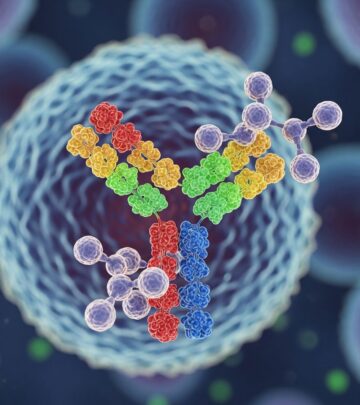
Risankizumab, marketed as Skyrizi®, is a fully humanized immunoglobulin G1 (IgG1) monoclonal antibody that selectively binds to the p19 subunit of interleukin-23 (IL-23). This targeted action inhibits IL-23 from interacting with its receptor, preventing downstream inflammatory signaling that drives autoimmune conditions like plaque psoriasis (PsO), psoriatic arthritis (PsA), and Crohn’s disease (CD).
IL-23 plays a central role in the pathogenesis of these diseases by promoting the release of proinflammatory cytokines such as IL-17A, IL-17F, and IL-22, which contribute to inflammation, plaque formation, joint damage, and intestinal mucosal injury. By specifically neutralizing the p19 subunit unique to IL-23, risankizumab offers precise immunomodulation without affecting other interleukins.
Approved by the FDA in 2019 for moderate-to-severe plaque psoriasis, risankizumab has since gained indications for active PsA and moderate-to-severe CD in adults. It is administered via subcutaneous injection and demonstrates high efficacy in achieving skin clearance, joint symptom relief, and mucosal healing.
What is risankizumab used for?
Risankizumab is indicated for:
- Moderate-to-severe plaque psoriasis in adults eligible for systemic therapy or phototherapy. Clinical trials like UltIMMa-1, UltIMMa-2, and IMMvent showed superior PASI90 (90% improvement in Psoriasis Area and Severity Index) rates of 75-88% at week 16 compared to ustekinumab, adalimumab, and placebo.
- Active psoriatic arthritis in adults, alone or with methotrexate. Phase 3 trials reported significant reductions in swollen/tender joints, PASI90 of 55%, and minimal disease activity (MDA) in 26% of patients.
- Moderate-to-severe Crohn’s disease in adults. Induction and maintenance trials (e.g., INSPIRE, COMMAND) achieved clinical remission in 38-40% and endoscopic improvement in 48-51% at week 52.
Investigational uses include atopic dermatitis.
How does risankizumab work?
Plaque psoriasis, PsA, and CD stem from an overactive immune response where excess IL-23 drives inflammation. Risankizumab attaches to the p19 subunit of IL-23, blocking its binding to the IL-23 receptor on T-cells and other immune cells. This halts signaling pathways like p38 MAPK and NF-κB, reducing production of IL-17 and other cytokines that cause plaques, joint swelling, and gut inflammation.
Unlike broader immunosuppressants, its selectivity minimizes off-target effects while effectively restoring immune balance. Steady-state plasma concentrations are reached after repeated dosing, with dose-proportional absorption.
Investigation of risankizumab
Risankizumab received its first approval in Japan (March 2019), followed by Canada, US (April 2019), and Europe. Development by AbbVie and Boehringer Ingelheim involved phase 3 trials confirming superiority over comparators:
| Trial | Population | Key Results (Week 16/52) |
|---|---|---|
| UltIMMa-1/2 | Plaque PsO | PASI90: 75-80%; vs. ustekinumab superior |
| IMMvent | Plaque PsO | PASI90: 84% risankizumab vs. 61% adalimumab |
| IMMerge | Plaque PsO | PASI90 week 52: 86.6% vs. 57.1% secukinumab |
| KEEPsAKE 1/2 | PsA | ACR20: 57-59%; PASI90: 55% |
| INSPIRE/COMMAND | Crohn’s | Clinical remission week 52: 38-40%; Endoscopic imp: 48-51% |
Long-term data show sustained responses, with 87% maintaining sPGA 0/1 at week 52 in IMMHANCE.
Valued image of risankizumab
(Image description: Clinical before-and-after photos showing near-complete clearance of plaque psoriasis lesions after 16 weeks of risankizumab 150 mg induction, with reduced erythema, scaling, and induration.)
Preparation for risankizumab treatment
- Screening: Test for tuberculosis (latent/active), hepatitis B/C, and current infections. Vaccinate against infections per guidelines.
- Contraindications: Active serious infections, hypersensitivity to risankizumab.
- Pregnancy/Lactation: Limited data; use in pregnancy only if benefits outweigh risks. No data on excretion in human milk.
- Patient Education: Self-injection training, rotation of sites (thigh, abdomen, upper arm), storage at 2-8°C.
What is the dosage of risankizumab?
Plaque Psoriasis & PsA: 150 mg (two 75 mg/0.83 mL injections) subcutaneously at Week 0, Week 4, then every 12 weeks.
Crohn’s Disease:
- Induction: 600 mg IV infusion (3 doses: Weeks 0, 4, 8) or 360 mg SC (4×90 mg at Week 0, 180 mg Week 4, 180 mg Week 8).
- Maintenance: 180 mg SC or 360 mg SC every 8 weeks starting Week 12.
No dose adjustments for renal/hepatic impairment or elderly. Pediatric use not established.
What does risankizumab look like?
Skyrizi is supplied as a 75 mg/0.83 mL clear, colorless to slightly yellow solution in a single-dose prefilled syringe or autoinjector. Do not use if discolored or particles present.
How should risankizumab be stored?
Refrigerate at 2-8°C in original carton; protect from light. Do not freeze or shake. Stable at ≤30°C for up to 30 days. Discard 60 minutes after first use.
Provider information
Approval status
FDA-approved: PsO (2019), PsA (2022), CD (2022). Available as Skyrizi® by AbbVie.
Formulations
- 75 mg/0.83 mL prefilled syringe/autoinjector (PsO/PsA).
- IV infusion bags for CD induction.
Cost
High-cost biologic; patient assistance programs available via manufacturer.
Rebates
Covered by most insurance with prior authorization; copay cards reduce out-of-pocket to $0 for eligible patients.
Patient information
How is risankizumab given?
Subcutaneous injection after antiseptic swab; rotate sites. Healthcare provider administers first doses; self-administer thereafter.
What are the risks of risankizumab?
Common (>1/100): Upper respiratory infections, headache, fatigue, injection site reactions (2-4%).
Serious (rare): Infections (TB reactivation, fungal), hypersensitivity, malignancy risk. Monitor for infections; interrupt if active.
What are the concerns with risankizumab?
- Increased infection risk; avoid live vaccines.
- Hypersensitivity: Angioedema, anaphylaxis possible.
- Immunosuppression: Screen for latent TB/hepatitis.
- Long-term safety: Ongoing monitoring for malignancy, cardiovascular events.
What monitoring is required?
- Baseline: CBC, LFTs, TB test, hepatitis serology.
- Ongoing: Signs of infection, TB symptoms annually.
What if a dose is missed?
Administer ASAP, then resume schedule. If nearing next dose, skip and proceed.
Alternatives to risankizumab
| Drug | Target | Key Difference |
|---|---|---|
| Ustekinumab | IL-12/23 | Less selective; inferior PASI90 |
| Secukinumab | IL-17A | Skin/joint focus; risankizumab superior in head-to-head |
| Guselkumab | IL-23 p19 | Similar; dosing every 8 weeks |
| Tildrakizumab | IL-23 p19 | Less frequent dosing but lower efficacy in some trials |
Interactions with other drugs
No major CYP interactions. Avoid live vaccines; caution with other immunosuppressants.
Frequently Asked Questions (FAQs)
What conditions does risankizumab treat?
Moderate-to-severe plaque psoriasis, active psoriatic arthritis, and moderate-to-severe Crohn’s disease in adults.
How soon does risankizumab work for psoriasis?
Skin clearance as early as week 4; PASI90 by week 16 in 75-88%.
Is risankizumab safe during pregnancy?
Limited data; weigh risks/benefits. Not recommended unless necessary.
Does risankizumab cause weight gain?
Not commonly reported; monitor overall health.
Can I drink alcohol on risankizumab?
Moderate use ok; excess may worsen liver enzymes or immunity.
References
- SKYRIZI® (risankizumab-rzaa) Mechanism of Action — Skyrizi HCP. 2023. https://www.skyrizihcp.com/dermatology/dosing/mechanism-of-action
- How Does SKYRIZI Work? — Skyrizi. 2023. https://www.skyrizi.com/psoriasis/about-skyrizi/how-skyrizi-works
- Risankizumab: Uses, Interactions, Mechanism of Action — DrugBank. 2024-01-15. https://go.drugbank.com/drugs/DB14762
- Risankizumab in Adults with Psoriatic Arthritis — Skin Therapy Letter. 2022. https://www.skintherapyletter.com/psoriatic-arthritis/risankizumab/
- Skyrizi (risankizumab-rzaa) treatment of plaque psoriasis — Clinical Trials Arena. 2023-06. https://www.clinicaltrialsarena.com/marketdata/skyrizi-risankizumab-plaque-psoriasis/
- FDA Approves SKYRIZI for Moderate-to-Severe Plaque Psoriasis — ACCP. 2019-04-23. https://accp1.org/Members/ACCP1/5Publications_and_News/SKYRIZI-Moderate-Severe-Plaque-Psoriasis-Adults.aspx
Similar Articles





Read full bio of Sneha Tete