Risks And Complications Of Skin Surgery: What To Know
Comprehensive guide to understanding and managing risks and complications in dermatologic surgical procedures.
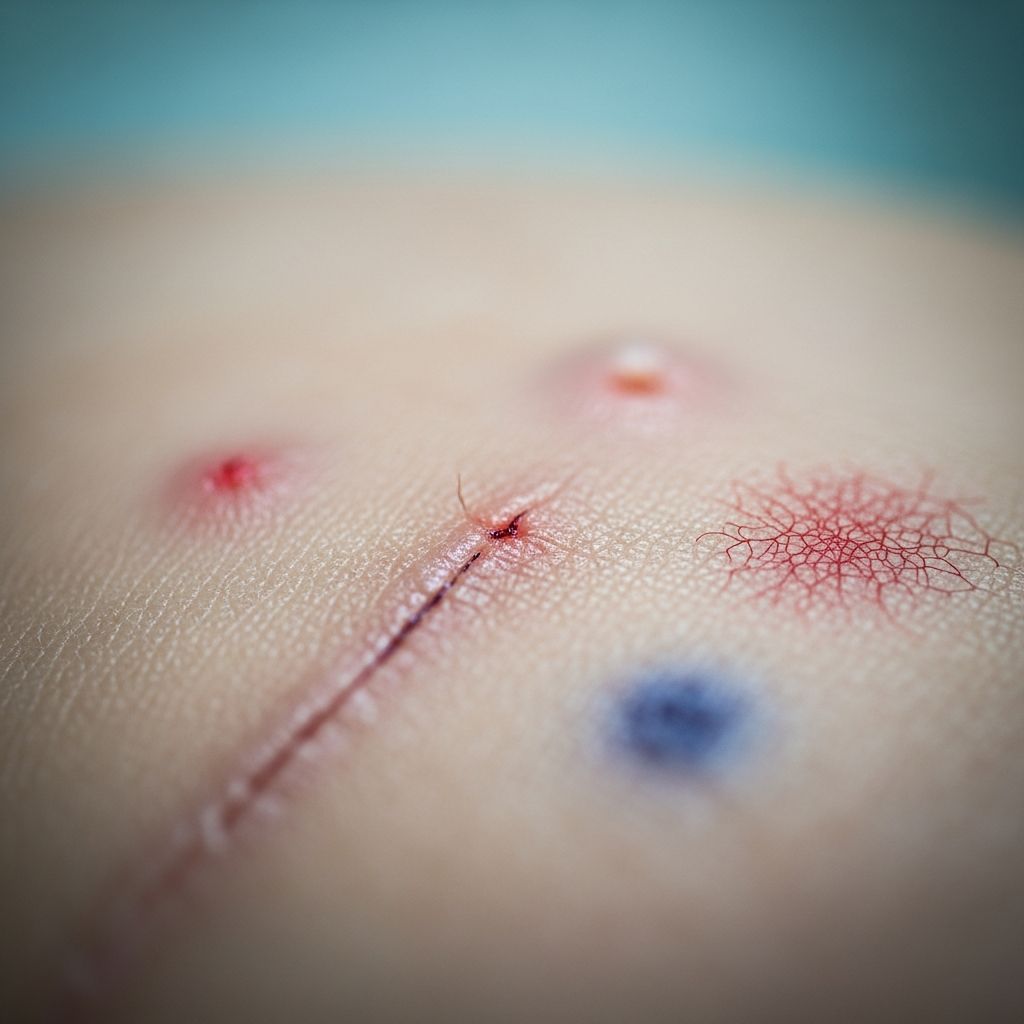
Skin surgery encompasses a range of procedures performed by dermatologists to treat skin conditions, remove lesions, or address cosmetic concerns. While these interventions are generally safe and effective, they carry inherent risks and potential complications that patients should understand prior to undergoing treatment. Awareness of these factors enables informed consent and proactive management for better outcomes.
What is skin surgery?
Skin surgery involves the excision, repair, or reconstruction of skin and subcutaneous tissues to treat medical or cosmetic issues. Common procedures include excision of skin lesions, skin biopsies, cryotherapy, skin grafting, Mohs micrographic surgery, and laser treatments. These are typically performed under local anesthesia in outpatient settings by trained dermatologic surgeons.
Procedures range from simple ellipse excisions for small tumors to more complex interventions like flaps or grafts for larger defects. The goal is to remove diseased tissue while preserving function and achieving optimal cosmetic results.
Who performs skin surgery?
Dermatologic surgery is primarily conducted by dermatologists with specialized training in cutaneous surgery. These professionals undergo fellowship programs in procedural dermatology, equipping them to handle both benign and malignant skin conditions. In some cases, plastic surgeons or general surgeons may collaborate, particularly for extensive reconstructions.
Why is skin surgery performed?
Skin surgery addresses diverse indications:
- Diagnostic purposes: Biopsies to identify suspicious lesions.
- Treatment of skin cancer: Excision of basal cell carcinoma (BCC), squamous cell carcinoma (SCC), and melanoma.
- Management of benign lesions: Removal of cysts, lipomas, warts, or actinic keratoses.
- Cosmetic enhancement: Scar revision, mole removal, or skin resurfacing.
- Reconstructive needs: Closure of wounds via flaps or grafts after trauma or surgery.
How is skin surgery performed?
Most skin surgeries use local anesthetics like lidocaine to numb the area. The surgeon cleans the site, injects anesthesia, and performs the procedure using scalpel, cautery, or cryotherapy probes. Wounds are closed with sutures, staples, or left to heal by secondary intention. Complex cases may require skin flaps or grafts.
For skin grafts, skin is harvested from a donor site (e.g., thigh) and placed over the defect. Split-thickness grafts include epidermis and partial dermis, while full-thickness grafts encompass the entire dermis for better cosmesis.
Pre-operative preparation
Preparation minimizes risks:
- Disclose medications, especially anticoagulants (aspirin, warfarin), supplements, or herbal remedies that increase bleeding risk.
- Manage medical conditions like diabetes or hypertension.
- Avoid smoking, which impairs healing.
- Follow fasting instructions if sedation is used.
- Sign informed consent after discussion of risks.
Immediate complications
Complications can arise during or shortly after surgery:
- Bleeding: Common due to vascular skin supply; controlled with cautery or pressure. Risk higher with anticoagulants.
- Infection: Occurs in ~1% of cases; prevented by sterile technique and antibiotics if needed.
- Allergic reactions: Rare to local anesthetics or dressings.
- Nerve damage: Dissection errors may cause temporary numbness or weakness.
- Vasovagal response: Fainting from pain or anxiety.
Related Stories



Early post-operative complications
Within days to weeks:
- Wound dehiscence: Breakdown due to tension or infection.
- Suture reactions: Redness from materials, not always infection.
- Hematoma/Seroma: Fluid collections requiring drainage.
- Poor wound healing: In smokers or diabetics.
Delayed complications
Occurring weeks to months later:
- Scarring: Hypertrophic or keloid scars in prone individuals.
- Pigmentation changes: Hypo- or hyperpigmentation, especially in darker skin.
- Recurrence: Incomplete lesion excision.
- Contracture: Graft shrinkage affecting mobility.
Risks and complications specific to procedure type
| Procedure | Common Complications |
|---|---|
| Excision | Bleeding, infection, poor scarring |
| Skin Grafting | Graft failure (hematoma, infection), donor site pain, contraction |
| Cryotherapy | Blistering, hypopigmentation, nerve damage, ulceration |
| Mohs Surgery | Lower recurrence but possible tissue defects requiring reconstruction. |
Post-operative care
Proper care reduces complications:
- Keep wounds clean and moist with petroleum ointment.
- Avoid soaking; gentle washing after 48 hours.
- Elevate site to reduce swelling.
- Refrain from strenuous activity for 1-2 weeks.
- Monitor for infection signs: redness, pus, fever.
For grafts, protect fragility; donor sites heal in 5-14 days.
When to seek medical attention
Contact your doctor if:
- Increasing pain, swelling, or redness.
- Pus, foul odor, or fever >38°C.
- Excessive bleeding not controlled by pressure.
- Graft appears dark or separates.
- Signs of allergic reaction.
Prevention of complications
Strategies include:
- Patient selection: Optimize comorbidities.
- Technique: Precise dissection along tension lines.
- Antibiotics: Prophylactic for high-risk cases.
- Follow-up: Early detection of issues.
Frequently Asked Questions
What is the most common complication of skin surgery?
The most frequent issues are bleeding and infection, affecting a small percentage of patients when proper protocols are followed.
How long does it take for a surgical wound to heal?
Superficial wounds heal in 1-2 weeks; deeper ones or grafts may take 4-6 weeks, with full remodeling over months.
Will I have a scar after skin surgery?
Yes, all incisions scar, but skilled closure minimizes visibility. Keloid risk varies by genetics and site.
Can skin surgery cause nerve damage?
Temporary numbness is possible; permanent damage is rare with experienced surgeons.
Is cryotherapy safer than excision?
Cryotherapy avoids incisions but risks pigment loss and multiple sessions; suitability depends on lesion type.
Long-term outcomes
Most patients achieve excellent results with minimal complications. Scars mature over 12-18 months, fading significantly. Regular sunscreen prevents hyperpigmentation. Patient education and adherence to care instructions are pivotal.
References
- Dermatologic surgical procedure — Wikipedia. 2023-10-15. https://en.wikipedia.org/wiki/Dermatologic_surgical_procedure
- Skin Grafting — DermNet NZ. 2024-05-20. https://dermnetnz.org/topics/skin-grafting
- Excision biopsy of skin lesions — DermNet NZ. 2024-03-12. https://dermnetnz.org/topics/excision-of-skin-lesions
- Cryotherapy: Uses, Cautions, and Aftercare — DermNet NZ. 2024-07-08. https://dermnetnz.org/topics/cryotherapy
- The role of surgery in dermatology — DermNet NZ. 2023-11-30. https://dermnetnz.org/topics/the-role-of-surgery-in-dermatology
- Skin surgery — DermNet NZ. 2024-01-22. https://dermnetnz.org/topics/skin-surgery
Similar Articles








Read full bio of Sneha Tete