Rivaroxaban: Essential Guide To Uses, Dosing, And Risks
Discover how rivaroxaban prevents and treats blood clots, its dosing, risks, and key patient advice for safe use.
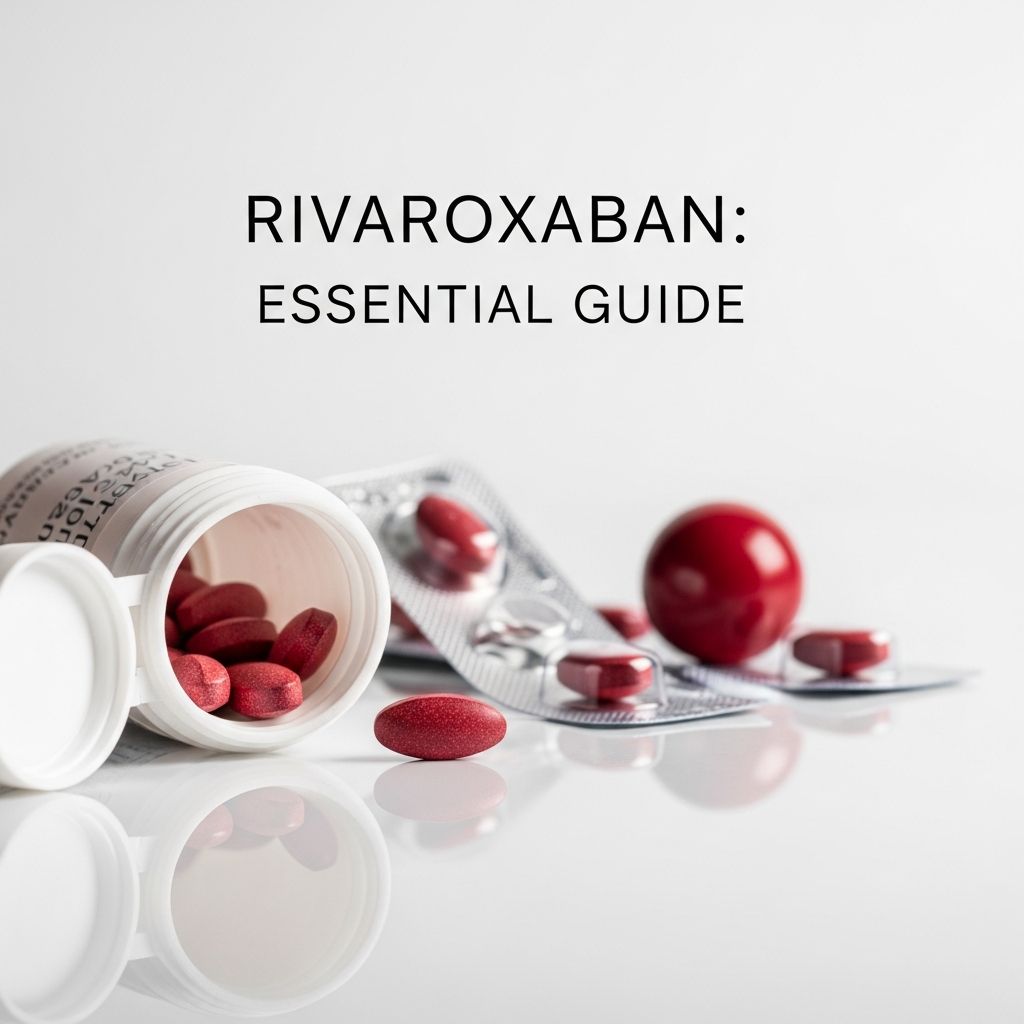
Rivaroxaban, commonly known by the brand name Xarelto, is an oral anticoagulant medication classified as a factor Xa inhibitor. It prevents blood clots by directly blocking factor Xa, a key protein in the clotting process, reducing the risk of serious conditions like deep vein thrombosis and stroke.
Understanding Blood Clots and Rivaroxaban’s Role
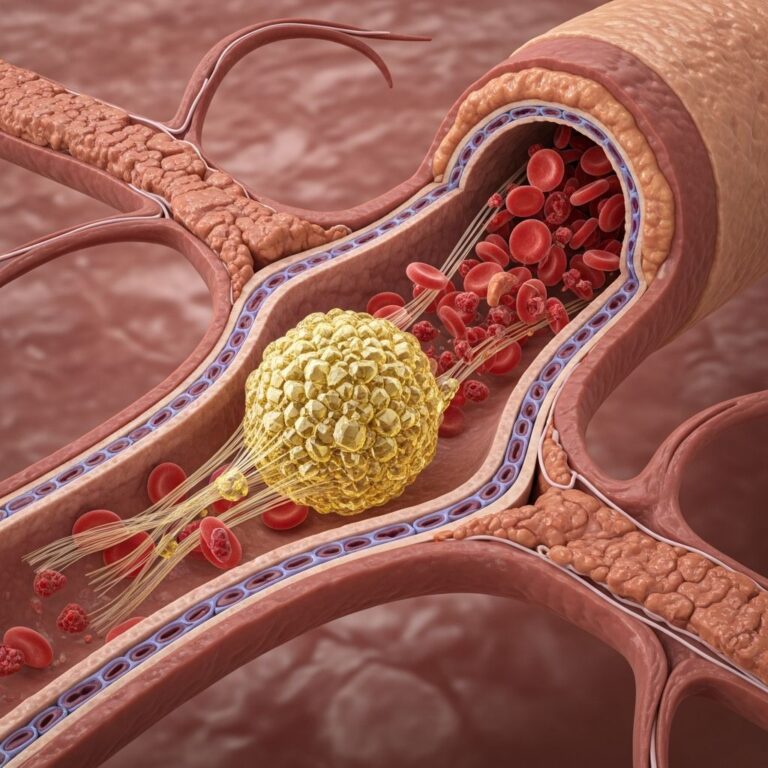
Blood clots, or thrombi, form through a complex cascade involving clotting factors produced by the liver and platelets. Factor Xa activates prothrombin to thrombin, which converts fibrinogen to fibrin, creating a clot mesh. Rivaroxaban competitively and irreversibly inhibits free and clot-bound factor Xa, halting this amplification without relying on antithrombin III, unlike older anticoagulants.
This direct action thins the blood by slowing clotting time, preventing new clots and stabilizing existing ones without actually reducing blood volume. Unlike warfarin, it requires no routine INR monitoring, offering convenience, though no universal antidote exists for major bleeds.
Primary Medical Uses
Rivaroxaban addresses multiple thrombotic risks:
- Treatment and prevention of deep vein thrombosis (DVT) in leg veins and pulmonary embolism (PE) when clots travel to lungs.
- Reducing stroke and systemic embolism risk in nonvalvular atrial fibrillation patients.
- Lowering major cardiovascular events like heart attack, stroke, or death in coronary artery disease (CAD) or peripheral artery disease (PAD), often with low-dose aspirin.
- Post-surgical prophylaxis after hip or knee replacements.
- Venous thromboembolism (VTE) prevention in hospitalized acute illness patients at risk due to immobility.
- Pediatric use for VTE treatment/prevention from birth to 18 years and post-Fontan procedure thromboprophylaxis in children ≥2 years.
These indications stem from its high oral bioavailability and predictable pharmacokinetics.
Dosing Guidelines for Adults
Dosage varies by condition, with food requirements for higher strengths:
| Condition | Dosage | Food Requirement | Duration |
|---|---|---|---|
| DVT/PE Treatment (initial) | 15 mg twice daily | With food | 21 days, then 20 mg once daily |
| DVT/PE Maintenance/Recurrence Reduction | 20 mg once daily | With food | Ongoing as prescribed |
| Post-Hip Replacement DVT Prevention | 10 mg once daily | With or without food | 35 days (start 6-10 hours post-surgery) |
| Post-Knee Replacement DVT Prevention | 10 mg once daily | With or without food | 12 days |
| Nonvalvular Atrial Fibrillation (Stroke Prevention) | 20 mg once daily (15 mg if CrCl 15-50 mL/min) | With evening meal | Long-term |
| CAD/PAD Risk Reduction (with aspirin 75-100 mg) | 2.5 mg twice daily | With or without food | Chronic |
| Hospitalized Acute Illness VTE Prevention | 10 mg once daily | With or without food | 31-39 days total |
Avoid in severe renal impairment (CrCl <30 mL/min).
Pediatric Dosing and Administration
For children, rivaroxaban is available as tablets or suspension. Doses are weight-based:
- ≥50 kg: 20 mg once daily with food.
- Lower weights: Calculated by doctor, e.g., 0.3-0.6 mg/kg for VTE.
Administer suspension after reconstitution; shake well. Pediatric use approved for VTE post-initial parenteral therapy and Fontan-related prophylaxis.
Potential Side Effects and Risks
The primary risk is bleeding, as rivaroxaban impairs hemostasis:
- Major bleeding: Gastrointestinal, intracranial; symptoms include severe headache, dizziness, prolonged bleeding, black stools, or coughing blood.
- Common: Bruising, minor cuts bleeding longer, nosebleeds, anemia.
- Rare: Spinal/epidural hematoma with neuraxial anesthesia, wound complications post-surgery.
Related Stories



Monitor for unexplained bleeding or bruising. No routine blood tests needed, but assess renal function periodically. In trials, bleeding rates were comparable or lower than warfarin in some settings.
Drug Interactions and Precautions
Rivaroxaban interacts with drugs affecting CYP3A4/P-gp or hemostasis:
- Strong inhibitors (e.g., ketoconazole, ritonavir): Increase exposure; avoid or reduce dose.
- Inducers (e.g., rifampin, St. John’s wort): Decrease efficacy; avoid.
- Other anticoagulants/antiplatelets: Heighten bleeding risk; use cautiously.
- NSAIDs, SSRIs: Monitor for bleeding.
Contraindicated in active major bleeding, severe liver disease, or pregnancy (limited data; crosses placenta). Caution in elderly, renal/hepatic impairment, or high bleeding risk. Switch from/to other anticoagulants requires timing to avoid gaps/thrombosis.
Practical Administration Tips
Swallow tablets whole; crush/chew only if using suspension instructions. 10 mg dose anytime; higher doses with meals for absorption. Store at room temperature, protect from moisture. For suspension: Reconstitute with 6 mL water per packet, stable 60 days refrigerated.
Miss a dose? Take ASAP if <6 hours late for once-daily; skip if more. Never double. Inform doctors/dentists/surgeons before procedures; may need to pause 24-48 hours based on bleed risk.
Special Populations and Monitoring
- Pregnancy/Breastfeeding: Category C; avoid due to fetal bleed risk. Limited excretion data in milk.
- Elderly: Higher bleed risk; start low if needed.
- Renal: Adjust for CrCl 15-50 mL/min; avoid <15.
- Hepatic: Avoid Child-Pugh B/C.
No INR/PTT routine checks, but anti-Xa levels possible for extremes. Lifestyle: Limit alcohol, avoid contact sports.
Frequently Asked Questions (FAQs)
What if I experience bleeding while on rivaroxaban?
Seek immediate medical help for major signs like severe pain, swelling, or heavy bleeding. Andexanet alfa may reverse effects in emergencies.
Can I take rivaroxaban with food?
10 mg anytime; 15/20 mg with food for better absorption.
Does rivaroxaban require blood tests?
No routine monitoring like warfarin, but kidney function checks recommended.
Is rivaroxaban safe for children?
Yes, weight-based dosing for VTE and specific cardiac cases.
How does rivaroxaban differ from warfarin?
Oral direct inhibitor, no dietary restrictions or frequent labs, fixed dosing.
Patient Education and Safety
Carry a medical alert card/wallet info. Report new symptoms promptly. Combine with lifestyle changes like mobility post-surgery, compression stockings for DVT. Regular follow-ups ensure ongoing safety.
References
- Rivaroxaban: MedlinePlus Drug Information — National Library of Medicine. 2023-10-01. https://medlineplus.gov/druginfo/meds/a611049.html
- Rivaroxaban: Uses, Interactions, Mechanism of Action — DrugBank Online. 2024-02-15. https://go.drugbank.com/drugs/DB06228
- Rivaroxaban (oral route) – Mayo Clinic — Mayo Foundation for Medical Education and Research. 2024-01-20. https://www.mayoclinic.org/drugs-supplements/rivaroxaban-oral-route/description/drg-20075013
- Common questions about rivaroxaban — NHS. 2023-11-10. https://www.nhs.uk/medicines/rivaroxaban/common-questions-about-rivaroxaban/
- Rivaroxaban (Xarelto) – Patient Education — Northwestern Medicine. 2022-05-01. https://www.nm.org/-/media/northwestern/resources/patients-and-visitors/patient-education/medication/northwestern-medicine-rivaroxaban-xarelto.pdf
- Rivaroxaban (Xarelto) – NCBI Bookshelf — National Center for Biotechnology Information. 2023-08-15. https://www.ncbi.nlm.nih.gov/books/NBK344334/
Similar Articles








Read full bio of Sneha Tete