Robotic Cardiac Surgery: Benefits and Advancements
Explore how robotic-assisted cardiac surgery enhances precision, minimizes recovery time, and improves patient outcomes through minimally invasive techniques.
Robotic Cardiac Surgery: A New Era in Heart Care
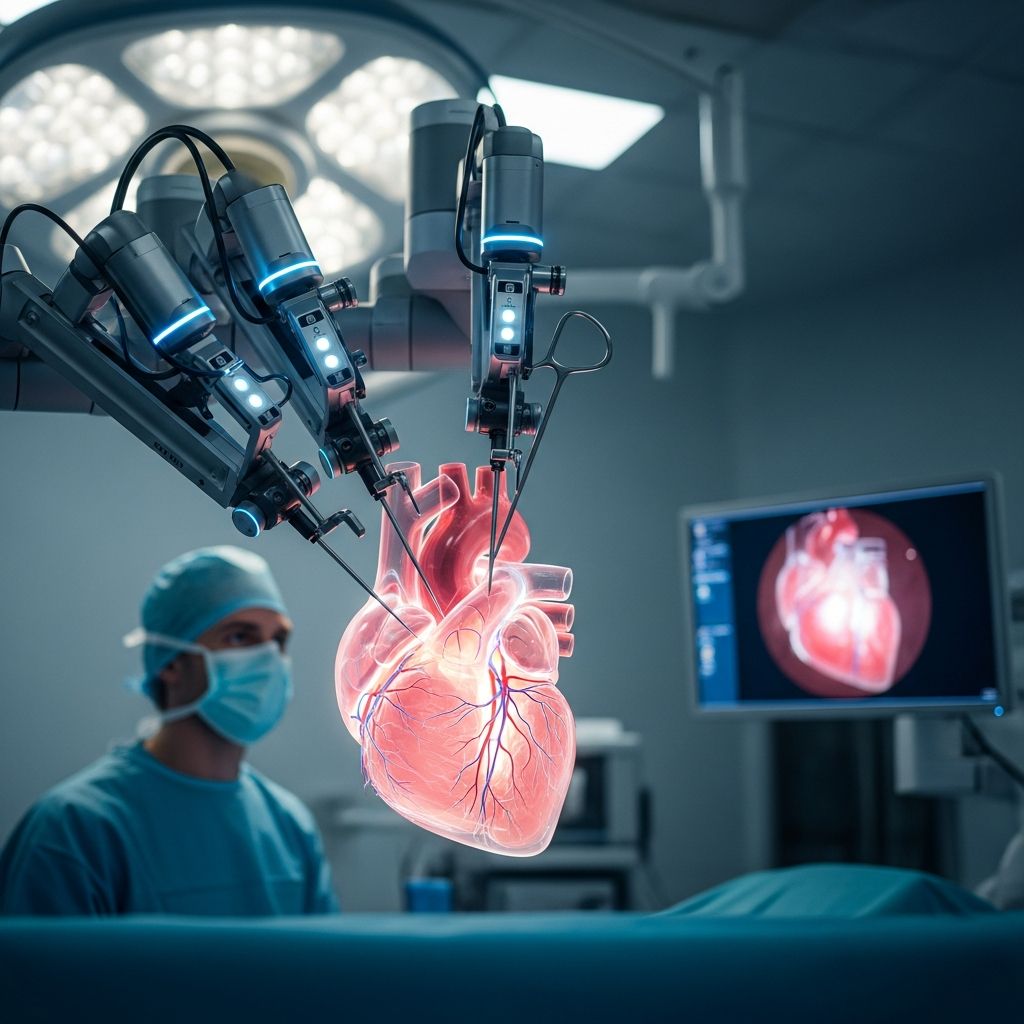
Robotic-assisted cardiac surgery represents a significant advancement in the field of cardiovascular medicine, combining cutting-edge technology with surgical expertise to deliver superior patient outcomes. Rather than replacing surgeons, robotic systems enhance their capabilities by providing superior visualization, increased precision, and the ability to perform complex procedures through smaller incisions. This innovative approach addresses long-standing challenges in traditional cardiac surgery, enabling patients to experience shorter recovery times, reduced pain, and fewer complications.
The transformation of cardiac surgery through robotics is reshaping how surgeons approach mitral valve repair, coronary artery bypass grafting (CABG), and numerous other cardiac interventions. By integrating computer-assisted technology with surgical skill, robotic platforms create a digital interface between the surgeon’s hands and the instruments, fundamentally improving surgical capabilities for endoscopic and minimally invasive procedures.
Understanding Robotic-Assisted Cardiac Surgery
Robotic cardiac surgery employs specialized systems that allow surgeons to operate with enhanced precision and control. During these procedures, the surgeon sits at a separate console and manipulates mechanical instruments that replicate hand movements with exceptional accuracy. The robotic system translates the surgeon’s hand motions into precise movements of surgical instruments within the patient’s chest, providing advantages that traditional laparoscopic approaches cannot match.
One of the primary technological advantages is the system’s seven degrees of multidirectional movement, far exceeding the four degrees of freedom available in traditional endoscopic instrumentation. Additionally, the robotic platform provides three-dimensional, high-definition visualization with magnification of 10 to 12 times, offering surgeons an exceptionally clear and detailed view of the surgical field. This combination of enhanced dexterity and superior visualization creates an entirely new paradigm for performing complex cardiac procedures with minimal tissue trauma.
Key Advantages of Robotic Cardiac Surgery
The benefits of robotic-assisted cardiac surgery extend far beyond smaller incisions, fundamentally improving the patient experience and surgical outcomes across multiple dimensions.
Minimally Invasive Approach
Rather than requiring a full sternotomy or large thoracotomy, robotic cardiac surgery utilizes small incisions, typically no larger than those needed for traditional laparoscopic procedures. These smaller access points result in significantly reduced tissue trauma, minimal blood loss, and substantially decreased postoperative pain compared to conventional open-heart surgery. Patients experience faster healing, shorter hospital stays, and quicker returns to normal activities and quality of life.
Enhanced Visualization
The three-dimensional, high-definition imaging system provides surgeons with superior visualization compared to traditional two-dimensional video monitors used in endoscopic procedures. The magnified, crystal-clear images enable surgeons to identify anatomical details with precision, making complex repairs and reconstructions more feasible and accurate. This enhanced visualization reduces the risk of missing critical structures and improves overall surgical accuracy.
Increased Precision and Dexterity
The robotic system’s seven degrees of multidirectional freedom exceed the capabilities of conventional minimally invasive instruments. Surgeons can perform intricate movements and maneuvers that would be difficult or impossible with traditional tools, enabling them to execute complex cardiac procedures with exceptional precision. This enhanced dexterity is particularly valuable for delicate procedures such as mitral valve repair and coronary anastomosis.
Reduced Blood Loss and Transfusion Requirements
By minimizing tissue trauma through smaller incisions and precise surgical techniques, robotic cardiac surgery typically results in reduced intraoperative and postoperative blood loss. This reduction decreases the need for blood transfusions, which carries associated risks and complications. Lower blood loss also contributes to faster recovery and reduced postoperative morbidity.
Related Stories



Shorter Operating Times
As surgeons gain experience with robotic platforms and techniques are refined, operative times tend to decrease significantly. Studies comparing robotic and traditional approaches demonstrate that experienced surgeons can perform procedures more efficiently with robotic assistance, reducing time under anesthesia and associated risks. The use of specialized devices such as the Cor-Knot system for annuloplasty deployment further reduces operative and cardiopulmonary bypass times.
Cardiac Procedures Performed Robotically
A wide range of cardiac procedures can be performed using robotic-assisted techniques, with mitral valve repair and coronary artery bypass grafting representing the most commonly performed procedures.
Mitral Valve Repair
Robotic-assisted mitral valve repair has become increasingly common at leading cardiac centers. The robotic platform’s enhanced visualization and precision make it ideal for the detailed work required in valve reconstruction. Surgeons can perform complex annuloplasty procedures, leaflet repairs, and other mitral interventions with accuracy that improves valve competency and durability. Robotic mitral valve repair preserves the patient’s native valve, avoiding the need for prosthetic replacement and eliminating long-term anticoagulation therapy requirements.
Coronary Artery Bypass Grafting (CABG)
Minimally invasive robotic CABG allows surgeons to create coronary anastomoses through small incisions without requiring full sternotomy. The robotic system’s precision is particularly valuable in creating these delicate vascular connections, ensuring proper graft patency and long-term success. This approach is especially beneficial for single or double vessel disease and for patients with contraindications to conventional open surgery.
Additional Procedures
Beyond valve repair and CABG, robotic technology enables surgeons to perform atrial septal defect repair, left atrial myxoma resection, maze procedures for atrial fibrillation, and left ventricular lead placement. More recently, pioneering surgeons have successfully performed robotic-assisted heart transplantation and lung transplantation, expanding the potential applications of this technology. These diverse applications demonstrate the versatility and growing impact of robotic systems in cardiac surgery.
Patient Selection and Candidacy
Not all patients are candidates for robotic-assisted cardiac surgery, and careful patient selection is essential for optimal outcomes. Ideal candidates typically have specific anatomical considerations and clinical characteristics that make them suitable for minimally invasive approaches.
Patients with adequate body habitus, normal chest wall anatomy, and specific cardiac pathology are generally good candidates. Surgeons must carefully evaluate each patient’s individual circumstances, including factors such as body mass index, previous cardiac or thoracic surgery, presence of calcification or atherosclerosis, and overall cardiac function. Patients with significant pulmonary disease, those requiring emergency surgery, or those with extensive coronary calcification may not be ideal candidates for minimally invasive robotic approaches.
The learning curve associated with robotic-assisted cardiac surgery comprises three distinct phases: the initial learning phase, stabilization phase, and mastery phase. As surgeons and their teams progress through these phases, their ability to select appropriate candidates and achieve optimal outcomes improves substantially. Experience and patient volume are critical factors in determining conversion rates and achieving outcomes comparable to or superior to traditional approaches.
Outcomes and Safety Considerations
Extensive research demonstrates that robotic-assisted cardiac surgery delivers outcomes comparable to or superior to traditional open surgical approaches, particularly when performed by experienced surgeons at high-volume centers.
Operative Outcomes
Studies comparing robotic and traditional cardiac surgery reveal shorter operating times, reduced blood loss, and low conversion rates. Overall mortality rates are similar between robotic and conventional approaches, but robotic procedures often demonstrate lower morbidity rates due to reduced trauma and faster recovery. Patients typically experience shorter hospital stays and faster returns to normal functioning compared to those undergoing conventional open-heart surgery.
Conversion Rates
Conversion to conventional surgical approaches occurs when the minimally invasive robotic technique proves inadequate for safe completion of the procedure. While conversion rates vary based on surgeon experience and patient selection, they generally remain low and decrease significantly with experience. Current conversion rates range from 1-5% at experienced centers, and this complication does not negatively impact outcomes. The ability to quickly convert to open surgery when necessary remains an important safety feature of minimally invasive approaches.
Safety Profile
The safety profile of robotic cardiac surgery is excellent, with risks similar to those associated with the same procedures performed via traditional approaches. The most surgery-specific concern relates to the need for possible conversion to open surgery if complications arise. However, this consideration applies to all minimally invasive cardiac procedures. At experienced centers with appropriate patient selection, robotic cardiac surgery has established itself as a safe and effective alternative to traditional open surgery.
Emerging Technologies and Future Directions
The field of robotic cardiac surgery continues to advance rapidly, with several exciting innovations on the horizon that promise to further enhance surgical capabilities and patient outcomes.
Autonomous and Semi-Autonomous Surgery
While the surgeon remains fully in control of current robotic systems, future developments may enable semi-autonomous functions for specific, well-defined tasks. Researchers are exploring the potential for automated instrument exchanges and other repetitive procedures that could reduce operative time and enhance efficiency. These autonomous functions would operate only under strict safety protocols and surgeon oversight, ensuring patient safety remains paramount.
Transplantation Applications
Recent breakthroughs demonstrate the expanding role of robotics in cardiac transplantation. In 2021, surgeons performed the world’s first robotic-assisted lung transplant, enabling a patient to receive a new lung through incisions as small as 5-6 centimeters. This achievement was followed by the world’s first fully robotic double lung transplant in 2024 and the first robotic heart transplant in the United States in 2025. These pioneering procedures demonstrate how robotic technology can expand access to transplantation and improve recovery for transplant recipients.
Telesurgery Capabilities
Another frontier in robotic cardiac surgery is telesurgery, which enables surgeons to perform procedures on patients located at great distances. In 2025, the world’s first intercontinental robotic cardiac telesurgery was performed, opening possibilities for delivering advanced surgical expertise to patients in underserved areas. This technology has the potential to democratize access to specialized cardiac surgical care and improve outcomes for patients worldwide.
The Robotic Cardiac Surgery Learning Curve
Understanding the learning curve associated with robotic-assisted cardiac surgery is essential for institutions implementing these programs. The learning process typically occurs in three distinct phases:
Initial Learning Phase: During this phase, surgeons are mastering the basic technical skills required to operate the robotic console and manipulate instruments. Operative times are longer, and the surgeon may experience occasional technical difficulties.
Stabilization Phase: As surgeons gain experience, their technical proficiency improves, operative times decrease, and complications become less frequent. Outcomes begin to approach those of traditional surgery.
Mastery Phase: With continued experience, surgeons achieve expert-level proficiency, operative times reach optimal levels, and outcomes often exceed those of traditional approaches. At this stage, conversion rates are minimal, and patient outcomes are optimized.
The length of the learning curve varies based on individual surgeon factors, institutional support, patient volume, and the specific procedures being performed. High-volume centers with robust training programs typically progress through these phases more rapidly than lower-volume institutions.
Comparing Robotic and Traditional Cardiac Surgery
| Factor | Robotic-Assisted Surgery | Traditional Open Surgery |
|---|---|---|
| Incision Size | Small (typically 5-10 cm total) | Large (full sternotomy 20+ cm) |
| Blood Loss | Reduced | Increased |
| Hospital Stay | Shorter (2-3 days typical) | Longer (4-7 days typical) |
| Recovery Time | Faster (4-6 weeks) | Slower (8-12 weeks) |
| Pain Level | Significantly reduced | Substantial |
| Visualization | 3D HD with 10-12x magnification | Direct visualization or 2D monitors |
| Surgeon Dexterity | Seven degrees of freedom | Natural hand movement |
| Mortality Rates | Similar to traditional | Similar to robotic |
| Morbidity Rates | Often lower | Often higher |
| Tissue Trauma | Minimal | Substantial |
Frequently Asked Questions (FAQs)
Q: What is robotic cardiac surgery?
A: Robotic cardiac surgery is a minimally invasive technique where a surgeon operates from a console, manipulating robotic instruments to perform heart procedures through small incisions. The system provides enhanced visualization and precision, allowing complex cardiac procedures to be performed with minimal tissue trauma.
Q: Am I a candidate for robotic cardiac surgery?
A: Ideal candidates have specific anatomical considerations and certain cardiac conditions such as mitral valve disease or coronary artery disease amenable to minimally invasive repair. Your cardiac surgeon will evaluate your individual circumstances to determine suitability for robotic-assisted procedures.
Q: How long is the recovery time after robotic cardiac surgery?
A: Recovery times vary based on the specific procedure performed, but most patients experience significantly faster recovery compared to traditional open-heart surgery. Many patients return to normal activities within 4-6 weeks, compared to 8-12 weeks for conventional approaches.
Q: What are the risks associated with robotic cardiac surgery?
A: The risks of robotic cardiac surgery are similar to risks associated with the same procedures performed via traditional approaches. The primary robotic-specific concern involves possible conversion to open surgery, which occurs infrequently and does not negatively impact outcomes.
Q: What procedures can be performed with robotic assistance?
A: Common robotic procedures include mitral valve repair, coronary artery bypass grafting, atrial septal defect repair, and left atrial myxoma resection. More recently, heart transplantation, lung transplantation, and other complex procedures have been successfully performed using robotic technology.
Q: Will the robot be performing surgery on me?
A: No. Your cardiac surgeon remains in complete control throughout the procedure, operating from a console that provides real-time feedback. The robotic system enhances the surgeon’s capabilities by providing superior visualization and precision, but the surgeon makes all decisions and controls all instrument movements.
Q: How does robotic visualization compare to traditional methods?
A: Robotic systems provide three-dimensional, high-definition visualization with magnification 10 to 12 times greater than the human eye can achieve. This far exceeds the capabilities of traditional two-dimensional video monitors used in standard endoscopic surgery.
Q: What is the learning curve for robotic cardiac surgery?
A: The learning curve comprises three phases: initial learning, stabilization, and mastery. The duration varies based on surgeon experience, institutional factors, and patient volume. High-volume centers with robust training typically achieve proficiency more rapidly.
Q: Are outcomes with robotic surgery comparable to traditional surgery?
A: Yes. Studies demonstrate that outcomes with robotic cardiac surgery performed by experienced surgeons at high-volume centers are comparable to or superior to traditional open surgery, with shorter recovery times and lower morbidity rates.
Q: What does the future hold for robotic cardiac surgery?
A: Future developments include semi-autonomous functions for specific tasks, expanded transplantation applications, telesurgery capabilities, and continued innovations that promise to further enhance surgical precision, reduce operative times, and improve patient outcomes.
References
- Robotically Assisted Minimally Invasive Mitral Valve Surgery — Journal of Thoracic Disease, 2013. https://jtd.amegroups.org/article/view/1704/html
- Robotic Applications for Intracardiac and Endovascular Procedures — PubMed/National Center for Biotechnology Information, 2022. https://pubmed.ncbi.nlm.nih.gov/36273775/
- Robotic Cardiac Surgery: Overview — PubMed/National Center for Biotechnology Information, 2003. https://pubmed.ncbi.nlm.nih.gov/14712871/
- Robotics Integration Ushers in New Era of Cardiac Surgery — American College of Surgeons, October 2025. https://www.facs.org/for-medical-professionals/news-publications/news-and-articles/bulletin/2025/october-2025-volume-110-issue-9/robotics-integration-ushers-in-new-era-of-cardiac-surgery/
- Revolutionizing Cardiothoracic Surgery & Heart Transplantation — Johns Hopkins Medicine, January 2025. https://www.youtube.com/watch?v=wAUQ19Hw3iI
Similar Articles








Read full bio of Sneha Tete