Rosacea: 4 Main Subtypes And Treatment Options
Chronic inflammatory skin condition causing facial redness, flushing, papules, and ocular symptoms, manageable with lifestyle and treatments.
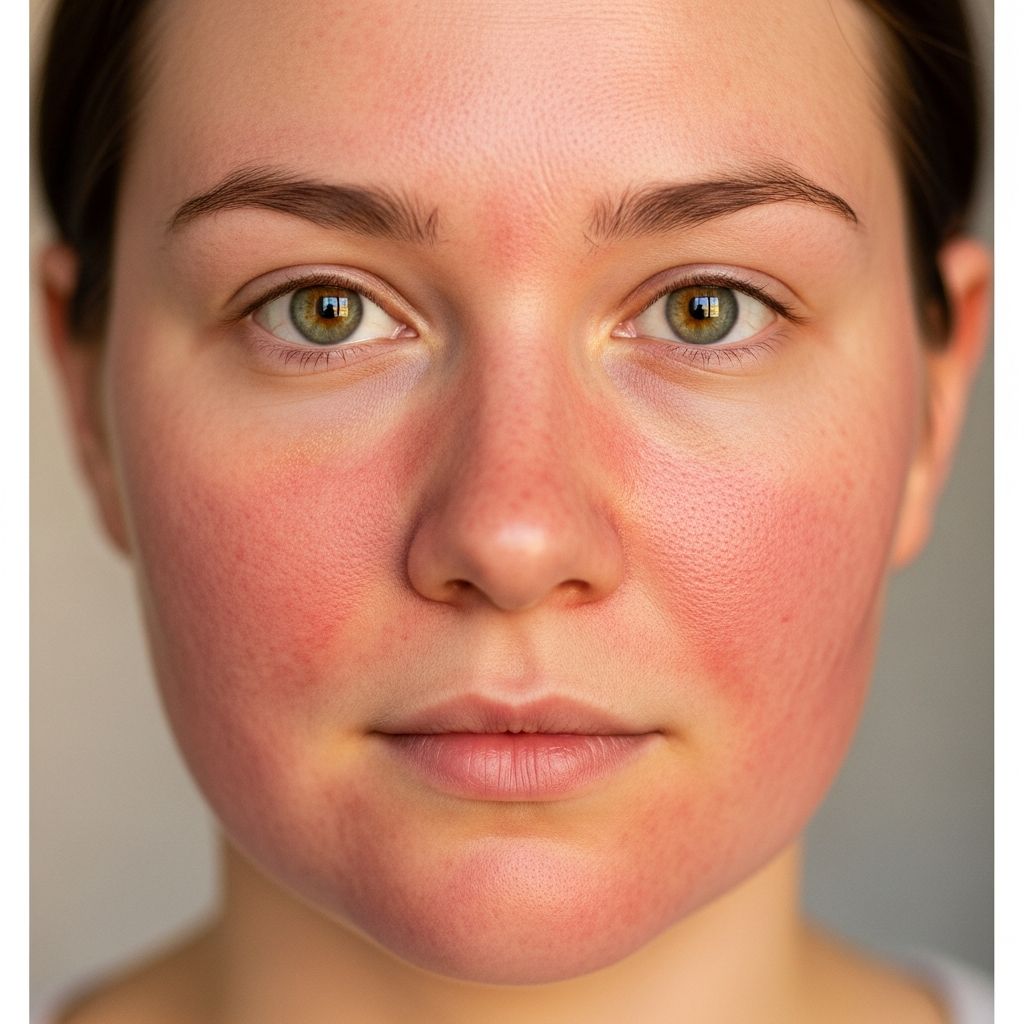
Rosacea is a
chronic inflammatory skin condition
predominantly affecting the central face, most often starting between the ages of 30–60 years. It is characterised by persistent facial redness with a relapsing and remitting course, managed through lifestyle measures, skincare, medications, and procedures.Introduction
Rosacea manifests as recurrent flushing, inflammatory papules and pustules, telangiectasias, and phymatous changes on the cheeks, nose, chin, and forehead. Over 50% of patients experience ocular symptoms such as blepharitis, conjunctivitis, and keratitis. While not curable, symptoms respond well to targeted interventions, often requiring combination therapy for multiple features.
The condition leads to significant psychosocial impact due to visible changes, emphasizing the need for early diagnosis and holistic management including trigger avoidance and gentle skincare.
Demographics
Rosacea is diagnosed more frequently in fair-skinned individuals of Celtic and Northern European descent, though it occurs across skin types. It affects women more often than men in milder forms, but men are prone to severe phymatous variants like rhinophyma. Prevalence peaks in middle age, with subtypes varying by gender and ethnicity.
In darker skin types, erythema may appear as persistent red-brown or violaceous discoloration, with hypertrophic rosacea presenting as firm nodules rather than flushing.
Causes
The exact cause of rosacea remains unknown, but multifactorial elements contribute:
- Genetic predisposition: Family history increases risk, with heritability linked to fair skin and Celtic origins.
- Vascular abnormalities: Abnormal dilation of facial blood vessels leads to flushing and telangiectasia.
- Immune dysregulation: Elevated antimicrobial peptides like cathelicidin and increased matrix metalloproteinases (MMPs) drive inflammation and tissue remodelling.
- Microbial factors: Demodex folliculorum mites are more abundant in rosacea follicles, eliciting inflammatory responses. Bacillus oleronius from mites may trigger immunity.
- Triggers: Environmental factors exacerbate symptoms (detailed below).
Neurovascular dysregulation and high vascular endothelial growth factor (VEGF) levels promote hypervascularity.
Clinical features
Rosacea presents four main subtypes, often overlapping:
| Subtype | Key Features |
|---|---|
| Erythematotelangiectatic | Persistent erythema, flushing, telangiectasia, scale; central face. |
| Papulopustular | Inflammatory papules, pustules; acne-like but no comedones. |
| Phymatous | Thickened skin, prominent follicles; rhinophyma in men. |
| Ocular | Blepharitis, meibomian gland dysfunction, chalazia; affects >50%. |
Additional features include burning, stinging, facial oedema (Morbihan disease), and rare neurogenic variants with pain. Unlike acne, no cysts or comedones; unlike lupus, no systemic symptoms.
Variation in skin types
In skin of colour, rosacea may lack visible flushing, instead showing hyperpigmentation, perifollicular telangiectasia, or lichenoid papules. Phymatous changes appear as leonine facies. Diagnosis requires biopsy in ambiguous cases to distinguish from sarcoidosis or granuloma faciale.
Complications
Untreated rosacea leads to:
- Permanent telangiectasia and fibrosis.
- Rhinophyma causing nasal disfigurement.
- Ocular complications: corneal scarring, vision loss.
- Psychosocial distress, anxiety, depression.
- Lymphoedema and bacterial infections.
Diagnosis
Diagnosis is clinical, based on central facial erythema plus one of: flushing, papules/pustules, telangiectasia, or ocular symptoms. No specific test; dermoscopy reveals vascular patterns. Biopsy rarely needed unless atypical.
Differential diagnoses
- Acne vulgaris: Comedones, cysts present.
- Seborrhoeic dermatitis: Greasy scale, retroauricular.
- Lupus erythematosus: Systemic symptoms, malar rash.
- Contact dermatitis: Itchy, geometric distribution.
- Photodermatitis: Exposed sites only.
- Carcinoma telangiectaticum: Nodular base.
- Ocular: blepharitis, keratitis.
Treatment
Treatment targets predominant features; combination often required. All patients need education on triggers and skincare.
Related Stories



Lifestyle and general measures
- Avoid triggers: sun, heat, alcohol, spicy food, exercise.
- Sunscreen (SPF 30+ broad-spectrum) daily.
- Gentle cleansers, moisturisers; avoid irritants, alcohol-based products.
- Keep trigger diary.
Topical treatments
| Agent | Indication | Dose | Notes |
|---|---|---|---|
| Metronidazole 0.75% gel/cream | Papules, erythema | Twice daily, 3-4 months | Anti-inflammatory; well-tolerated. |
| Azelaic acid 15-20% | Papules, pustules | Once/twice daily | Reduces inflammation; OTC option. |
| Ivermectin 1% cream | Papulopustular, Demodex | Once daily | Anti-mite, anti-inflammatory. |
| Brimonidine 0.33% gel | Erythema | Once daily | Vasoconstrictor; short-term. |
| Alpha agonists (oxymetazoline) | Redness | Daily | Reduces flushing. |
Avoid topical corticosteroids.
Oral treatments
- Anti-inflammatories: Doxycycline 40-100 mg daily (sub-antimicrobial), 6-12 weeks; lymecycline, minocycline alternatives.
- Severe/refractory: Low-dose isotretinoin 10-20 mg/day, specialist-prescribed.
- NSAIDs: For discomfort.
Laser and procedural
- Vascular lasers (PDL, IPL) for telangiectasia, erythema.
- CO2 laser, surgery for rhinophyma.
- Electrosurgery for vessels if lasers unavailable.
Ocular rosacea
Artificial tears, lid hygiene, oral tetracyclines, topical cyclosporine.
Outcome
With adherence, 70-80% achieve improvement in 3-6 weeks. Relapses common; long-term maintenance needed. Early intervention prevents progression to phyma or scarring. Multidisciplinary care optimizes outcomes.
Frequently Asked Questions
What triggers rosacea flares?
Common triggers: UV exposure, hot drinks, alcohol, spicy foods, temperature extremes, stress, exercise, Demodex mites.
Is rosacea contagious?
No, it is not infectious.
Can rosacea be cured?
No cure, but controllable with treatment.
Does rosacea affect eyes?
Yes, ocular rosacea in >50%, causing dryness, redness, vision issues if untreated.
Is laser treatment permanent?
Lasers reduce vessels effectively but maintenance may be needed.
References
- Rosacea: Symptoms, Causes, and Management — DermNet NZ. 2023. https://dermnetnz.org/topics/rosacea
- Rosacea: seeing red in primary care — Best Practice Journal (bpac.org.nz). 2016-05-01. https://bpac.org.nz/bpj/2016/may/rosacea.aspx
- Rosacea — Royal Australian College of General Practitioners (RACGP). 2017-05-01. https://www.racgp.org.au/afp/2017/may/rosacea
Similar Articles








Read full bio of Sneha Tete