Roseola Images: 8 Clinical Photos To Identify Infant Rash
Comprehensive visual guide to roseola rash: symptoms, progression, and identification in infants.
What is roseola?
Roseola, also known as
roseola infantum
,exanthem subitum
, orsixth disease
, is a common, mild viral illness primarily affecting infants and young children. It is caused by human herpesvirus 6 (HHV-6), most commonly subtype B, and less frequently by human herpesvirus 7 (HHV-7). This self-limiting condition typically occurs between 6 months and 3 years of age, with peak incidence around 9-12 months. Over 80-90% of children experience it by age 2.The hallmark presentation involves a high fever lasting 3-5 days, followed by the sudden appearance of a distinctive rash as the fever resolves. The disease spreads via respiratory droplets or saliva from asymptomatic carriers, with an incubation period of 9-10 days. Roseola is highly contagious during the febrile phase but becomes non-infectious 24 hours after the fever subsides.
Who gets roseola?
Roseola predominantly affects young children, especially those aged 6 months to 3 years. It is rare in adults due to prior exposure and immunity. Infants under 6 months may have partial protection from maternal antibodies. Risk factors include daycare attendance and close contact with infected siblings or family members.
- Age group: 6 months–3 years (peak at 9–12 months)
- Gender: No preference
- Geography: Worldwide, common in temperate climates
- Prevalence: Nearly universal in childhood
Immunocompromised children may experience more severe or prolonged symptoms.
Signs and symptoms
The classic course of roseola unfolds in two phases: a prodromal high-fever stage followed by the exanthematous rash phase.
Phase 1: High fever (days 1–5)
Sudden onset of high fever (39–40°C or 102–104°F), often without localizing signs initially. Accompanying symptoms include:
- Runny nose, sore throat, cough (upper respiratory infection signs)
- Irritability, lethargy, anorexia
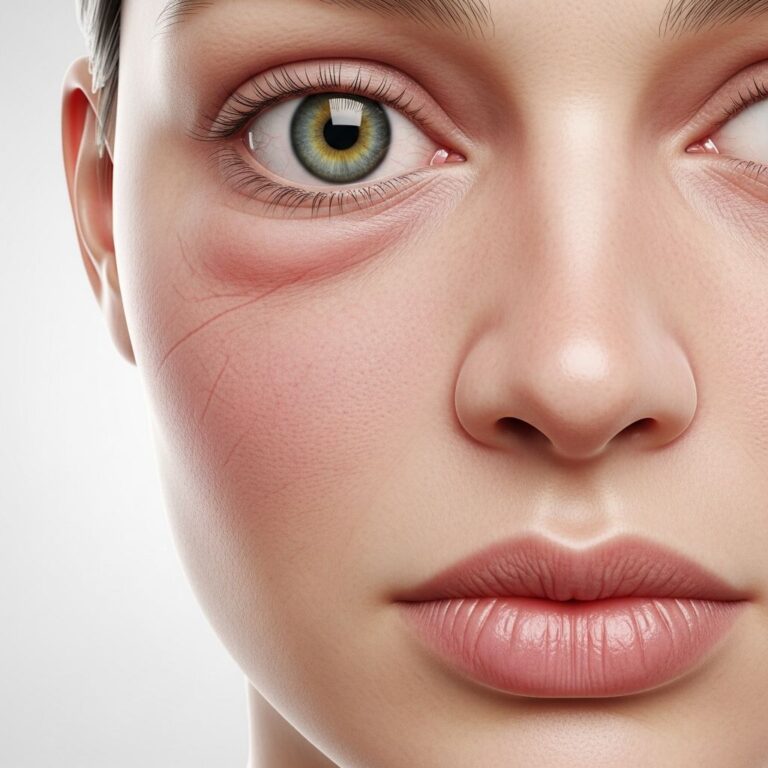
- Mild diarrhea, swollen eyelids (periorbital edema), or ear tugging
- Cervical lymphadenopathy
In 5–15% of cases, the fever triggers
febrile seizures
(simple, lasting <15 minutes), which are benign but alarming for parents.Phase 2: Rash appearance (as fever defervesces)
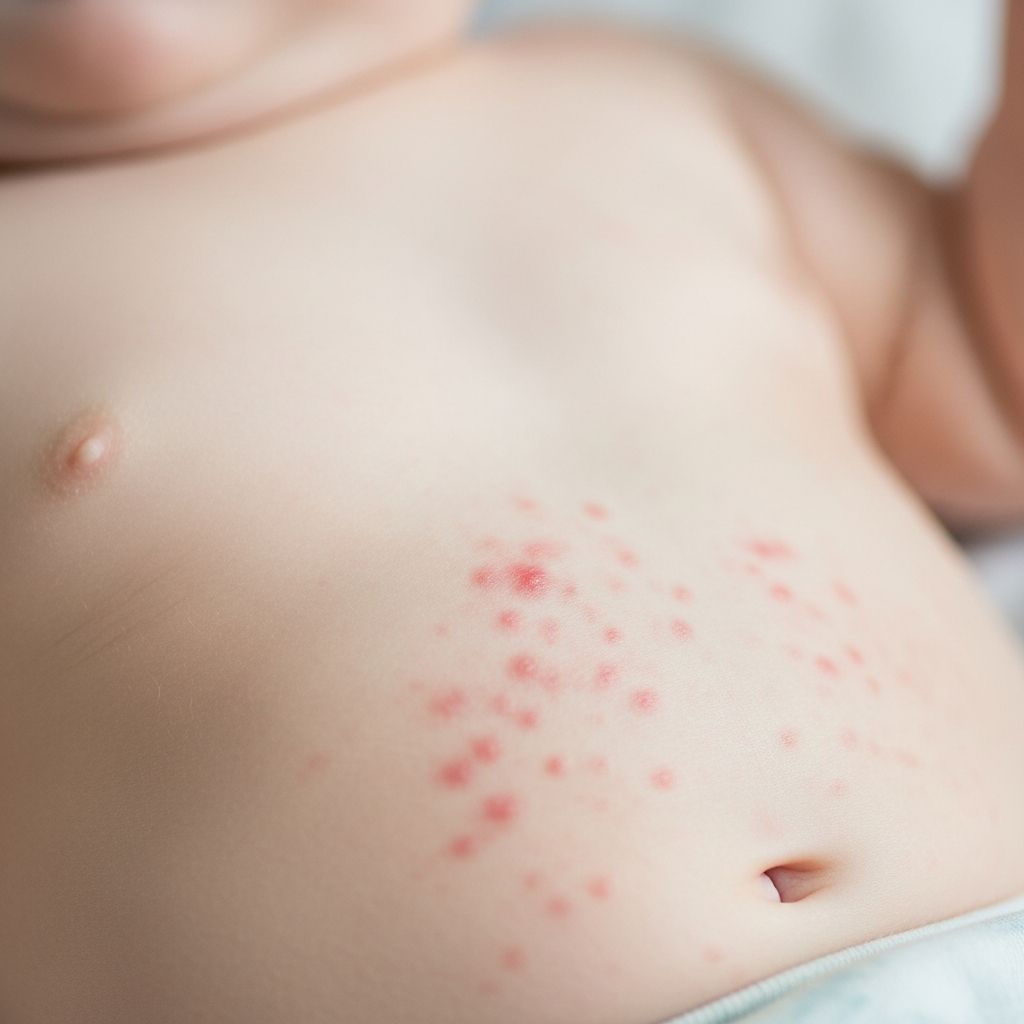
Within 12–48 hours of fever resolution, a morbilliform (measles-like) rash emerges, starting on the trunk and spreading centrifugally.
- Appearance: Discrete
rose-pink
or red macules/papules (2–5 mm), blanching on pressure, sometimes with pale halo - Distribution: Trunk (chest, back, abdomen), proximal extremities; spares face, palms, soles; may involve soft palate
- Characteristics: Non-pruritic, non-painful, no vesicles or crusting; fades in hours to 2 days
Image 1: Classical roseola rash on the trunk of an infant—small pink macules coalescing on chest and abdomen, post-febrile phase. Note blanching with glass test (diaskopy).[Images sourced from DermNet NZ archives]
Roseola images
This gallery presents high-resolution clinical photographs of roseola at various stages, aiding accurate identification.
Truncal rash (most common presentation)
Image 2: 10-month-old with widespread pink maculopapular eruption on abdomen and flanks. Lesions 3–4 mm, discrete with pale halos, appearing day 4 post-fever onset.
Related Stories



Image 3: Close-up of back showing confluent rose-colored spots blanching under pressure.
Rash progression to extremities
Image 4: Mild extension to proximal arms and thighs; note sparing of distal limbs and face.
Image 5: Rare palatal involvement—soft palate petechiae mimicking early measles.
Atypical presentations
Image 6: Persistent rash on neck in a 2-year-old (HHV-7 variant), lasting 48 hours.
Image 7: Febrile phase periorbital swelling with early truncal spots.
Image 8: Resolving rash (day 2), hypopigmented macules fading rapidly.
| Feature | Description | Clinical Image Reference |
|---|---|---|
| Color | Rose-pink/red, blanching | Images 1–3 |
| Size | 2–5 mm macules/papules | Image 2 |
| Distribution | Trunk > proximal limbs | Images 4–5 |
| Duration | Hours to 2 days | Image 8 |
| Symptoms | Non-itchy, non-tender | All |
Diagnosis
Diagnosis is clinical, based on the pathognomonic sequence: high fever without source → abrupt defervescence → characteristic rash. No routine lab tests needed.
- Differentials:
- Measles (Koplik spots, cough/coryza/conjunctivitis, progression cephalocaudal)
- Rubella (postauricular nodes, facial predominance)
- Enterovirus (pruritic, vesicles, hand-foot-mouth)
- Scarlet fever (sandpaper texture, strawberry tongue)
- Confirmation (if atypical): HHV-6 PCR (saliva/blood), serology (IgM/IgG)
Treatment
Symptomatic and supportive; no antivirals required.
- Fever management: Paracetamol/acetaminophen (15 mg/kg q4-6h) or ibuprofen (10 mg/kg q6-8h)
- Hydration: Oral fluids; monitor for dehydration
- Seizures: Diazepam PR if prolonged (>5 min)
- Rash: None needed; calamine if mildly pruritic (rare)
Immunocompromised patients may need IV ganciclovir.
Complications
Usually none; benign course.
- Common: Febrile convulsions (10–15%, self-limited)
- Rare: Encephalitis, hepatitis, pneumonitis (immunosuppressed), aseptic meningitis
- HHV-6 association: Drug-induced hypersensitivity (DIHS), mononucleosis-like syndrome
Prevention
No vaccine. Hygiene measures:
- Handwashing, avoid saliva sharing (kissing, utensils)
- Isolate during fever phase
- Daycare exclusion until afebrile 24 hours
Frequently Asked Questions (FAQs)
Q: Is roseola contagious?
A: Yes, via saliva/respiratory droplets during the fever phase (up to 24 hours post-defervescence).
Q: How long does the roseola rash last?
A: Typically 1–2 days, sometimes fading in hours; no scarring.
Q: Can roseola cause seizures?
A: Yes, in 5–15% of cases due to rapid fever rise; usually benign febrile seizures.
Q: Is treatment with antibiotics needed?
A: No, it’s viral; antibiotics unnecessary unless bacterial superinfection.
Q: Does roseola rash itch?
A: Rarely; unlike viral exanthems with pruritus (e.g., enterovirus).
Q: How to differentiate roseola from measles?
A: Roseola rash follows fever resolution, starts on trunk, non-pruritic; measles precedes rash with 3Cs (cough, coryza, conjunctivitis), starts on face.
References
- Roseola — Healthify NZ. 2023. https://healthify.nz/health-a-z/r/roseola
- Roseola rash: symptoms, pictures, and treatment — Medical News Today. 2023-05-23. https://www.medicalnewstoday.com/articles/roseola-rash
- Roseola — DFTB Skin Deep. 2023. https://dftbskindeep.com/all-diagnoses/roseola/
- Roseola (viral rash): Causes, Symptoms, and Treatment — DermNet NZ. 2015-09. https://dermnetnz.org/topics/roseola
- Roseola: Causes, Symptoms, and Treatment — Healthgrades. 2023. https://resources.healthgrades.com/right-care/infections-and-contagious-diseases/roseola
- Common Rashes Module — Don’t Forget the Bubbles. 2023. https://dontforgetthebubbles.com/common-rashes-module/
- PedsCases Viral Rashes Video — PedsCases. 2020. https://www.pedscases.com/sites/default/files/PedsCases%20Viral%20Rashes%20Video.pdf
Similar Articles








Read full bio of medha deb