Rotator Cuff Disorders: Insights Into Symptoms & Treatment
Understanding rotator cuff disorders: symptoms, causes, diagnosis, treatment options, and recovery strategies for shoulder pain relief.
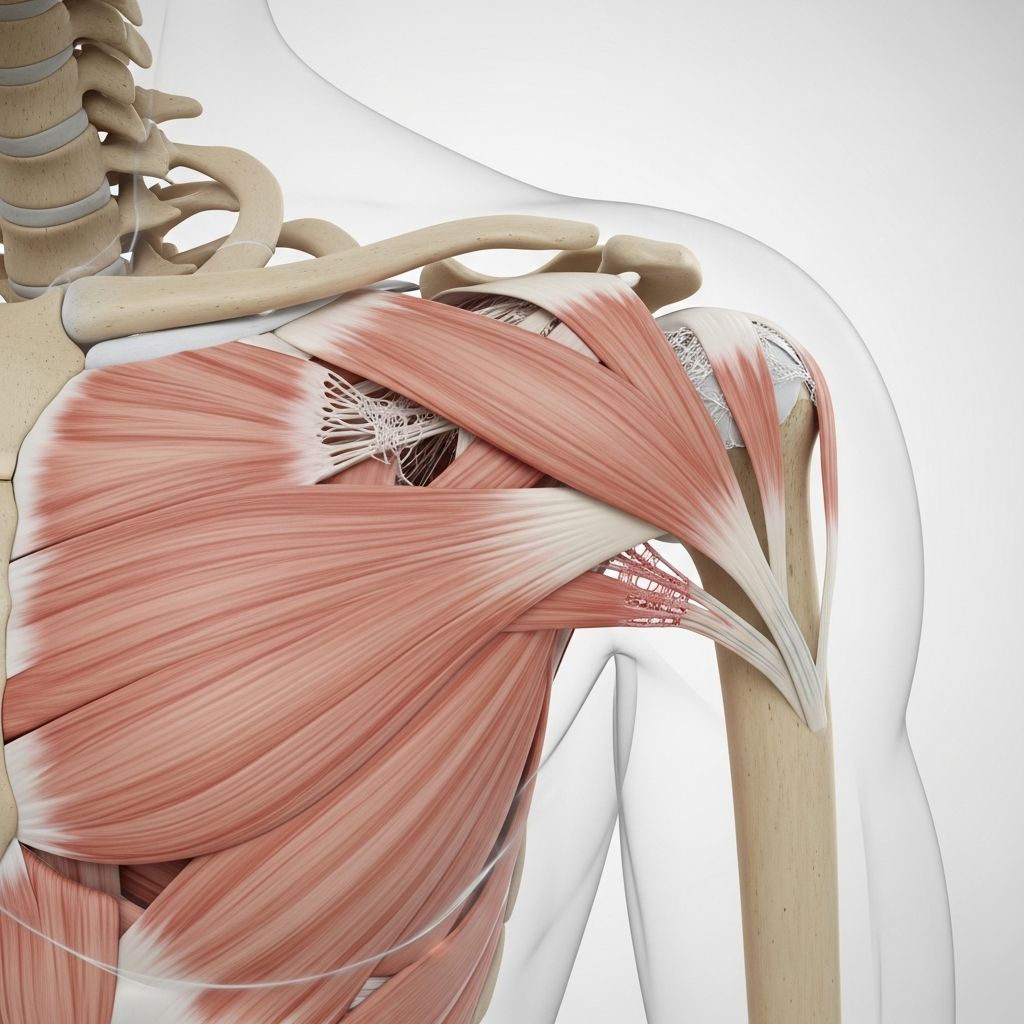
Rotator cuff disorders encompass a range of conditions affecting the muscles and tendons stabilizing the shoulder joint, leading to pain, weakness, and limited mobility. These issues, common in adults especially over 40, arise from degeneration, trauma, or repetitive overhead activities.
What are rotator cuff disorders?
The rotator cuff comprises four muscles—supraspinatus, infraspinatus, teres minor, and subscapularis—and their tendons, forming a cuff around the humeral head to maintain glenohumeral joint stability. Disorders include tendonitis, tendinosis, partial or full-thickness tears, impingement syndrome, bursitis, and calcific tendinitis, often presenting as a continuum of pathology.
Rotator cuff syndrome represents a spectrum from inflammation to tears, with subacromial impingement causing extrinsic compression and internal impingement involving posterior glenoid contact during extreme arm positions. These conditions impair shoulder function, particularly in overhead motions.
Symptoms
Typical symptoms include an insidious onset of shoulder pain, worsening with overhead activities or at night, often disturbing sleep. Patients report dull aches on the shoulder’s side and front, weakness in arm elevation, and pain with specific movements.
- Shoulder pain: Exacerbated by lifting, reaching, or lying on the affected side.
- Weakness: Difficulty raising the arm, especially above shoulder level.
- Night pain: Common, preventing comfortable sleep.
- Limited range of motion: Painful arc between 60-120 degrees of abduction.
- Other: Crepitus, stiffness, or referred pain to the upper arm.
In acute tears, sudden severe pain and inability to lift the arm occur post-trauma; chronic cases show gradual progression.
Causes
Rotator cuff disorders result from intrinsic degeneration or extrinsic compression. Age-related attrition predominates in those over 50, compounded by repetitive use in sports (e.g., tennis, swimming) or occupations (e.g., painting, construction).
Extrinsic causes
Subacromial impingement from acromial spurs or hooked acromion narrows the subacromial space, pinching tendons. Internal impingement occurs in abduction/external rotation. Bursitis and biceps tendon issues contribute.
Intrinsic causes
Tendon hypovascularity in the supraspinatus ‘critical zone,’ repetitive eccentric loading, apoptosis, matrix degeneration, and genetic factors weaken tissue. Histopathology reveals rounded tenocytes, myxoid changes, vascular proliferation, reduced cellularity, and collagen thinning.
Trauma like falls can cause acute tears in weakened tendons.
Who is affected?
Prevalence increases with age: 20% in 60-year-olds, 50% over 80 have tears, many asymptomatic. Risk factors include:
- Overhead athletes or workers.
- Dominant hand use.
- Smoking, diabetes, obesity.
- Previous injuries or instability.
Diagnosis
Diagnosis combines history, exam, imaging. Insidious pain with overhead activity and night pain suggests rotator cuff pathology. Red flags (fever, deformity, cancer history) warrant urgent evaluation.
Examination
Key tests:
| Test | Description | Positive Indicates |
|---|---|---|
| Empty Can (Jobe’s) | Arm at 90° abduction, thumbs down; resist downward pressure. | Supraspinatus weakness/pain. |
| External Rotation Lag | Resist external rotation at side. | Infraspinatus/teres minor. |
| Lift-Off/Belly Press | Hand lift-off back or press on abdomen. | Subscapularis. |
| Neer/Hawkins | Passive forward flexion or internal rotation at 90°. | Impingement. |
Assess AC joint, biceps, and cervical spine.
Investigations
- X-rays: Rule out arthritis, spurs, calcifications.
- Ultrasound: Dynamic tendon assessment.
- MRI: Gold standard for tears, inflammation.
Related Stories



Treatment
Treatment is tiered: conservative first, surgery if fails. Tailored to tear size, symptoms, patient age/activity.
Non-surgical
90% improve with 3-6 months conservative care.
- Rest/activity modification: Avoid aggravating overhead use.
- Physiotherapy: Essential; includes stretching, strengthening (scapular stabilizers, rotator cuff), manual therapy. Evidence supports exercise over others.
- Pain relief: NSAIDs, acetaminophen; corticosteroid injections for short-term relief (not routine).
- Other: Ice, taping, ultrasound (limited evidence).
Surgery
Indicated for failed conservative treatment, acute tears, young/active patients, full-thickness tears causing weakness.
- Arthroscopic subacromial decompression: For impingement.
- Rotator cuff repair: Suture anchors for tears; success 85-95% pain relief, lower for massive tears.
- Open repair: Complex cases.
Post-op rehab: sling 4-6 weeks, gradual strengthening 3-6 months.
Physiotherapy
Core treatment: phases include protection, ROM recovery, strengthening, return to activity. Focus on rotator cuff and scapular exercises (e.g., side-lying external rotation, rows). Improves function, reduces pain.
Recovery timeline
| Stage | Timeline | Goals |
|---|---|---|
| Acute/Conservative | 4-12 weeks | Pain reduction, full ROM. |
| Post-Surgical | 6 weeks sling; 3-6 months full | Strength, function return. |
| Chronic/Retricted | 6-12 months | Functional adaptation. |
Full recovery varies; 70-90% satisfactory outcomes.
Prevention
- Maintain shoulder strength/flexibility via regular exercises.
- Proper technique in sports/work.
- Avoid overload, warm-up adequately.
- Manage comorbidities.
Frequently Asked Questions
Can rotator cuff tears heal without surgery?
Partial tears often heal with conservative treatment; full tears in older, low-demand patients may not require surgery if asymptomatic.
How long does recovery take after surgery?
Expect 4-6 months for daily activities, up to 12 months for sports.
Is physiotherapy enough for a tear?
Yes for many partial tears or tendinopathy; surgery for symptomatic full-thickness.
What exercises help rotator cuff pain?
Pendulum swings, wall slides, external rotations with bands; under guidance.
Does age affect treatment choice?
Older patients favor non-surgical; younger/active prefer repair.
References
- Rotator Cuff Syndrome – StatPearls — NCBI Bookshelf/StatPearls Publishing. 2023-08-08. https://www.ncbi.nlm.nih.gov/books/NBK531506/
- Rotator cuff injury – Symptoms, diagnosis and treatment — BMJ Best Practice. 2023. https://bestpractice.bmj.com/topics/en-us/586
- Rotator Cuff Tendinopathy Diagnosis, Nonsurgical Medical Care — JOSPT. 2025. https://www.jospt.org/doi/10.2519/jospt.2025.13182
- Patient Guide to Rotator Cuff Injuries — Rothman Orthopaedic Institute. 2023. https://rothmanortho.com/images/KFPatientEducation/Rotator-Cuff-injuries-RI.pdf
- Rotator cuff injury – Symptoms and causes — Mayo Clinic. 2023-11-11. https://www.mayoclinic.org/diseases-conditions/rotator-cuff-injury/symptoms-causes/syc-20350225
- Management of Rotator Cuff Injuries: Clinical Practice Guideline — APTA/AAOS. 2022. https://www.apta.org/patient-care/evidence-based-practice-resources/cpgs/management-of-rotator-cuff-injuries-clinical-practice-guideline
Similar Articles








Read full bio of Sneha Tete