Rotator Cuff Tendinitis: Causes, Symptoms, and Treatment
Understanding rotator cuff tendinitis: comprehensive guide to symptoms, diagnosis, and effective treatment options.
Understanding Rotator Cuff Tendinitis
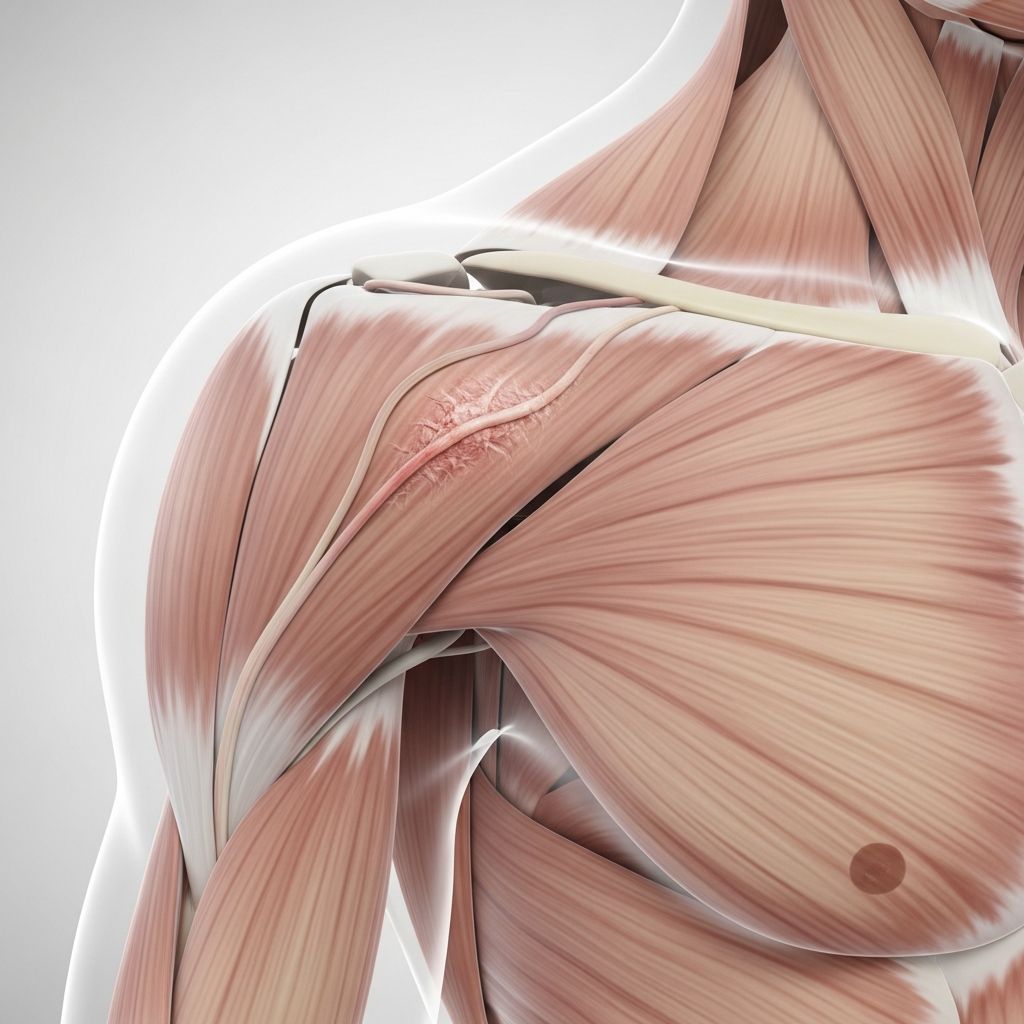
Rotator cuff tendinitis is an inflammatory condition affecting the tendons of the rotator cuff, a group of four muscles and their tendons that stabilize and control movement of the shoulder joint. These muscles include the supraspinatus, infraspinatus, teres minor, and subscapularis. When these tendons become inflamed or irritated, they can cause significant shoulder pain, weakness, and limited range of motion. This condition is one of the most common causes of shoulder pain and can affect people of all ages, though it is particularly prevalent in athletes and individuals with occupations requiring repetitive overhead activities.
Causes and Risk Factors
Rotator cuff tendinitis can develop through various mechanisms, with both acute injuries and chronic overuse patterns contributing to its onset. Understanding the underlying causes is essential for both prevention and appropriate treatment.
Repetitive Overhead Activities
One of the primary causes of rotator cuff tendinitis is repetitive use of the rotator cuff muscles through overhead motions. This is commonly observed in sports such as baseball, volleyball, tennis, and swimming, where athletes repeatedly raise their arms above their heads. Additionally, occupational activities that require frequent overhead work can lead to this condition. The repetitive motion causes the rotator cuff tendons to be pinched between the ball and socket joint and the coracoacromial arch, leading to irritation and inflammation.
Mechanical Impingement
Shoulder impingement syndrome is closely associated with rotator cuff tendinitis. This occurs when the space between the top of the shoulder, called the acromion, and the rotator cuff tendons becomes smaller, especially when you raise your arm. The acromion can rub against, or impinge on, the tendon and the bursa below, causing irritation and pain. Mechanical compression can result from several factors, including a degenerative bursa, acromial spurring, and predisposing acromial morphologies such as the hooked-type acromion.
Age-Related and Intrinsic Changes
Vascular changes and age-related degeneration play significant roles in rotator cuff tendinitis development. Focal vascular adaptations occur secondary to aging and can contribute to intrinsic cuff failure. Additionally, repetitive eccentric forces directly experienced by the cuff itself can trigger tendinopathy. The exact pathogenesis involves a combination of extrinsic impingement from surrounding structures and intrinsic degeneration from changes within the tendon itself.
Symptoms and Diagnosis
Recognizing the symptoms of rotator cuff tendinitis is crucial for early intervention and prevention of more serious complications.
Common Symptoms
The primary indicator of rotator cuff tendinitis is pain in the shoulder, which may be accompanied by inflammation and swelling of the tendons. Pain may present as:
- Mild pain present both with use and at rest
- Pain radiating from the front of the shoulder to the side of the arm
- Sudden pain or gradual onset depending on the cause
- Pain that worsens with certain movements, particularly overhead activities
- Weakness in the affected shoulder
- Restricted range of motion
Many patients also experience swelling of the subacromial bursa, a condition called bursitis. The bursa is a small fluid-filled sac that reduces friction created by the rotator cuff tendons as they move back and forth under the acromion. As the tendons become irritated and swell, they occupy more space in the joint, which leads to further pinching and pain.
Related Stories



Clinical Evaluation
When evaluating rotator cuff tendinitis, healthcare professionals correlate clinical examination findings with radiographic imaging and MRI results. A thorough assessment includes physical examination of shoulder strength, range of motion, and specific maneuvers that reproduce symptoms. Imaging studies help identify structural abnormalities, degenerative changes, and the extent of tendon involvement.
Conservative Treatment Approaches
Most cases of rotator cuff tendinitis respond well to nonsurgical treatment. The goal of treatment is to reduce pain and restore function, with consideration given to the patient’s age, activity level, and general health.
Rest and Activity Modification
Initial management typically involves rest from the exacerbating activity, particularly repetitive overhead activity and heavy lifting. Your doctor may suggest activity modification to avoid movements that tend to cause your symptoms. Rest is important to allow the swelling and inflammation of the tendons to resolve and to prevent further injury, as inflamed tendons are more susceptible to tears.
Ice and Cold Therapy
Applying cold packs to your shoulder three to four times per day can help reduce inflammation and provide pain relief. Cold therapy is particularly effective in the acute phase of the condition and should be applied for approximately 15-20 minutes at a time.
Nonsteroidal Anti-Inflammatory Drugs (NSAIDs)
Anti-inflammatory medications such as ibuprofen, aspirin, and naproxen are commonly recommended as first-line nonoperative management. These medications work to reduce pain and swelling, making it easier to participate in rehabilitation activities. NSAIDs are often used in conjunction with physical therapy modalities to optimize treatment outcomes.
Physical Therapy
Physical therapy remains the mainstay of first-line treatment for rotator cuff tendinitis. Even in the setting of partial thickness tears, patients can be managed with physical therapy alone. Initial physical therapy typically consists of:
- Stretching exercises to improve motion and flexibility
- Passive exercises to help restore range of motion and ease pain
- Gentle mobilization techniques
Once pain is under control, your physical therapist will introduce strengthening exercises, including:
- Aggressive rotator cuff strengthening programs
- Periscapular stabilizer strengthening
- Range of motion exercises
- Overall posture correction to prevent other injuries
Athletes with strong rotator cuff muscles are less likely to develop rotator cuff tendinitis, making strengthening a crucial component of both treatment and prevention.
Steroid Injections
If conservative treatment measures are not providing adequate relief, your doctor may recommend a steroid injection. The most utilized injection for rotator cuff tendinitis is administered into the subacromial space. Steroids are very effective anti-inflammatory medicines that can significantly reduce inflammation and pain. Patients can experience symptomatic relief almost instantaneously after the injection, which allows them to participate more actively in subsequent physical therapy sessions. These injections can be performed in the doctor’s office, with or without the use of ultrasound or other forms of image guidance.
Surgical Treatment Options
Surgical intervention is considered when conservative treatment approaches have failed or symptoms persist or worsen despite at least 4-6 months of exhaustive nonoperative treatment modalities. Surgical treatment tends to be most effective in carefully selected patients who have not responded to conservative care.
Subacromial Decompression and Acromioplasty
The standard surgical procedure for rotator cuff tendinitis involves subacromial decompression or acromioplasty. This procedure aims to increase the space available for the rotator cuff tendons, reducing impingement and allowing for healing.
Surgical Risks and Complications
Like all surgical procedures, rotator cuff surgery carries certain risks that should be discussed with your surgeon, including:
- Recurrent pain or symptoms
- Infection
- Joint stiffness
- Neurovascular injury
- Risks associated with anesthetic use
- Deltoid dysfunction from failed deltoid repair or excessive debridement
- Anterosuperior escape in cases of massive, retracted rotator cuff tears
Postoperative Recovery
Following surgical intervention, enrollment in a comprehensive physical therapy program is highly recommended to regain joint mobility and muscle strength. Recovery times vary depending on what caused the impingement and its severity.
Recovery and Prognosis
With proper treatment, outcomes for most patients with rotator cuff tendinitis are favorable. Many patients experience gradual improvement and return to normal function, although complete recovery may take several weeks to months depending on the severity and underlying cause. Early recognition and treatment of symptoms can prevent progression to more serious conditions like partial or full-thickness rotator cuff tears.
Prevention Strategies
Preventing rotator cuff tendinitis involves several key strategies:
- Maintaining proper posture and body mechanics during daily activities
- Building and maintaining strong rotator cuff muscles through regular strengthening exercises
- Avoiding excessive overhead activities or modifying technique to reduce strain
- Taking regular breaks during repetitive activities
- Using proper equipment and technique in sports and occupational activities
- Gradually increasing activity levels to allow tissues to adapt
- Staying active and maintaining overall shoulder health
When to Seek Medical Attention
You should contact a healthcare provider if you experience:
- Persistent shoulder pain that does not improve with rest and ice
- Significant weakness or loss of function in your shoulder
- Pain that affects your ability to perform daily activities
- Symptoms that worsen despite home treatment measures
- Pain lasting longer than a few weeks
Referral to an orthopedic surgeon should be considered, especially with long-standing persistent symptoms or when conservative treatment has been unsuccessful.
Frequently Asked Questions
Q: What is the difference between rotator cuff tendinitis and rotator cuff tear?
A: Rotator cuff tendinitis is inflammation of the tendons, while a rotator cuff tear involves actual damage to the tendon tissue. Tendinitis can progress to a tear if left untreated, and inflammation can weaken the tendons, making them more susceptible to tears.
Q: How long does recovery from rotator cuff tendinitis typically take?
A: Recovery times vary significantly depending on the severity of the condition and the underlying cause. Many patients see improvement over several weeks to months with conservative treatment. Rotator cuff tears are rare in children and adolescents, but adults may require longer recovery periods.
Q: Can rotator cuff tendinitis be prevented?
A: Yes, rotator cuff tendinitis can often be prevented by maintaining proper posture, strengthening the rotator cuff muscles, avoiding excessive overhead activities, and using proper technique in sports and occupational activities. Athletes with strong rotator cuff muscles are significantly less likely to develop this condition.
Q: Is surgery always necessary for rotator cuff tendinitis?
A: No, most cases of rotator cuff tendinitis respond well to conservative treatment. Surgery is only considered after at least 4-6 months of exhaustive nonoperative treatment has failed to relieve symptoms. Even partial thickness tears can often be managed successfully with physical therapy alone.
Q: What can I do at home to manage rotator cuff tendinitis?
A: Home management includes rest from aggravating activities, applying ice packs 3-4 times daily, taking NSAIDs as directed, and performing gentle stretching exercises. Following the treatment plan prescribed by your healthcare provider is essential for optimal recovery.
References
- Rotator Cuff Tendonitis — National Center for Biotechnology Information (NCBI), StatPearls. 2024. https://www.ncbi.nlm.nih.gov/books/NBK532270/
- Shoulder Impingement Rotator Cuff Tendinitis — American Academy of Orthopaedic Surgeons (AAOS), OrthoInfo. 2024. https://orthoinfo.aaos.org/en/diseases–conditions/shoulder-impingementrotator-cuff-tendinitis
- Rotator Cuff Tendinitis — Lurie Children’s Hospital. 2024. https://www.luriechildrens.org/en/specialties-conditions/rotator-cuff-tendinitis/
- Rotator Cuff Injury – Symptoms and Causes — Mayo Clinic. 2024. https://www.mayoclinic.org/diseases-conditions/rotator-cuff-injury/symptoms-causes/syc-20350225
- Shoulder Impingement Syndrome (Rotator Cuff Tendinitis) — Cleveland Clinic. 2024. https://my.clevelandclinic.org/health/diseases/shoulder-impingement-rotator-cuff-tendinitis
Similar Articles








Read full bio of Sneha Tete