Rotarix Vaccine: What Parents Need To Know
Protecting infants from rotavirus gastroenteritis: everything you need to know about Rotarix vaccine, its administration, benefits, and safety.
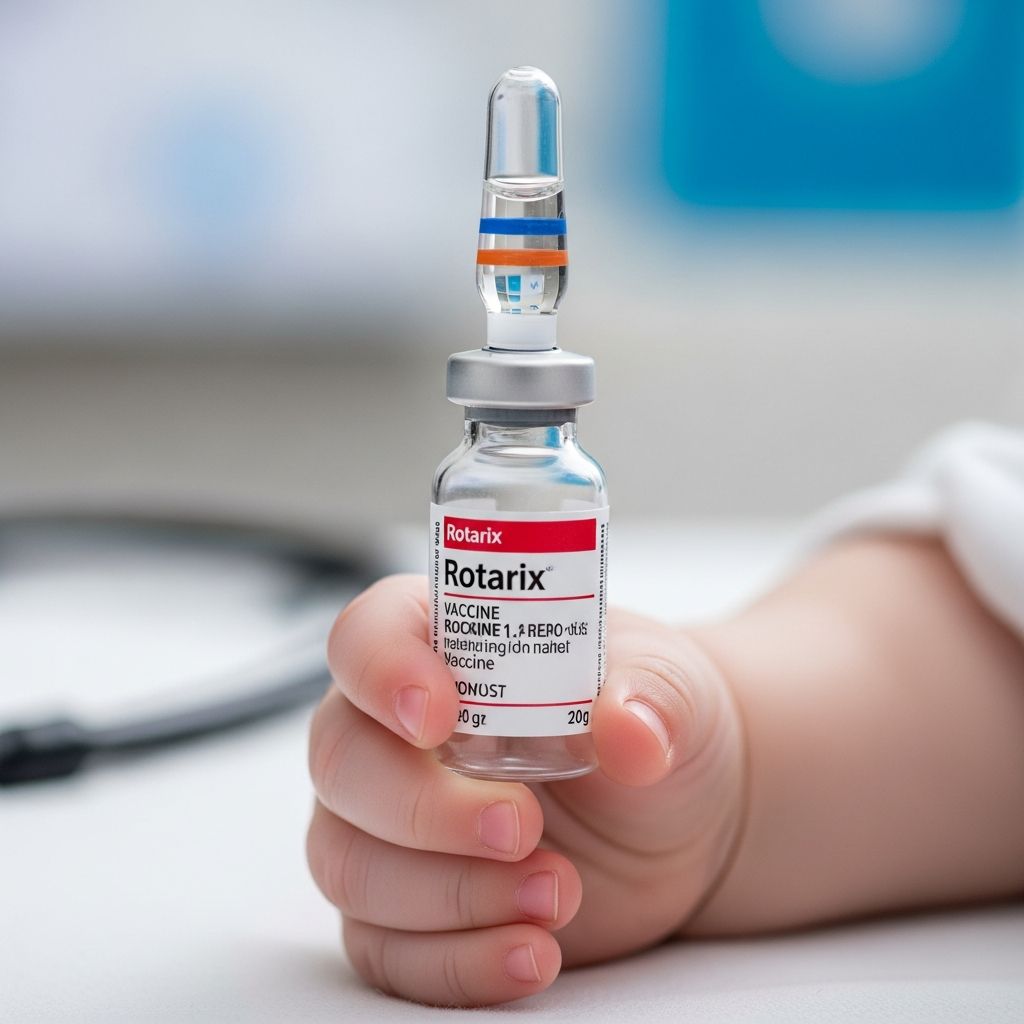
Rotarix is a live, attenuated oral vaccine designed to protect infants against rotavirus gastroenteritis, the leading viral cause of severe diarrhea, vomiting, and fever in young children worldwide. Administered as a two-dose series starting at 6 weeks of age, it significantly reduces the incidence of hospitalization due to rotavirus infection.
About Rotarix
Rotarix, derived from the human 89-12 strain (G1P type), targets rotavirus serotypes G1, G3, G4, and G9, which account for the majority of severe cases. Rotavirus is highly contagious, spreading through fecal-oral route, and before widespread vaccination, it caused over 500,000 deaths annually in children under 5, primarily in developing countries. In high-income settings like the UK and US, it led to substantial healthcare burdens with frequent emergency visits and hospitalizations.
The vaccine mimics natural infection but in a weakened form, stimulating the immune system to produce protective antibodies without causing disease. Clinical trials involving over 24,000 infants demonstrated its efficacy in preventing any grade of rotavirus gastroenteritis by 74-87% and severe cases by 85-96% through two seasons post-vaccination.
Before Taking Rotarix
Consult your healthcare provider before vaccination if your infant has any medical history that could contraindicate its use. Key considerations include:
- Allergies: Do not administer if there has been a severe allergic reaction (anaphylaxis) to a previous dose or any component.
- Immunodeficiency: Avoid in infants with severe combined immunodeficiency (SCID) or other conditions severely impairing the immune system, as the live virus could replicate uncontrollably.
- Gastrointestinal issues: Contraindicated in cases of past intussusception (bowel blockage) or conditions increasing its risk, such as uncorrected congenital malformations of the gut.
- Acute illness: Delay if the baby has moderate or severe gastroenteritis or fever; mild illnesses like a cold are usually not a barrier.
Inform the provider about any family history of immune disorders or recent exposures. Rotarix contains no preservatives like thimerosal and is suitable for most healthy infants.
How Rotarix Is Given
Rotarix is exclusively for oral administration, not injection. The regimen consists of two 1.5 mL doses, spaced at least 4 weeks apart. The first dose starts at 6 weeks (42 days) of age, and the series must complete by 24 weeks (approximately 6 months).
- Preparation: No reconstitution needed; withdraw the full contents of one pre-filled oral applicator (1.5 mL).
- Positioning: Hold the infant in a semi-upright or reclined position to prevent choking.
- Administration: Slowly squeeze the applicator into the mouth toward the inner cheek, allowing natural swallowing. Administer before other vaccines at the visit.
- If regurgitated: A replacement dose may be given if most is lost, but do not repeat if only a small amount is spat out.
The typical UK schedule aligns with 8-week and 12-week immunization visits, ensuring timely protection before peak rotavirus season (winter-spring).
Common Questions About Rotarix
Parents often have concerns about the vaccine’s process and effects. Here’s what to expect:
- Does it hurt? No, as it’s oral, there’s no needle prick.
- Can it be given with other vaccines? Yes, safely co-administered with DTaP, IPV, Hib, hepatitis B, and pneumococcal vaccines.
- What if we miss a dose? Catch up as soon as possible, provided the baby is under 24 weeks.
- Interchangeability: Best to complete with Rotarix; switching to RotaTeq may require three doses total.
Side-Effects Of Rotarix
Related Stories



Most infants tolerate Rotarix well, with side effects being mild and transient. In clinical studies monitoring 8 days post-dose:
| Side Effect | Frequency in Vaccine Group | Placebo Comparison |
|---|---|---|
| Fussiness/Irritability | 50-52% | ~45% |
| Mild Diarrhea | 3-6% | ~2-4% |
| Vomiting | 3-5% | ~2% |
| Cough/Runny Nose | ~10% | Similar |
| Fever | 2-4% | Comparable |
These resolve within 1-2 days without intervention. Serious adverse events are rare; no increased risk of seizures or hypersensitivity beyond background rates.
How Effective Is Rotarix?
Rotarix demonstrates robust efficacy:
- Any rotavirus gastroenteritis: 71.9-87.1% through two seasons (ATP cohort).
- Severe cases (Vesikari score ≥11): 85.6-96.0% efficacy.
- Hospitalizations: Reduces rotavirus-related admissions by 84-96%; all-cause gastroenteritis by ~50%.
Protection wanes slightly in the second season but remains high against severe disease. Real-world data confirm fewer outbreaks post-introduction.
Special Precautions
Intussusception risk: A small increased risk (1 per 20,000-100,000 doses), mainly after dose 1, lower than previous vaccines. Benefits outweigh this rare event.
Vaccine virus shedding: Up to 50% shed post-dose 1, but transmission is rare and milder than wild-type.
Cautious use near immunocompromised household members; weigh risks.
Storage And Handling
Store refrigerated at 2-8°C (36-46°F); do not freeze. Protect from light. Stable for 24 hours at room temperature if needed, but discard unused portions.
Frequently Asked Questions (FAQs)
Q: At what age is Rotarix given?
A: First dose from 6 weeks, second at least 4 weeks later, completing by 24 weeks of age.
Q: Is Rotarix safe for preterm babies?
A: Yes, if stable and ≥6 weeks chronological age; consult provider for very preterm infants.
Q: What if my baby spits up the vaccine?
A: A replacement dose can be given if most is lost.
Q: Does Rotarix protect against all rotavirus strains?
A: Highly effective against G1-G4, G9; heterotypic protection observed.
Q: Can Rotarix cause rotavirus infection?
A: No, it’s attenuated and does not cause clinical disease in healthy infants.
Q: Is there a risk of intussusception?
A: Small risk (about 1 extra case per 20,000-100,000); monitor for symptoms like persistent vomiting or bloody stools.
In summary, Rotarix is a cornerstone of infant immunization, dramatically curbing rotavirus morbidity. Always discuss with your GP or pediatrician for personalized advice. (Word count: 1672)
References
- Package Insert – Rotarix — U.S. Food and Drug Administration (FDA). 2017-05-01. https://www.fda.gov/media/75726/download
- Rotavirus vaccine — National Health Service (NHS). 2023-10-12. https://www.nhs.uk/vaccinations/rotavirus-vaccine/
- Rotavirus Vaccine Oral Solution (Rotarix) — Cleveland Clinic. 2024-02-15. https://my.clevelandclinic.org/health/drugs/20770-rotavirus-vaccine-oral-solution-rotarix
- Rotavirus vaccine – Rotarix — Patient.info. 2023-11-20. https://patient.info/medicine/rotavirus-vaccine-rotarix
- Ask The Experts About Vaccines: Rotavirus — Immunize.org. 2024-01-10. https://www.immunize.org/ask-experts/topic/rotavirus/
- Rotavirus: The Disease & Vaccines — Children’s Hospital of Philadelphia (CHOP). 2023-09-05. https://www.chop.edu/vaccine-education-center/vaccine-details/rotavirus-vaccine
- Rotavirus Vaccine VIS — Centers for Disease Control and Prevention (CDC). 2024-06-28. https://www.cdc.gov/vaccines/hcp/current-vis/downloads/rotavirus.pdf
Similar Articles








Read full bio of medha deb