Rowell Syndrome: Diagnosis, Treatment, And Outcomes
Rare lupus variant with erythema multiforme-like lesions, speckled ANA, and rheumatoid factor challenges diagnosis and treatment.
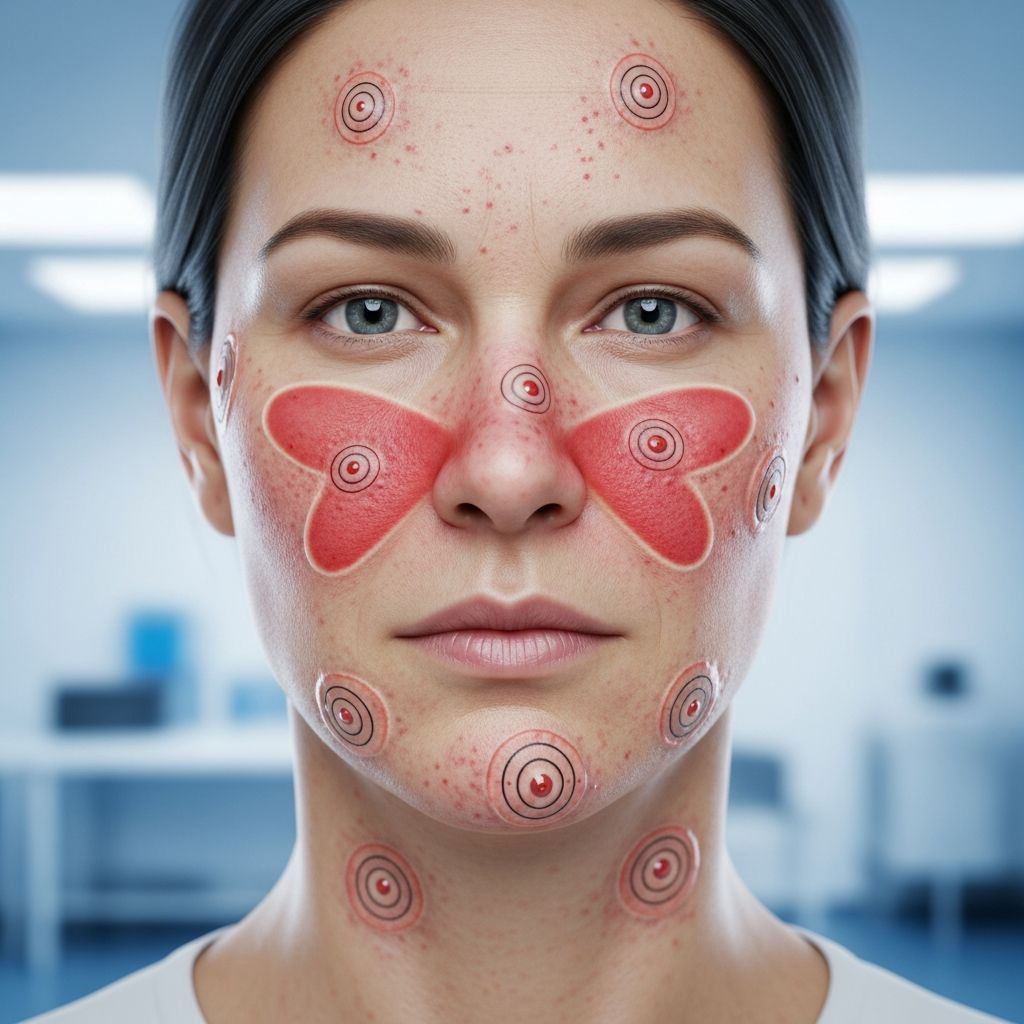
Rowell syndrome is a rare entity consisting of
erythema multiforme-like lesions
coexisting withlupus erythematosus (LE)
along with characteristic immunological findings, such as speckled pattern antinuclear antibodies (ANA), positive rheumatoid factor, and anti-Sjögren’s syndrome A (anti-SSA/Ro) antibodies. Its acceptance as a distinct entity remains controversial, but it is currently classified as a subtype of chronic cutaneous lupus erythematosus.Introduction
The syndrome was first described in 1963 by Rowell, Beck, and Anderson, who reported four out of 120 patients with chronic discoid LE developing erythema multiforme-like lesions on the arms, legs, face, and chest, coinciding with a speckled pattern of ANA, positive rheumatoid factor, and a precipitating antibody to saline extract from human tissue (anti-Sj-T). Rowell syndrome has been reported in patients with both systemic lupus erythematosus (SLE) and discoid lupus erythematosus (DLE). Of the 96 reported cases up to recent reviews, 18 originated from India, highlighting potential geographic variations in reporting.
Recent comprehensive reviews emphasize its rarity and the diagnostic challenges posed by overlapping dermatological and rheumatological features. Pathogenesis involves autoimmune mechanisms influenced by genetics and environmental triggers, with laboratory confirmation playing a pivotal role.
Demographics
Rowell syndrome predominantly affects females, mirroring the epidemiology of lupus erythematosus, with a female-to-male ratio often exceeding 9:1 in reported cases. The mean age of onset is typically in the fourth decade of life, though cases in children and older adults have been documented.
Global case reports indicate a higher prevalence in certain regions, such as India, possibly due to genetic predispositions or increased awareness among dermatologists and rheumatologists. A 2025 review analyzed demographics across multiple cases, noting consistent patterns of autoimmune predisposition.
Causes
The pathogenesis of Rowell syndrome shares features with lupus erythematosus, involving genetic susceptibility and environmental triggers. Key contributing factors identified in literature include:
- Ultraviolet light exposure (sunlight): A common trigger exacerbating cutaneous lesions.
- Medications: Certain drugs may precipitate flares, though specific agents vary.
- Infections: Bacterial infections and, more recently, COVID-19 vaccination have been implicated as predisposing risks.
- Autoimmune dysregulation: Involves abnormal immune responses leading to tissue damage, with roles for antinuclear antibodies and other autoantibodies.
Genetic factors, such as polymorphisms in immune-related genes, combined with these environmental insults, underlie the disease process.
Clinical Features
Rowell syndrome is characterised by
erythema multiforme (EM)-like lesions
in a patient with underlying lupus erythematosus. These lesions typically present as typical or atypical target lesions distributed on the trunk, arms, legs, face, and chest, distinguishing them from classic acral EM.Associated features include:
- Chronic cutaneous LE lesions, such as discoid plaques.
- Mucosal involvement is rare, unlike true EM.
- Systemic symptoms from SLE, including arthralgias, fatigue, and fever in some cases.
Skin lesions may be photosensitive and persistent, with histological evidence of interface dermatitis and periadnexal inflammation.
Related Stories



Complications
Complications arise primarily from underlying systemic LE, including:
- Haematological involvement: Anaemia, thrombocytopenia, or leukopenia.
- Renal disease: Lupus nephritis in systemic cases.
- Severe cutaneous reactions: Rare progression to Stevens-Johnson syndrome/toxic epidermal necrolysis (SJS/TEN).
Other associations include sicca syndrome, rheumatoid arthritis overlaps, and secondary infections due to immunosuppressive therapies.
Diagnosis
Diagnosis relies on specific criteria for this subtype of chronic cutaneous LE. The following table outlines the diagnostic framework:
| Major Criteria (All Required) |
|---|
| 1. Presence of chronic cutaneous LE |
| 2. Erythema multiforme-like lesions (typical or atypical target lesions) |
| 3. ≥1 positive speckled ANA, anti-Ro/SSA, or anti-La/SSB antibodies (speckled ANA in >90% of cases) |
| 4. Negative direct immunofluorescence (DIF) on lesional skin |
| Minor Criteria (One Required) |
|---|
| 1. Absence of infectious or pharmacological triggers |
| 2. Lesions not in acral or mucosal areas |
| 3. Presence of at least one additional criterion for systemic LE |
Histology reveals periadnexal lymphocytic infiltrate and periadnexal CD123+ plasmacytoid dendritic cells. Laboratory findings commonly include positive ANA (speckled pattern), rheumatoid factor, and anti-SSA/Ro antibodies. Recent studies note occasional positive DIF, challenging traditional criteria.
Differential Diagnoses
The differential diagnosis for Rowell syndrome includes conditions with overlapping cutaneous and immunological features:
- Erythema multiforme major: Acral distribution, mucosal involvement, identifiable triggers.
- Subacute cutaneous LE: Annular/polycyclic lesions, anti-Ro positive, photosensitive.
- Drug-induced LE: History of offending medication, positive ANA.
- Paraneoplastic EM: Associated malignancy.
- Other autoimmune bullous diseases: e.g., bullous SLE.
Precise serological and histopathological correlation is essential to distinguish Rowell syndrome.
Treatment
Treatment mirrors that of lupus erythematosus, tailored to disease severity:
- First-line: Systemic corticosteroids (e.g., prednisone) for acute flares.
- Antimalarials: Hydroxychloroquine, effective in cutaneous and systemic control.
- Immunosuppressants: Methotrexate, azathioprine, mycophenolate mofetil for refractory cases.
- Biologics: Rituximab shows promising outcomes; emerging targeted immunotherapies for personalized care.
- Topical therapies: Corticosteroids and calcineurin inhibitors for skin lesions.
Sun protection is crucial. Multidisciplinary management involving dermatology and rheumatology optimizes outcomes.
Outcome
Most patients with Rowell syndrome respond well to therapy, with resolution of EM-like lesions and control of underlying LE. Long-term remission is achievable, though relapses occur with triggers. Prognosis depends on systemic involvement; early intervention prevents complications. Ongoing research into targeted therapeutics promises improved personalized management.
Frequently Asked Questions
What is Rowell syndrome?
Rowell syndrome is a rare lupus erythematosus variant featuring erythema multiforme-like skin lesions with specific autoantibodies like speckled ANA and rheumatoid factor.
Who is at risk for Rowell syndrome?
Primarily females in their 30s-40s with lupus erythematosus; triggers include sunlight, infections, and medications.
How is Rowell syndrome diagnosed?
Based on major criteria: chronic cutaneous LE, EM-like lesions, positive speckled ANA/anti-Ro, negative DIF; plus one minor criterion.
What are the treatments for Rowell syndrome?
Hydroxychloroquine, corticosteroids, immunosuppressants, and biologics like rituximab; sun avoidance is key.
Is Rowell syndrome curable?
Not curable but manageable; most patients achieve good control with therapy.
References
- Rowell Syndrome: A Comprehensive Review on Pathogenesis of a Rare and Challenging Entity and the Horizon of Targeted Therapeutics — Azadeh Khayyat et al. Health Sciences Reports. 2025-02-17. https://pubmed.ncbi.nlm.nih.gov/39963153/
- Rowell syndrome — DermNet NZ. 2020-06. https://dermnetnz.org/topics/rowell-syndrome
- Rowell Syndrome: A Comprehensive Review on Pathogenesis — Wiley Online Library. 2025. https://onlinelibrary.wiley.com/doi/full/10.1002/hsr2.70470
- Positive Direct Immunofluorescence in Rowell Syndrome: Further Support for a Subtype of Cutaneous Lupus Erythematosus — Cureus. 2024. https://www.cureus.com/articles/349189-positive-direct-immunofluorescence-in-rowell-syndrome-further-support-for-a-subtype-of-cutaneous-lupus-erythematosus
Similar Articles








Read full bio of medha deb