Rubber Band Scar Removal: Why Experts Warn And Safer Care
Experts warn against the dangerous viral TikTok trend of using rubber bands to remove scars and skin growths at home.
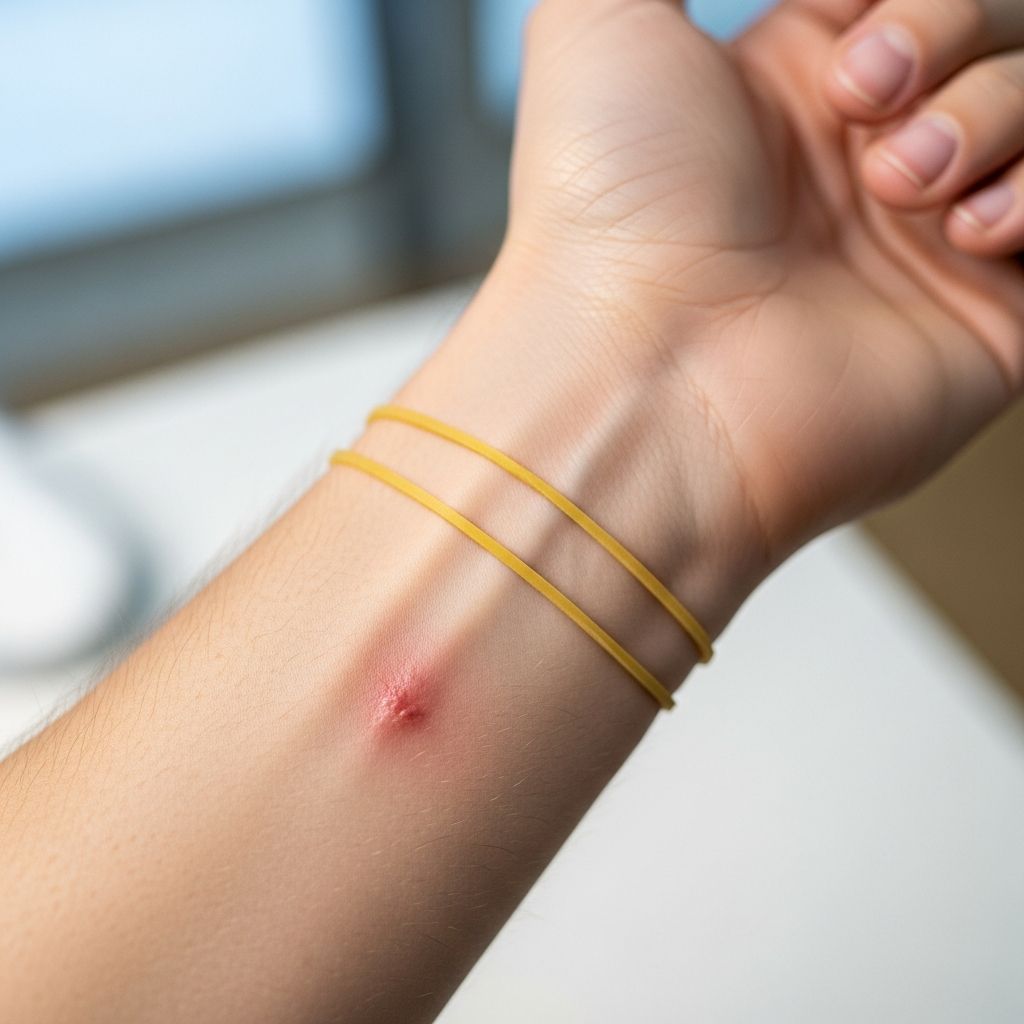
A disturbing DIY trend has exploded on TikTok, where users wrap rubber bands tightly around raised scars, keloids, skin tags, or other blemishes in hopes they’ll fall off. Videos show people claiming success, but dermatologists are sounding the alarm: this practice, mimicking ligation used in medical settings, can cause severe infections, permanent damage, and even life-threatening complications when done at home.
What Is the Rubber Band Scar Removal Trend?
The trend, popularized on platforms like TikTok, involves looping a rubber band or similar elastic material around the base of a raised skin lesion—such as a keloid, hypertrophic scar, mole, or skin tag—and leaving it in place for days or weeks. Proponents claim it cuts off blood supply, causing the tissue to necrotize (die) and slough off, leaving smooth skin behind. Hashtags like #RubberBandScarRemoval and #DIYKeloidRemoval have millions of views, with users sharing before-and-after photos.
While some videos show apparent success, many hide complications like pus-filled wounds, excessive bleeding, or larger scars forming afterward. Experts emphasize that what works in controlled medical environments fails disastrously at home due to lack of sterility, improper technique, and no professional oversight.
How Does the Rubber Band Method Purportedly Work?
The technique draws from legitimate medical procedures like ligation, where a band is used to restrict blood flow to small, benign growths like skin tags or hemorrhoids. In theory, ischemia (lack of blood) causes the tissue to shrink and detach. However, for scars like keloids—which are overgrowths of scar tissue extending beyond the original wound—this DIY version is imprecise and uncontrolled.
- Blood supply cutoff: The band squeezes the base, starving the lesion of oxygen and nutrients.
- Tissue necrosis: Dead tissue darkens, dries, and eventually falls off.
- Regeneration claim: Users hope new skin grows flat, but this rarely happens with scars.
In medical ligation for skin tags, sterile tools and follow-up ensure safety. Home attempts use household rubber bands, which harbor bacteria and snap unpredictably.
Why Dermatologists Say This Trend Is Dangerous
Dermatologists unanimously warn against it. “This is not a safe or effective way to treat scars,” says Dr. Amanda Doyle, a board-certified dermatologist. “It can lead to infection, worsening scarring, and systemic issues.”
Risks and Complications
- Infection: Non-sterile bands introduce bacteria, leading to abscesses or cellulitis. One case reported necrotizing fasciitis (flesh-eating bacteria).
- Pain and nerve damage: Tight constriction causes throbbing pain; prolonged pressure harms nerves.
- Bleeding: When tissue detaches, heavy bleeding can occur without medical intervention.
- Worse scarring: Inflammation from trauma often causes larger keloids to recur—a phenomenon called the “Keloid Paradox.”
- Sepsis and death: Rare but documented in extreme DIY cases, per expert warnings.
A YouTube explainer notes: “When a rubber band is tied tightly around a keloid, it squeezes the tissue like a noose, cutting off blood supply—but this causes the keloid to…” (video cuts off, but implies aggressive regrowth).
Related Stories



What Are Keloids and Hypertrophic Scars?
To understand the trend’s futility, know the conditions targeted.
| Feature | Keloids | Hypertrophic Scars |
|---|---|---|
| Definition | Abnormal scar tissue growing beyond original wound boundaries. | Raised scars staying within wound edges. |
| Appearance | Firm, shiny, dome-shaped; often itchy/painful. | Red, thick; flatten over 1-2 years. |
| Causes | Genetic predisposition + trauma (piercings, surgery, acne). | Deep wounds, tension during healing. |
| Treatment Response | Recur often; aggressive therapy needed. | Improve with time/conservative care. |
Keloids affect 10-15% of African Americans and Asians due to genetics. Unlike normal scars, they don’t regress.
Safe, Proven Treatments for Scars and Keloids
Skip the rubber bands—see a dermatologist. Evidence-based options abound.
1. Corticosteroid Injections
Intralesional triamcinolone acetonide (TAC) flattens keloids by reducing collagen production. Studies show significant improvement in height and pliability after 4-6 sessions.
- Effectiveness: 50-80% reduction in size.
- Side effects: Skin atrophy (temporary), hypopigmentation.
2. Laser Therapy
Pulsed dye laser (PDL) targets redness and improves texture. Combined with injections, results are optimal. One study found PDL reduced erythema significantly by week 32.
3. Silicone Sheets/Gels
Occlusive silicone hydrates and pressures scars, proven in meta-analyses to reduce hypertrophy.
4. Cryotherapy and Surgery
Freezing or excision for small lesions, always with adjuvant therapy to prevent recurrence.
5. Emerging: External Tissue Expansion
Medical devices (e.g., TopClosure®, DermaClose®) use controlled tension with elastic bands or loops to close wounds and prevent scars. A meta-analysis of 20+ studies showed faster healing than grafts, with devices like vessel loops or rubber-band-like systems used safely under supervision.
These aren’t DIY: They’re applied post-surgery for fasciotomies, burns, etc., achieving closure in 7-15 days vs. weeks for grafts.
5-Fluorouracil (5-FU) Injections
Anticancer drug inhibits fibroblast growth. Comparable to TAC in flattening scars.
Medical vs. DIY: Why Context Matters
Professional ligation uses sterile, calibrated bands on tiny, superficial growths (e.g., skin tags under 5mm). Scars like keloids are vascular, deep-rooted, and prone to inflammation. A 2023 meta-analysis confirms external tissue expanders with rubber-like components succeed only in sterile, monitored settings.
For fetal-like scarless healing, research explores gene therapies mimicking embryonic skin regeneration—no rubber bands involved.
Frequently Asked Questions (FAQs)
Is rubber band removal safe for skin tags?
Not at home. Dermatologist-supervised ligation is fine for small tags, but risks infection otherwise. Cut them off professionally.
Can I try this on a small scar?
No. Even small lesions can infect or keloid worse. Consult a doctor.
How long until a keloid falls off with a rubber band?
1-2 weeks per viral claims, but complications often arise first. Not recommended.
What if the banded area gets infected?
Seek emergency care: redness, pus, fever signal abscess or sepsis. Remove band immediately.
Do keloids ever go away on their own?
Rarely. Hypertrophic scars may flatten in 12-18 months; keloids persist without treatment.
What’s the best home remedy for scars?
Silicone gel, pressure earrings for ear keloids, sunscreen. No guarantees like professional care.
Expert Advice: What to Do Instead
If bothered by scars:
- See a board-certified dermatologist.
- Avoid trauma/piercings if prone to keloids.
- Use silicone products early.
- Combine therapies for best results.
“Patients deserve safe, effective care—not viral hacks,” stresses experts. Fetal skin research hints at future scarless healing, but today, evidence-based medicine rules.
References
- Experts warn against disturbing DIY skin blemish removal trend — NZ Herald. 2023-10-12. https://www.nzherald.co.nz/lifestyle/experts-warn-against-disturbing-diy-skin-blemish-removal-trend/P73CDAXU7EVLCA2TPKOZUAOKPE/
- Efficacy and safety of external tissue expansion technique in the reconstruction of skin soft tissue defects — Oxford Academic (Burns & Trauma). 2023-01-01. https://academic.oup.com/burnstrauma/article/doi/10.1093/burnst/tkac045/6887310
- Treatment Response of Keloidal and Hypertrophic Sternotomy Scars — JAMA Dermatology. 2002-06-01. https://jamanetwork.com/journals/jamadermatology/fullarticle/478984
- The next big thing in anti-aging is pretty controversial — MDLinx. 2023-07-20. https://www.mdlinx.com/article/the-next-big-thing-in-anti-aging-is-pretty-controversial/17gkIW7A95gE8vyuJXJcxg
- Why Rubber Bands Can Harm Keloids — YouTube. 2024-05-15. https://www.youtube.com/shorts/iiR57tJxKIs
Similar Articles








Read full bio of medha deb