Safeguarding Vision In Protests: Ballistic Eyewear Checklist
Essential strategies to shield your eyes from rubber bullets, tear gas, and protest hazards for maximum safety.
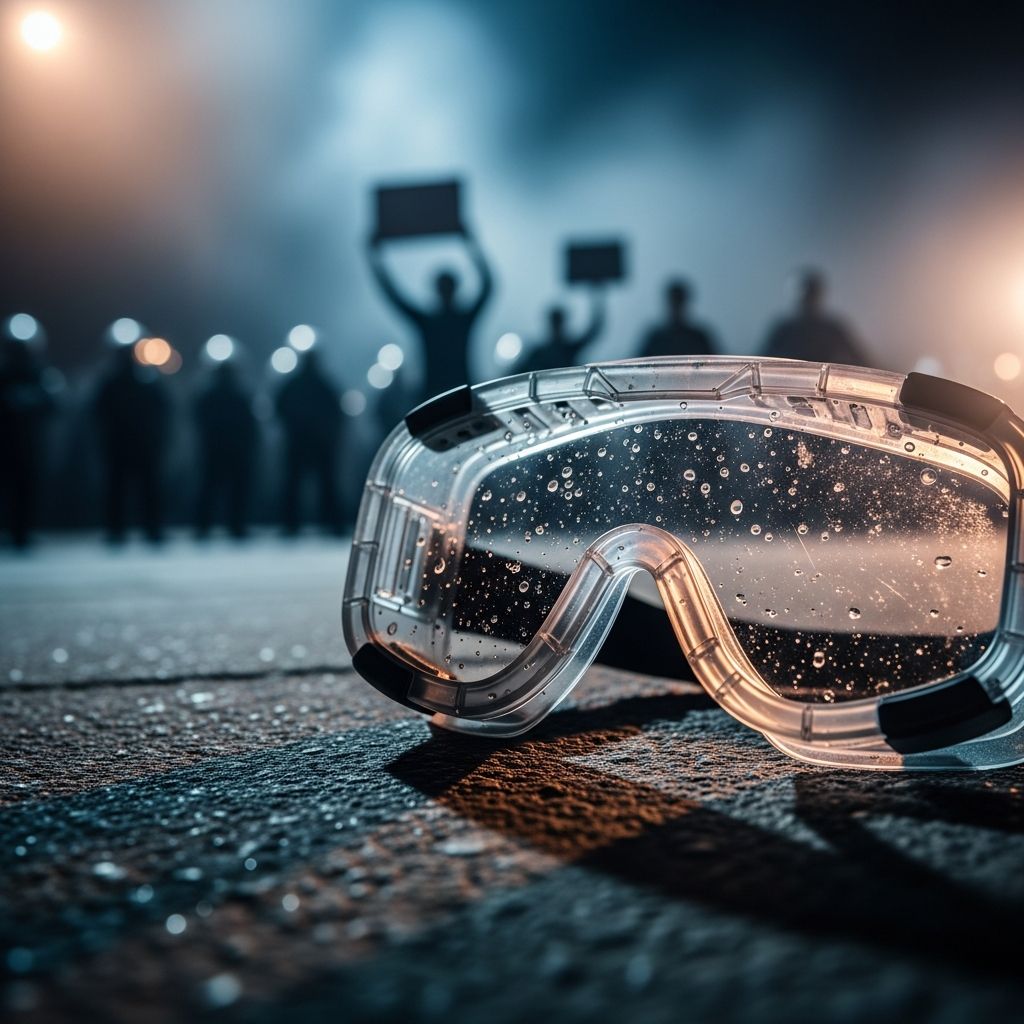
Protests often involve crowd control measures like rubber bullets and tear gas, posing severe risks to eyesight. Proper preparation with specialized eyewear and knowledge of hazards can prevent permanent damage or blindness.
Understanding Protest-Related Eye Threats
Crowd management tools such as rubber bullets and chemical irritants like tear gas are deployed to disperse gatherings. These ‘less-lethal’ options frequently result in significant ocular injuries despite their designation. Rubber bullets, kinetic impact projectiles coated in rubber, travel at velocities of 200-500 feet per second, capable of fracturing orbital bones or rupturing the eyeball. Tear gas, a riot control agent, induces intense burning, tearing, and potential long-term conditions like glaucoma or cataracts upon prolonged exposure.
Studies from conflict zones and recent U.S. protests highlight the prevalence of these dangers. For instance, during 2020 social justice marches, 33% of documented eye injuries led to permanent blindness, with common issues including ruptured globes (27%) and orbital fractures (23%). Chemical agents exacerbate risks by causing mucosal inflammation, blurred vision, and corneal damage, especially in enclosed spaces. Bystanders and participants alike face unpredictable trajectories from misaimed projectiles.
Kinetic Projectiles: The Hidden Dangers of Rubber Bullets
Rubber bullets consist of a metal core encased in rubber, fired from standard or riot-specific guns. Intended to incapacitate without lethality, they often cause blunt force trauma. Impacts to the eye region can shatter surrounding bones, tear orbital tissues, or directly perforate the globe, leading to retinal detachment or vision loss. A 2003 study at St. John Eye Hospital documented over half of patients requiring surgery, with 53% failing to regain full sight.
| Projectile Type | Size | Material | Weight (g) | Velocity (m/s) |
|---|---|---|---|---|
| Improved Rubber Bullet | Flat-ended cylinder | Rubber-coated metal | Varies | 100 |
| Sponge Baton | 40mm x varies | Foam rubber | 60 | 76 |
| Plastic Baton | 3.7cm x 10cm | Polyvinyl chloride | 131 | 85 |
| Paintball | 17.3mm | Gelatin/plastic | 3 | 91 |
This table illustrates various less-lethal munitions and their properties, underscoring why eye protection must withstand high-impact forces. Even at recommended distances, penetration of muscle and bone occurs.
Chemical Irritants: Tear Gas and Beyond
Tear gas disperses as an aerosol, targeting mucous membranes. Symptoms include excessive tearing, redness, burning sensation, and blurred vision in the eyes; runny nose and irritation in nasal passages; and burning in the mouth. Skin exposure leads to rashes or burns, while inhalation affects lungs. Long-term risks from heavy exposure encompass glaucoma, scarring, cataracts, and respiratory issues like asthma, particularly indoors.
Unlike projectiles, tear gas permeates closed eyelids, demanding sealed barriers. Contact lenses worsen outcomes by trapping irritants, heightening infection risks. Combined threats—projectiles plus chemicals—compound dangers in dynamic protest settings.
Optimal Eyewear for Comprehensive Defense
Standard glasses fail against these hazards; industrial ANSI Z87.1+ rated eyewear offers baseline impact resistance but falls short for high-velocity threats. Ballistic-rated eyewear, tested to military standards (e.g., stopping a 0.15 caliber projectile at 640-660 fps), provides superior protection.
- Ballistic Goggles: Feature impact-resistant lenses, often with foam seals for airtight fits against tear gas.
- Fit-Over Options: Accommodate prescription glasses, like Pyramex Capstone models.
- Full-Seal Design: Prevents chemical ingress; avoid vented frames.
- Anti-Fog Coating: Ensures clarity during exertion.
Related Stories



Goggles outperform glasses by encasing the eye fully, blocking lateral entries. Pair with gloves to avoid touching contaminated faces.
Preparation Checklist Before Heading Out
Proactive steps minimize risks:
- Acquire ballistic-rated, sealed goggles from reputable suppliers.
- Test fit for comfort and seal integrity.
- Remove contact lenses; opt for glasses if needed.
- Pack saline solution, sterile cups, and tape for injuries.
- Buddy system: Designate a partner for mutual monitoring.
Train on gear usage and escape routes. Stay informed on local regulations.
Immediate Response to Eye Exposures
If hit by a projectile, do not rub or apply pressure—risk rupturing the globe. Shield with a disposable cup taped in place and seek ER immediately. For tear gas, evacuate upwind, remove lenses if worn, and flush eyes with water or saline for 10-15 minutes. Avoid indoor confinement to prevent prolonged exposure.
Professional care is crucial: Ophthalmologists assess for fractures, perforations, or chemical burns. Delays exacerbate outcomes.
Real-World Injury Statistics and Lessons
U.S. protests in 2020 saw 30 ocular cases, with devastating results: 20% macular holes, many surgeries, and frequent blindness. Global data mirrors this, urging policy reviews on less-lethal weapons. Protesters using inadequate protection suffer disproportionately.
Enhancing Overall Protest Safety
Beyond eyes, protect skin with long sleeves, avoid crowds’ frontlines, and document incidents. Community training on mutual aid boosts resilience. Advocacy for transparent use of force protocols can reduce reliance on hazardous tools.
Frequently Asked Questions
Can regular sunglasses stop rubber bullets?
No, they lack impact resistance. Ballistic eyewear is required.
How does tear gas affect vision long-term?
Prolonged exposure risks glaucoma, scarring, and cataracts.
What if my eye is injured during a protest?
Shield without pressure, seek specialist ER care urgently.
Are ballistic goggles comfortable for long wear?
Modern designs prioritize ventilation, padding, and adjustability.
Should I wear contacts in tear gas environments?
No, they trap irritants; use sealed goggles over glasses.
Empowering Safe Participation
Knowledge equips individuals to protest without sacrificing vision. Invest in quality gear, prepare thoroughly, and prioritize health amid activism.
References
- How to Protect Your Eyes From Rubber Bullets? — Safety Glasses USA. 2023. https://safetyglassesusa.com/blogs/news/how-to-protect-your-eyes-from-rubber-bullets
- Health impacts of tear gas, rubber bullets, and more — SciLine. 2020. https://www.sciline.org/public-health/harmful-effects-of-tear-gas/
- Eye protection advice during protests — Happy Valley Vision Source. 2020. https://www.happyvalleyvision.com/blog/param1/param2/param3/param41/214626-eye-protection-advice-during-protests
- Less-Lethal Weapons Resulting in Ophthalmic Injuries — PMC – NIH. 2020-07-21. https://pmc.ncbi.nlm.nih.gov/articles/PMC7406611/
- Increasing Eye Injuries during Social Justice Marches — UCSF Ophthalmology. 2021. https://ophthalmology.ucsf.edu/increasing-eye-injuries-during-social-justice-marches/
- Riot Control Agents | Chemical Emergencies — CDC. 2023. https://www.cdc.gov/chemical-emergencies/chemical-fact-sheets/riot-control-agents.html
- Preparing for, Protecting Against, and Treating Tear Gas — Physicians for Human Rights. 2020. https://phr.org/our-work/resources/preparing-for-protecting-against-and-treating-tear-gas-and-other-chemical-irritant-exposure-a-protesters-guide/
Similar Articles








Read full bio of medha deb