Sarcoidosis Pathology: Essential Guide To Skin Histology
Detailed histopathological examination of sarcoidosis, focusing on non-caseating granulomas and diagnostic features in skin biopsies.
Introduction
Sarcoidosis is a multisystem granulomatous disorder of unknown etiology, characterized by the presence of non-caseating epithelioid granulomas in affected organs. In the skin, cutaneous sarcoidosis manifests in specific and nonspecific forms, with pathology playing a pivotal role in diagnosis. The disease affects approximately 25% of patients with skin involvement, ranging from macules and papules to plaques, nodules, lupus pernio, and subcutaneous infiltrates.
Histologically, sarcoidosis exhibits a granulomatous reaction pattern, where multiple discrete, predominantly epithelioid granulomas dominate the dermis. These “naked” granulomas are lymphocyte-poor, surrounded by minimal inflammatory cells and a thin rim of fibrosis. Necrosis is rare, distinguishing it from necrotizing granulomatous conditions like tuberculosis.
Diagnosis relies on clinicopathological correlation, excluding infections and other granulomatous diseases via special stains. This article delves into the microscopic features, variants, epidermal changes, and differential diagnoses essential for accurate identification.
Scanning Power View
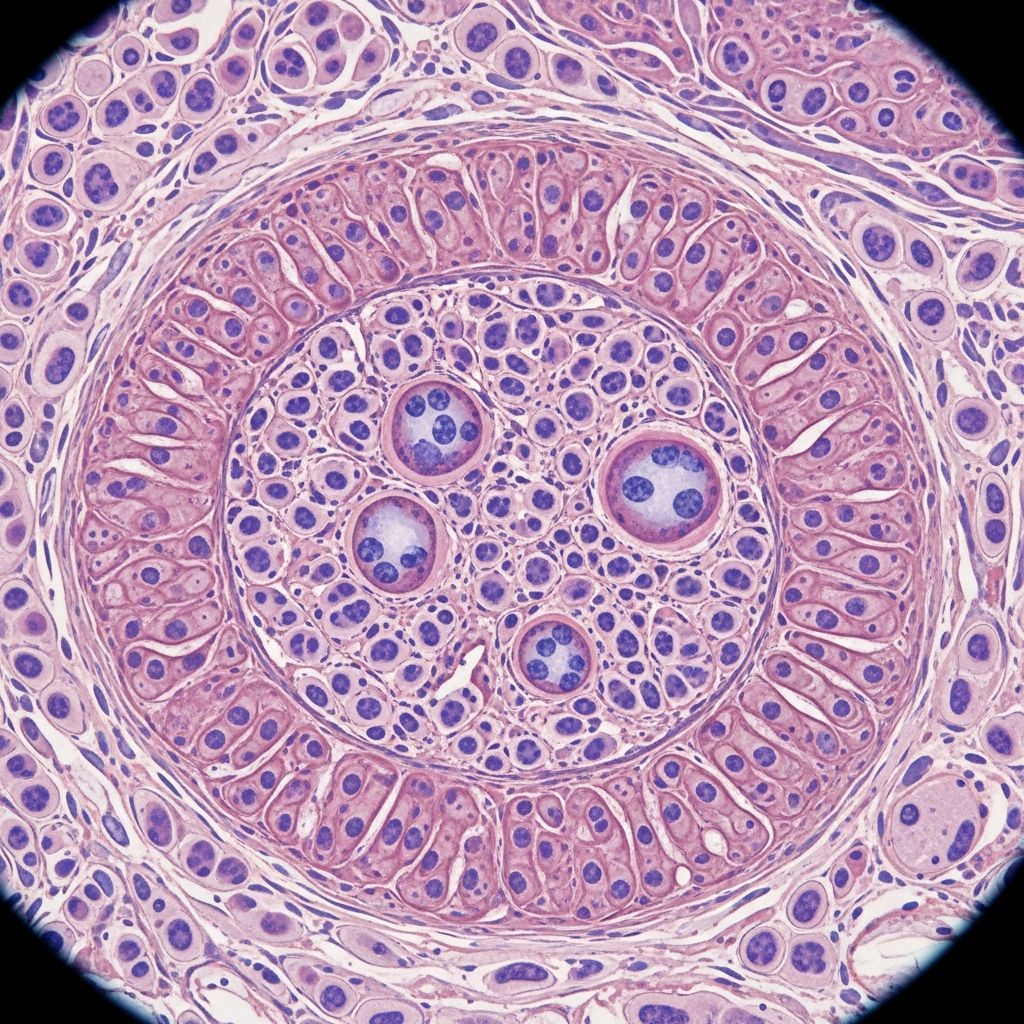
At low magnification, sarcoidosis presents a striking granulomatous reaction pattern. Multiple discrete granulomas are scattered throughout the dermis, often extending from superficial to deep layers (Figure 1 equivalent description: panoramic view reveals well-circumscribed nodules of epithelioid cells).
Granulomas are uniformly sized, oval to round, and lack central necrosis in classic cases. In 86.7% of cutaneous cases, non-caseating, lymphocyte-poor epithelioid cell granulomas predominate, with superficial and deep dermal involvement in all instances.
Subcutaneous extension occurs in 33.3% of cases, particularly in Darier-Roussy subcutaneous sarcoidosis, featuring firm nodules on the trunk and extremities composed of similar granulomas.
Granulomas
The hallmark of sarcoidosis pathology is the
non-caseating epithelioid granuloma
. These consist of aggregated epithelioid histiocytes with abundant pink cytoplasm, forming cohesive clusters. Multinucleated giant cells, including Langhans and foreign body types, are present in 100% of cases.- Naked sarcoidal granulomas (NSG): Seen in 86.7% of biopsies, characterized by sparse lymphocytic cuffing, emphasizing their “naked” appearance.
- Inclusion bodies: Asteroid bodies (star-shaped) or Schaumann bodies (calcified, laminated) in 20% of cases.
- Fibrinoid necrosis: Focal in 13.3%, not extensive, unlike caseating granulomas.
- Distribution: Superficial and deep dermis (100%), subcutaneous fat (33.3%), peri-adnexal (6.7%), perimuscular (6.7%).
Reticulin stain highlights fibrillar networks within granulomas in 100% of cases, aiding confirmation.
Epidermal Changes
Epidermal alterations occur in 46.6% of cutaneous sarcoidosis biopsies, reflecting chronicity or lesion type.
| Feature | Frequency | Description |
|---|---|---|
| Atrophy | 26.7% | Loss of rete ridges, thinned epidermis. |
| Hyperkeratosis/Parakeratosis | 20% | Irregular thickening, retained nuclei. |
| Acanthosis/Papillomatosis | 20% | Epidermal thickening, elongated papillae. |
| Basal vacuolation | Variable | Liquefaction degeneration at dermoepidermal junction. |
These changes are nonspecific but support sarcoidosis in the context of underlying granulomas, especially in plaque-type lesions.
Stromal Changes
A thin rim of mild dermal fibrosis encircles granulomas, contributing to their discrete appearance. Lymphocytic infiltrate is mild (46.6%), moderate (26.7%), or severe (26.7%). Peri-adnexal granulomas may mimic tuberculoid leprosy, but negative AFB stains differentiate.
Foreign body giant cells and rare foreign material (6.7%) indicate sarcoidosis is not mutually exclusive with reactions to exogenous substances.
Special Stains
Related Stories



Essential to exclude mimickers:
- AFB (Ziehl-Neelsen), Wade-Fite: Negative for mycobacteria (100%).
- Gomori-Grocott (GMS): Negative for fungi.
- Reticulin: Positive, outlining granuloma structure (100%).
These confirm non-infectious etiology.
Cutaneous Manifestations and Pathology Correlation
Skin lesions are specific (granulomatous) or nonspecific. Specific lesions (macules, papules, plaques, lupus pernio) show NSG. Nonspecific include erythema nodosum (panniculitis).
Sites: Head/neck (46.7%), arms (20%), back (13.3%), legs (6.7%). Facial involvement in 46%.
Darier-Roussy variant: Subcutaneous nodules (0.3–0.5 cm), granulomas in fat, may precede systemic disease.
Differential Diagnosis
Key mimics:
| Condition | Key Distinguishing Features |
|---|---|
| Tuberculosis | Caseating necrosis, AFB positive. |
| Leprosy | Peri-adnexal granulomas, AFB+ on Wade-Fite. |
| Fungal infection | GMS positive organisms. |
| Foreign body reaction | Polarizable material, more mixed inflammation. |
| Granuloma annulare | Mucin, palisading, more necrosis. |
Systemic evaluation (chest X-ray, ACE levels) aids, though not always available.
Systemic Associations
Skin findings correlate with pulmonary (most common), ocular, and joint involvement. Lofgren syndrome: erythema nodosum + hilar adenopathy.
Frequently Asked Questions (FAQs)
Q: What is the most characteristic histological finding in sarcoidosis?
A: Naked sarcoidal granulomas – non-caseating epithelioid granulomas with minimal lymphocytic infiltrate.
Q: How common is necrosis in cutaneous sarcoidosis?
A: Focal fibrinoid necrosis in 13.3%; extensive caseation is rare and suggests alternative diagnoses.
Q: Are special stains always negative in sarcoidosis?
A: Yes, for AFB and fungi; reticulin is characteristically positive.
Q: Can sarcoidosis involve subcutaneous tissue?
A: Yes, in 33.3% of cases, as in Darier-Roussy nodules.
Q: What epidermal changes support sarcoidosis diagnosis?
A: Atrophy (26.7%), hyperkeratosis, acanthosis in 46.6% of biopsies.
References
- Clinico-pathological spectrum of cutaneous sarcoidosis — PMC/NIH. 2020-08-01. https://pmc.ncbi.nlm.nih.gov/articles/PMC7418838/
- Darier-Roussy subcutaneous sarcoidosis — DermNet NZ. 2023-01-15. https://dermnetnz.org/topics/darier-roussy-subcutaneous-sarcoidosis
- Sarcoidosis pathology — DermNet NZ. 2010-01-01. https://dermnetnz.org/topics/sarcoidosis-pathology
- Clinical Features, Histopathology and Differential Diagnosis of Sarcoidosis — PMC/NIH. 2022-01-01. https://pmc.ncbi.nlm.nih.gov/articles/PMC8750978/
Similar Articles








Read full bio of Sneha Tete