Saturated Fat: 6 Common Foods And What To Know
Understanding saturated fat's role in health, from heart disease risks to recent research challenging old guidelines.
Saturated fat is a type of dietary fat found in many animal products and some plant oils, often solid at room temperature. While long viewed as a primary driver of heart disease due to raising LDL cholesterol, recent research nuances this view, suggesting benefits or neutrality for certain groups when part of balanced diets.
What Is Saturated Fat?
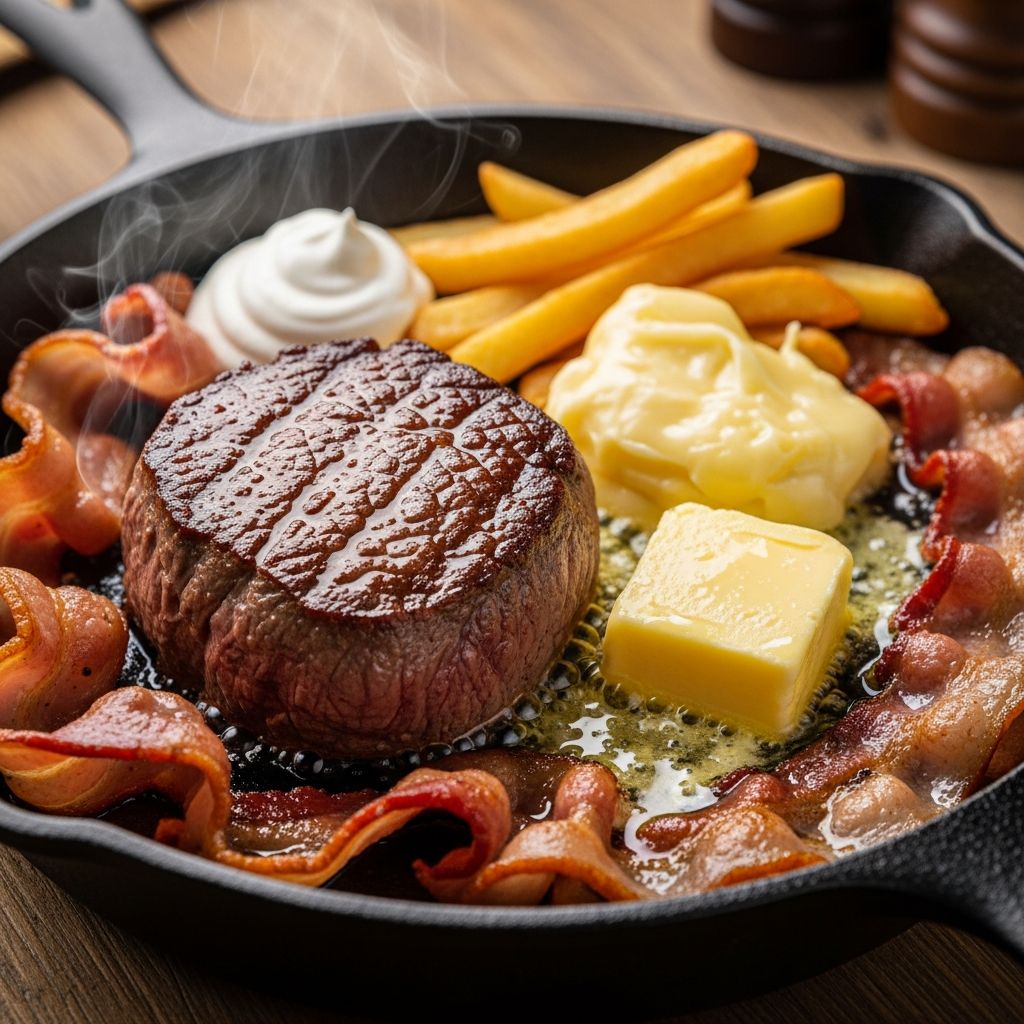
Saturated fat consists of fatty acids with no double bonds between carbon atoms, making them stable and typically solid at room temperature. Common sources include butter, cheese, red meat, and tropical oils like palm and coconut oil. Unlike unsaturated fats, which are liquid, saturated fats provide energy but have been linked to health concerns when overconsumed.
These fats are essential in small amounts for cell function and hormone production, but excess intake can influence cholesterol levels. Foods high in saturated fat often pair with calories from processed items, complicating their impact.
How Much Saturated Fat Should You Eat Per Day?
Dietary guidelines recommend limiting saturated fat to less than 10% of total daily calories for most adults. On a 2,000-calorie diet, this equates to about 22 grams or 200 calories from saturated fat daily. For example, one tablespoon of butter contains roughly 7 grams, nearly one-third of this limit.
Individuals with heart disease or high cholesterol may need stricter limits, often under 7% of calories, as advised by healthcare providers. Total fat should comprise 25-30% of calories, prioritizing unsaturated sources. Recent studies suggest these limits may be more critical for high-risk groups than the general population.
Foods High in Saturated Fat
Many everyday foods contain significant saturated fat. Here’s a table of common examples with typical serving sizes:
| Food Item | Serving Size | Saturated Fat (g) |
|---|---|---|
| New York Steak | 8 oz | 14 |
| Cheeseburger | 1 typical | 10 |
| Vanilla Shake | 1 medium | 10 |
| Butter | 1 tbsp (15 mL) | 7 |
| Cheddar Cheese | 1 oz | 6 |
| Coconut Oil | 1 tbsp | 12 |
These items can fit into a diet occasionally, but portion control is key to staying within limits.
Health Effects of Saturated Fat
Heart Disease
Excess saturated fat raises LDL (bad) cholesterol, promoting plaque buildup in arteries and increasing risks of heart disease and stroke. However, a 2010 meta-analysis found no significant link between dietary saturated fat and increased cardiovascular disease (CVD) risk across studies. Dairy products high in saturated fat were even associated with reduced CVD risk in some cohorts.
A 2025 systematic review of 17 trials confirmed reductions in CVD events from lowering saturated fat, particularly in high-risk individuals substituting with polyunsaturated fats, which lowered LDL cholesterol. For low-to-moderate risk groups, benefits were less evident, sparking debate on blanket restrictions.
Related Stories



Cholesterol
Saturated fats elevate LDL cholesterol, a known CVD risk factor. Yet, effects vary by fatty acid chain length and diet context. Low-carb, high-saturated fat diets may reduce plasma saturated fats compared to high-carb versions due to lower triglycerides. Some saturated fats improve atherogenic dyslipidemia markers like HDL and small dense LDL.
Weight Gain
High-saturated fat foods like fried items and baked goods are calorie-dense at 9 calories per gram, more than double that of carbs or protein. Overconsumption contributes to weight gain, elevating risks for diabetes and heart issues. Balanced intake supports weight management.
Other Health Effects
Beyond CVD, saturated fats influence inflammation and metabolic health. Plant-based saturated fats like coconut oil show mixed effects, with some benefits in low-carb contexts. Over-simplifying saturated fats ignores individual chain differences and dietary synergies.
What Happens If You Eat Too Much Saturated Fat?
Chronic high intake leads to elevated LDL, arterial plaque, and heightened CVD risk, especially in vulnerable populations. Weight gain from calorie surplus compounds issues, while inflammation may rise. In high-risk cases, it increases serious events like heart attacks over five years. For others, long-term data (decades) is needed to assess true impact. Moderation prevents these outcomes.
Benefits of Saturated Fat
Not all saturated fat is harmful. They provide stable energy, aid vitamin absorption (A, D, E, K), and support cell membranes. In low-carb diets, they may lower overall circulating fats. Full-fat dairy links to lower CVD risk, challenging vilification. Evolutionarily, saturated fats sustained human diets without evident detriment in moderation.
Saturated Fat vs. Unsaturated Fat
| Aspect | Saturated Fat | Unsaturated Fat |
|---|---|---|
| Structure | No double bonds; solid at room temp | Double bonds; liquid (mono/poly) |
| Sources | Butter, meat, coconut oil | Olive oil, nuts, fish |
| Health Impact | May raise LDL; context-dependent | Lowers LDL, supports heart health |
| Daily Rec. | <10% calories | Prioritize for replacement |
Replacing saturated with polyunsaturated fats benefits high-risk groups by reducing cholesterol and events.
How to Reduce Saturated Fat in Your Diet
- Choose lean meats over fatty cuts; trim visible fat.
- Use olive or avocado oil instead of butter or palm oil.
- Opt for low-fat dairy or plant alternatives.
- Bake, grill, or steam instead of frying.
- Read labels: limit items with partially hydrogenated oils (trans fats).
- Increase fruits, veggies, whole grains for fiber to manage cholesterol.
These swaps maintain flavor while aligning with guidelines.
Recent Research on Saturated Fat
Debate intensifies. A 2025 review supports limits for high-risk but questions for general populations, fueling guideline challenges. Earlier work shows no CVD link and dairy benefits. Context like carbs matters: high-sat low-carb diets may improve lipids.
Frequently Asked Questions
Is saturated fat bad for you?
It raises LDL and CVD risk in excess, especially for high-risk individuals, but recent meta-analyses find no clear general population link.
Which foods are high in saturated fat?
Red meat, butter, cheese, coconut/palm oils, fried foods.
How much saturated fat per day on 2000 calories?
Less than 22 grams (<10% calories).
Can saturated fat be part of a healthy diet?
Yes, in moderation within balanced patterns; full-fat dairy may protect.
Should I avoid coconut oil?
It’s high in saturated fat (12g/tbsp); use sparingly, prefer unsaturated oils.
References
- Facts about saturated fats — MedlinePlus (National Library of Medicine). 2023. https://medlineplus.gov/ency/patientinstructions/000838.htm
- Saturated Fat and Health: Recent Advances in Research — PMC/NIH. 2010-05-15. https://pmc.ncbi.nlm.nih.gov/articles/PMC2974200/
- New study on saturated fats leads to collision of politics, science — STAT News. 2025-12-15. https://www.statnews.com/2025/12/15/saturated-fat-intake-new-study-controversy-impact-dietary-guidelines/
Similar Articles








Read full bio of medha deb