Saw Palmetto: Uses, Benefits, and Safety Profile
Comprehensive guide to saw palmetto: Evidence-based benefits, uses, and safety considerations.
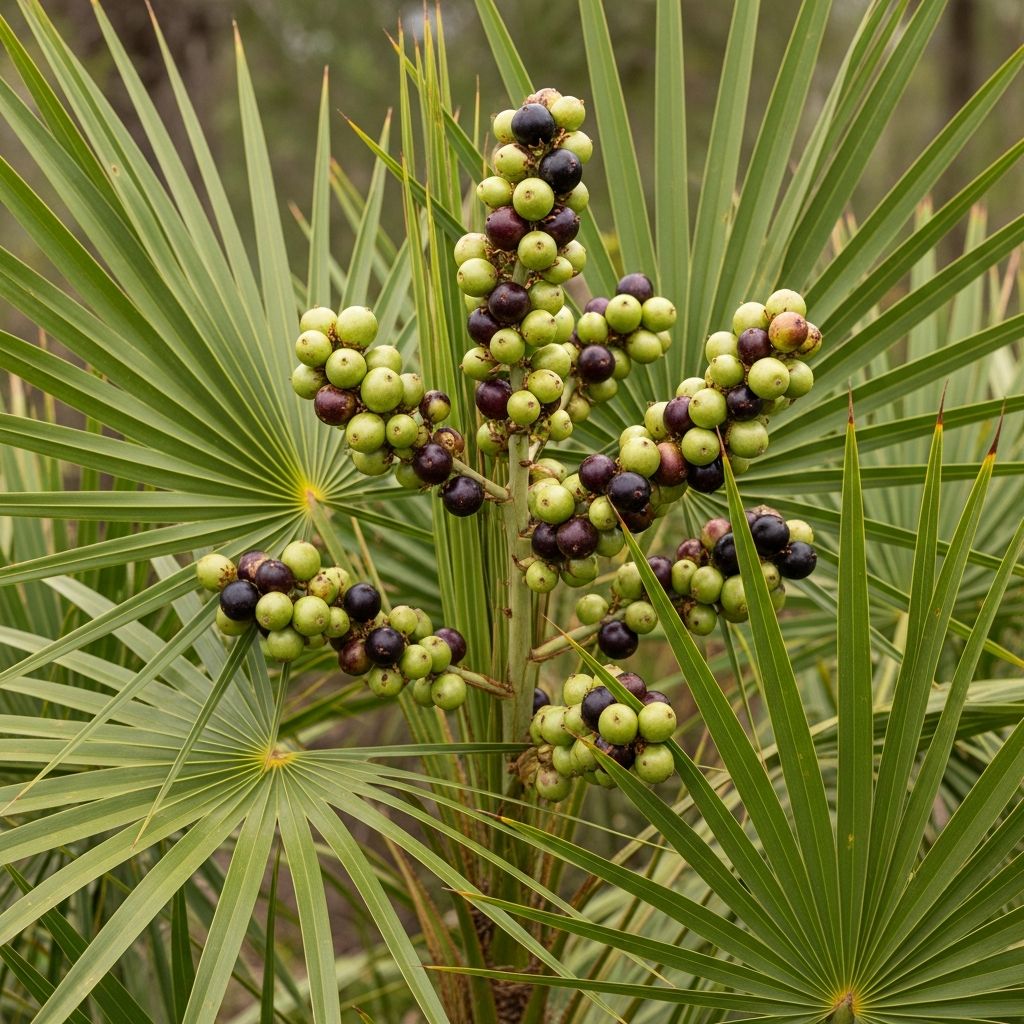
Saw palmetto (Serenoa repens) is a species of palm native to the southeastern United States that has become increasingly popular in the supplement market. This botanical extract has been used traditionally and in modern medical practice to address various health concerns, particularly those related to male health and aging. Understanding the scientific evidence behind saw palmetto’s purported benefits is essential for making informed decisions about its use.
What Is Saw Palmetto?
Saw palmetto is a small palm tree native to the southeastern region of the United States, particularly found in Florida and surrounding areas. The supplement is derived from the berries of this plant and has been used in traditional medicine for centuries. The extract contains various active compounds, including fatty acids, sterols, and other phytochemicals that are believed to contribute to its potential health effects.
The supplement is available in multiple forms, including capsules, tablets, liquid extracts, and teas. It has gained widespread popularity in North America and Europe, where it is commonly marketed for prostate health and hair loss prevention in men. The standardized extracts typically contain lipophilic compounds that are thought to be responsible for the supplement’s biological activity.
How Does Saw Palmetto Work?
The mechanism of action of saw palmetto involves its interaction with hormonal pathways in the body. The active compounds in saw palmetto may help block the activity of 5-alpha reductase, an enzyme responsible for converting testosterone to dihydrotestosterone (DHT). This enzyme inhibition may help maintain testosterone levels as individuals age. Improved testosterone levels may theoretically lead to improvements in body composition, libido, and mood.
Because DHT is also involved in the enlargement of the prostate gland, decreasing DHT levels through saw palmetto use may improve prostate health and benign prostatic hyperplasia (BPH) symptoms. Additionally, since DHT regulates hair growth and may contribute to hair loss and balding, saw palmetto may support hair health through this same mechanism. However, research on these effects remains mixed, and it remains unclear whether saw palmetto is truly effective for these conditions.
Potential Benefits and Uses
Hair Growth and Hair Loss Prevention
One of the most popular uses of saw palmetto is for preventing hair loss and promoting hair growth in men experiencing androgenic alopecia (male-pattern baldness). A comprehensive review of multiple studies found that oral and topical supplements containing saw palmetto improved hair quality by approximately 60%, raised total hair count by 27%, and increased hair density in 83% of people with hair loss.
A 2023 clinical study examining people with androgenic alopecia who took a specifically formulated saw palmetto oil supplement found that saw palmetto resulted in decreased hair fall, improved growth, and improved scalp appearance when compared to a placebo. However, researchers note that while some study results suggest that saw palmetto may benefit hair growth, more research is still needed to establish definitive efficacy and optimal dosing protocols.
Urinary Tract Function and Benign Prostatic Hyperplasia
Saw palmetto has been extensively studied for its potential to improve urinary symptoms associated with benign prostate hyperplasia (BPH), a condition that causes enlargement of the prostate gland and results in decreased urine flow. However, research findings have been mixed.
Related Stories



In a 12-week study, participants with BPH who took 1,000 mg daily of saw palmetto oil enriched with beta-sitosterol, a compound found naturally in many plants, experienced significant improvements in BPH symptoms compared with those who took unenriched saw palmetto oil. Additionally, a 24-week study of 354 participants found that taking 320 mg of saw palmetto decreased symptoms of BPH and improved urinary flow, quality of life, and sexual function compared with a placebo.
However, a 2021 review of 27 studies concluded that saw palmetto had no significant impact on lower urinary tract symptoms when used alone. A large-scale randomized controlled trial published in JAMA demonstrated that saw palmetto extract was no better than placebo for improving lower urinary tract symptoms, even at increasing doses over a 72-week period.
Prostate Health Support
The prostate is a small gland located between the bladder and the penis that is responsible for maintaining sperm health and producing seminal fluid. Research suggests that saw palmetto can support prostate health and help prevent issues such as BPH and related complications. A 15-year study of 30 participants with BPH concluded that taking 320 mg of saw palmetto extract daily may help prevent the progression of BPH.
Studies also indicate that this supplement may reduce BPH-related urinary symptoms and inflammation in prostate tissue. Pretreatment with saw palmetto has been shown to reduce intra- and postoperative complications in patients who underwent transurethral resection of the prostate and open prostatectomy procedures. Additionally, data suggest potential benefits against chronic prostatitis and chronic pelvic pain syndrome.
Yet some studies do not associate saw palmetto with improvements in prostate health or BPH symptoms, indicating that further high-quality research is needed to establish conclusive evidence.
Anti-inflammatory Properties
Some research in animal models suggests that saw palmetto possesses anti-inflammatory properties, which may help treat certain inflammatory conditions. A 2015 study in mice with enlarged prostates observed that saw palmetto extract decreased swelling and several markers of inflammation, including interleukin-6 (IL-6). Another 2015 study in rats with BPH found that saw palmetto decreased inflammation and improved antioxidant status.
In human prostate and vascular cells in an inflammatory environment, saw palmetto extracts have been shown to decrease monocyte chemotactic protein-1 production and vascular cell adhesion molecule-1 expression. A 2019 review of research suggests that saw palmetto extract may reduce inflammation in the prostate tissue.
Although these results are promising in laboratory and animal studies, human clinical trials specifically evaluating anti-inflammatory effects remain limited. The National Center for Complementary and Integrative Health (NCCIH) notes that there isn’t enough research to support the potential benefits of saw palmetto oil for any condition as a standalone therapy.
Research Evidence and Clinical Studies
The scientific evidence regarding saw palmetto’s effectiveness presents a mixed picture. Early studies from the 1990s and early 2000s suggested modest benefits for BPH symptoms. A 2002 Cochrane meta-analysis of 21 clinical trials found that compared with placebo, saw palmetto significantly reduced nocturia (nighttime urination), increased self-rated improvement, and improved peak uroflow. Adverse effects were reported as infrequent in these earlier analyses.
However, more recent large-scale studies have been less encouraging. The JAMA study, which enrolled participants and assessed them over 72 weeks with increasing doses of saw palmetto extract, found that mean symptom scores decreased slightly with saw palmetto but decreased more with placebo. The group mean difference favored placebo, and the proportion of participants achieving clinically meaningful improvement was similar between groups.
For hair loss, while some studies show promising results, researchers consistently emphasize that more high-quality human studies are needed to establish definitive efficacy, optimal dosing, and long-term safety profiles.
Safety and Side Effects
Common Side Effects
Saw palmetto is generally well-tolerated, with most reported side effects being mild and similar to those experienced with placebo in clinical trials. The most commonly reported adverse effects include:
- Gastrointestinal upset and digestive discomfort
- Diarrhea or loose stools
- Fatigue and reduced energy levels
- Headache
- Decreased libido or sexual dysfunction
- Rhinitis or nasal congestion
These side effects are typically mild and transient, often resolving with continued use or dose adjustment. In clinical trials, the frequency and severity of adverse effects reported with saw palmetto were comparable to those experienced with placebo.
Special Populations and Precautions
Certain populations should exercise caution or avoid saw palmetto altogether. Individuals who may be pregnant should avoid saw palmetto due to its hormonal effects and lack of established safety data during pregnancy. Women in general should consult healthcare providers before using saw palmetto, as research on its effects in women is limited.
Individuals taking blood-thinning medications or anticoagulants should discuss saw palmetto use with their healthcare provider, as some evidence suggests it may have mild antiplatelet properties. Similarly, those scheduled for surgery should inform their surgical team about saw palmetto supplementation.
People with bleeding disorders or those taking other supplements or medications should consult their healthcare provider before starting saw palmetto to ensure there are no potential interactions.
Dosage and Forms
Clinical studies have used varying doses of saw palmetto extract, most commonly in the range of 160 to 320 mg daily, often taken in divided doses. Some studies have examined higher doses, with one investigating up to 960 mg daily (3 doses of 320 mg). The standardized lipophilic extracts used in research typically contain specific concentrations of active compounds to ensure consistency across studies.
Saw palmetto is available in numerous commercial formulations, including capsules, tablets, soft gels, liquid extracts, and teas. When selecting a product, consumers should look for supplements from reputable manufacturers that third-party test their products and provide standardized extract content. However, the quality and potency of commercial supplements can vary significantly.
Frequently Asked Questions
Is saw palmetto effective for treating benign prostatic hyperplasia?
Research results are mixed. Some studies suggest saw palmetto may modestly improve BPH symptoms and urinary flow, while large-scale trials have found it performs no better than placebo. Additional research is needed to clarify its true effectiveness.
Can saw palmetto prevent hair loss?
Some studies suggest saw palmetto may improve hair growth and reduce hair loss, with improvements in hair count and density observed in certain trials. However, more robust clinical evidence is needed, and individual results may vary significantly.
Is saw palmetto safe to take long-term?
Saw palmetto appears to be relatively safe for long-term use based on available evidence, with side effects generally being mild. However, long-term safety studies in large populations remain limited, and individuals should consult healthcare providers about extended use.
Can women take saw palmetto?
While saw palmetto is not commonly studied in women, there is no strong evidence of harm. However, women should consult healthcare providers before using saw palmetto, particularly those who are pregnant, breastfeeding, or have hormone-sensitive conditions.
How long does it take to see results from saw palmetto?
Clinical studies have typically examined saw palmetto effects over periods ranging from 12 to 72 weeks. Some people may notice benefits within weeks, while others may require months of consistent use. Results vary considerably between individuals.
Does saw palmetto interact with medications?
Saw palmetto may interact with blood-thinning medications and other supplements affecting coagulation. Individuals taking prescription medications should consult their healthcare provider before starting saw palmetto to assess potential interactions.
The Bottom Line
Saw palmetto is a botanical supplement with a long history of traditional use and considerable commercial popularity. While research has identified various mechanisms through which saw palmetto compounds may affect hormone metabolism and inflammation, the clinical evidence for its effectiveness remains inconclusive.
For benign prostatic hyperplasia and lower urinary tract symptoms, evidence is mixed, with some smaller studies suggesting modest benefits while larger, more recent trials have found saw palmetto no better than placebo. For hair loss, while some research shows promising results, substantial additional high-quality studies are needed. Anti-inflammatory benefits have been observed in laboratory and animal studies, but human evidence is limited.
Saw palmetto appears to be generally safe with mild side effects comparable to placebo in most clinical trials. However, certain populations should avoid it, including pregnant women and those taking blood-thinning medications. Additional large-scale human research is needed to understand definitively how saw palmetto affects health and for which conditions it may be genuinely beneficial.
Individuals considering saw palmetto supplementation should consult with qualified healthcare providers to determine whether it is appropriate for their specific health situation and to ensure it does not interact with other medications or supplements they may be taking.
References
- 5 Promising Benefits and Uses of Saw Palmetto — Healthline. 2024. https://www.healthline.com/nutrition/saw-palmetto-benefits
- Effect of Increasing Doses of Saw Palmetto Extract on Lower Urinary Tract Symptoms — JAMA. 2006. https://jamanetwork.com/journals/jama/fullarticle/1104439
- Saw Palmetto — Memorial Sloan Kettering Cancer Center. Memorial Sloan Kettering Cancer Center. 2024. https://www.mskcc.org/cancer-care/integrative-medicine/herbs/saw-palmetto
- Saw Palmetto for Prostate Disorders — American Academy of Family Physicians. 2003. https://www.aafp.org/pubs/afp/issues/2003/0315/p1281.html
- Spotlight on Saw Palmetto: What the Science Says — National Center for Complementary and Integrative Health (NCCIH). 2024. https://www.nccih.nih.gov/health/providers/digest/spotlight-on-saw-palmetto-science
Similar Articles








Read full bio of Sneha Tete