Scabies: Causes, Symptoms, And Effective Treatments
Discover the causes, symptoms, diagnosis, and effective treatments for scabies, the highly contagious mite infestation affecting millions worldwide.
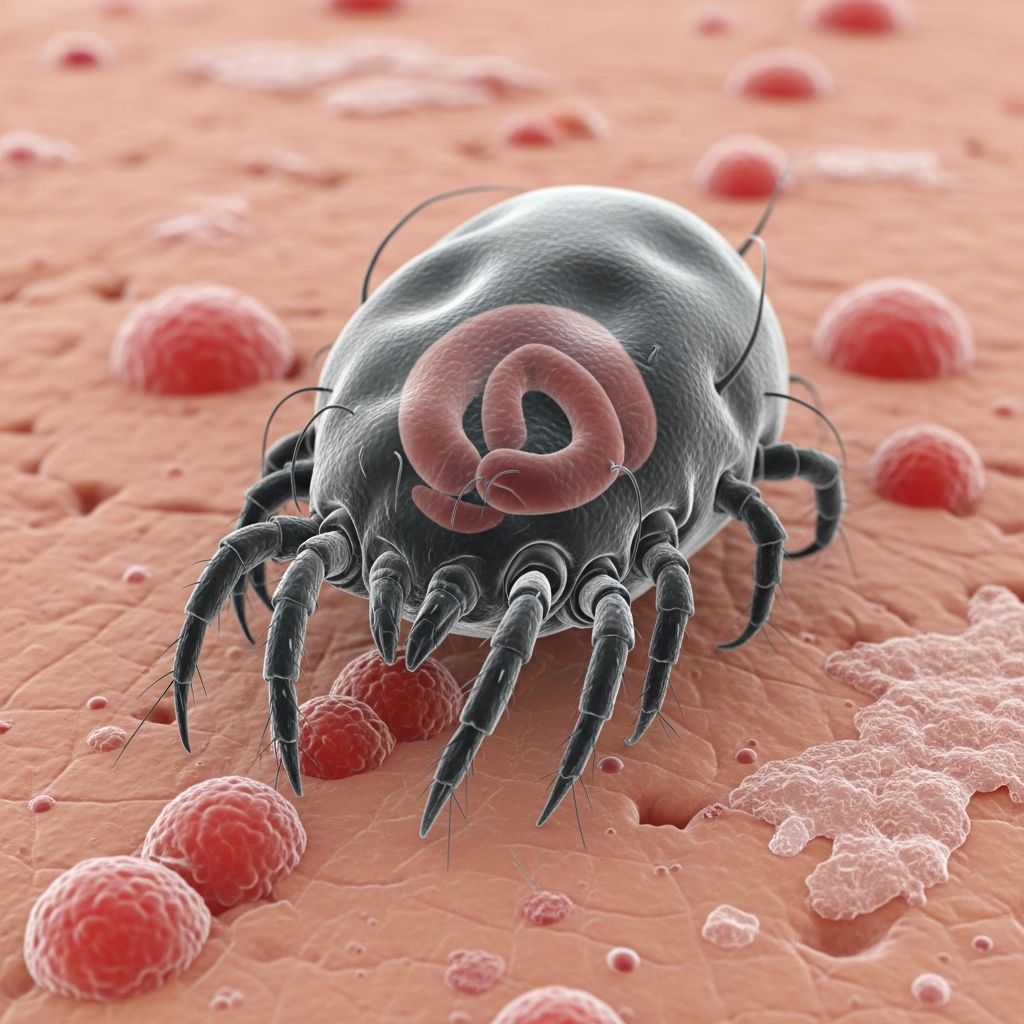
Scabies represents a widespread parasitic skin condition triggered by the mite Sarcoptes scabiei, leading to severe discomfort through intense itching and visible skin changes. This infestation impacts over 200 million people globally each year, posing challenges particularly in crowded or resource-limited settings.
The Nature of the Scabies Mite
The culprit behind scabies is the microscopic mite Sarcoptes scabiei var. hominis, a tiny arachnid measuring about 0.3-0.4 mm in length for adult females. These mites burrow into the upper layers of the skin, where females create tunnels to deposit eggs—typically 2-3 per day over a lifespan of 4-5 weeks. The resulting hatchlings emerge to continue the cycle, provoking an immune response that manifests as irritation.
Transmission occurs predominantly via prolonged skin-to-skin contact, explaining its prevalence in households, nursing homes, and close-knit communities. While less common, fomite transmission through infested bedding or clothing can happen, especially in severe cases.
Recognizing the Signs and Symptoms
Symptoms typically emerge 2-6 weeks after initial exposure in first-time cases, though sensitized individuals may react within 1-3 days. The hallmark is intense pruritus, often worsening nocturnally due to heightened body temperature and mite activity.
- Pimple-like eruptions, linear burrows, and erythematous papules, commonly in finger webs, wrists, elbows, axillae, waistline, and genitals.
- Sores from scratching, prone to secondary bacterial infections like impetigo.
- In infants and young children, rashes may extend to palms, soles, and scalp.
Nodular variants present as persistent, itchy lumps in groin or axillary areas, stemming from hypersensitivity.
Crusted Scabies: A Severe Variant
Crusted, or Norwegian, scabies arises in immunocompromised individuals, such as those with HIV, elderly patients, or on immunosuppressive therapy. Unlike typical cases with 10-15 mites, this form harbors thousands to millions, leading to thick, crusted plaques resembling pumice stone, nail dystrophy, and minimal initial itching.
Associated risks include generalized lymphadenopathy, eosinophilia, elevated IgE, and life-threatening secondary infections like septicaemia or post-streptococcal glomerulonephritis. Over half of cases link to identifiable immunosuppression, with HIV prominent in 45% of reports.
How to Diagnose Scabies Accurately
Diagnosis hinges on clinical evaluation, supported by history of contact and characteristic lesions. Key sites include interdigital spaces and flexural areas. In endemic areas, clinical suspicion suffices, but confirmation via dermoscopy (revealing delta-wing burrows) or microscopy of skin scrapings identifies mites, eggs, or feces.
Classifications include:
| Type | Criteria |
|---|---|
| Confirmed | Microscopic or dermoscopic evidence |
| Clinical | Typical lesions + contact history |
| Suspected | Atypical findings but supportive history |
Full-body exams in good lighting are essential, focusing on head/scalp in at-risk groups.
Effective Treatment Approaches
Treatment eradicates mites while alleviating symptoms. All household/close contacts require simultaneous therapy, regardless of symptoms, plus environmental measures like hot washing linens.
Topical Therapies
- Permethrin 5% cream: First-line; apply from neck down, leave 8-14 hours, repeat after 1 week. Safe for ages ≥2 months.
- Benzyl benzoate 25%, precipitated sulfur, or others as alternatives.
Oral Options
Ivermectin (200 mcg/kg, two doses 1 week apart) for crusted cases, treatment failures, or impractical topicals. Not for children <15kg or pregnant women.
Post-treatment itching may persist 2-4 weeks (post-scabietic itch); topical steroids/crotamiton can soothe.
Prevention Strategies in Everyday Life
Related Stories



Prevent reinfestation through hygiene and awareness:
- Avoid close contact with infested individuals until treated.
- Machine-wash bedding/clothes in hot water (>50°C), dry on high heat, or seal in bags 3 days.
- Trim nails to reduce spread.
- In institutions, mass prophylaxis may be needed.
High-risk settings like shelters demand vigilant screening.
Potential Complications and Long-Term Effects
Beyond discomfort, scratching invites Streptococcus pyogenes impetigo, linking to acute glomerulonephritis and rheumatic heart disease. Crusted forms heighten sepsis mortality risk.
Global burden exceeds 200 million cases yearly, with DALYs underscoring public health impact, especially in tropics.
Differential Diagnosis: Ruling Out Look-Alikes
Itch differentials include eczema, psoriasis, fungal infections (tinea), syphilis, or vasculitis. Burrows distinguish scabies; history/contact clinches it.
Frequently Asked Questions (FAQs)
Is scabies contagious?
Yes, primarily via 15-20 minutes skin contact; crusted form spreads easier.
How long until symptoms appear?
4-6 weeks initially; 1-3 days on reinfestation.
Can I treat scabies at home without a doctor?
No, prescription scabicides required; self-treatment risks failure.
Does scabies affect animals?
Human variant doesn’t transmit to pets; animal scabies causes transient itch.
When to seek urgent care?
For crusted signs, secondary infection, or no improvement post-treatment.
Living with Scabies: Patient Tips
Maintain skin hydration, avoid irritants, and follow-up if nodules linger months post-treatment. Education curbs stigma and outbreaks.
References
- Scabies – Iowa Department of Health and Human Services — Iowa HHS. 2024. https://hhs.iowa.gov/health-prevention/providers-professionals/center-acute-disease-epidemiology/epi-manual/information-other-diseases-and-conditions-fact-sheets/scabies
- Clinical practice guidelines for the diagnosis and treatment of scabies — PMC. 2024. https://pmc.ncbi.nlm.nih.gov/articles/PMC11589009/
- Scabies – Merck Manual Professional Edition — Merck Manuals. 2024. https://www.merckmanuals.com/professional/dermatologic-disorders/parasitic-skin-infections/scabies
- SCABIES HANDBOOK – Georgia Department of Public Health — Georgia DPH. 2024. https://dph.georgia.gov/document/document/adesgeorgiascabieshandbookv2024pdf/download
- Scabies – World Health Organization — WHO. 2024. https://www.who.int/news-room/fact-sheets/detail/scabies
Similar Articles








Read full bio of medha deb